
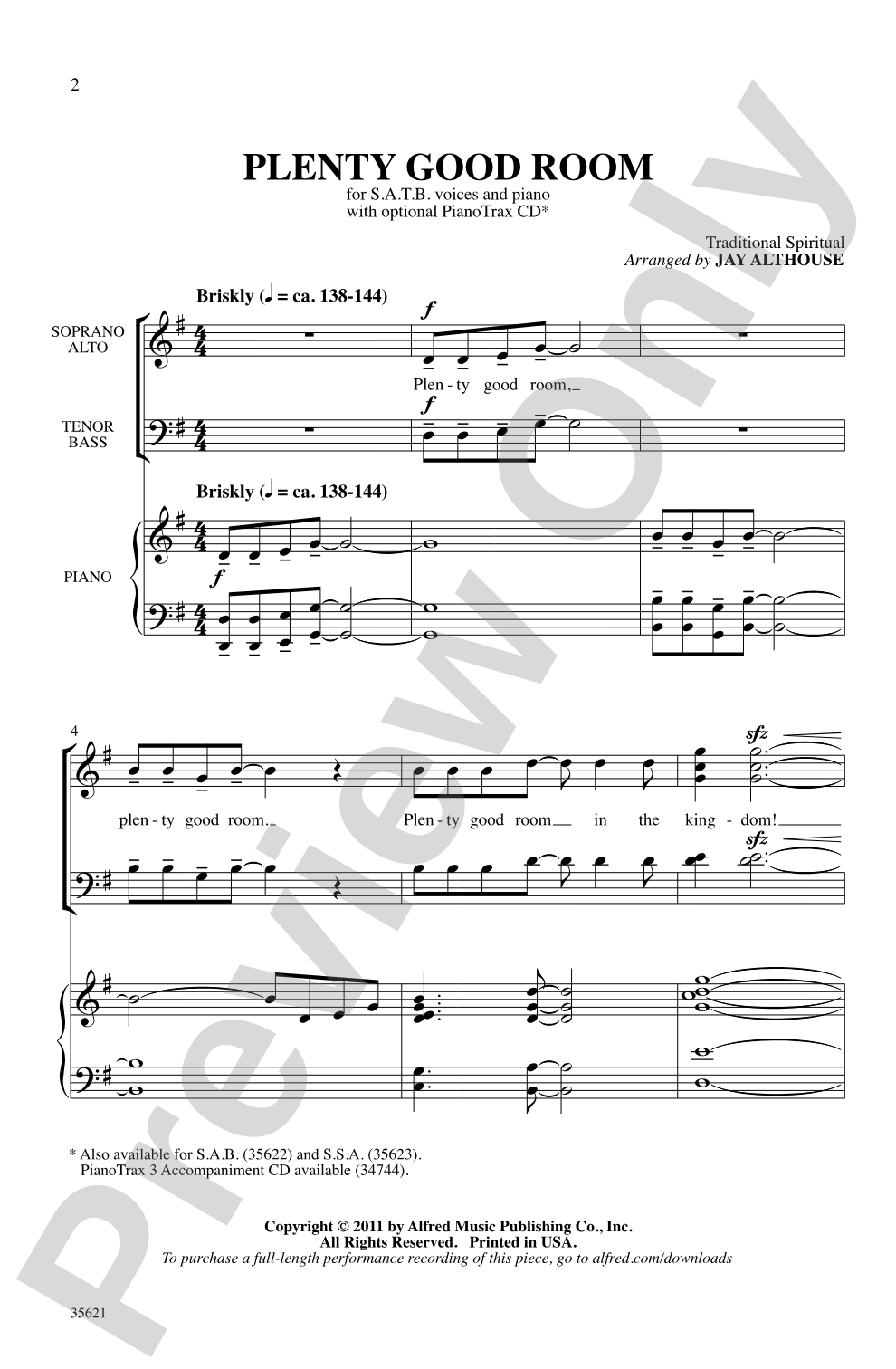

Plenty Good Room: SATB Choral Octavo
Traditional Spiritual / arr. Jay Althouse
Item: 00-PO-0000927
$1.80
Minimum order quantity: 20 copies
Pickup currently not available
Related Items
Plenty Good Room: PianoTrax Digital Download |
$9.99
|
View | |
Plenty Good Room: SAB Choral Octavo |
$1.80
|
View | |
Plenty Good Room: SSA Choral Octavo |
$1.80
|
View | |
Plenty Good Room: SATB Choral Octavo |
$1.80
|
View | |
Plenty Good Room: SAB Choral Octavo |
$1.80
|
View | |
Plenty Good Room: SSA Choral Octavo |
$1.80
|
View |
Description
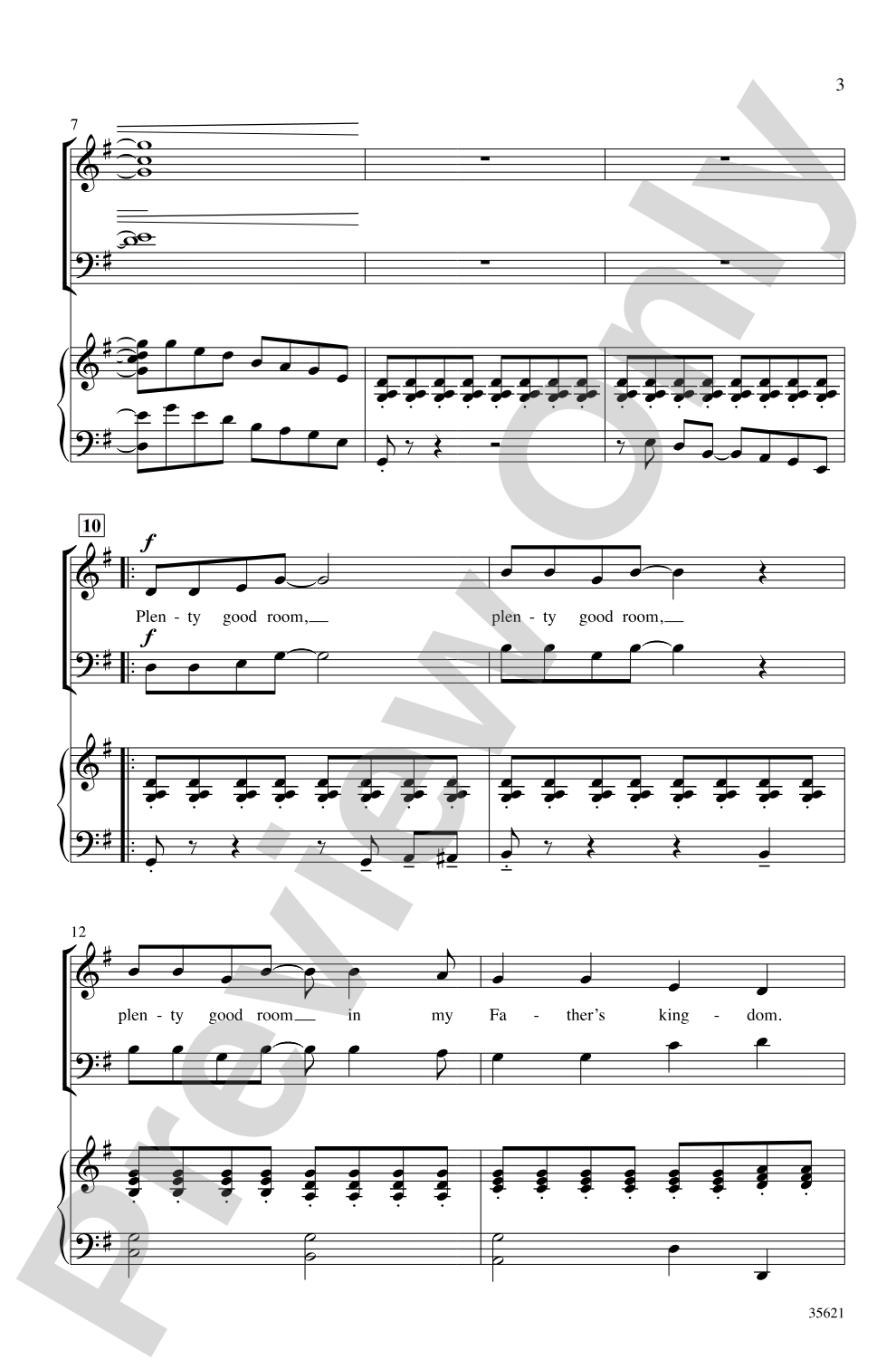
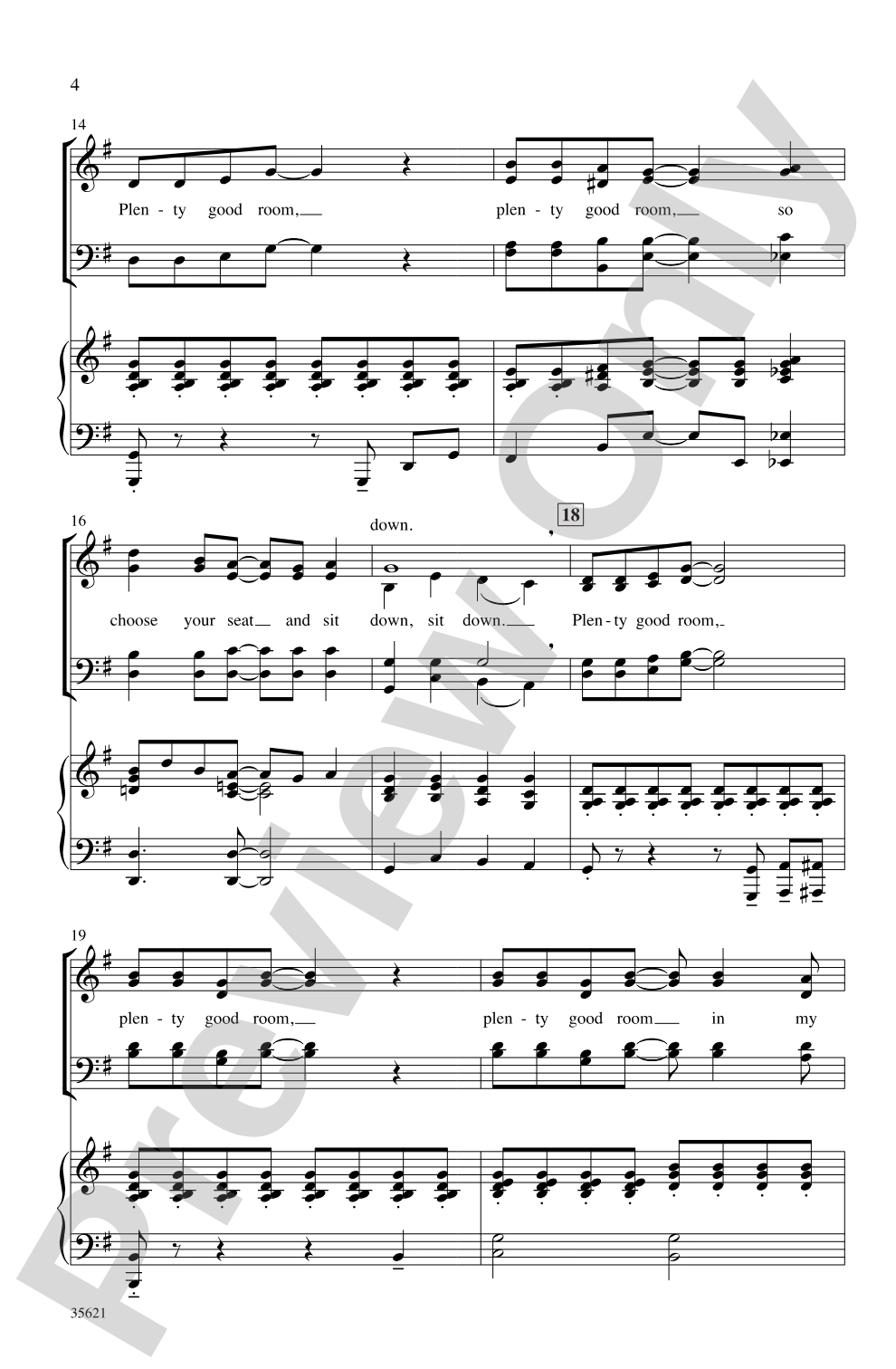
This masterful arrangement drives forward with fortitude and rhythmic energy. Features a fantastic piano accompaniment, rich harmonies, and two brief solos. Exceptional! Featured on PianoTrax 3 Accompaniment CD (00-34744).


Plenty Good Room: SATB Choral Octavo isn't in MakeMusic Cloud just yet...but it could be. Let us know you'd like to see it, and you'll help shape what comes next. In the meantime, start a free trial and dive into thousands of interactive titles your students can play along with today.
Request This Title
Tell us you want it.
Start Your Free Trial
Explore everything that's ready to play right now.
Sample Audio
1
Audio File
--:--
0:00
0:00
Sample Video
No sample videos found.
Additional Details
Series:
Alfred Choral Designs
Publisher:
Alfred Music
Page Count:
12
SKU:
00-PO-0000927
More about this title
About the Arranger: Jay Althouse

Jay Althouse holds degrees in Music Education and Music from Indiana University of Pennsylvania, where he was honored as a Distinguished Alumni recipient. His career spans both the publishing industry, where he spent eight years managing rights and licenses and served on the Executive Board of the Music Publishers Association of America, and prolific composition, with more than 800 choral works now in print across all difficulty levels.
Althouse's output extends well beyond composition. He has co-created children's musicals with his wife Sally K. Albrecht, curated and arranged celebrated vocal solo collections including Folk Songs for Solo Singers, and co-authored pedagogical staples such as The Complete Choral Warm-up Book and Accent on Composers. His educational materials for the classroom (Ready to Read Music, Sixty Music Quizzes, and One-Page Composer Bios) reflect his commitment to music literacy and teacher support. As a writer member of ASCAP, he is a regular recipient of the ASCAP Special Award. He has served on the boards of the North Carolina Master Chorale and the Folk Art Society of America, and contributes regularly to the Folk Art Messenger. His arrangements of American vernacular music, including the choral work I Hear America Singing performed by the San Francisco Girls and Boys Choirs at the 2009 Presidential Inauguration, demonstrate his skill at honoring traditional voices.
Why we love this
Althouse crafts arrangements that respect the spiritual's essential character while giving singers genuine harmonic content and rhythmic momentum. The addition of two solo moments allows you to feature individual voices without stepping outside the ensemble sound, and the piano accompaniment drives the piece forward rather than simply supporting it.
What to expect
The piece pulses with purposeful forward momentum and spiritual conviction. Rich harmonic textures deepen the traditional spiritual's emotional core, while rhythmic vitality keeps the energy grounded and authentic rather than overly arranged.
Who it's for
This octavo works for intermediate to advanced SATB choirs seeking a spiritual arrangement that combines accessibility with musical substance. Church choirs, school choirs preparing for festival or concert performance, and community ensembles wanting a piece that showcases both ensemble blend and individual singers will find this rewarding.
How to get the most out of it
- Shape the rhythmic energy through dynamic contrast; the forward motion comes from clarity, not volume. Let quieter passages breathe.
- Balance the solo sections carefully so they sound like soloists emerging from the choir, not a shift to a different performance.
- Use the piano accompaniment to establish the harmonic language early in rehearsal. Familiarity with how the chords move will help singers lock into their parts faster.
- Pay attention to the text in relation to the rhythmic drive. The arrangement's energy should serve the spiritual's message, not overshadow it.
How to use it
Program this in concert contexts centered on American spirituals or sacred traditions; it pairs naturally with other folk-based or traditional repertoire. The moderate length and two solo moments also make it effective as a featured piece in a mixed-repertoire concert where you want to highlight both ensemble capability and individual singers.
Skills your students will build
- Sustaining rhythmic energy within rich harmonic contexts
- Blending ensemble voices while maintaining clarity in four-part writing
- Interpreting and performing solo sections within a choral setting
- Understanding spiritual traditions and their arrangement conventions