
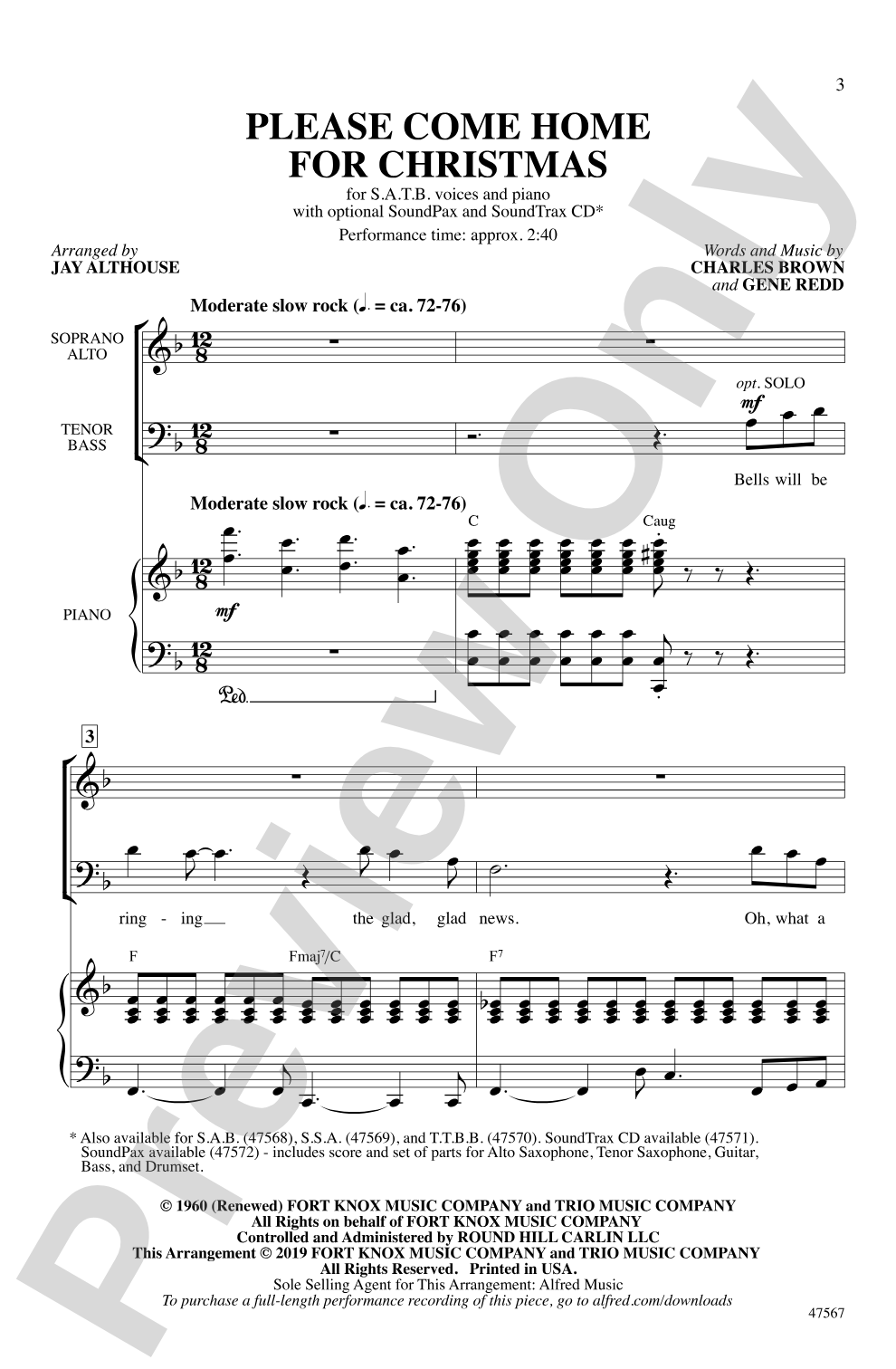
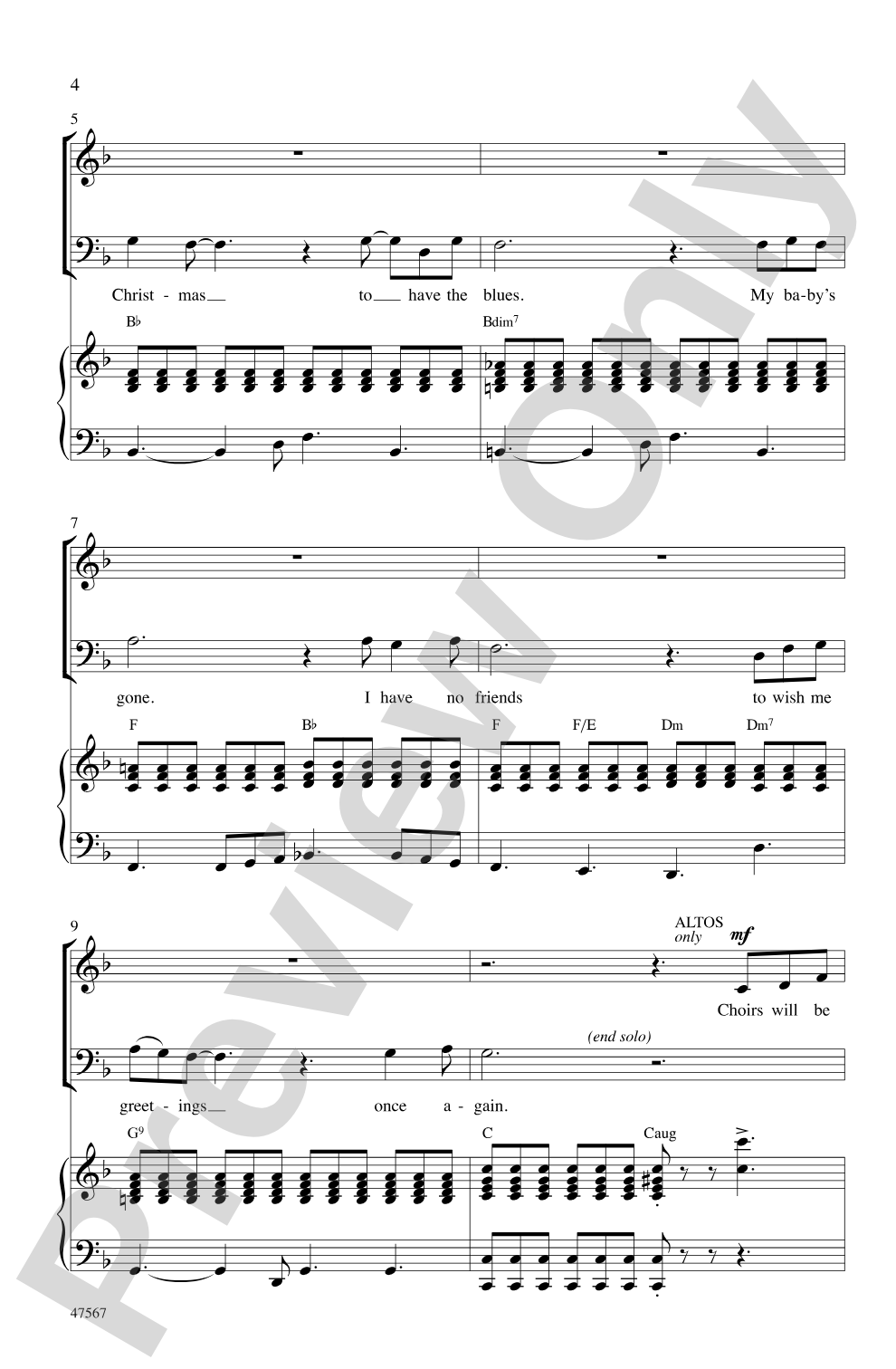

Please Come Home for Christmas: SATB Choral Octavo
Words and music by Charles Brown and Gene Redd / arr. Jay Althouse
Item: 00-PO-0005938
$2.10
Minimum order quantity: 20 copies
One moment…
Related Items
Please Come Home for Christmas: SoundTrax Digital Audio Download |
$27.99
|
View | |
Please Come Home for Christmas: SAB Choral Octavo |
$2.10
|
View | |
Please Come Home for Christmas: SSA Choral Octavo |
$2.10
|
View | |
Please Come Home for Christmas: TTB Choral Octavo |
$2.10
|
View | |
Please Come Home for Christmas: Choral SoundPax |
$30.00
|
View | |
Please Come Home for Christmas: SATB Choral Octavo |
$2.10
|
View | |
Please Come Home for Christmas: SAB Choral Octavo |
$2.10
|
View | |
Please Come Home for Christmas: SSA Choral Octavo |
$2.10
|
View | |
Please Come Home for Christmas: TTB Choral Octavo |
$2.10
|
View | |
Please Come Home for Christmas: Choral Octavo SoundTrax CD |
$27.99
|
View | |
Please Come Home for Christmas: Choral SoundPax |
$30.00
|
View |
Description
In 1960, pianist and singer Charles Brown first recorded this Christmas classic. Since then, the Eagles, Kelly Clarkson, Martina McBride, and Jon Bon Jovi are among the many artists who have covered the blues-infused tune about missing "the one you love" during the holidays. Opens with an optional solo followed by irresistible classic '60s harmonies.


Please Come Home for Christmas: SATB Choral Octavo isn't in MakeMusic Cloud just yet...but it could be. Let us know you'd like to see it, and you'll help shape what comes next. In the meantime, start a free trial and dive into thousands of interactive titles your students can play along with today.
Request This Title
Tell us you want it.
Start Your Free Trial
Explore everything that's ready to play right now.
Sample Audio
1
Audio File
--:--
0:00
0:00
Sample Video
Additional Details
Series:
Alfred Pop Choral Series
Publisher:
Alfred Music
Page Count:
12
SKU:
00-PO-0005938
More about this title
About the Composer: Charles Brown
Charles Brown (1922–1999) was a pianist, vocalist, and bandleader who helped shape the sound of rhythm and blues in postwar America. His sophisticated piano style and warm baritone vocals bridged jazz, blues, and early rock and roll, influencing generations of performers across multiple genres. "Please Come Home for Christmas," recorded in 1960, became his signature song and has endured as a holiday standard, covered by artists ranging from country to rock to pop.
Why we love this
This arrangement captures the emotional weight of the original recording while remaining accessible for high school and community choirs. The optional solo opening gives your strongest vocalist a moment to shine, and the arrangement respects the song's blues roots without requiring specialized style knowledge from your singers. It's a secular Christmas choice with genuine depth, perfect for directors seeking repertoire that feels contemporary and human rather than purely festive.
What to expect
Warm and introspective, like late-night conversation over coffee. The arrangement wraps the melody in sophisticated harmonies that evoke a '60s living room, and the blues inflection gives it an honest, human quality that contrasts with purely cheerful Christmas repertoire.
Who it's for
High school and community choirs looking for a secular holiday selection with substance and contemporary appeal. Directors and singers who enjoy music that reflects the bittersweet reality of holiday experiences, not just celebration.
How to get the most out of it
- Teach the arrangement from the recorded accompaniment first; the chordal movement and '60s harmony voicings become clear quickly when singers hear the lush piano texture underneath.
- If you use the optional solo, choose someone who can sing the blues inflection naturally. The solo requires phrasing that leans slightly behind the beat, not strict rhythmic precision.
- Balance the harmonies so no single voice part overwhelms; the richness comes from all four parts blending, not from individual prominence.
- Shape the phrase endings with a slight ritardando to honor the emotional content of the lyric.
How to use it
Program this as the emotional centerpiece of a holiday concert, positioned in the second half where audiences are ready for something reflective. It pairs beautifully with both upbeat secular selections and traditional carols, serving as a bridge between different styles of holiday music.
Skills your students will build
- Blues phrasing and style (behind-the-beat singing, relaxed swing feel)
- Four-part SATB balance in jazz harmonies
- Interpreting emotional subtext beyond the written notes
- Blend and intonation in complex chord structures