
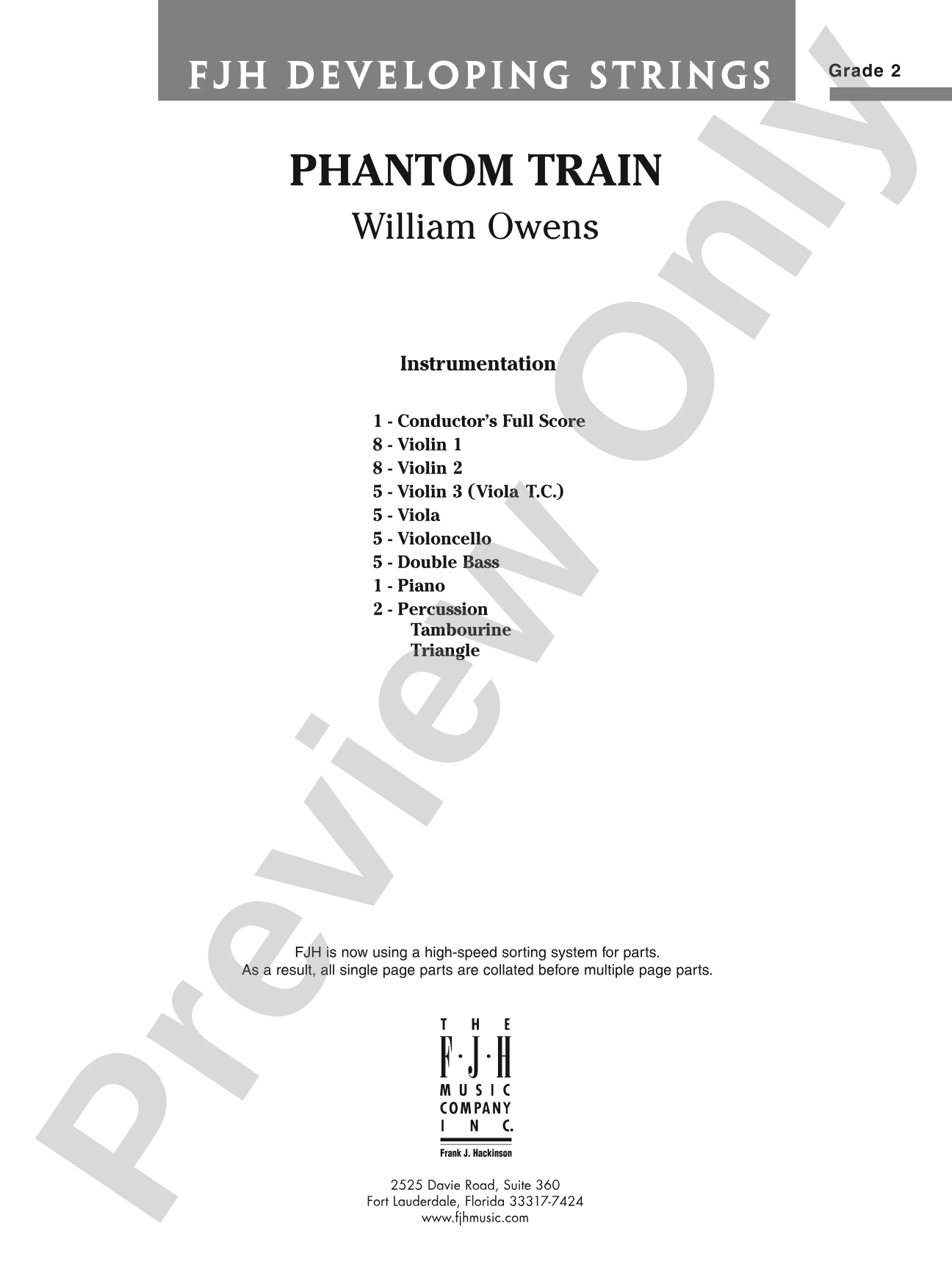
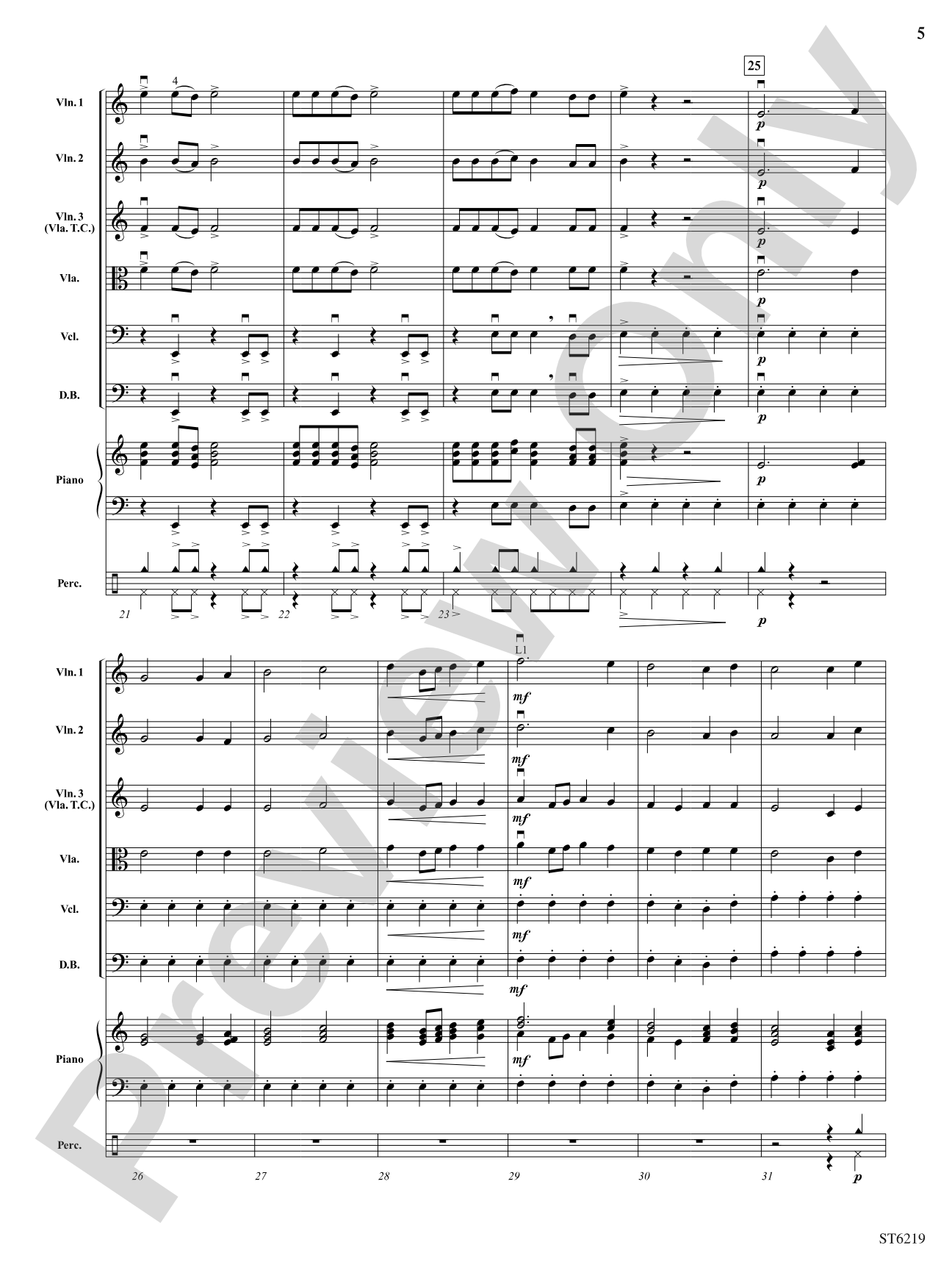
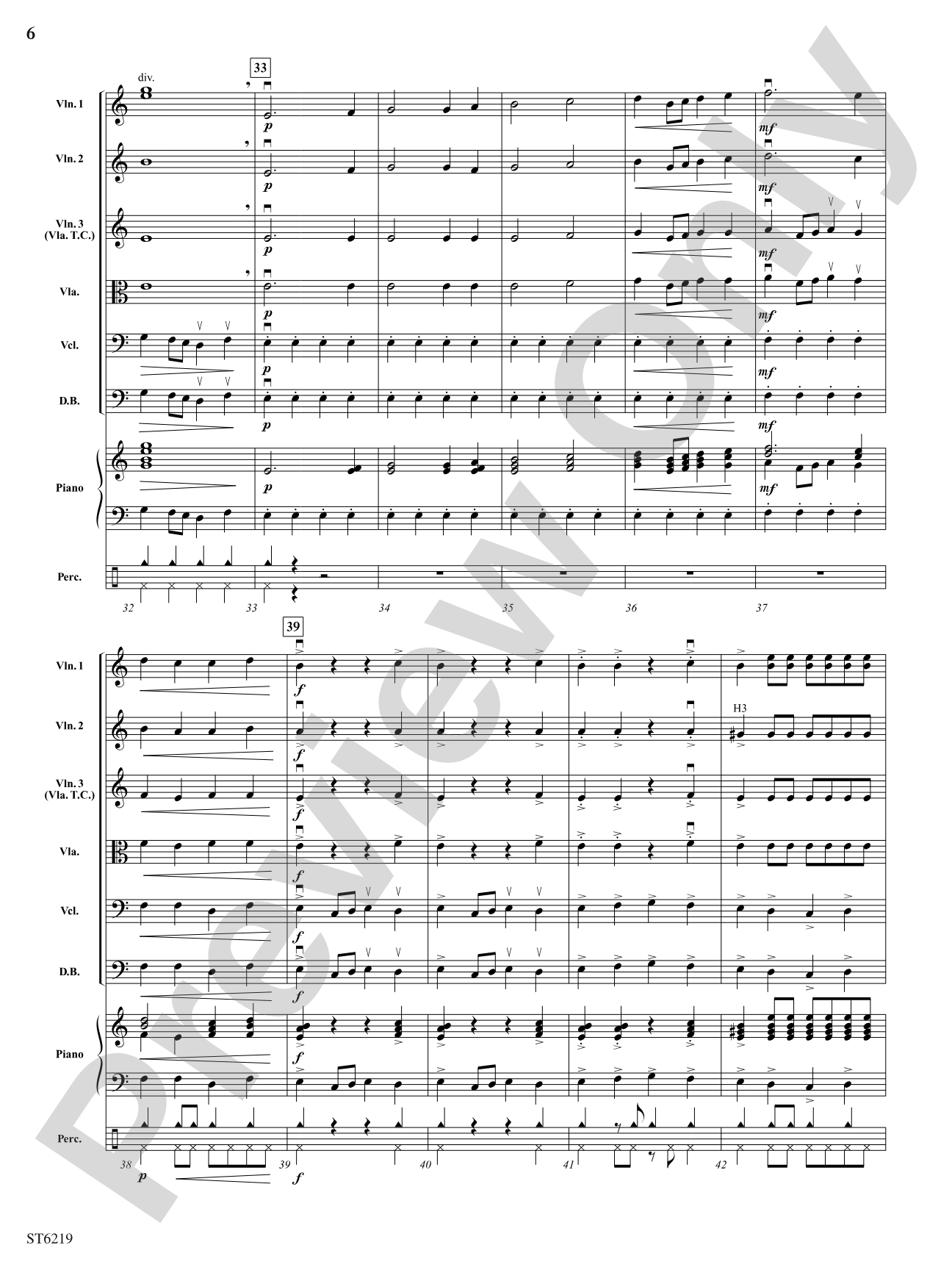
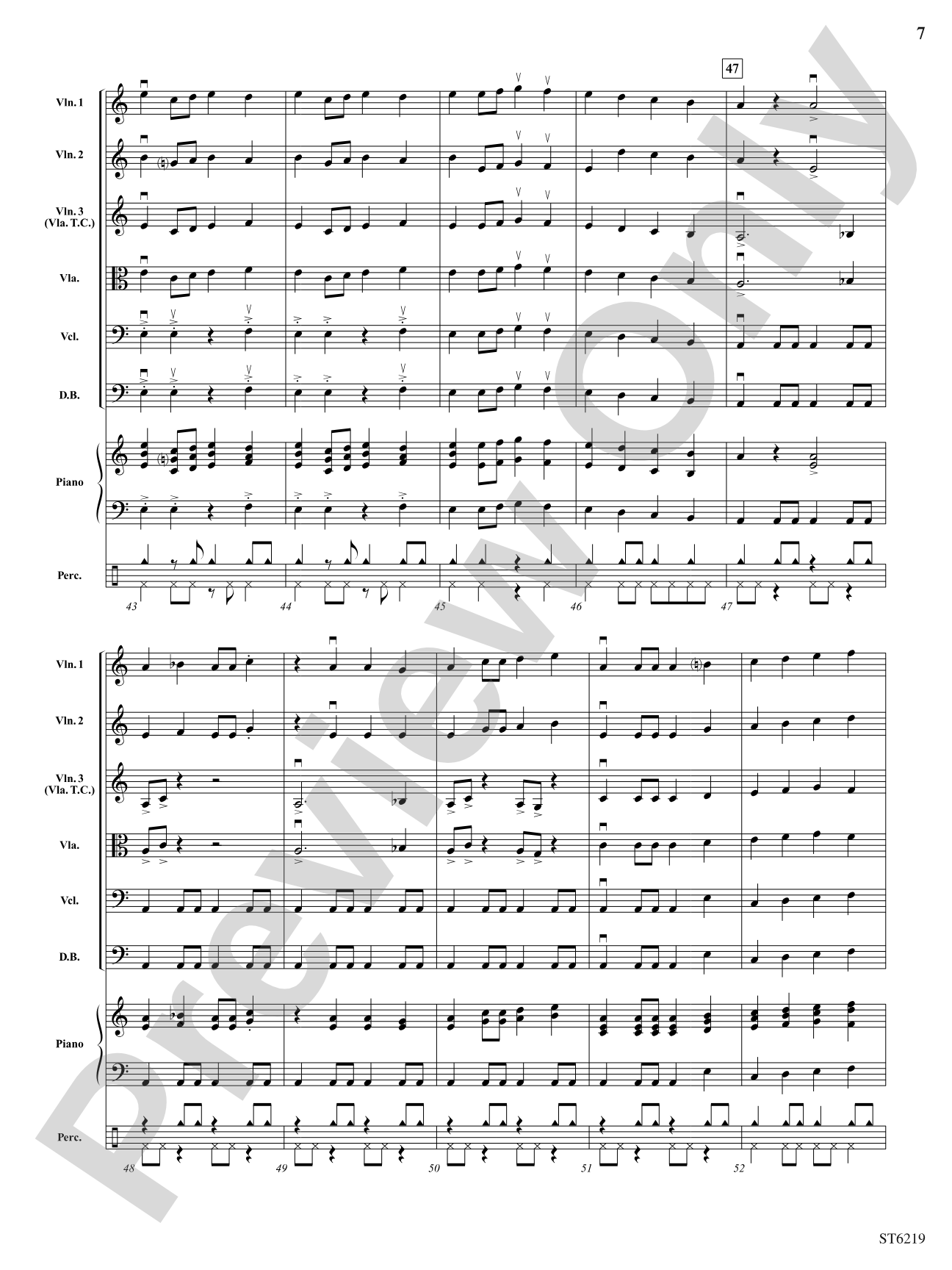
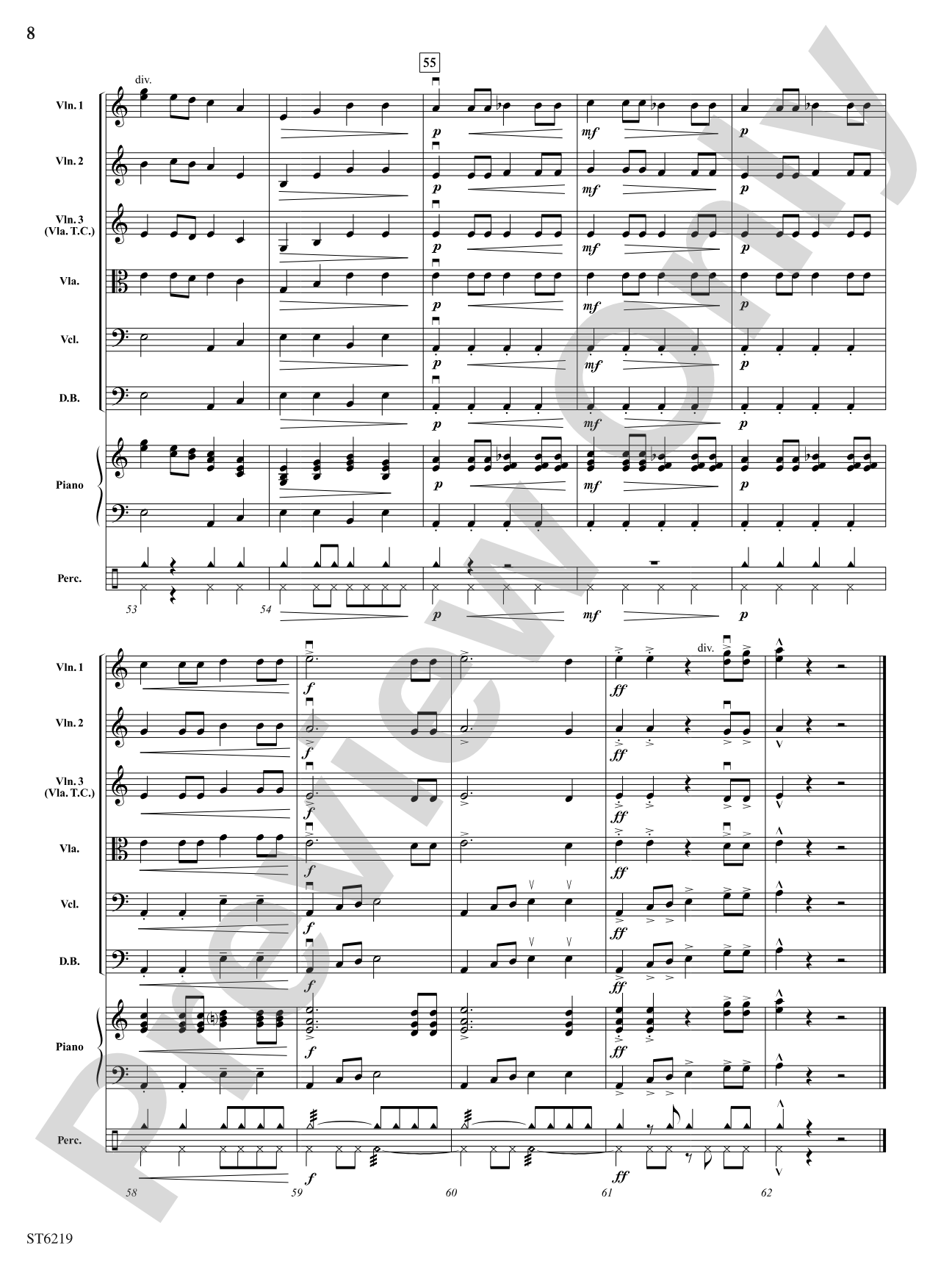

Phantom Train: String Orchestra Conductor Score & Parts
By William Owens
Grade: 2
Item: 98-DST6219
$60.00
Pickup currently not available
Buy Extra Parts (Digital PDF Download)
| Product | Price | Quantity |
|---|---|---|
| Phantom Train: Score | $5.00 | |
| Phantom Train: Violin 1 | $7.00 | |
| Phantom Train: Violin 2 | $7.00 | |
| Phantom Train: Violin 3 (Viola T.C.) | $7.00 | |
| Phantom Train: Viola | $7.00 | |
| Phantom Train: Violoncello | $7.00 | |
| Phantom Train: Double Bass | $7.00 | |
| Phantom Train: Piano | $7.00 | |
| Phantom Train: Percussion | $7.00 |
Parts Added to Cart!
Description
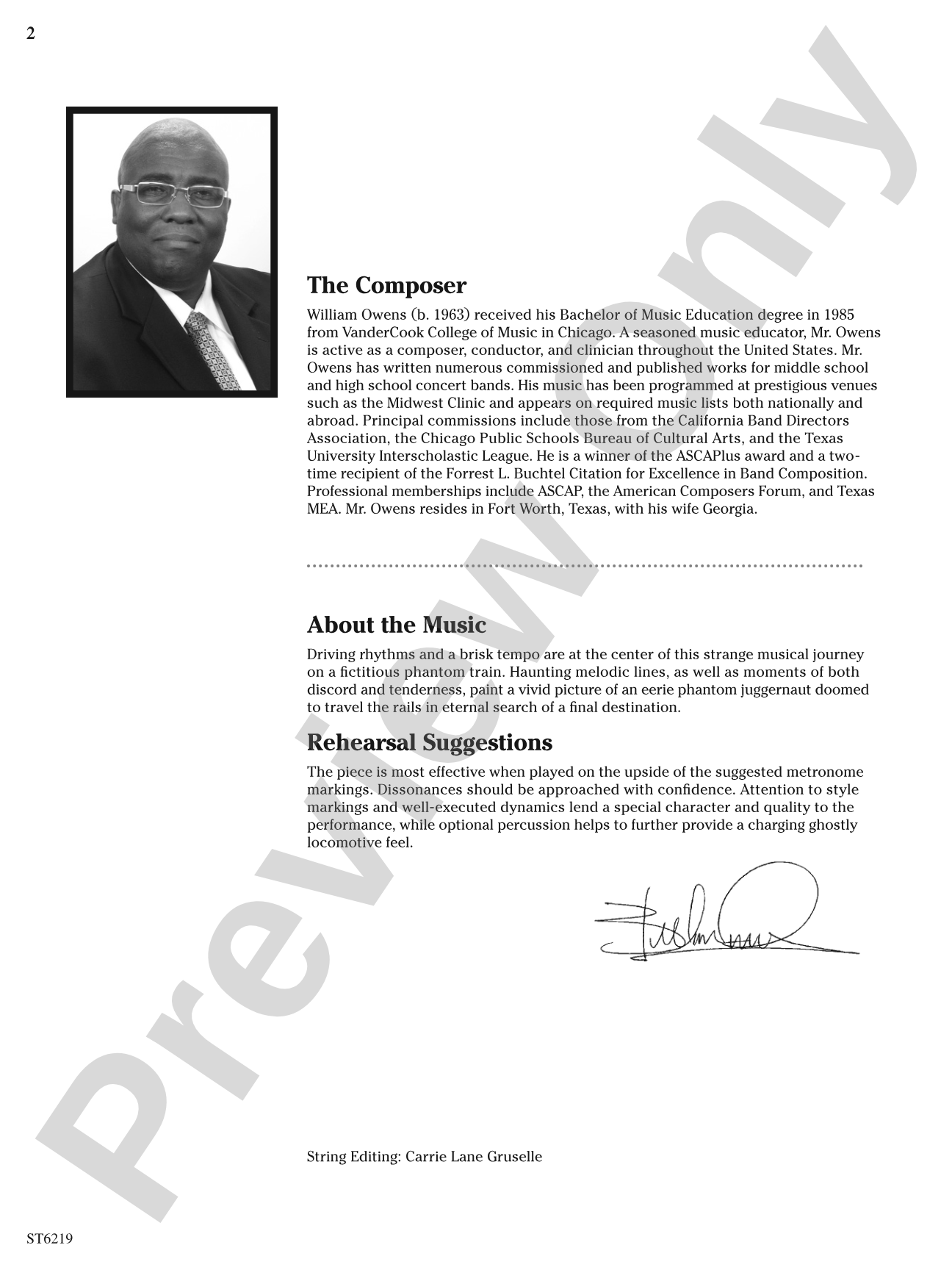
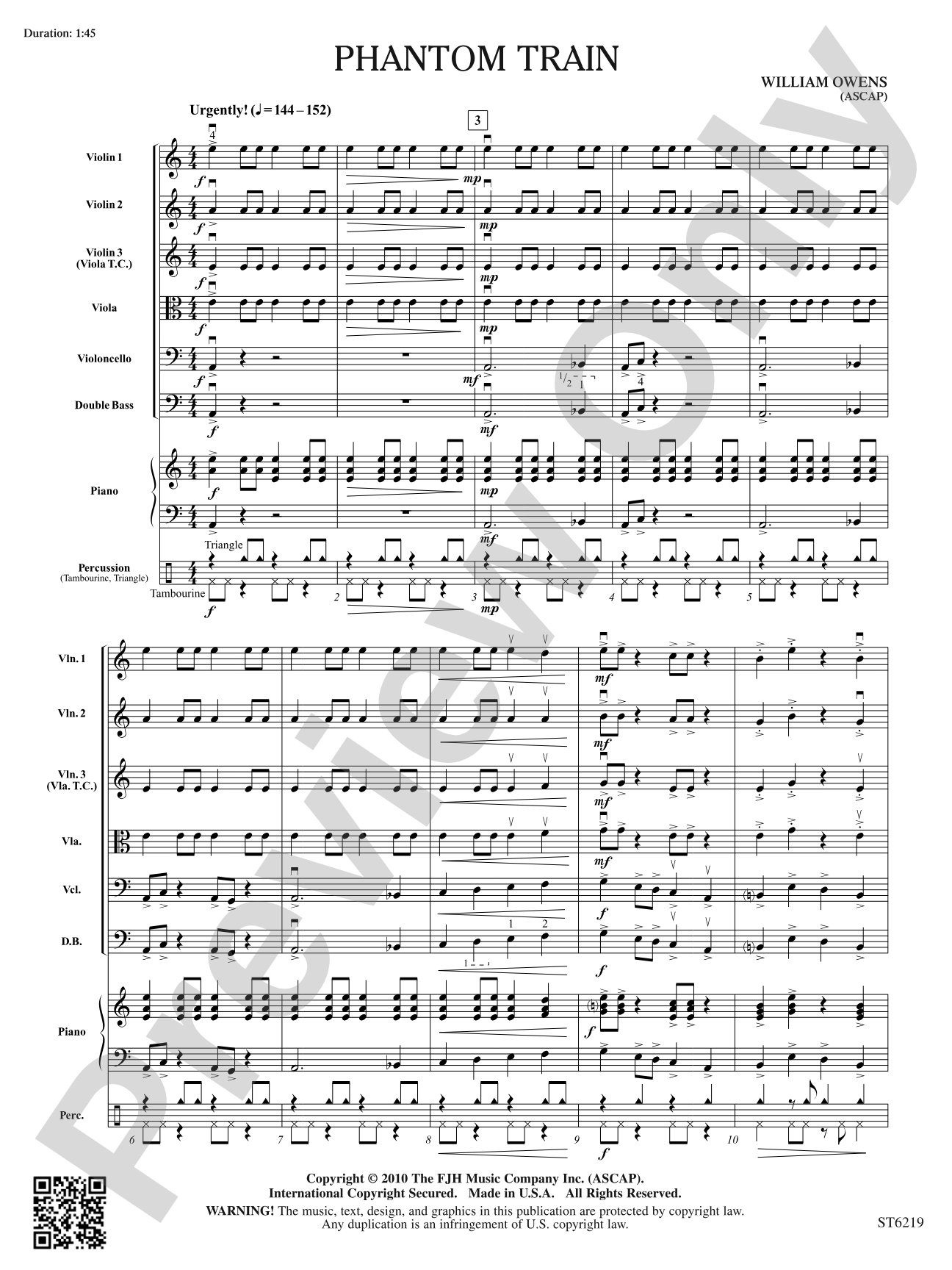
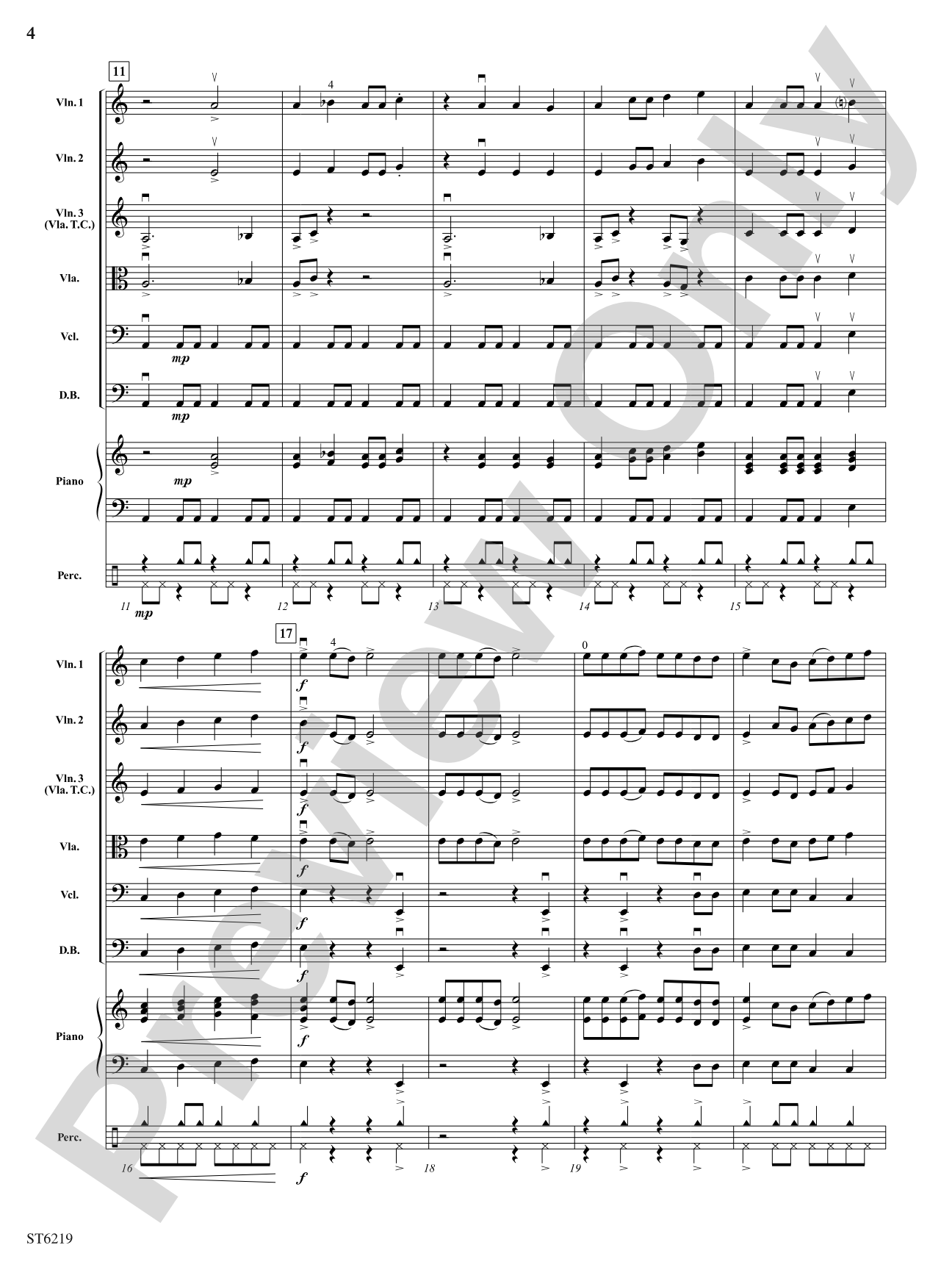
Driving rhythmic patterns and a brisk tempo are at the center of this eerie musical journey on a fictitious "phantom train." Haunting melodic lines along with moments of discord paint a vivid picture of a doomed phantom juggernaut in eternal search of a final destination. Climb aboard and take a ride-if you dare!


Discover MakeMusic Cloud: thousands of interactive titles your students can play along with today.
Sample Audio
1
Audio File
--:--
0:00
0:00
Sample Video
No sample videos found.
Additional Details
Series:
FJH Developing Strings
Publisher:
The FJH Music Company, Inc.
SKU:
98-DST6219
More about this title
About the Composer: William Owens
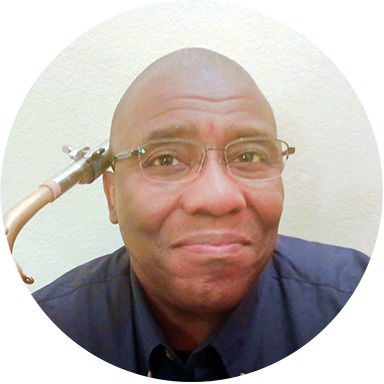
William Owens brings three decades of classroom experience to his compositional work. A Chicago-trained musician and former Texas band director, he has built a catalog of over 300 works for young ensembles since 1993, earning recognition on required repertoire lists across North America and inclusion in educational music texts.
Owens holds memberships in ASCAP, TMEA, and Phi Beta Mu International, and has received commissions from South Plains College, the American Bandmasters Association, and other regional organizations. He was honored as a Distinguished Alumnus by VanderCook College of Music and received the Texas Bandmasters Association's Meritorious Achievement Award before retiring from full-time teaching in 2014.
Why we love this
Owens crafts programmatic writing that captures student imagination without sacrificing musicianship. The driving rhythmic foundation and haunting melodic material work equally well for young orchestras still building ensemble precision, while the vivid narrative arc gives students a concrete emotional anchor for their playing and lets directors frame rehearsals around character and storytelling rather than mechanics alone.
What to expect
A cinematic journey into the supernatural. Relentless rhythmic propulsion carries the listener forward, while haunting melodic lines and strategic moments of dissonance create unease and tension. The piece balances accessibility with genuine atmosphere; it's eerie without being heavy, thrilling without being chaotic.
Who it's for
Grade 2 string orchestras with solid fundamentals in intonation and rhythmic precision. The programmatic content appeals to intermediate student musicians who respond to storytelling and vivid imagery, making it an engaging choice for orchestras ready to move beyond pure technique work.
How to get the most out of it
- Establish the pulse firmly in early rehearsals. The rhythmic patterns that define the piece demand a rock-solid sense of forward motion; let students feel the momentum before refining articulation or balance.
- Shape the melodic phrases with awareness of the "journey" narrative. Discord moments work best when they contrast sharply against the eerie melodic passages, so clarify the tonal center before introducing dissonance.
- Balance the lower strings carefully in the driving patterns. The foundation of the piece depends on violas and cellos locking together; isolate rhythm section rehearsals to ensure they're supporting rather than overpowering the melody.
How to use it
Program this for a Halloween or October concert where thematic coherence strengthens the audience experience. It also works as an effective opener or closer for a concert built around program music or storytelling, and serves as a confidence builder for orchestras developing their ability to shape longer narrative arcs.
Skills your students will build
- Maintaining steady rhythmic propulsion in repeated patterns across multiple voices
- Balancing lyrical melodic lines against rhythmic accompaniment
- Creating contrast through articulation and dynamics to support programmatic intent
- Responding to conductor interpretation of phrasing and character