Peaceful River Cover Image

Peaceful River: SoundTrax Digital Audio Download

$27.99 USD
Sale price  $27.99 USD Regular price 
Skip to product information
Peaceful River Cover Image

Peaceful River: SoundTrax Digital Audio Download

A Partner Song with the Traditional Spiritual "I've Got Peace Like a River"

Arr., with new words and music, by Mary Donnelly and George L. O. Strid

Item: 00-A-00015316

$27.99
Digital Download
Description

Peaceful River: SoundTrax Digital Audio Download isn't in MakeMusic Cloud just yet...but it could be. Let us know you'd like to see it, and you'll help shape what comes next. In the meantime, start a free trial and dive into thousands of interactive titles your students can play along with today.

Sample Pages

No sample pages found.

Sample Audio
0:00
0:00
Sample Video
Additional Details
Series: Alfred Choral Designs
Publisher: Alfred Music
SKU: 00-A-00015316

More about this title

About the Composer: Mary Donnelly
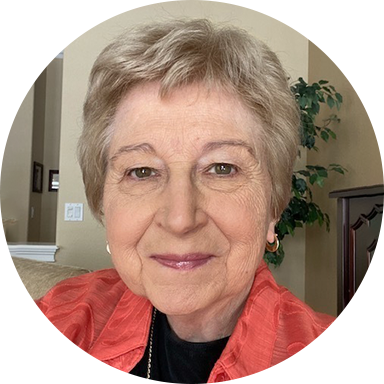
Mary Donnelly

Mary Donnelly grew up in Reno, Nevada, and studied English and French at the University of Nevada before discovering her passion for music education. During her undergraduate years, she founded two children's choruses, which inspired her to pursue formal music training. She earned a Master's Degree in Education from Lesley College in Cambridge, Massachusetts, where she focused on integrating the arts across the curriculum. For thirty years, she taught general music and choir in the Washoe County School District, retiring after a career devoted to making music accessible to young learners.

In 1985, Donnelly began collaborating with George L. O. Strid when their principal asked them to write a musical for Reading Week. That first project, The Million Dollar Mystery, launched a prolific partnership spanning decades. Together they have created over two hundred songs and twenty-five musicals, establishing themselves as trusted voices in school music. Donnelly is a member of ACDA, NEA, and ASCAP, and continues to live in Reno with her husband, Rich.

Why we love this

Donnelly and Strid understand what works with student singers, and Peaceful River shows it. The partner song structure creates natural energy and flexibility for mixed-ability choirs, while the flowing melody and accessible harmonic language keep rehearsals focused on music-making rather than technical struggle. The recorded accompaniment frees you from the piano, letting your singers hear themselves in relation to professional sound.

What to expect

Peaceful River lives up to its title, with the flowing, gentle quality of water moving steadily forward. The partner song structure creates harmonic richness without heaviness, evoking calm reflection and a sense of natural motion that feels organic rather than forced.

Who it's for

This piece suits middle school and high school choirs seeking a legitimate secular work with accessible yet singable writing. It also works well for community youth choirs and all-gender ensemble settings where you want music that is both musically rewarding and genuinely enjoyable to rehearse.

How to get the most out of it

  • Balance the two melodic lines by identifying which voice part carries the primary tune in each phrase; this prevents either line from being swallowed by the harmony.
  • Use the recorded accompaniment strategically during rehearsal to build independence, then remove it in later rehearsals to strengthen ensemble listening.
  • Shape the accompaniment dynamics subtly beneath the singers' dynamic contour; the SoundTrax recording can serve as a reference, but your singers' musicality should always lead.

How to use it

Program this as a contrast piece on a concert that includes livelier material, or use it to open a program and establish a contemplative mood. Its peaceful character also makes it a strong choice for seasonal or all-school assembly performances where you want to reach a broad audience with accessible yet artful music.

Skills your students will build

  • Singing in parallel harmonic lines while maintaining independent melodic shape
  • Balancing two concurrent melodies within one ensemble
  • Blending with recorded accompaniment and responding to dynamic cues beyond the written page
  • Understanding partner song structure and how two melodies can coexist

You May Also Like