
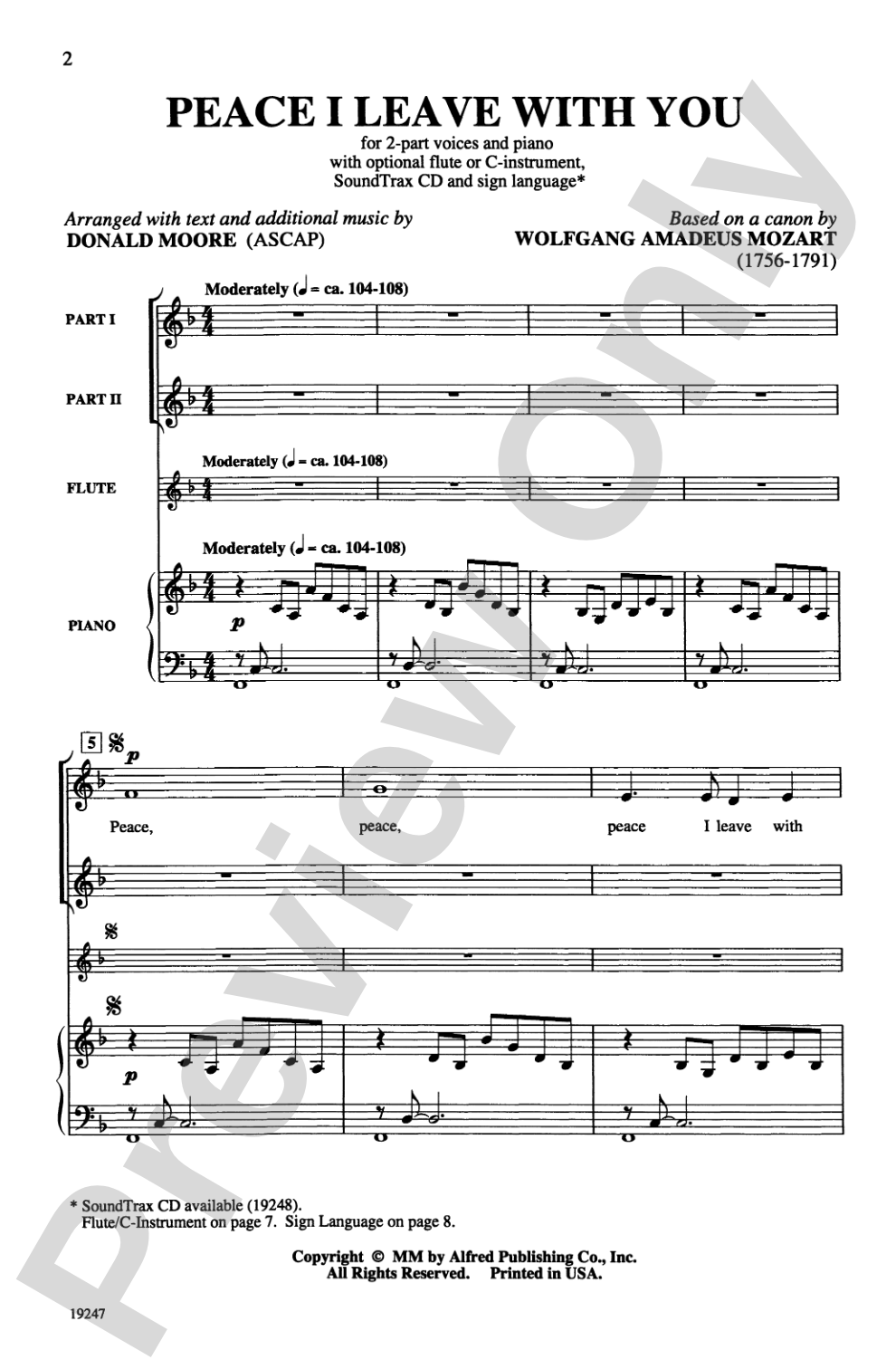

Peace I Leave with You: 2-Part (with Opt. Sign Language) Choral Octavo
Based on a Canon by Mozart
Music by Wolfgang Amadeus Mozart / arr. Donald Moore
Item: 00-PO-0003139
$2.05
Minimum order quantity: 20 copies
Pickup currently not available
Related Items
Peace I Leave with You: SATB (with Opt. Sign Language) Choral Octavo |
$2.25
|
View | |
Peace I Leave with You: SAB (with Opt. Sign Language) Choral Octavo |
$2.25
|
View | |
Peace I Leave with You: SATB (with Opt. Sign Language) Choral Octavo |
$2.25
|
View | |
Peace I Leave with You: SAB (with Opt. Sign Language) Choral Octavo |
$2.25
|
View | |
Peace I Leave with You: 2-Part (with Opt. Sign Language) Choral Octavo |
$2.05
|
View | |
Peace I Leave with You: Choral Octavo SoundTrax CD |
$27.99
|
View |
Description
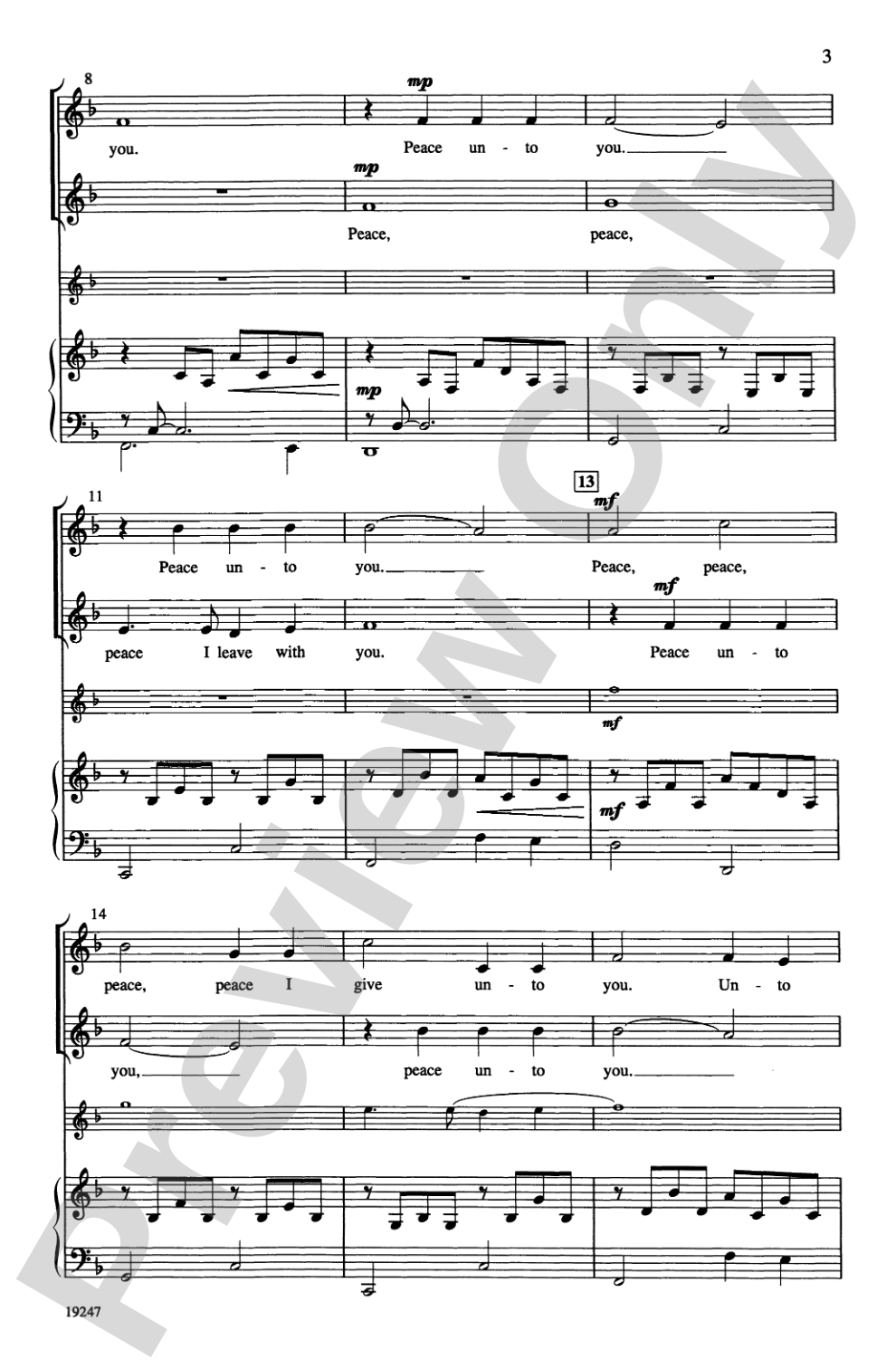
Look no further for the perfect classic canon setting. With a melody by Mozart and an arrangement perfectly crafted for your singers by Don Moore, this 2-part piece is excellent for young and developing groups. And there's an easy, optional flute or C-instrument part. Sign language is included in the publication...an effective addition to any concert. Included on Sally's "In the Spotlight!" Video, 00-27432.


Peace I Leave with You: 2-Part (with Opt. Sign Language) Choral Octavo isn't in MakeMusic Cloud just yet...but it could be. Let us know you'd like to see it, and you'll help shape what comes next. In the meantime, start a free trial and dive into thousands of interactive titles your students can play along with today.
Request This Title
Tell us you want it.
Start Your Free Trial
Explore everything that's ready to play right now.
Sample Audio
1
Audio File
--:--
0:00
0:00
Sample Video
Additional Details
Series:
Alfred Choral Designs
Publisher:
Alfred Music
Page Count:
8
SKU:
00-PO-0003139
Instrumentation:
Opt. Flute or C-Instrument
More about this title
About the Composer: Wolfgang Amadeus Mozart
Wolfgang Amadeus Mozart (1756-1791) was an Austrian composer whose prolific output spanned symphonies, concertos, operas, and sacred music across the Classical era. His melodies are distinguished by their clarity, balance, and singability, qualities that have made his work ideal for educational settings and arrangements for centuries.
Why we love this
Don Moore's arrangement takes a Mozart melody and shapes it specifically for young choral ensembles, removing the performance anxiety that can come with "classical" work while preserving the elegance of the source material. The optional flute or C-instrument part and included sign language interpretation give you flexibility to adapt this piece to your ensemble's needs and abilities. It's the kind of accessible masterwork that singers actually enjoy performing and that audiences recognize immediately.
What to expect
The piece carries a gentle, meditative quality that reflects its text about peace. Mozart's melody unfolds with natural phrasing and clarity, creating an atmosphere that feels both familiar and refined. The 2-part writing sits comfortably in the voices while maintaining musical interest and harmonic color.
Who it's for
This octavo works well for middle school and early high school choirs, particularly those new to part singing or still building confidence with standard repertoire. It's also effective for community, church, and volunteer choirs looking for music that sounds polished without requiring advanced vocal technique.
How to get the most out of it
- Treat the melody line with legit singing tone from the opening phrase. The beauty of Mozart lies in clean vowels and consistent resonance, not volume.
- Emphasize the text naturally rather than mechanically. Let the words about peace shape your phrasing and dynamics instead of imposing a predetermined interpretation.
- If using the optional instrumental part, balance it so the flute or C-instrument enhances rather than competes with the voices. It should feel like a conversation, not an accompaniment.
- Coordinate sign language interpretation with your pianist or accompanist if you're incorporating it into performance. Run several rehearsals with both elements together.
How to use it
Program this during winter concert or holiday season programming as a peaceful contrast to more energetic selections. It pairs well alongside other classical or sacred-leaning pieces and works equally effectively as an opening number or a quieter moment mid-concert. The optional sign language interpretation makes it particularly powerful for graduations or peace-themed community events.
Skills your students will build
- Singing independent melodic lines in 2-part texture
- Maintaining vocal tone and legit production across phrases
- Text expression and phrasing shaped by meaning rather than notation
- Blend and balance when adding optional instrumental parts
- Coordination of voice and movement (if incorporating sign language)