
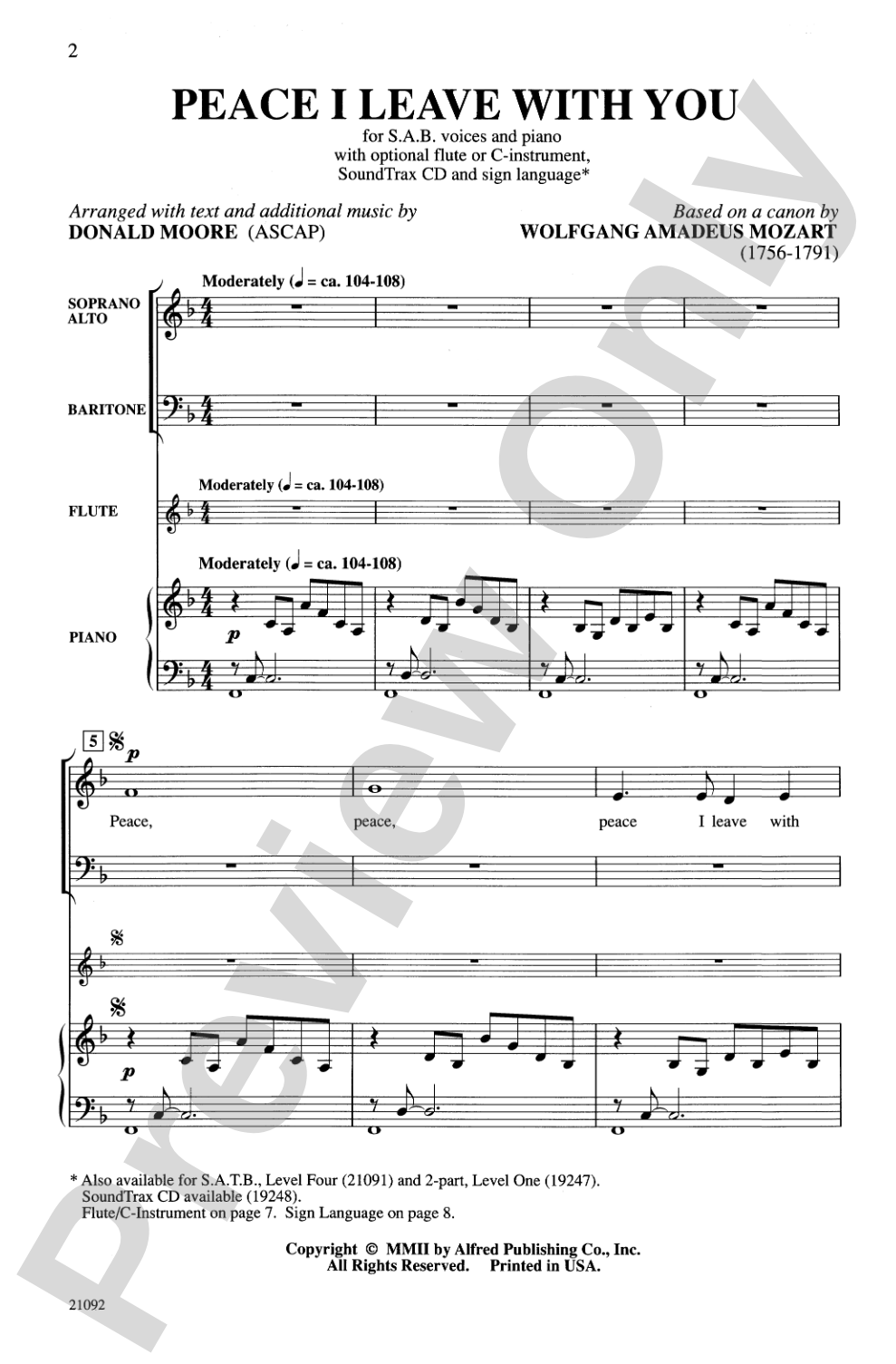

Peace I Leave with You: SAB (with Opt. Sign Language) Choral Octavo
Based on a Canon by Mozart
Music by Wolfgang Amadeus Mozart / arr. Donald Moore
Item: 00-PO-0002195
$2.25
Minimum order quantity: 20 copies
Pickup currently not available
Related Items
Peace I Leave with You: SATB (with Opt. Sign Language) Choral Octavo |
$2.25
|
View | |
Peace I Leave with You: 2-Part (with Opt. Sign Language) Choral Octavo |
$2.05
|
View | |
Peace I Leave with You: SATB (with Opt. Sign Language) Choral Octavo |
$2.25
|
View | |
Peace I Leave with You: SAB (with Opt. Sign Language) Choral Octavo |
$2.25
|
View | |
Peace I Leave with You: 2-Part (with Opt. Sign Language) Choral Octavo |
$2.05
|
View | |
Peace I Leave with You: Choral Octavo SoundTrax CD |
$27.99
|
View |
Description
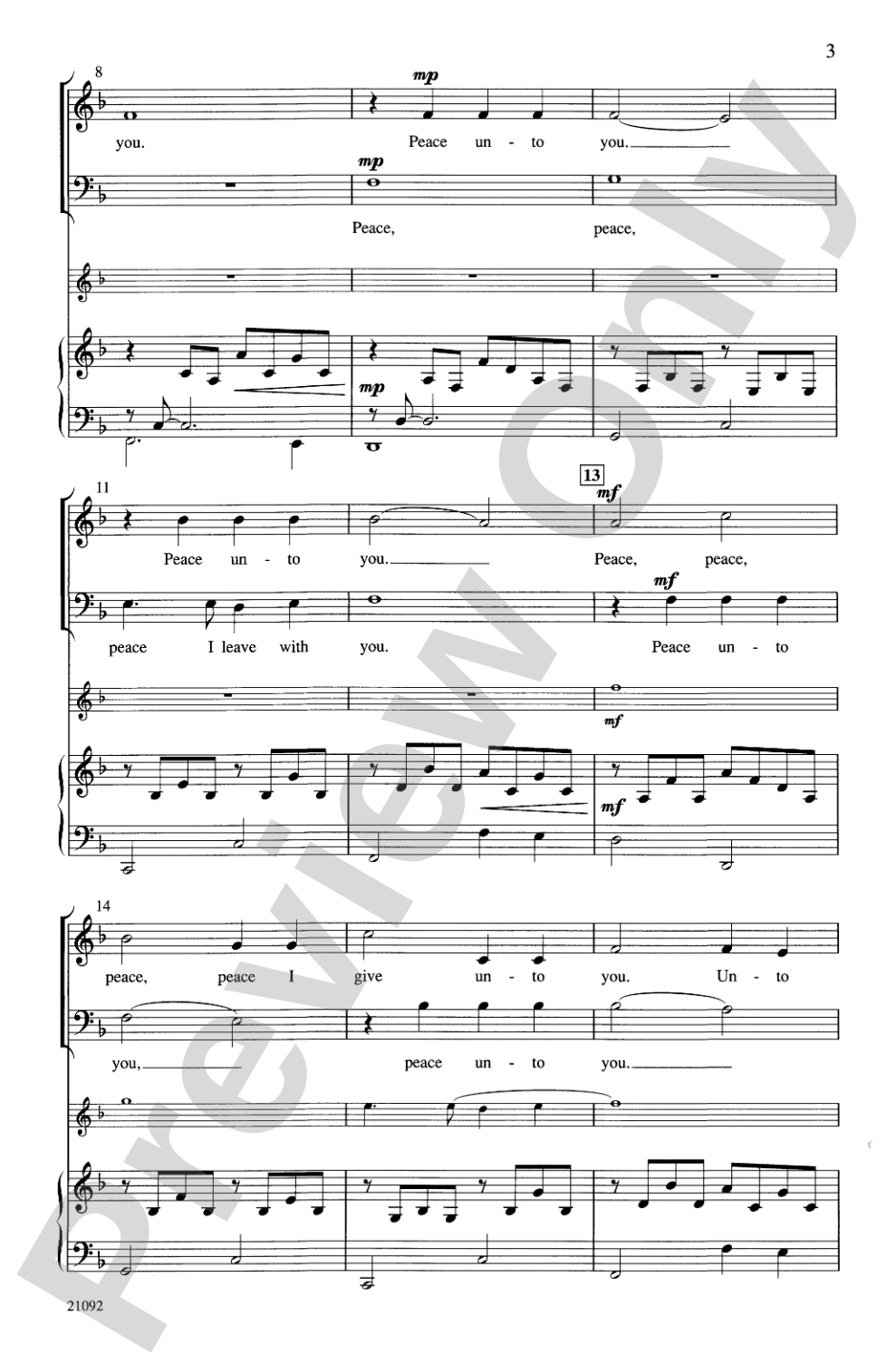
Look no further for the perfect classic canon setting. With a melody by Mozart and an arrangement perfectly crafted by Don Moore, this meaningful canon with optional flute/C-instrument is excellent for young and developing groups. Includes sign language...an effective addition to any concert. Staging Suggestions are featured on Sally's "In the Spotlight!" video, Alfred 00-19803.


Peace I Leave with You: SAB (with Opt. Sign Language) Choral Octavo isn't in MakeMusic Cloud just yet...but it could be. Let us know you'd like to see it, and you'll help shape what comes next. In the meantime, start a free trial and dive into thousands of interactive titles your students can play along with today.
Request This Title
Tell us you want it.
Start Your Free Trial
Explore everything that's ready to play right now.
Sample Audio
1
Audio File
--:--
0:00
0:00
Sample Video
Additional Details
Series:
Alfred Archive Edition: Alfred Choral Designs
Publisher:
Alfred Music
Page Count:
8
SKU:
00-PO-0002195
Instrumentation:
Opt. Flute or C-Instrument
More about this title
About the Composer: Wolfgang Amadeus Mozart
Wolfgang Amadeus Mozart (1756-1791) composed across every major genre of his time, from symphonies and concertos to operas and sacred works. His melodic gifts were extraordinary; even his simplest themes contain the harmonic sophistication and architectural elegance that made him one of history's most influential composers. For choral directors, Mozart's music offers an unparalleled combination of accessibility and musical substance, allowing singers of developing ability to experience genuine masterworks.
Why we love this
Don Moore's arrangement preserves Mozart's graceful melody while adapting it for young mixed voices in a canon structure that builds naturally from unison to layered parts. The optional flute or C-instrument part adds color without complexity, and the included sign language option transforms a concert moment into a truly inclusive performance. This is the kind of piece that reminds singers why they joined choir in the first place.
What to expect
The piece radiates quiet dignity and gentle warmth. Mozart's melody unfolds with the kind of inevitability that feels effortless, while the canon structure creates an understated richness as voices enter and interweave. There's a reflective quality appropriate to its text, especially fitting for winter concerts and occasions celebrating peace and community.
Who it's for
This arrangement works beautifully for middle school and early high school choirs, particularly groups still building confidence with part singing and mixed voicing. It's also ideal for community choruses, church choirs, and adult singers seeking meaningful repertoire that doesn't require advanced reading skills. The SAB voicing and optional instrumental part make it accessible without sacrificing musical substance.
How to get the most out of it
- Establish the melodic line with confidence in the first voice; the canon depends entirely on the clarity of your opening statement. A slight broadness in tempo during the first phrase helps singers hear the shape before entries begin.
- Layer the parts deliberately during rehearsal. Start with two voices in canon, then add the third, so singers understand exactly where their entrance sits relative to the melody. This prevents the piece from becoming muddy.
- If using sign language, integrate it early and rehearse the timing as carefully as you would musical entrances. Coordinate with your sign language interpreter or resource well before performance to ensure staging suggestions align with your choral placement.
- Balance the optional instrument part so it supports rather than dominates the voices. If you're using a flute, encourage a warm tone that blends with the choir rather than standing apart from it.
How to use it
Program this during a winter concert dedicated to peace or brotherhood themes, where its contemplative quality serves as an emotional anchor. The optional sign language element makes it a powerful choice for a concert celebrating inclusion and accessibility. It also fits naturally in graduation programs or holiday performances where you want meaningful classical music that connects with younger audiences.
Skills your students will build
- Reading and executing canon entrances
- Maintaining a melodic line while other parts sing simultaneously
- Blending SAB voicing with clear part independence
- Following a conductor's cue while listening internally to other voice parts
- Coordinate singing with optional sign language
- Interpreting a classical melody with appropriate phrasing and breath