
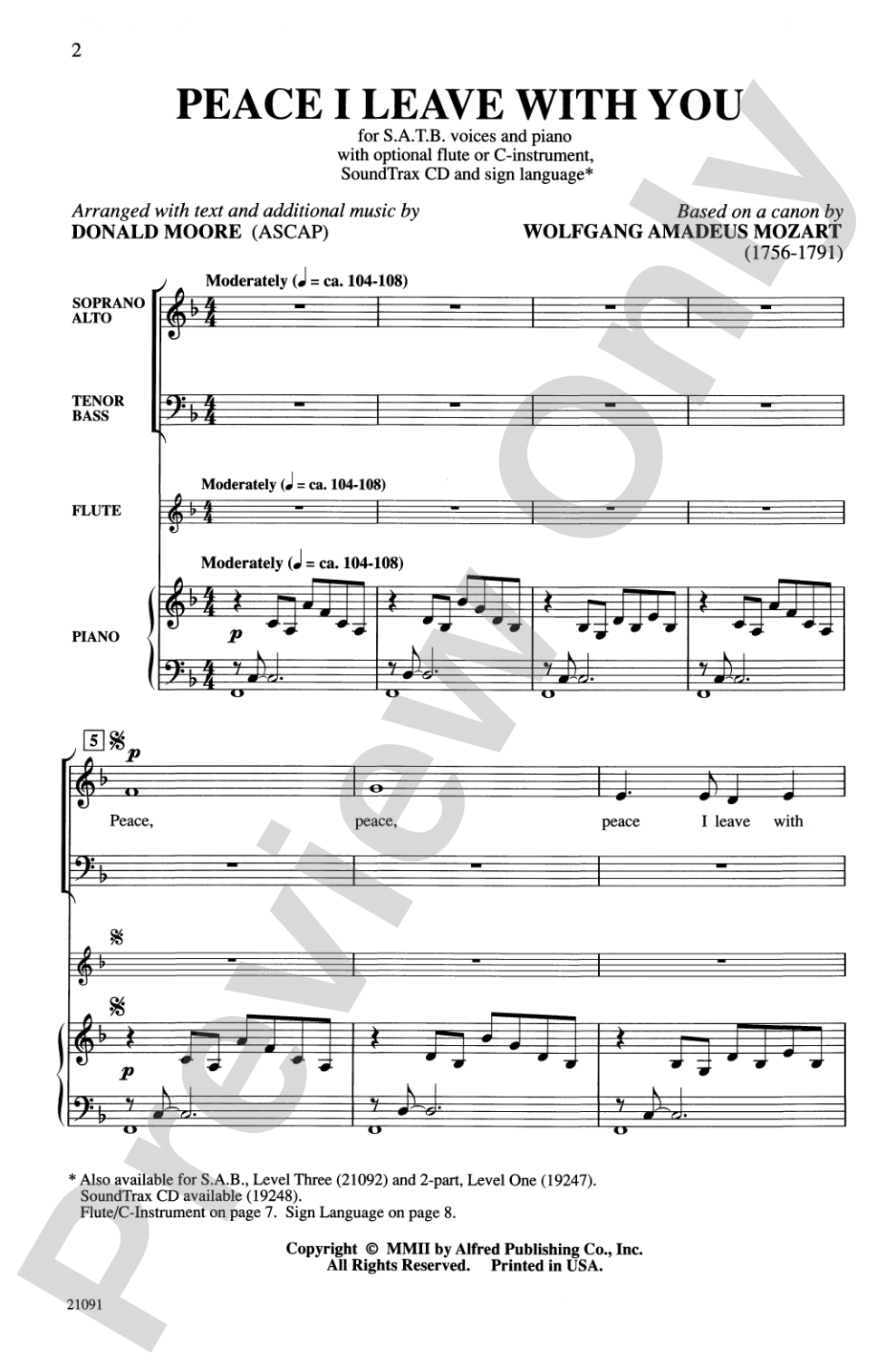
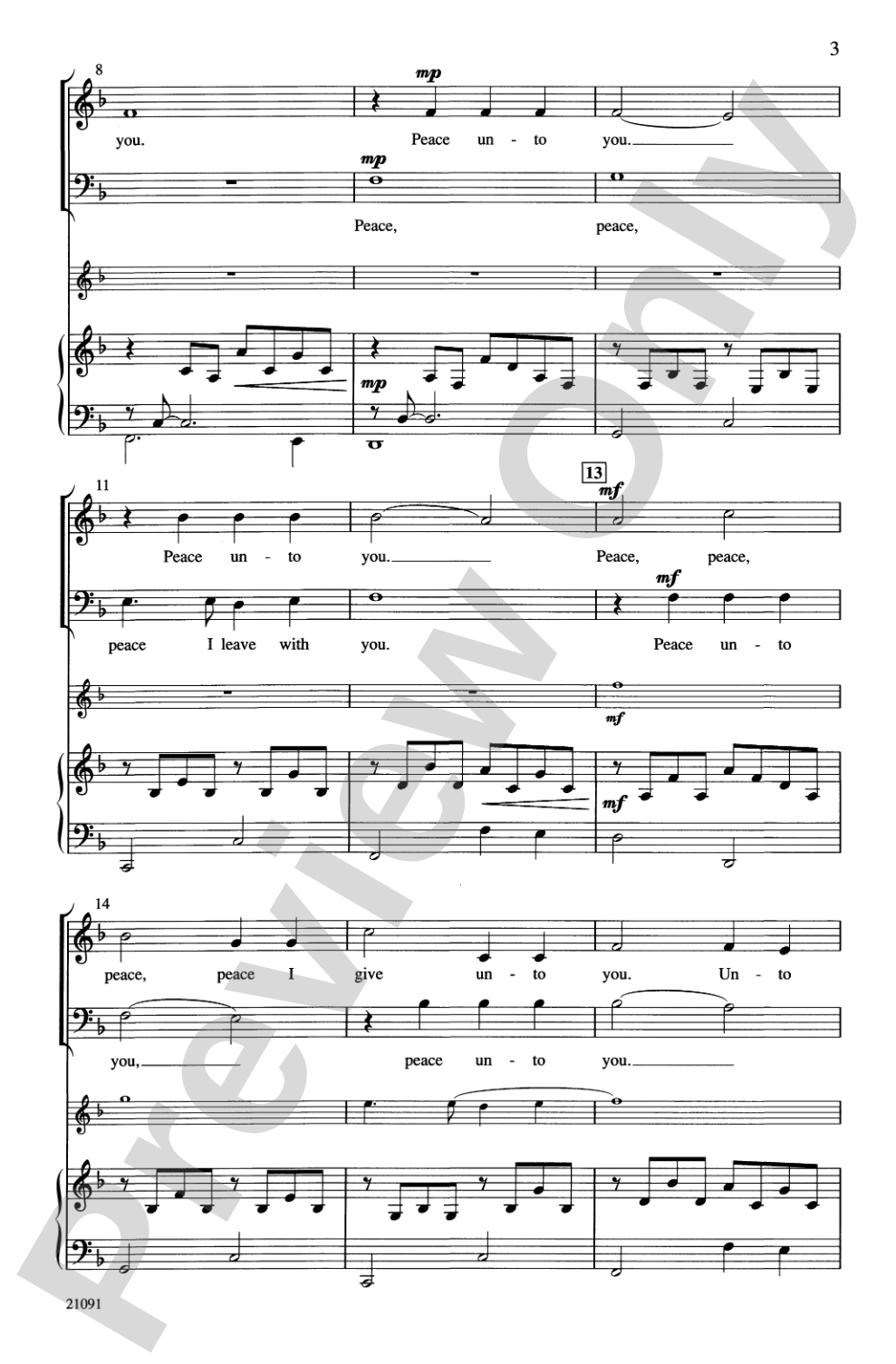

Peace I Leave with You: SATB (with Opt. Sign Language) Choral Octavo
Based on a Canon by Mozart
Music by Wolfgang Amadeus Mozart / arr. Donald Moore
Item: 00-PO-0002194
$2.25
Minimum order quantity: 20 copies
Pickup currently not available
Related Items
Peace I Leave with You: SAB (with Opt. Sign Language) Choral Octavo |
$2.25
|
View | |
Peace I Leave with You: 2-Part (with Opt. Sign Language) Choral Octavo |
$2.05
|
View | |
Peace I Leave with You: SATB (with Opt. Sign Language) Choral Octavo |
$2.25
|
View | |
Peace I Leave with You: SAB (with Opt. Sign Language) Choral Octavo |
$2.25
|
View | |
Peace I Leave with You: 2-Part (with Opt. Sign Language) Choral Octavo |
$2.05
|
View | |
Peace I Leave with You: Choral Octavo SoundTrax CD |
$27.99
|
View |
Description
Look no further for the perfect classic canon setting. With a melody by Mozart and an arrangement perfectly crafted by Don Moore, this meaningful canon with optional flute/C-instrument is excellent for young and developing groups. Includes sign language...an effective addition to any concert. Staging Suggestions are featured on Sally's "In the Spotlight!" video, Alfred 00-19803.


Peace I Leave with You: SATB (with Opt. Sign Language) Choral Octavo isn't in MakeMusic Cloud just yet...but it could be. Let us know you'd like to see it, and you'll help shape what comes next. In the meantime, start a free trial and dive into thousands of interactive titles your students can play along with today.
Request This Title
Tell us you want it.
Start Your Free Trial
Explore everything that's ready to play right now.
Sample Audio
1
Audio File
--:--
0:00
0:00
Sample Video
Additional Details
Series:
Alfred Archive Edition: Alfred Choral Designs
Publisher:
Alfred Music
Page Count:
8
SKU:
00-PO-0002194
Instrumentation:
Opt. Flute or C-Instrument
More about this title
About the Composer: Wolfgang Amadeus Mozart
Wolfgang Amadeus Mozart (1756-1791) composed across every major genre of his era, from opera and symphony to chamber music and sacred works. His melodic gift remains unmatched in Western music; even his simplest themes carry elegance and memorable shape. For choral directors, Mozart's vocal writing balances technical accessibility with genuine musical substance, making his works ideal for building singers' musicianship while maintaining audience engagement.
Why we love this
Don Moore's arrangement transforms a Mozart melody into a straightforward canon that works beautifully for developing choirs without sacrificing musical integrity. The optional flute or C-instrument part adds textural interest without complicating preparation, and the sign language inclusion creates a multi-sensory performance opportunity that resonates particularly well at graduations and peace-focused concerts. Musically, it sits at that sweet spot where singers feel they're performing something genuinely classical, not simplified.
What to expect
Transparent and luminous. The canon's overlapping voices create gentle musical conversation rather than dense harmony, and Mozart's melody floats naturally through each voice part. There's warmth in the simplicity and genuine dignity in the restraint.
Who it's for
Young and developing SATB choirs looking for a piece that feels substantial without overwhelming rehearsal time or technical demands. The canon structure rewards careful listening and ensemble awareness, making it excellent for high school choirs, community groups, or collegiate ensembles working with less experienced singers.
How to get the most out of it
- Establish the canon entries clearly in rehearsal by having each voice section sing the melody alone before layering voices. This prevents muddled entries and helps singers hear their role within the larger texture.
- If using the optional flute or C-instrument part, have that player enter after the voices establish the canon's rhythmic foundation. This balance keeps voices as the primary focus while the instrumental line adds gentle support.
- Incorporate the sign language staging during full rehearsals, not as an afterthought. Coordinate hand movements with musical phrases so gestures feel organic rather than imposed.
- Use the recorded accompaniment in early rehearsals to steady your singers' confidence with the canon structure, then gradually reduce reliance on it as ensemble security improves.
How to use it
This works exceptionally well as a closing piece for graduation concerts or holiday programs centered on themes of peace and reflection. Its accessibility allows it to pair comfortably with more complex repertoire on the same concert, and the optional sign language element makes it a natural choice for programs celebrating inclusive performance practices.
Skills your students will build
- Canon singing and voice independence
- Melodic phrasing in a contrapuntal texture
- Ensemble balance when multiple voice parts carry the same material
- Integration of optional instrumental parts with vocal lines
- Coordination of choreographed movement (sign language) with singing