
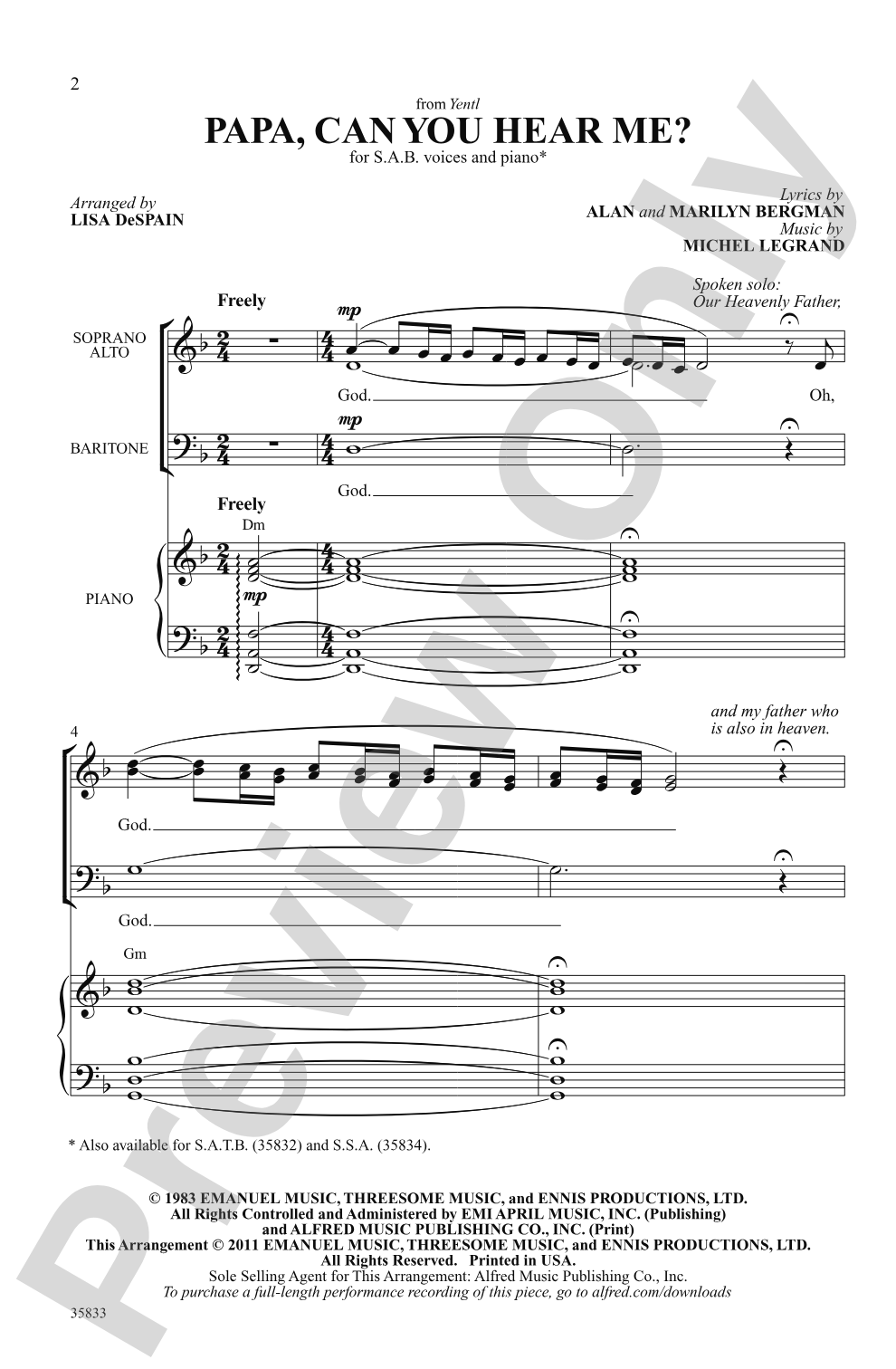

Papa, Can You Hear Me? (from Yentl): SAB Choral Octavo
From Yentl
Lyrics by Alan and Marilyn Bergman, music by Michel LeGrand / arr. Lisa DeSpain
Item: 00-PO-0001120

$1.90
Minimum order quantity: 20 copies
Pickup currently not available
Related Items
Papa, Can You Hear Me? (from Yentl): SATB Choral Octavo |
$2.25
|
View | |
Papa, Can You Hear Me? (from Yentl): SSA Choral Octavo |
$1.90
|
View | |
Papa, Can You Hear Me?: SATB Choral Octavo |
$2.25
|
View | |
Papa, Can You Hear Me?: SAB Choral Octavo |
$1.90
|
View | |
Papa, Can You Hear Me?: SSA Choral Octavo |
$1.90
|
View |
Description
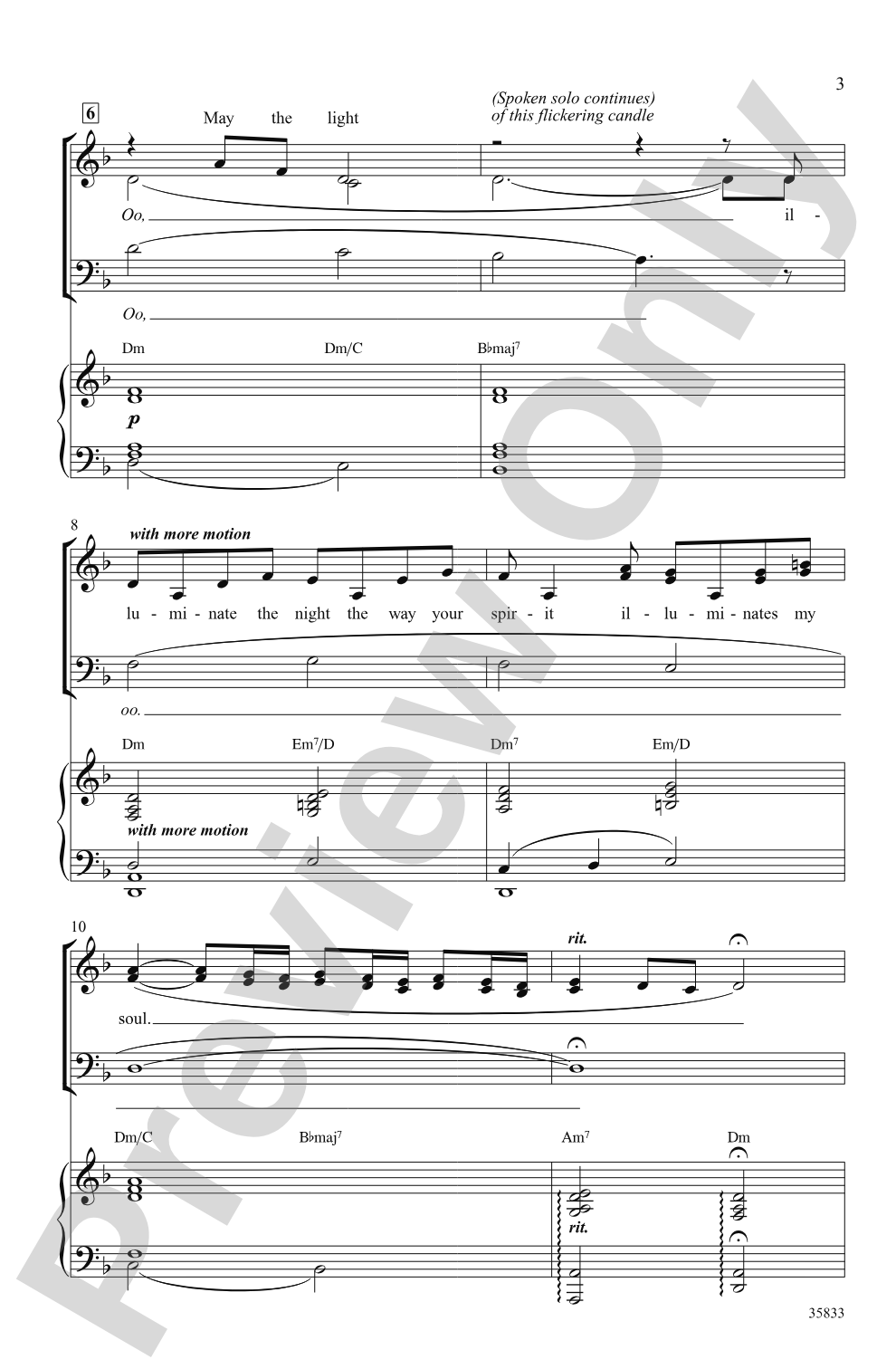
From the Barbra Streisand film Yentl, this Academy Award nominated ballad was most recently performed by the character Rachel on Glee. Opportunities for musical expression abound for both choir and soloists in this lyrical, well-crafted arrangement by Lisa DeSpain.


Don't just read it, hear it, play along with it, and watch your students grow with it. In MakeMusic Cloud, Papa, Can You Hear Me? (from Yentl): SAB Choral Octavo comes alive with professional accompaniment, adjustable tempo, and built-in practice tools that turn solo practice into real progress.
Open in the Player
Jump straight in and assign it today.
Start Your Free Trial
Open this title and explore the full library in minutes.
Sample Audio
1
Audio File
--:--
0:00
0:00
Sample Video
No sample videos found.
Additional Details
Series:
Alfred Pop Choral Series
Publisher:
Alfred Music
Page Count:
12
SKU:
00-PO-0001120
More about this title
About the Composer: Michel LeGrand
Michel LeGrand (1932-2019) composed music for film, television, and stage with a gift for melody that transcended genre. His scores earned three Academy Awards and numerous nominations, including for Yentl, and his work shaped the sound of cinema across five decades. LeGrand's compositions remain central to music education because they model how sophisticated harmonic language and emotional directness can coexist, offering arrangers rich material to adapt for student ensembles.
Why we love this
This arrangement captures the intimate vulnerability of the original without oversimplifying the harmonic sophistication that made LeGrand's score memorable. Lisa DeSpain's writing gives both your choir and featured soloists genuine moments of musicality, making it equally rewarding for the ensemble and those stepping into the spotlight.
What to expect
A quiet moment of longing and tenderness. The arrangement honors the song's cinematic origins while giving the choir a supportive, almost protective role around the soloist's vulnerability. There is no artifice here; just honest lyricism and the space for genuine connection.
Who it's for
Choirs at the intermediate to advanced level who have soloists capable of carrying an emotionally mature song without oversinging. Works well for groups seeking contemporary repertoire with film recognition and enough vocal range to engage their strongest singers.
How to get the most out of it
- Shape the opening phrases as if the soloist is singing directly outward; resist the urge to rush emotional climaxes, letting silence and space work for you.
- Balance the SAB voicing by listening for the alto line, which often carries important harmonic color; undersupport the sopranos so the arrangement's warmth emerges naturally.
- Treat the accompaniment as a character in the ensemble; lock the pianist into the choir's tempo choices rather than letting the piano pull the group forward.
- Explore dynamic contrast within phrases rather than between them; this film ballad needs breath and movement even at soft volumes.
How to use it
Program this alongside other contemporary film selections to create a themed concert, or pair it with spirituals and folk arrangements for a program exploring the human voice as narrator of personal story. Its modest page count and intermediate difficulty make it ideal for concert finales where impact matters more than spectacle.
Skills your students will build
- Balancing solo voices with choral accompaniment
- Sustaining lyrical legit singing at soft dynamics
- Shaping longer phrases with minimal harmonic anchor
- Responding to and supporting a featured singer's interpretation