
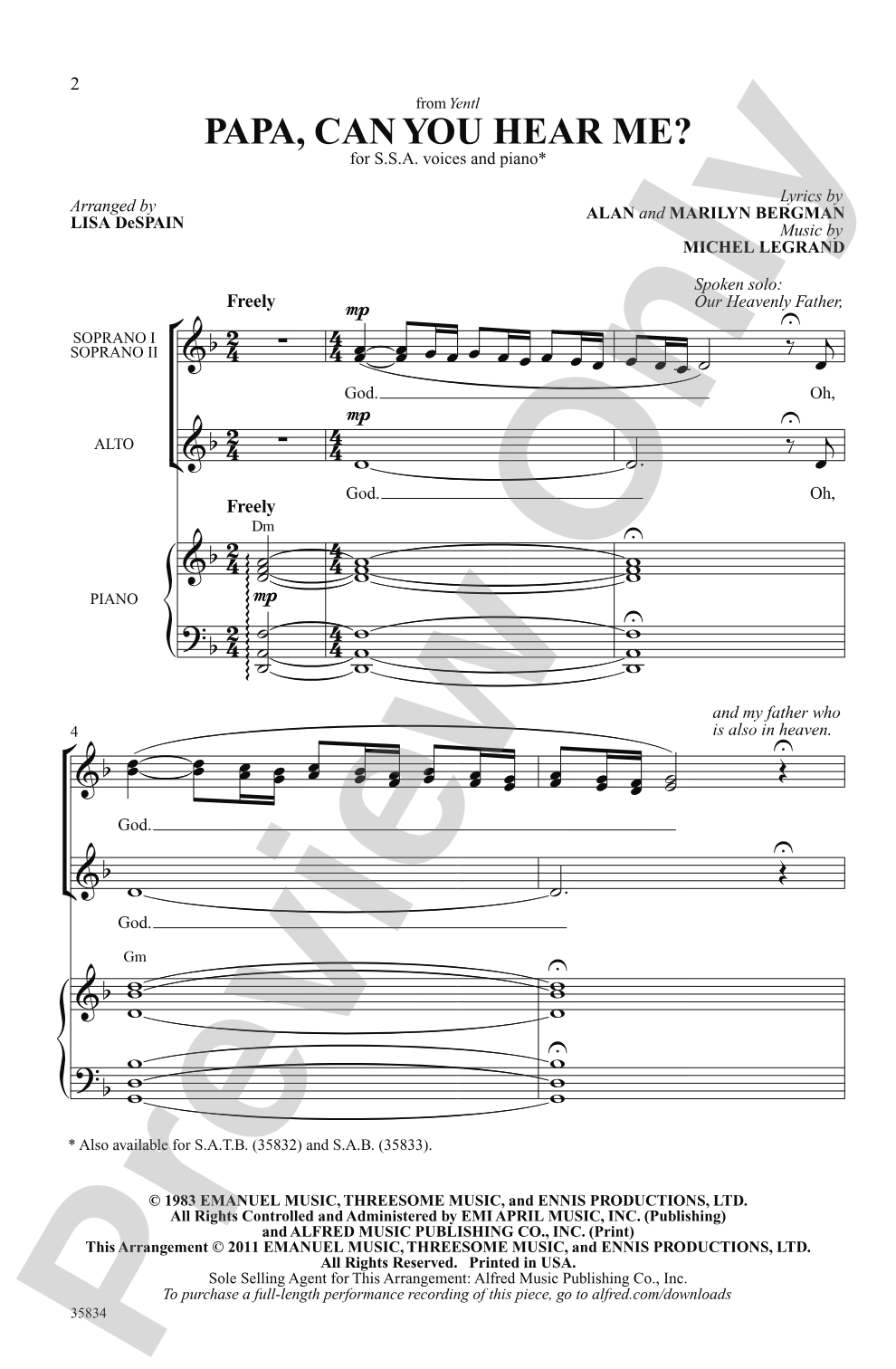
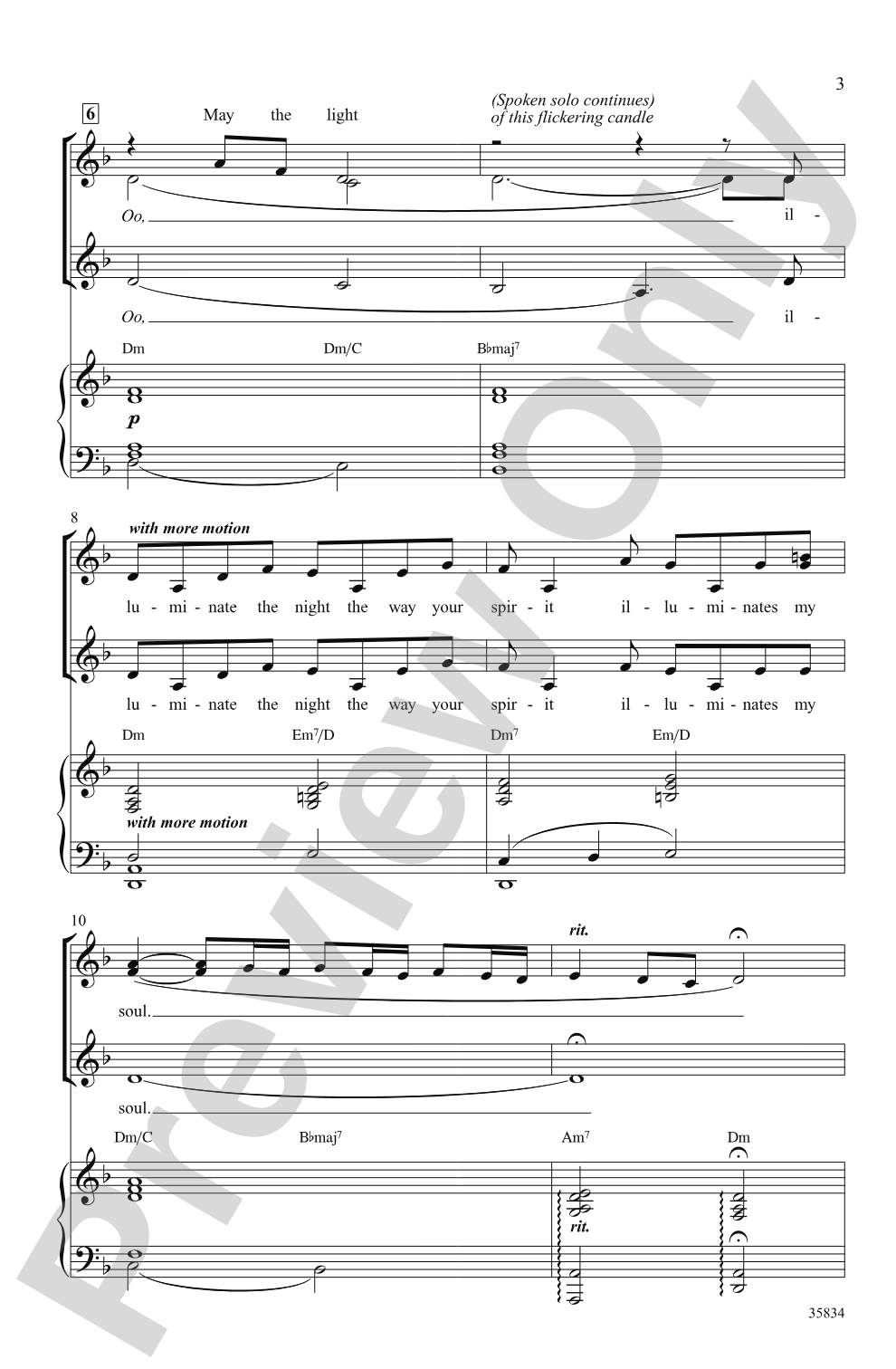

Papa, Can You Hear Me? (from Yentl): SSA Choral Octavo
From Yentl
Lyrics by Alan and Marilyn Bergman, music by Michel LeGrand / arr. Lisa DeSpain
Item: 00-PO-0001121

$1.90
Minimum order quantity: 20 copies
Pickup currently not available
Related Items
Papa, Can You Hear Me? (from Yentl): SATB Choral Octavo |
$2.25
|
View | |
Papa, Can You Hear Me? (from Yentl): SAB Choral Octavo |
$1.90
|
View | |
Papa, Can You Hear Me?: SATB Choral Octavo |
$2.25
|
View | |
Papa, Can You Hear Me?: SAB Choral Octavo |
$1.90
|
View | |
Papa, Can You Hear Me?: SSA Choral Octavo |
$1.90
|
View |
Description
From the Barbra Streisand film Yentl, this Academy Award nominated ballad was most recently performed by the character Rachel on Glee. Opportunities for musical expression abound for both choir and soloists in this lyrical, well-crafted arrangement by Lisa DeSpain.


Don't just read it, hear it, play along with it, and watch your students grow with it. In MakeMusic Cloud, Papa, Can You Hear Me? (from Yentl): SSA Choral Octavo comes alive with professional accompaniment, adjustable tempo, and built-in practice tools that turn solo practice into real progress.
Open in the Player
Jump straight in and assign it today.
Start Your Free Trial
Open this title and explore the full library in minutes.
Sample Audio
1
Audio File
--:--
0:00
0:00
Sample Video
No sample videos found.
Additional Details
Series:
Alfred Pop Choral Series
Publisher:
Alfred Music
Page Count:
12
SKU:
00-PO-0001121
More about this title
About the Composer: Michel LeGrand
Michel LeGrand (1932-2019) composed scores for over 200 films, winning five Academy Awards across his career. His gift for melody and harmonic sophistication made him one of cinema's most celebrated composers, with a particular talent for writing intimate character moments that resonate emotionally without overshadowing the narrative.
LeGrand's work spans multiple genres and styles, from jazz-inflected scores to classical orchestrations. His compositions for film often explore the interior lives of characters through music, making his material invaluable for choir directors seeking repertoire that connects emotional depth with accessible, singable lines.
Why we love this
This arrangement captures the raw vulnerability of the original without sacrificing the harmonic richness that makes LeGrand's work so musically satisfying. DeSpain's scoring for SSA creates natural opportunities for both section singing and solo moments, giving your singers the chance to shine individually while maintaining ensemble cohesion. The piece demands genuine emotional connection rather than technical pyrotechnics, which often yields more authentic, moving performances from young singers.
What to expect
Intimate and introspective, the piece invites singers into a private moment of yearning and hope. The melody sits comfortably in the voice while the harmonic underpinning creates richness that feels both contemporary and timeless. There's an aching beauty here, the kind that emerges when a character stops performing for others and speaks directly from the heart.
Who it's for
Directors with SSA or mixed choirs seeking emotionally mature repertoire that bridges popular and concert music. This arrangement works especially well for singers with some performance experience and the vocal maturity to sustain lyrical lines with intention. High school and college choirs will find it accessible yet genuinely rewarding.
How to get the most out of it
- Allow space for the emotional arc to unfold; resist the urge to rush through the lyrical passages. The power comes from restraint and breath control.
- Treat the solo opportunities as character moments rather than performance showcases. A soloist singing Rachel's perspective should inhabit the text emotionally, not just hit notes accurately.
- Shape phrases with your singers' awareness of how lyrics land on climactic pitches. Barbra Streisand's interpretive choices emphasize certain words; help your soloists discover their own meaningful inflections.
- Balance the SSA voicing so no part disappears into the blend. The middle voices often carry crucial harmonic content that supports the melodic line.
How to use it
This works beautifully as a concert closer or as part of a set exploring film music and contemporary songwriting. Pair it with other LeGrand compositions or with modern musical theater arrangements to create a thematic program that showcases how cinema has shaped contemporary choral literature. The emotional weight makes it an excellent anchor for a spring concert focused on personal narratives or coming-of-age themes.
Skills your students will build
- Sustaining long, lyrical phrases with consistent breath support
- Balancing individual expression with ensemble blend in a three-part texture
- Interpreting text-driven music where emotional authenticity shapes musical choices
- Listening to upper voices while maintaining harmonic integrity in middle and lower parts