
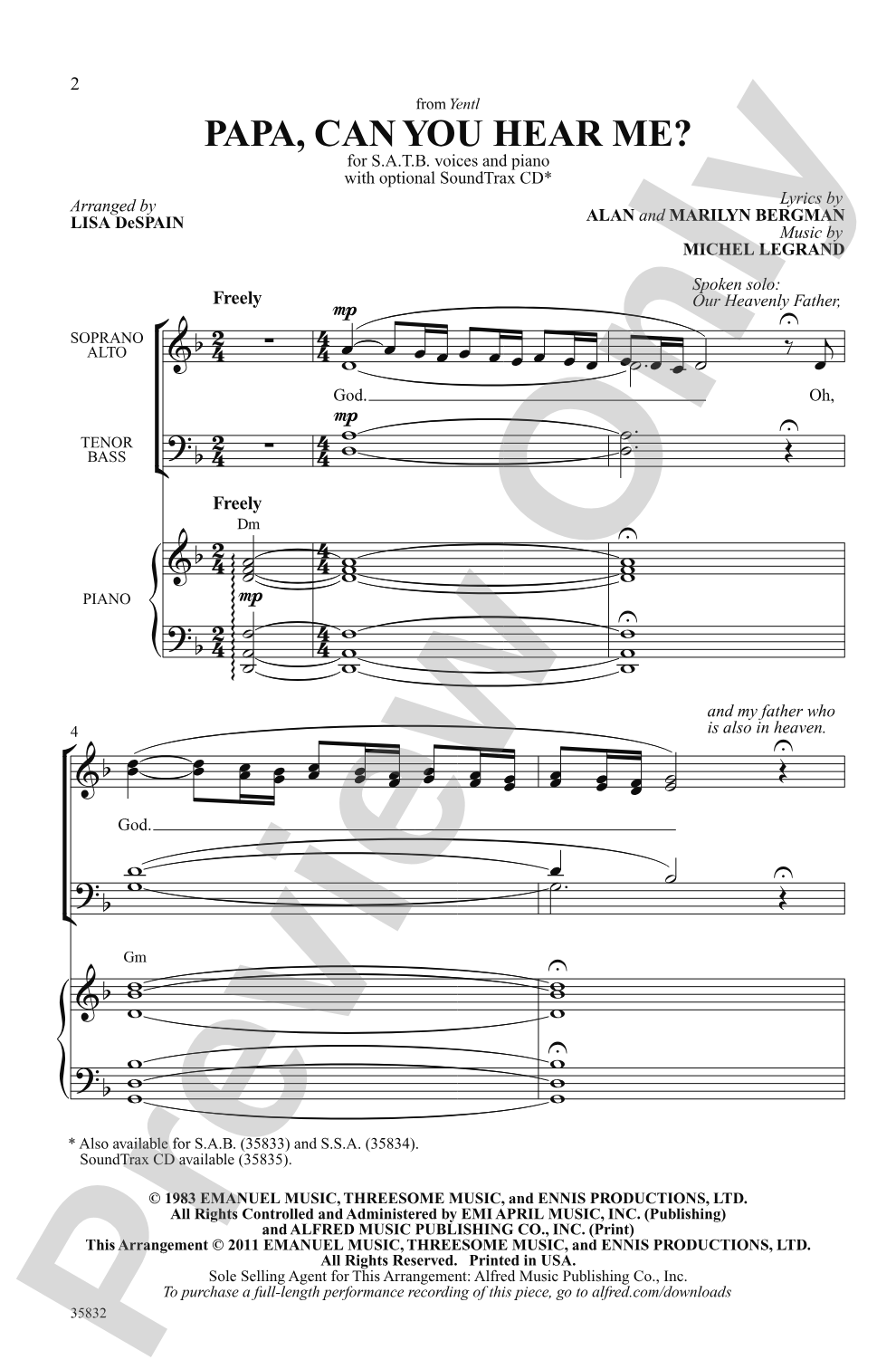
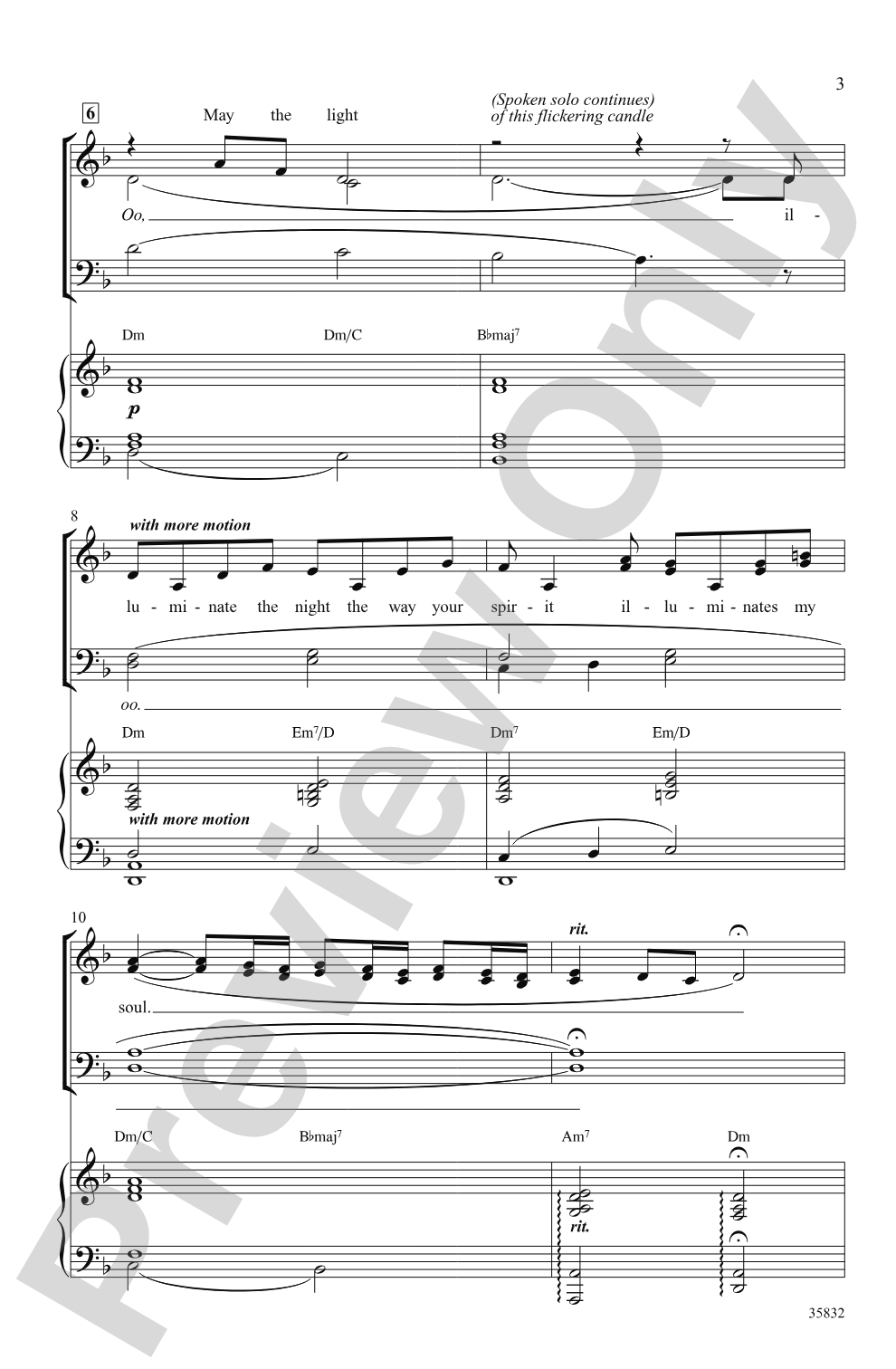

Papa, Can You Hear Me? (from Yentl): SATB Choral Octavo
From Yentl
Lyrics by Alan and Marilyn Bergman, music by Michel LeGrand / arr. Lisa DeSpain
Item: 00-PO-0001119

$2.25
Minimum order quantity: 20 copies
Pickup currently not available
Related Items
Papa, Can You Hear Me? (from Yentl): SAB Choral Octavo |
$1.90
|
View | |
Papa, Can You Hear Me? (from Yentl): SSA Choral Octavo |
$1.90
|
View | |
Papa, Can You Hear Me?: SATB Choral Octavo |
$2.25
|
View | |
Papa, Can You Hear Me?: SAB Choral Octavo |
$1.90
|
View | |
Papa, Can You Hear Me?: SSA Choral Octavo |
$1.90
|
View |
Description
From the Barbra Streisand film Yentl, this Academy Award nominated ballad was most recently performed by the character Rachel on Glee. Opportunities for musical expression abound for both choir and soloists in this lyrical, well-crafted arrangement by Lisa DeSpain.


Don't just read it, hear it, play along with it, and watch your students grow with it. In MakeMusic Cloud, Papa, Can You Hear Me? (from Yentl): SATB Choral Octavo comes alive with professional accompaniment, adjustable tempo, and built-in practice tools that turn solo practice into real progress.
Open in the Player
Jump straight in and assign it today.
Start Your Free Trial
Open this title and explore the full library in minutes.
Sample Audio
1
Audio File
--:--
0:00
0:00
Sample Video
No sample videos found.
Additional Details
Series:
Alfred Pop Choral Series
Publisher:
Alfred Music
Page Count:
12
SKU:
00-PO-0001119
More about this title
About the Composer: Michel LeGrand
Michel LeGrand stands as one of cinema's most gifted melodists, with a career spanning decades of film scores and theatrical compositions. His gift for writing singable, emotionally direct melodies that serve character and narrative made him a sought-after composer for major motion pictures, earning him multiple Academy Award nominations and wins across his lifetime.
Why we love this
This arrangement respects the intimacy of LeGrand's original melody while giving choirs genuine ensemble moments to inhabit. Lisa DeSpain's writing balances solo opportunities with four-part harmony in ways that reward both your strongest singers and your developing section voices, making it accessible without sacrificing sophistication.
What to expect
Quiet and searching, with moments of swelling emotion. The piece has the quality of someone speaking intimately, then opening up, then pulling back inward again. It's yearning rather than showy.
Who it's for
Choirs seeking a contemporary ballad that appeals to younger singers while remaining musically substantive. The combination of solo features and ensemble voicing works well for mixed groups at intermediate to advanced levels who want to explore expressive singing in an accessible style.
How to get the most out of it
- Let the soprano line breathe on the exposed high passages; resist the urge to rush through them, as the vulnerability is the whole point.
- The accompaniment tracks work best when your soloists know exactly where they sit rhythmically, so spend rehearsal time locking the solo sections before adding full ensemble parts.
- Shape the dynamics gradually through longer phrases rather than jerking between loud and soft; this ballad needs arc and continuity to land emotionally.
- Tune the suspended harmonies carefully, especially where the arrangement moves into richer chords. Those moments define the piece's tenderness.
How to use it
Pair this with other standards-based arrangements for a concert that bridges classic and contemporary repertoire, or use it as a showcase for a featured soloist with choir support. Its 12 pages make it substantial enough to anchor a concert set without overwhelming a program's balance.
Skills your students will build
- Sustaining legit vocal lines over extended phrases
- Balancing solo features with ensemble blend
- Interpreting rubato and expressive tempo shifts
- Tuning suspended and extended harmonies
- Reading and performing with accompaniment tracks
- Shaping long dynamic arcs across entire sections