Pange Lingua Variations Cover Image

Pange Lingua Variations: SATB Choral

$4.95 USD
Sale price  $4.95 USD Regular price 
Skip to product information
Pange Lingua Variations Cover Image

Pange Lingua Variations: SATB Choral

By Dave Brubeck

Item: 00-OCT02585

Need it now?

Buy Digital Version
$4.95
Shipped

One moment…

Description
This work beautifully captures the poetic spirit of the original Latin influences of Gregorian chant.

Pange Lingua Variations: SATB Choral isn't in MakeMusic Cloud just yet...but it could be. Let us know you'd like to see it, and you'll help shape what comes next. In the meantime, start a free trial and dive into thousands of interactive titles your students can play along with today.

Sample Pages

Sample Audio
No sample audio found.
Sample Video
Additional Details
Publisher: Alfred Music
Page Count: 32
UPC: 029156114546
SKU: 00-OCT02585
Instrumentation: Brass, Organ, Strings, & Percussion

More about this title

About the Composer: Dave Brubeck
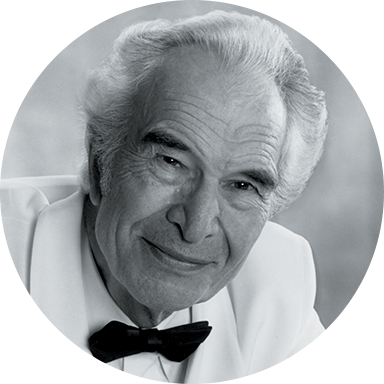
Dave Brubeck

Dave Brubeck brought jazz sensibilities into the concert hall and beyond. A pianist whose improvisational gifts shaped modern jazz, he studied with Darius Milhaud after World War II, who encouraged him to weave together the languages of both jazz and classical music. His groundbreaking album "Time Out" became the first jazz recording to sell over a million copies, and his composition "Take Five" remains iconic.

Brubeck's compositional reach extended far beyond jazz into sacred and orchestral music. He wrote choral pieces, hymns, chamber works, and large-scale compositions for chorus and orchestra, including the widely performed mass "To Hope!" and the oratorios "The Voice of the Holy Spirit" and "Beloved Son." His contributions to American music earned him the Presidential Medal of the Arts from President Clinton, a Grammy Lifetime Achievement Award, and election into the American Classical Music Hall of Fame in 2003.

Why we love this

This is sacred music written by a composer who understood how to balance sophisticated harmonic language with emotional directness. Brubeck's command of orchestration and harmonic tension creates a score that rewards careful preparation without demanding exhausting rehearsal time relative to its impact. Few pieces at this level combine Gregorian roots with the kind of inventive compositional voice that will engage both singers and listeners.

What to expect

The piece unfolds with meditative beauty rooted in plainchant, then blossoms into fuller harmonic landscapes that reflect Brubeck's jazz-inflected sensibility. There's a reverent quality throughout, but one infused with the energy and unpredictability of a composer unafraid to let classical and jazz vocabularies inform each other.

Who it's for

This work suits advanced high school and college choirs with access to instrumental support. The 32-page score and full orchestration make it ideal for concert performances and liturgical settings where you have strings, brass, and organ available.

How to get the most out of it

  • Shape phrases around the Latin text; the Gregorian inheritance means vowels and consonants carry both musical and liturgical weight.
  • Balance the full ensemble (brass, organ, strings, percussion) so the choir remains the expressive center. Instrumental support should enhance, not overpower, the voices.
  • Honor the variations structure by clarifying each statement of the theme. Small adjustments in tempo and weight between sections help the architecture emerge.

How to use it

Pair this with other large-scale sacred works on a concert dedicated to spirituality in contemporary classical music, or program it as a centerpiece of a liturgical service where your choir has access to a full ensemble. Its 32 pages and orchestral scope make it suitable for a spring or fall concert that showcases your choir's capabilities.

Skills your students will build

  • Singing Latin texts with clear diction across sustained phrases
  • Balancing four-part SATB writing within a complex orchestral texture
  • Navigating harmonic language that blends modal and tertian vocabulary
  • Responding to instrumental cues and maintaining ensemble cohesion with multiple instrumental sections

You May Also Like