
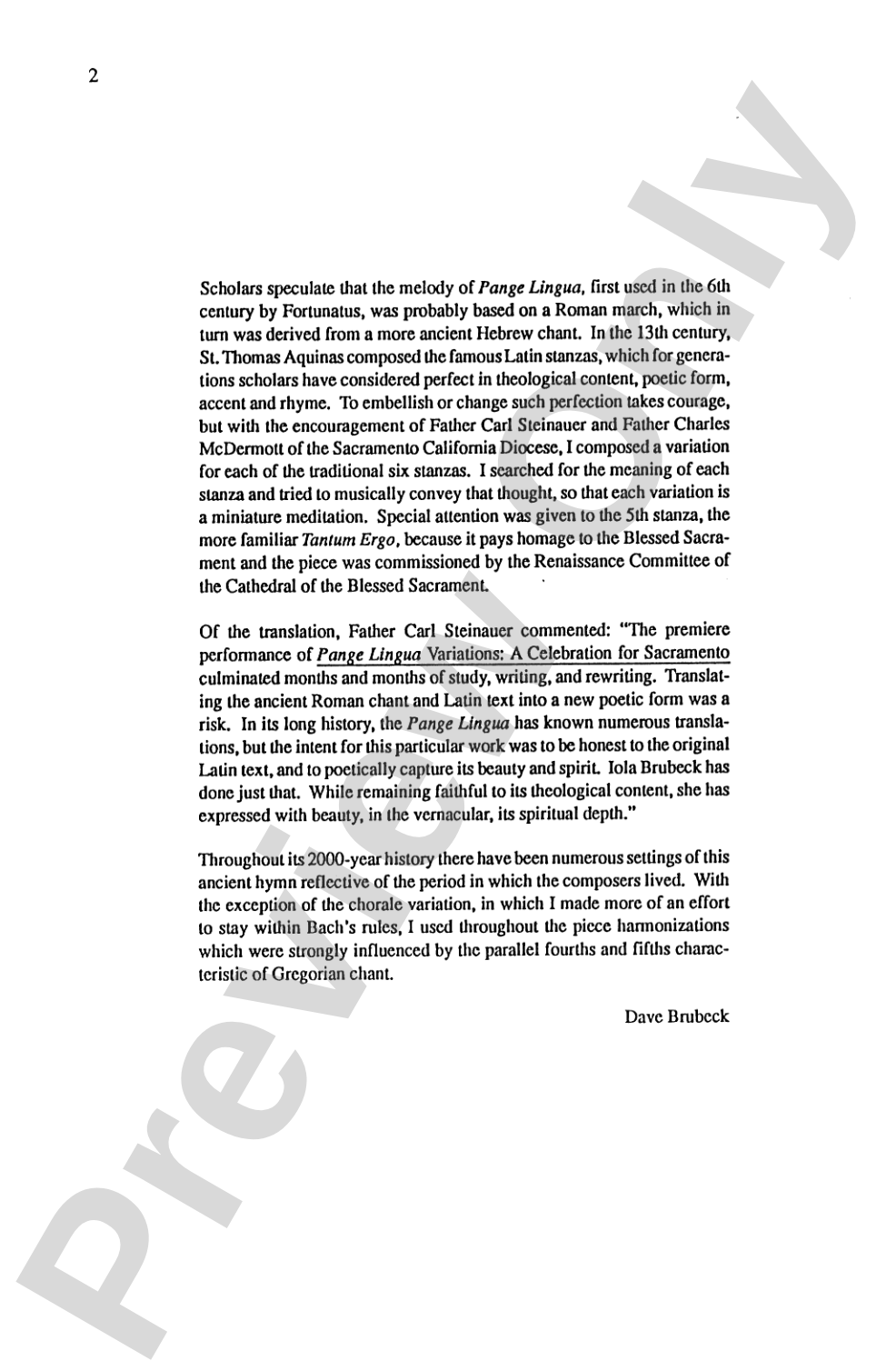
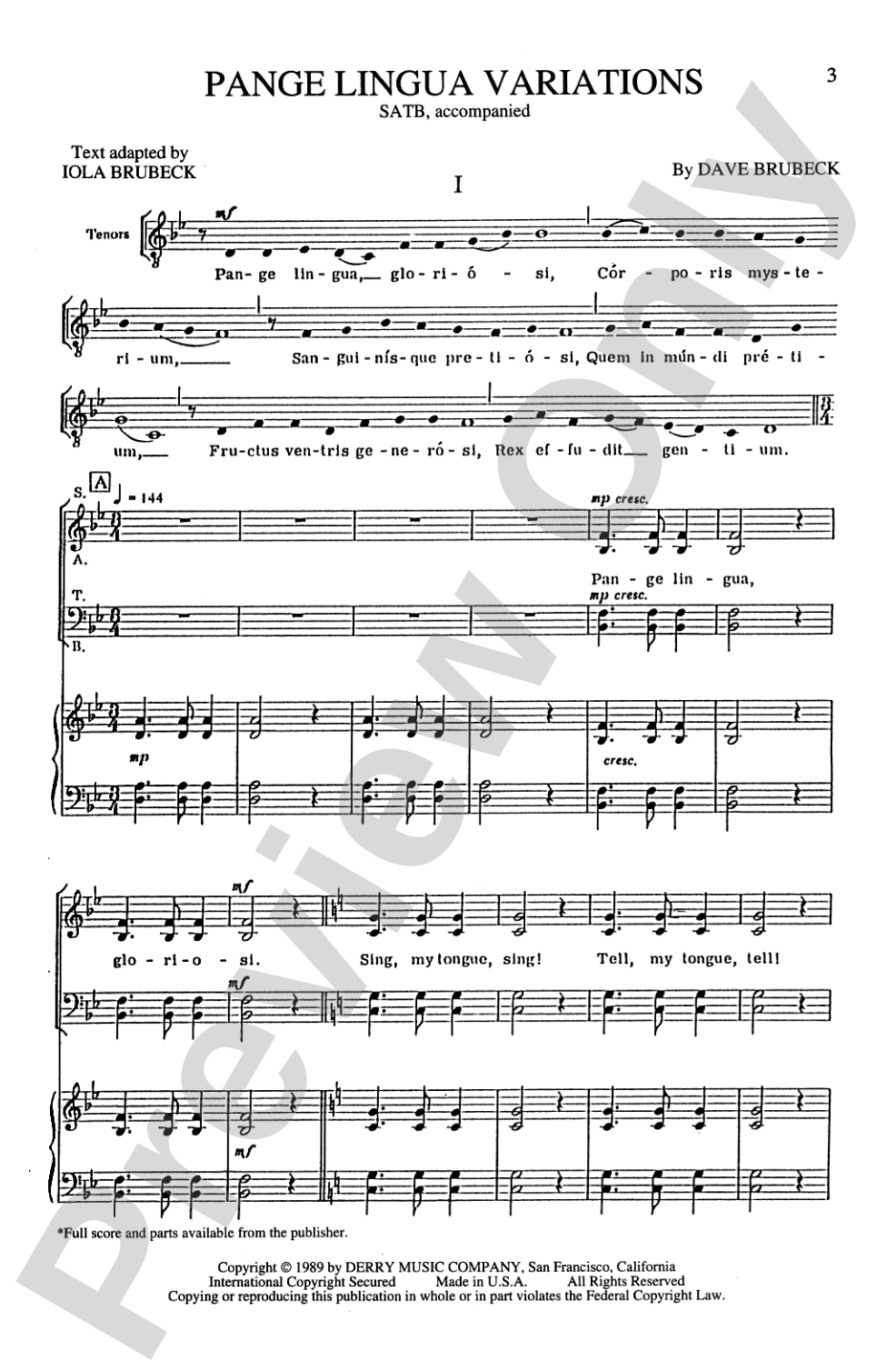
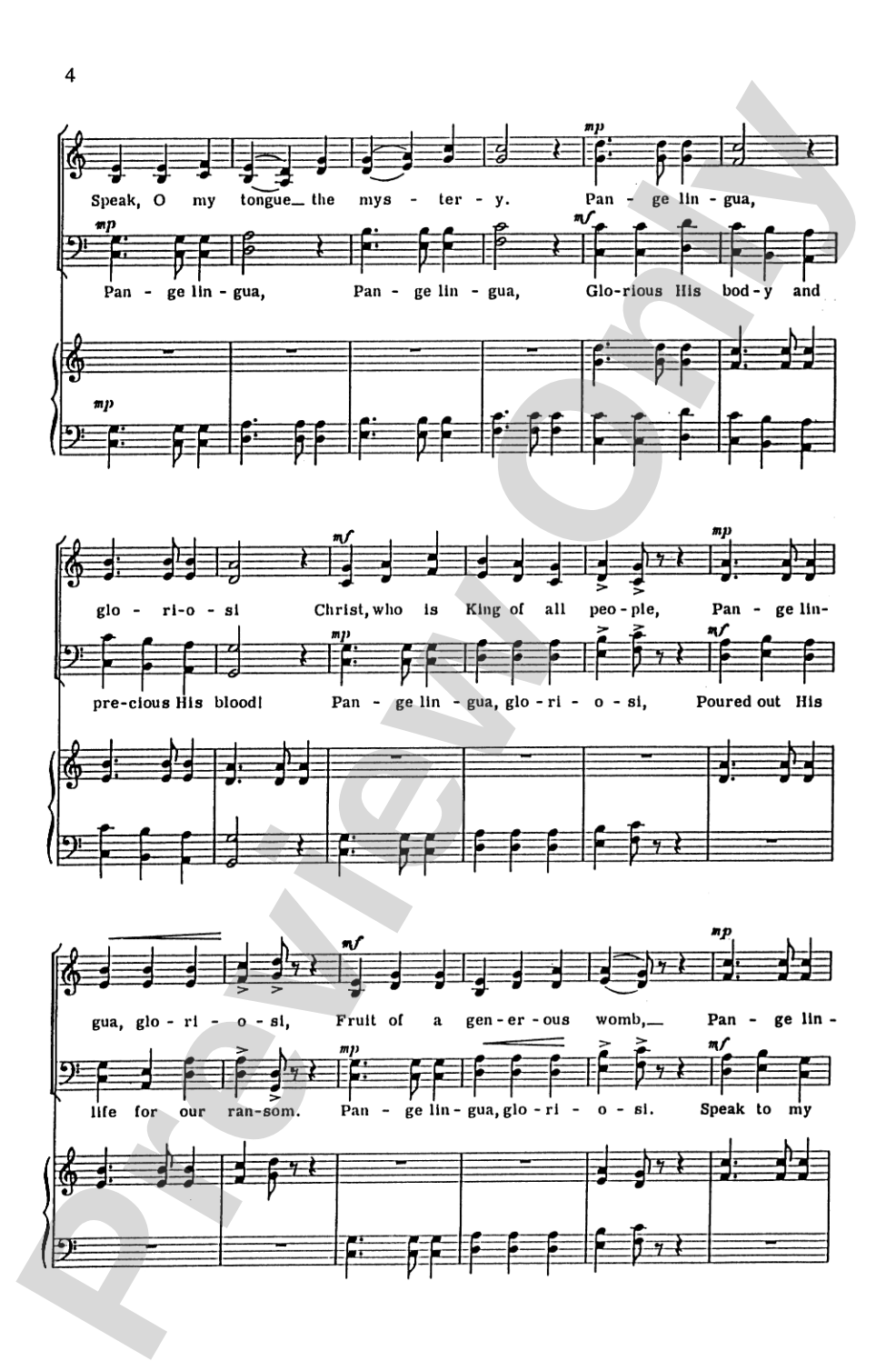
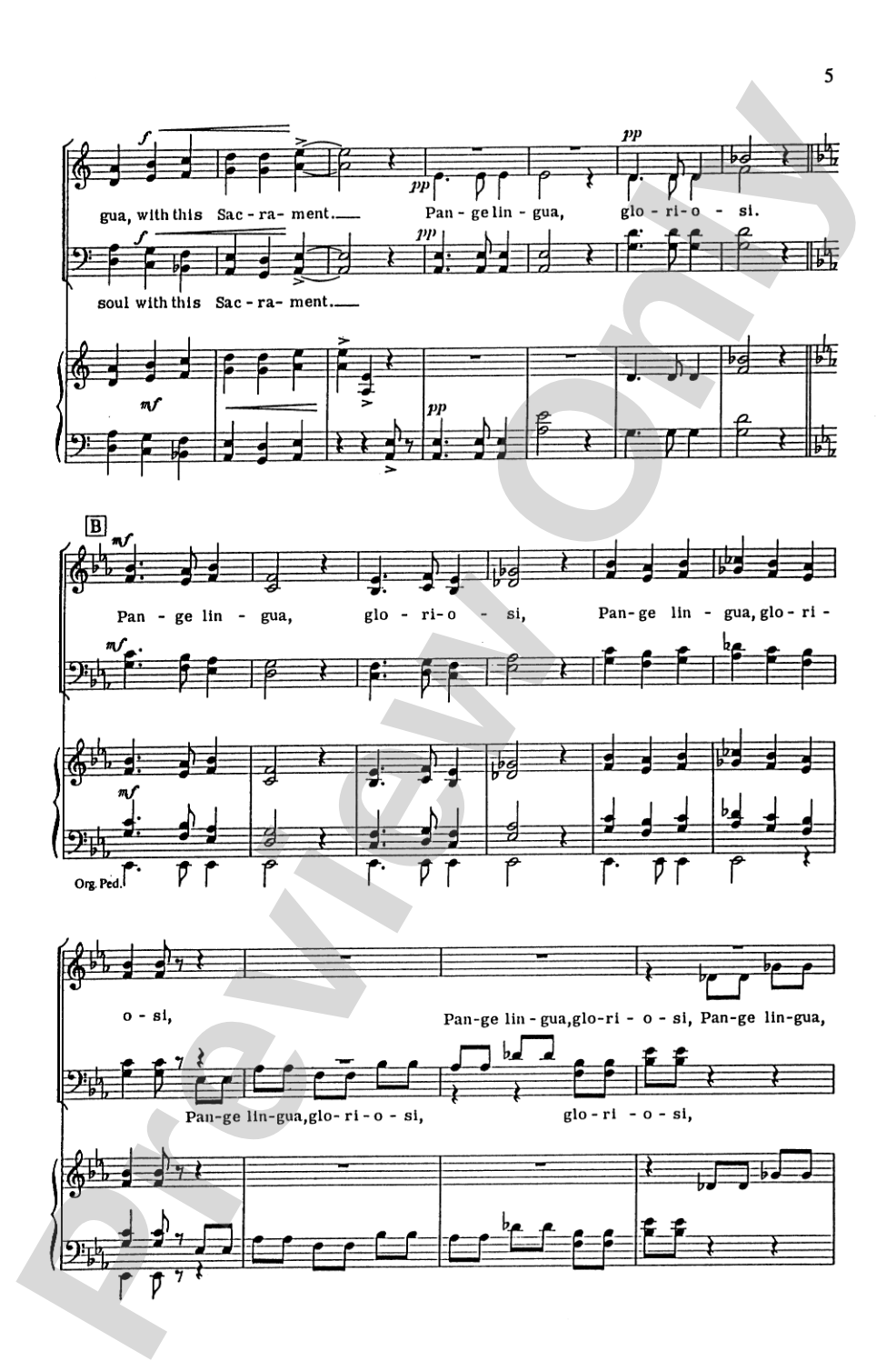
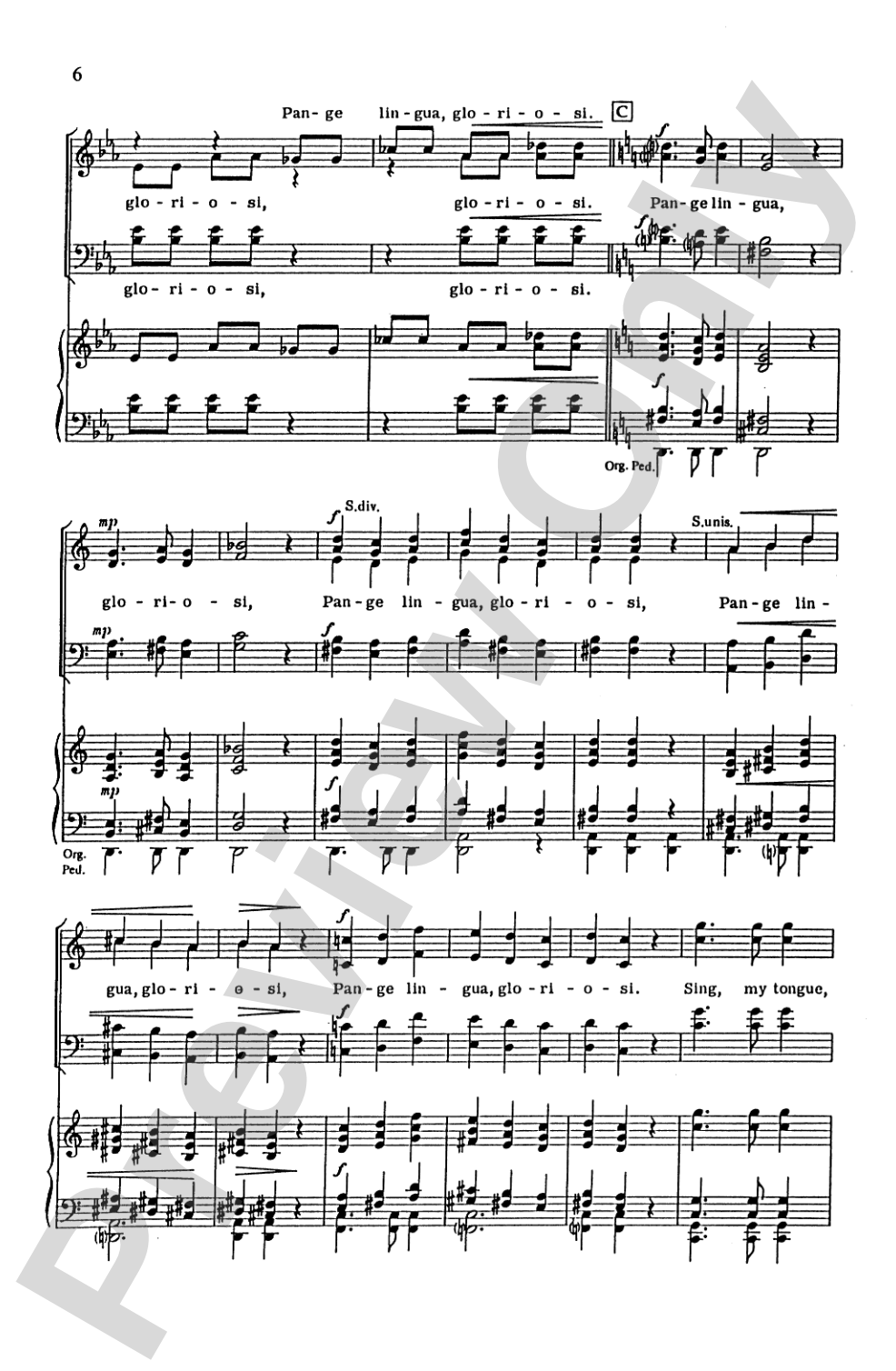
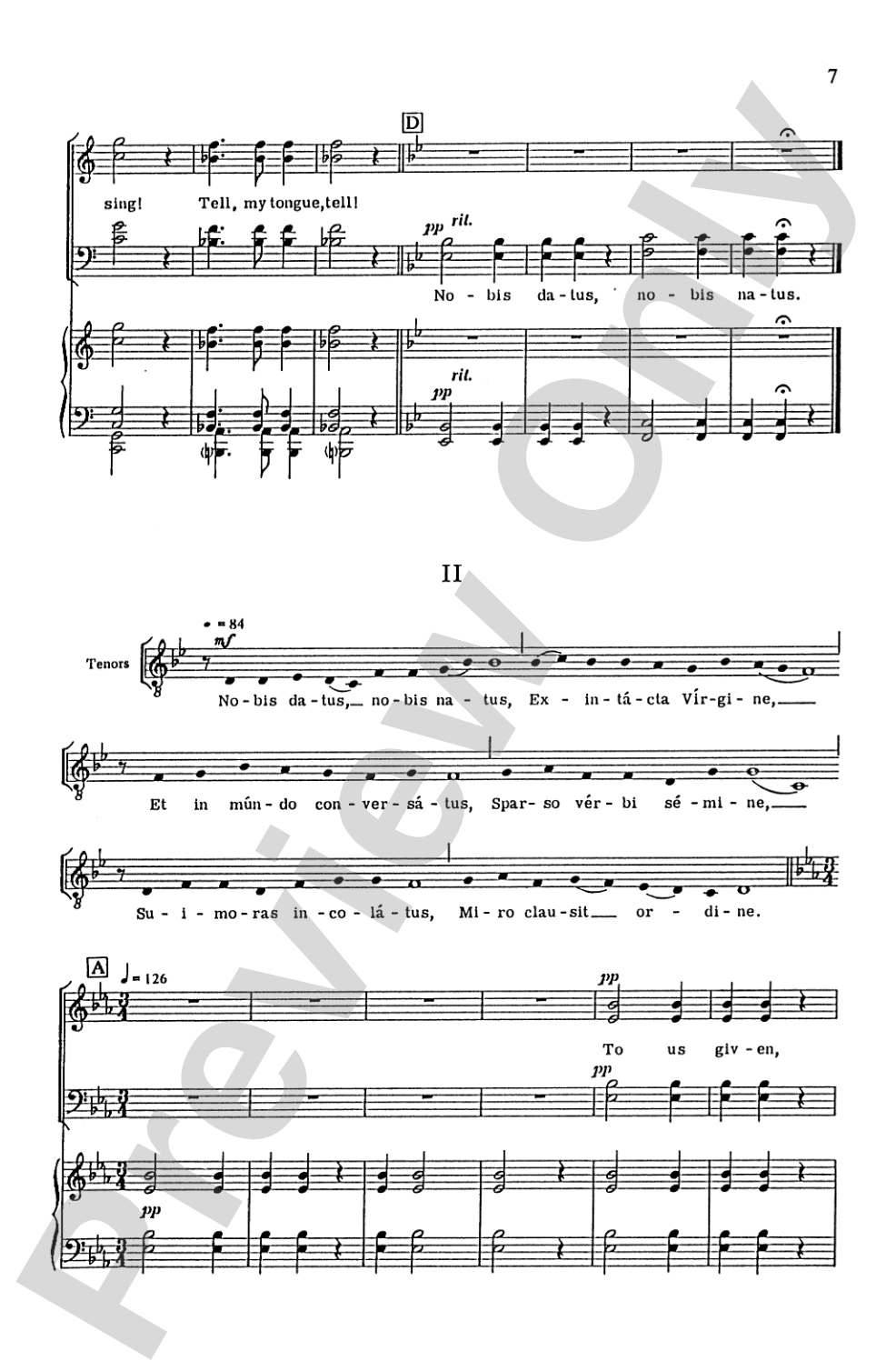

Pange Lingua Variations: SATB Choral
By Dave Brubeck
Item: 00-PO-0006795
$4.95
Minimum order quantity: 20 copies
Pickup currently not available
Description
This work beautifully captures the poetic spirit of the original Latin influences of Gregorian chant.


Pange Lingua Variations: SATB Choral isn't in MakeMusic Cloud just yet...but it could be. Let us know you'd like to see it, and you'll help shape what comes next. In the meantime, start a free trial and dive into thousands of interactive titles your students can play along with today.
Request This Title
Tell us you want it.
Start Your Free Trial
Explore everything that's ready to play right now.
Sample Audio
No sample audio found.
Sample Video
No sample videos found.
Additional Details
Publisher:
Alfred Music
Page Count:
32
SKU:
00-PO-0006795
Instrumentation:
Brass, Organ, Strings, & Percussion
More about this title
About the Composer: Dave Brubeck
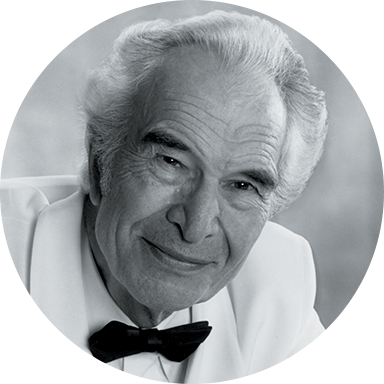
Dave Brubeck built his reputation as a jazz pianist and improviser, but his compositional reach extended far beyond the jazz idiom. He created a substantial catalog of choral works, orchestral pieces, chamber music, and large-scale compositions for chorus and orchestra, all fully notated and carefully crafted. His studies with Darius Milhaud at Mills College after World War II shaped his approach to blending jazz language with classical forms, a philosophy that runs through all his work.
Brubeck's cultural impact extended well beyond music. He was instrumental in breaking racial barriers in mid-20th-century America and received numerous honors for his contributions, including the Presidential Medal of the Arts from President Clinton, a Grammy Lifetime Achievement Award, and election to the American Classical Music Hall of Fame in 2003. His sacred choral works, including To Hope! and the Pange Lingua Variations, have been recorded by major ensembles like the London Symphony Orchestra and performed internationally in venues ranging from cathedrals to concert halls.
Why we love this
Brubeck's setting of this ancient Latin text draws on the meditative quality of Gregorian chant while infusing it with the harmonic sophistication and rhythmic vitality of his compositional voice. The inclusion of brass, strings, organ, and percussion creates a full orchestral palette that brings real color and drama to the Latin text, yet the choral writing remains singable and musicianly. This is a sacred work that commands attention without requiring elite vocal technique, making it genuinely accessible to strong community and collegiate choirs.
What to expect
This work opens in a hushed, reverent space rooted in centuries of liturgical tradition, but gradually unfolds with harmonic warmth and orchestral color that feels both modern and timeless. The variations section allows the choral sound to breathe and shift, sometimes intimate and sometimes soaring, while the accompanying instruments weave around and through the singing with jazz-inflected sophistication.
Who it's for
Collegiate, semi-professional, and advanced high school choirs with reliable intonation and the ability to blend with a full instrumental ensemble. Singers should be comfortable reading at least four-part writing and have some experience with Latin texts.
How to get the most out of it
- Balance the organ and brass parts carefully; they should support rather than overpower the choral lines. Rehearse without accompaniment first to establish secure intonation and phrasing.
- Pay close attention to the text underlay and clarify Latin pronunciation with your singers before intensive sectional rehearsals. The rhythm of the language itself will help lock in the musical phrasing.
- Use the full 32-page score to map climactic moments and dynamic shape across the entire work. These variations are designed to build architecturally.
- When working with the brass and string parts, conduct clear preparatory beats and establish a steady pulse; Brubeck's writing benefits from rhythmic precision and forward motion.
How to use it
Position this as a centerpiece for a sacred or interfaith concert, pairing it with complementary a cappella motets or allowing it to anchor a program exploring the evolution of the Pange Lingua text. The substantial orchestration and choral demands suggest a spring concert or special liturgical event where you can give it full rehearsal time and instrumental resources.
Skills your students will build
- Singing SATB writing with sustained harmonic independence
- Blending with a full instrumental ensemble (brass, strings, organ, percussion)
- Interpreting and performing Latin text with proper diction and musical line
- Understanding variation form and recognizing how musical material is transformed and developed