
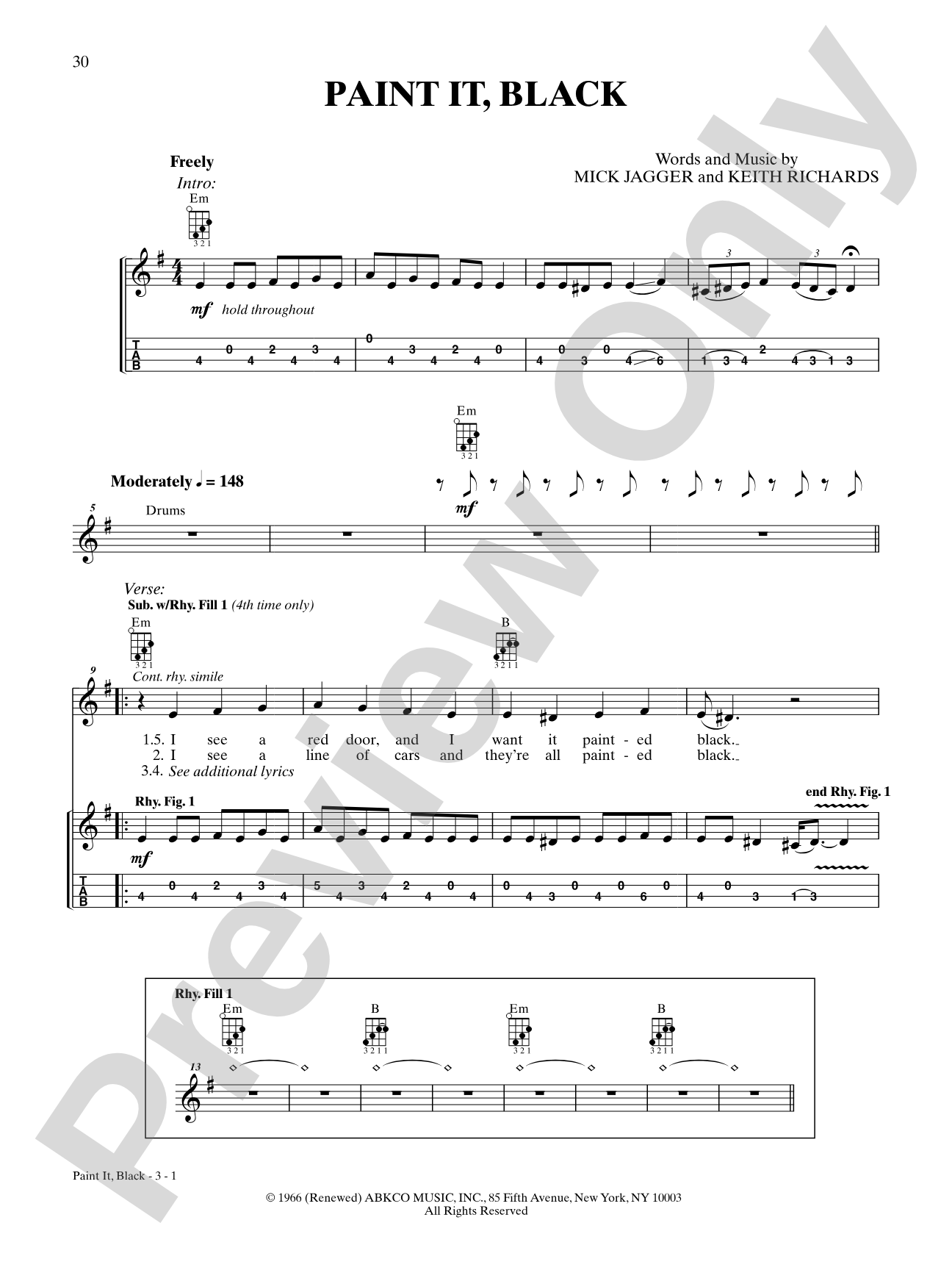

Paint It, Black: Ukulele TAB
12 Great Songs of the '60s, '70s & '80s
Item: 00-PS-0011787
$4.99
Pickup currently not available
Related Items
It's All Over Now: Ukulele TAB |
$4.99
|
View | |
Long Train Runnin': Ukulele TAB |
$4.99
|
View | |
The Night They Drove Old Dixie Down: Ukulele TAB |
$4.99
|
View | |
Stairway to Heaven: Ukulele TAB |
$5.99
|
View | |
After Midnight: Ukulele TAB |
$4.99
|
View | |
Maggie May: Ukulele TAB |
$4.99
|
View | |
Sunshine of Your Love: Ukulele TAB |
$4.99
|
View |
Description
Classic Rock Ukulele is designed for your total enjoyment. Each song uses the original guitar parts arranged for the ukulele. The ukulele craze is sweeping the world, so come be a part of it! Titles: After Midnight (Eric Clapton) * Go Your Own Way (Fleetwood Mac) * Hotel California (Eagles) * It's All Over Now (The Rolling Stones) * Jump (Van Halen) * Long Train Runnin' (The Doobie Brothers) * Maggie May (Rod Stewart) * The Night They Drove Old Dixie Down (The Band) * Paint It, Black (The Rolling Stones) * Stairway to Heaven (Led Zeppelin) * Sunshine of Your Love (Cream) * Truckin' (Grateful Dead).


Paint It, Black: Ukulele TAB isn't in MakeMusic Cloud just yet...but it could be. Let us know you'd like to see it, and you'll help shape what comes next. In the meantime, start a free trial and dive into thousands of interactive titles your students can play along with today.
Request This Title
Tell us you want it.
Start Your Free Trial
Explore everything that's ready to play right now.
Sample Audio
No sample audio found.
Sample Video
No sample videos found.
Additional Details
Series:
Just for Fun
Publisher:
Alfred Music
Page Count:
64
SKU:
00-PS-0011787
More about this title
About the Composer: Mick Jagger
Mick Jagger co-wrote "Paint It, Black" with Keith Richards during The Rolling Stones' creative peak in the mid-1960s. The song became one of rock's most enduring classics, showcasing Jagger's gift for memorable melodies paired with Richards' inventive guitar arrangements. His songwriting across decades has influenced generations of musicians and remains central to rock music education.
Why we love this
This collection brings legendary rock arrangements down to ukulele in a way that respects the original parts rather than oversimplifying them. Students get to play iconic riffs and recognizable melodies from artists they actually care about, which transforms practice from obligation into genuine engagement. The song selection spans multiple decades and styles of rock, so there's something for every player's taste and technical level.
What to expect
Opening this book is like holding a greatest-hits radio station in your hands. Each arrangement captures the spirit of its original recording while sounding natural on ukulele. You'll experience the satisfaction of playing recognizable, complete arrangements that sound polished and purposeful from your first run-through.
Who it's for
Ukulele players who want to move beyond beginner-level instrumental arrangements and tackle material from classic rock radio. Intermediate to advancing players will find these adaptations rewarding; the TAB format makes them accessible without sacrificing authenticity. Teachers can use this collection to keep adult students and teenage players engaged with repertoire they genuinely want to perform.
How to get the most out of it
- Pay attention to the TAB fingering suggestions, especially on passages that use the ukulele's higher frets. The voicings are specifically adapted to sound correct on a four-string instrument.
- Listen to the original recordings alongside your practice. Hearing how the guitar part sits in the full arrangement helps you shape phrasing and dynamics on ukulele.
- Work through songs with similar tuning or capo positions in sequence to build muscle memory and reduce setup time between pieces.
- Pace your progress through the book by mixing familiar songs with unfamiliar ones. Playing a recognizable tune keeps motivation high while you tackle harder arrangements.
How to use it
Assign individual songs as recital pieces for ukulele students preparing solo performances or ensemble showcases. Mix selections into a themed concert program on classic rock, 1970s hits, or "music you grew up hearing." Pair songs with similar keys or difficulty levels to structure student practice progressions across a semester or summer.
Skills your students will build
- Reading TAB fluently across extended passages and multiple pages
- Transferring guitar voicings and riffs to ukulele fingering patterns
- Recognizing and executing the rhythmic signature of each original arrangement
- Managing dynamics and phrasing to match the emotional intent of classic rock songs
- Building confidence with full-arrangement repertoire rather than fragments or simplified versions