
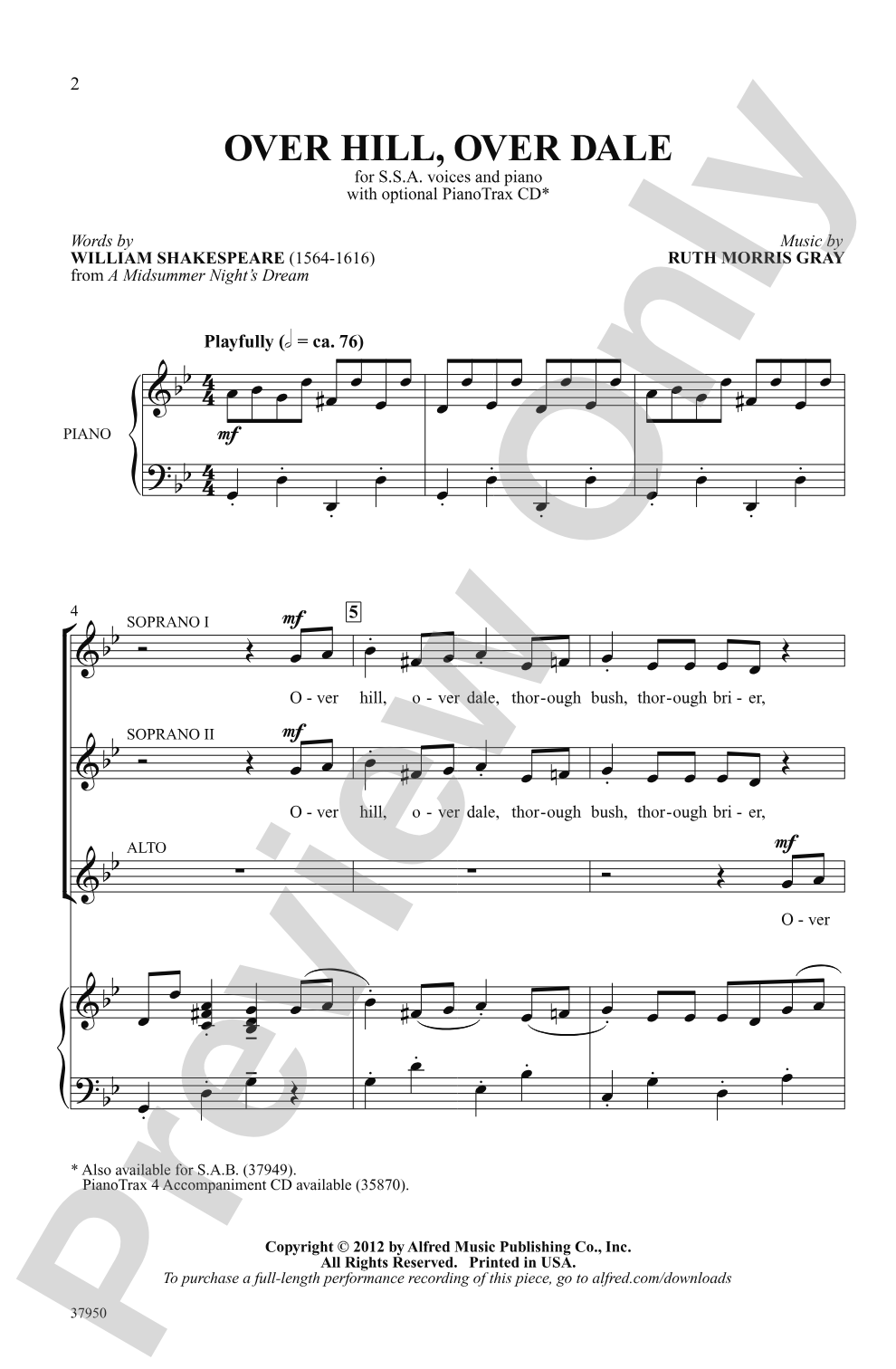

Over Hill, Over Dale: SSA Choral Octavo
Words by William Shakespeare from A Midsummer Night's Dream, music by Ruth Morris Gray
Item: 00-PO-0001291
$1.80
Minimum order quantity: 20 copies
Pickup currently not available
Description
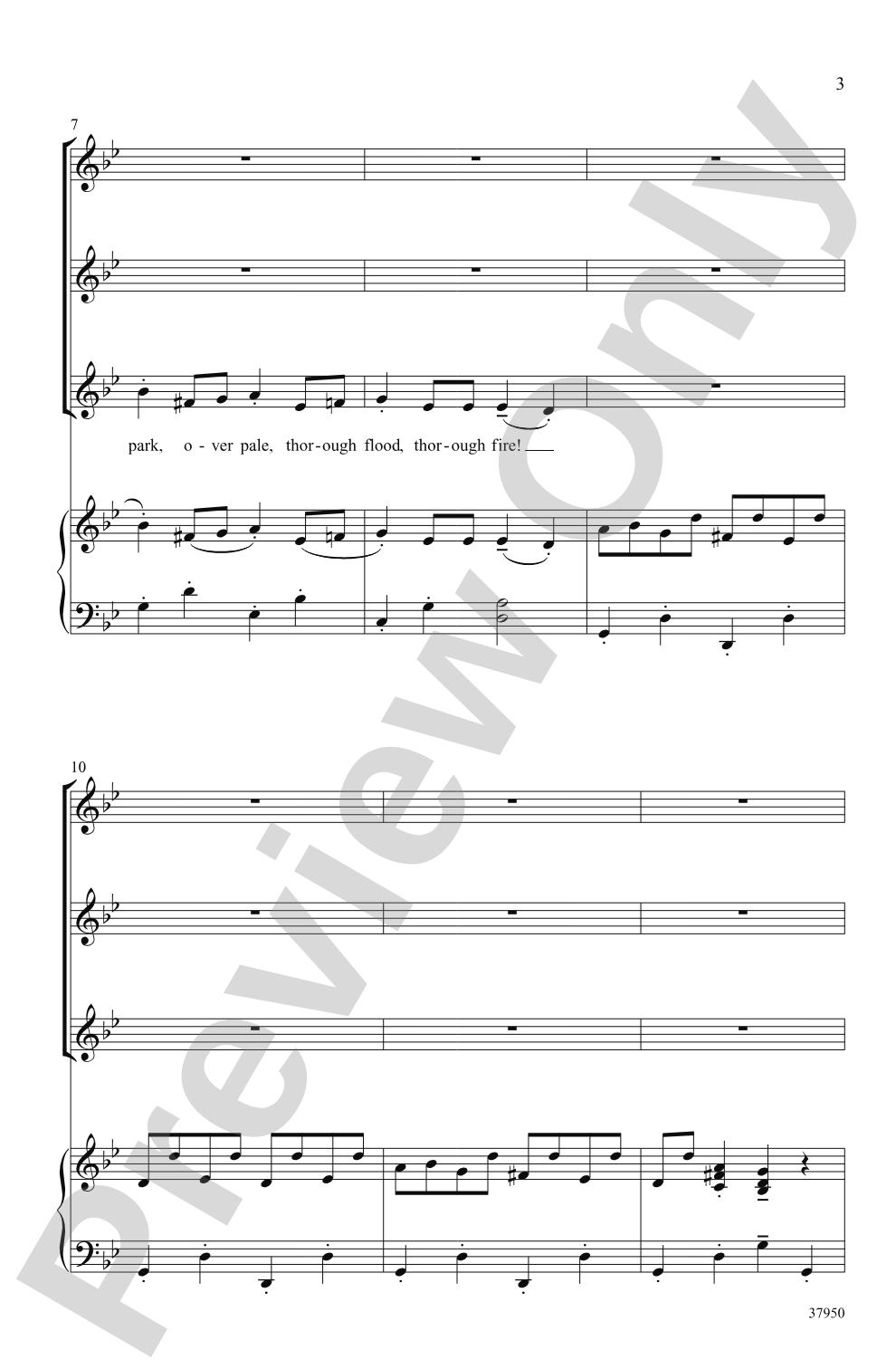
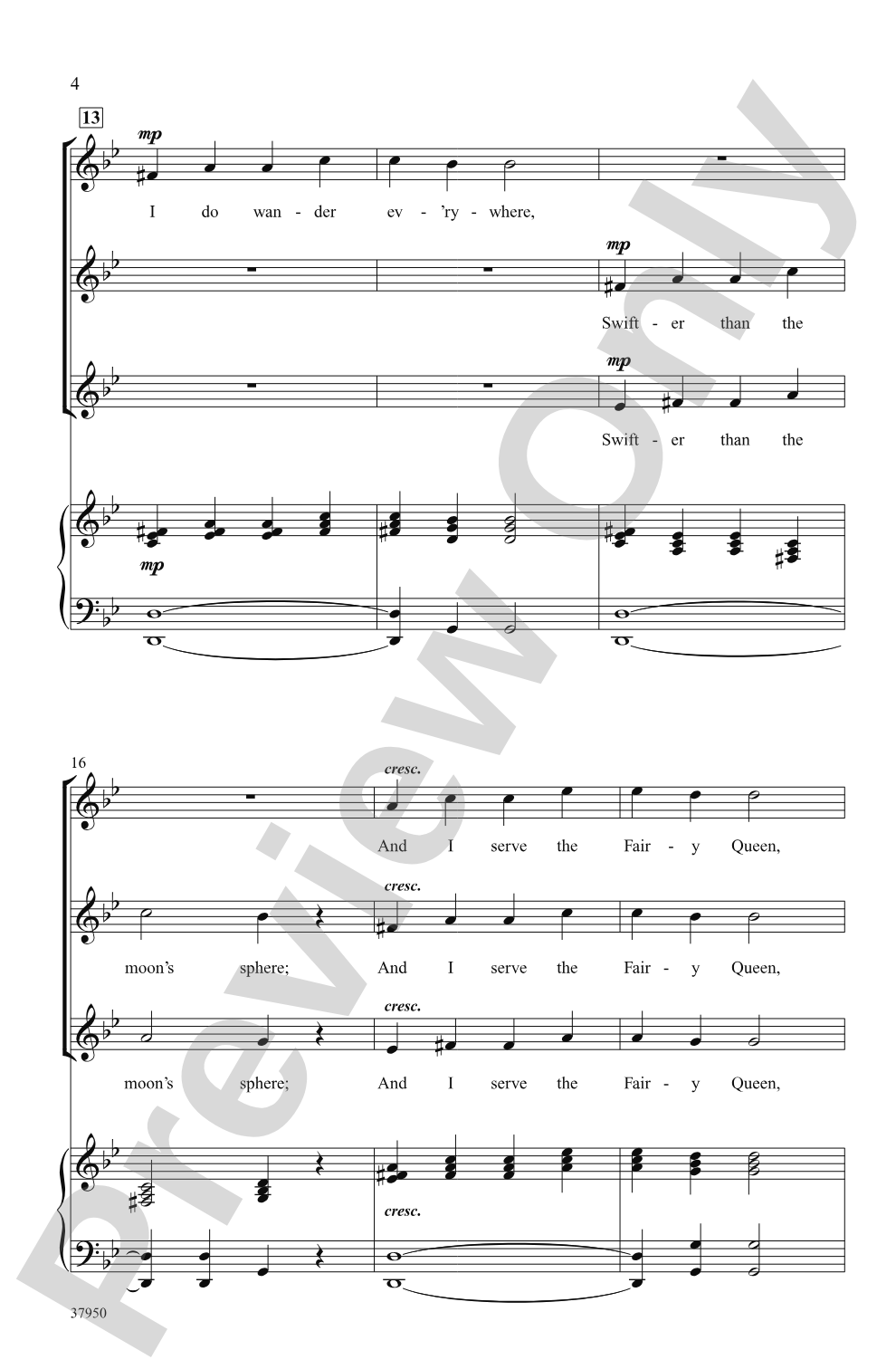
A whimsical chromatic piano motif opens and reappears throughout this buoyant Shakespeare text setting. Offers excellent three-part writing for treble or mixed ensembles and an appropriate balance of musical repetition vs. development. A midconcert night's dream. Accompaniment available on PianoTrax 4 CD (00-35870).
A NOTE FROM THE COMPOSER
Programming my opening fall concert is always a challenge, because each year I have so many brand new singers. In 2011, my a cappella choir (which does occasionally sing accompanied pieces) sang my new Alfred publication, "Over Hill, Over Dale." I originally chose this Shakespearean text to set to music after seeing a production of A Midsummer Night's Dream at my school. Because the piece has so many piano interludes, I thought it would be fun to add an element of drama and movement to the performance. I recruited the students who had played Oberon and Puck in the play (and yes, they sing in choir!). They wore capes and ran about the choir sprinkling fairy dust (sparkling confetti) during the song. "Over Hill, Over Dale" was the hit of the show!


A NOTE FROM THE COMPOSER
Programming my opening fall concert is always a challenge, because each year I have so many brand new singers. In 2011, my a cappella choir (which does occasionally sing accompanied pieces) sang my new Alfred publication, "Over Hill, Over Dale." I originally chose this Shakespearean text to set to music after seeing a production of A Midsummer Night's Dream at my school. Because the piece has so many piano interludes, I thought it would be fun to add an element of drama and movement to the performance. I recruited the students who had played Oberon and Puck in the play (and yes, they sing in choir!). They wore capes and ran about the choir sprinkling fairy dust (sparkling confetti) during the song. "Over Hill, Over Dale" was the hit of the show!
Over Hill, Over Dale: SSA Choral Octavo isn't in MakeMusic Cloud just yet...but it could be. Let us know you'd like to see it, and you'll help shape what comes next. In the meantime, start a free trial and dive into thousands of interactive titles your students can play along with today.
Request This Title
Tell us you want it.
Start Your Free Trial
Explore everything that's ready to play right now.
Sample Audio
1
Audio File
--:--
0:00
0:00
Sample Video
No sample videos found.
Additional Details
Series:
Alfred Choral Designs
Publisher:
Alfred Music
Page Count:
12
SKU:
00-PO-0001291
More about this title
About the Composer: Ruth Morris Gray

Ruth Morris Gray holds degrees in piano performance and composition from Biola University and a master's degree in music composition from UC Santa Barbara. She earned her California Single Subject Music Credential at Cal State Northridge and has directed choirs at Rosemead High School since 2004, where she also teaches piano.
With over 100 published choral compositions to her name, Gray brings both pedagogical insight and creative ambition to her writing. Her work balances accessibility with artistic substance, shaped by her daily experience teaching and performing with young singers.
Why we love this
Gray's command of three-part writing shines here: the lines sit comfortably for treble voices while the harmonic language stays fresh and engaging. The chromatic piano motif gives your accompanist real character work, and the balance between repetition and development means singers can learn quickly without the piece feeling predictable.
What to expect
Airy and enchanting, like watching fairy magic unfold on stage. The chromatic piano figures create shimmer and movement while the vocal lines float above with buoyant ease, capturing the playful mischief of Shakespeare's forest world.
Who it's for
This octavo works beautifully for treble choirs and mixed ensembles at the middle school through high school level. It fits programs needing accessible Shakespeare settings with enough musical substance to engage developing singers and audiences alike.
How to get the most out of it
- Highlight the piano interludes as dramatic moments. The chromatic motif can punctuate scene changes or choreographed movement, turning the accompaniment into part of your staging rather than background support.
- Mark the entrance points where the chromatic figure reappears; these landmarks help singers navigate the form and give conductors clear gestures for ensemble precision.
- Use the Shakespearean text as an interpretive anchor. The whimsy in Gray's setting should feel playful and light, not precious or overly theatrical.
How to use it
Program this at the lighter end of your concert program, perhaps as an intermission piece or as part of a themed set exploring Shakespeare in music. Its mid-length and accessible difficulty make it ideal for concert nights when you're introducing brand new singers to your choir.
Skills your students will build
- Three-part harmonic independence and balance in SSA voicing
- Singing with rhythmic precision while tracking a complex accompaniment motif
- Literary interpretation through music and text declamation
- Ensemble blend and intonation across sustained treble harmonies