

Over Hill, Over Dale: SAB Choral Octavo
Words by William Shakespeare from A Midsummer Night's Dream, music by Ruth Morris Gray
Item: 00-PO-0001290
$1.80
Minimum order quantity: 20 copies
Pickup currently not available
Description
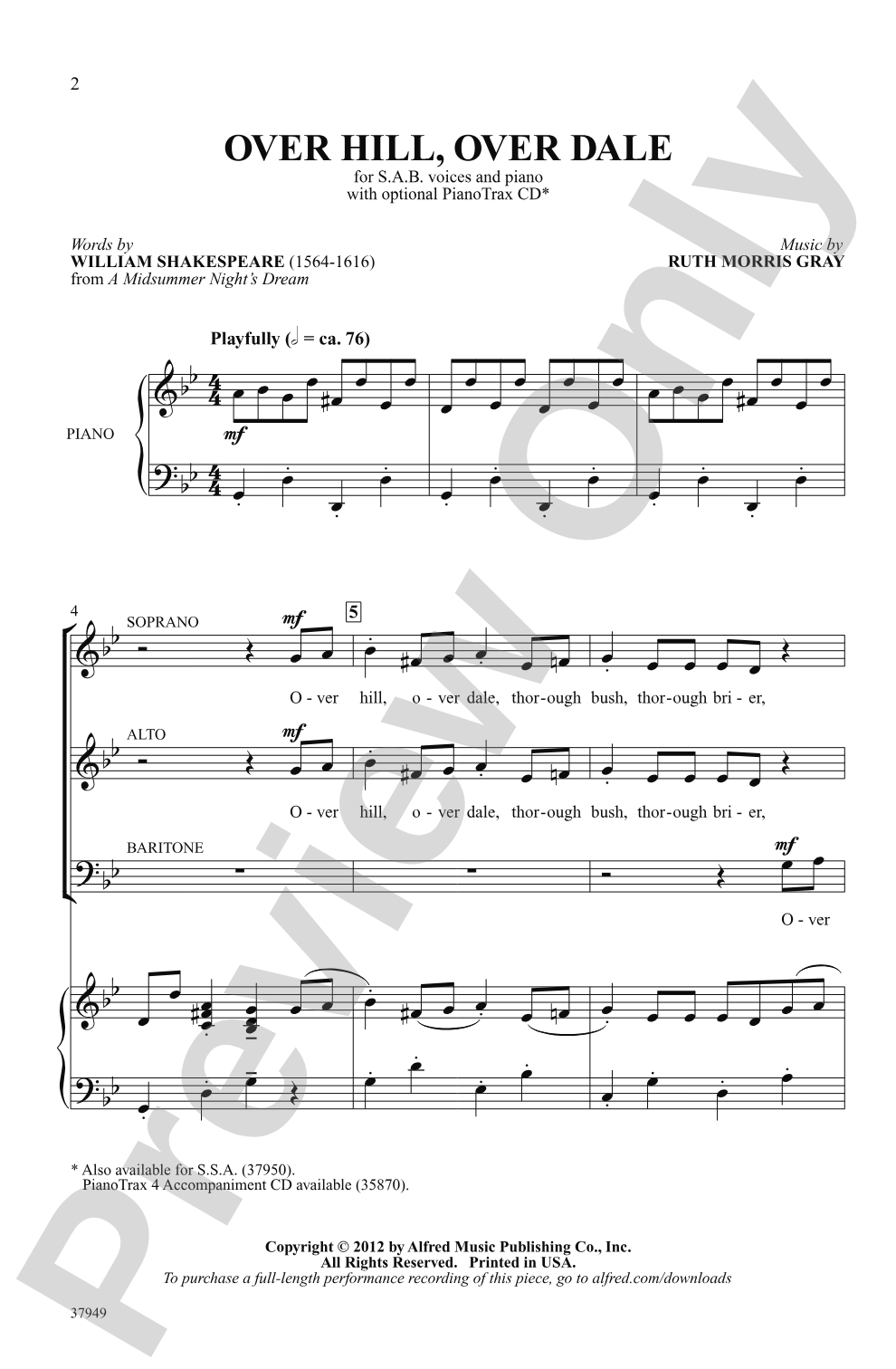
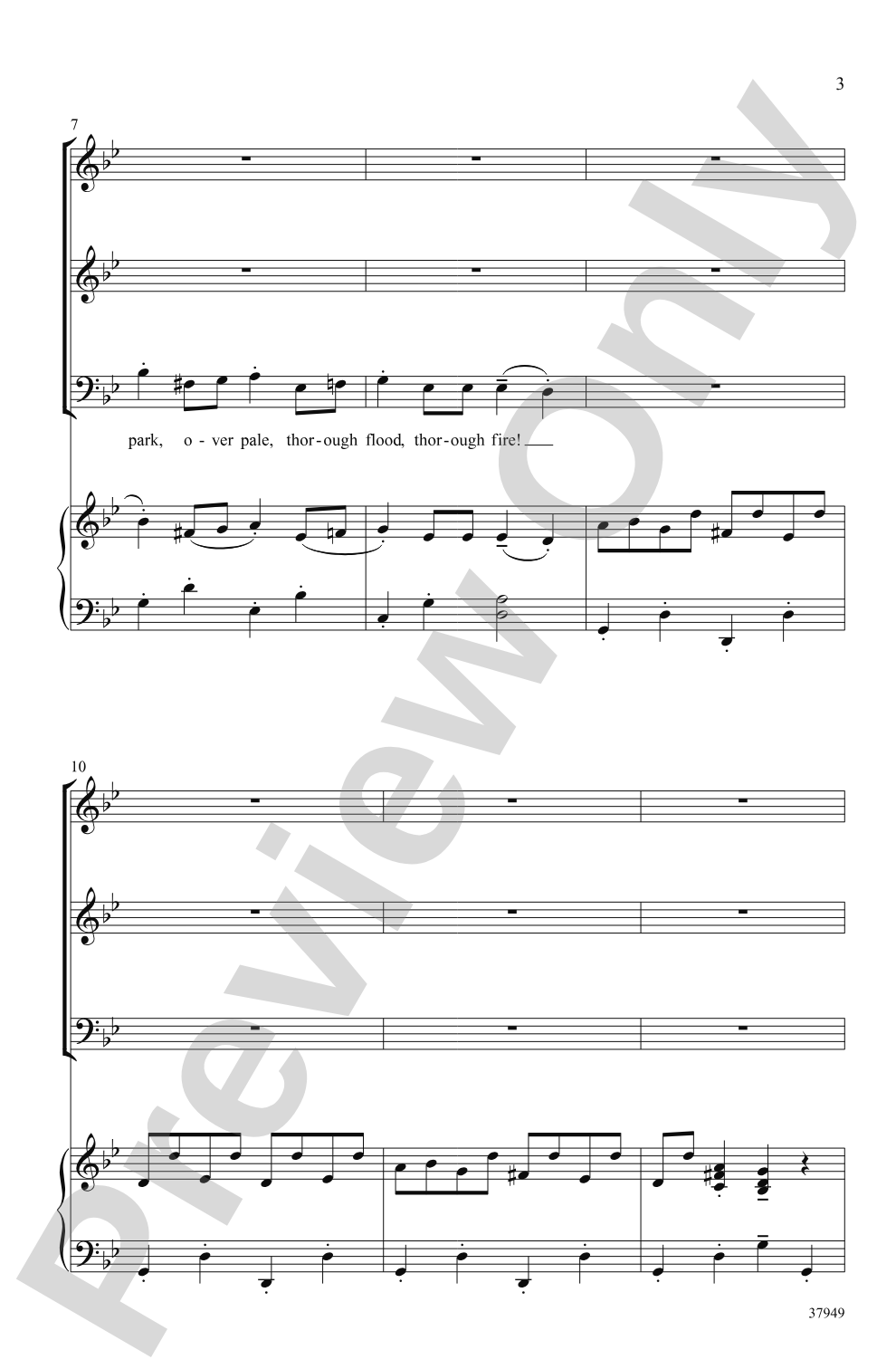
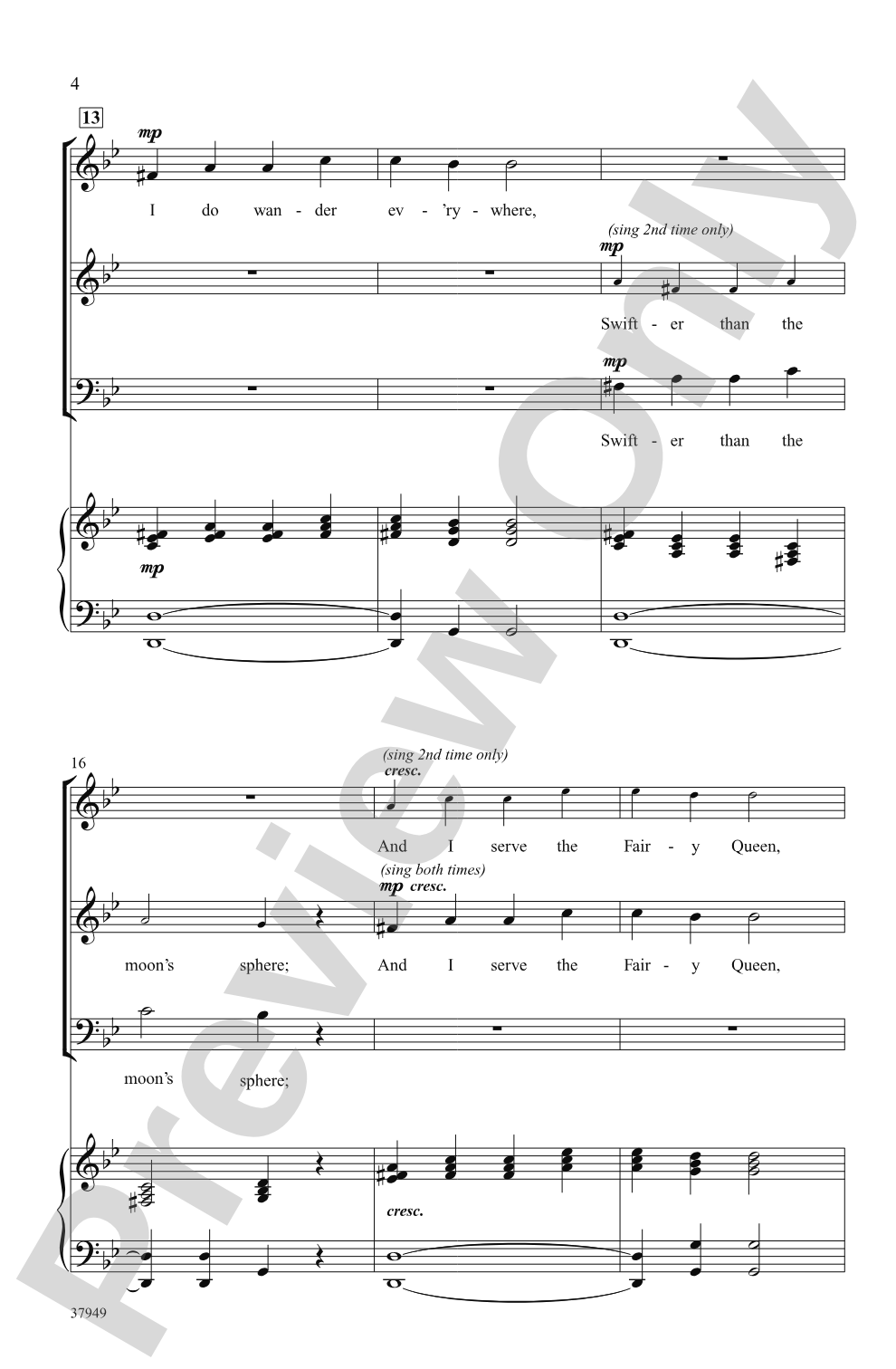
A whimsical chromatic piano motif opens and reappears throughout this buoyant Shakespeare text setting. Offers excellent three-part writing for treble or mixed ensembles and an appropriate balance of musical repetition vs. development. A midconcert night's dream. Accompaniment available on PianoTrax 4 CD (00-35870).
A NOTE FROM THE COMPOSER Programming my opening fall concert is always a challenge, because each year I have so many brand new singers. In 2011, my a cappella choir (which does occasionally sing accompanied pieces) sang my new Alfred publication, "Over Hill, Over Dale." I originally chose this Shakespearean text to set to music after seeing a production of A Midsummer Night's Dream at my school. Because the piece has so many piano interludes, I thought it would be fun to add an element of drama and movement to the performance. I recruited the students who had played Oberon and Puck in the play (and yes, they sing in choir!). They wore capes and ran about the choir sprinkling fairy dust (sparkling confetti) during the song. "Over Hill, Over Dale" was the hit of the show!


A NOTE FROM THE COMPOSER Programming my opening fall concert is always a challenge, because each year I have so many brand new singers. In 2011, my a cappella choir (which does occasionally sing accompanied pieces) sang my new Alfred publication, "Over Hill, Over Dale." I originally chose this Shakespearean text to set to music after seeing a production of A Midsummer Night's Dream at my school. Because the piece has so many piano interludes, I thought it would be fun to add an element of drama and movement to the performance. I recruited the students who had played Oberon and Puck in the play (and yes, they sing in choir!). They wore capes and ran about the choir sprinkling fairy dust (sparkling confetti) during the song. "Over Hill, Over Dale" was the hit of the show!
Over Hill, Over Dale: SAB Choral Octavo isn't in MakeMusic Cloud just yet...but it could be. Let us know you'd like to see it, and you'll help shape what comes next. In the meantime, start a free trial and dive into thousands of interactive titles your students can play along with today.
Request This Title
Tell us you want it.
Start Your Free Trial
Explore everything that's ready to play right now.
Sample Audio
1
Audio File
--:--
0:00
0:00
Sample Video
No sample videos found.
Additional Details
Series:
Alfred Choral Designs
Publisher:
Alfred Music
Page Count:
12
SKU:
00-PO-0001290
More about this title
About the Composer: Ruth Morris Gray

Ruth Morris Gray has directed choirs at Rosemead High School in California since 2004, where she also teaches piano. She holds a Bachelor of Music in Piano Performance and Composition from Biola University and a Master of Arts in Music Composition from UC Santa Barbara, along with a California Single Subject Music Credential from Cal State Northridge.
With over 100 published choral compositions to her name, Gray draws inspiration from her daily work with student singers at all levels. Beyond the music classroom, she is an active performer and composer who finds renewal in travel, swimming, reading, and cycling.
Why we love this
Gray's gift for blending theatrical flair with solid three-part writing means your singers get a piece that feels like a real event, not a filler. The chromatic piano motif is catchy enough that students remember it between rehearsals, and the balance of repetition and development keeps both rehearsal and performance from feeling static. This is the kind of piece that makes mixed or treble ensembles sound polished while remaining genuinely fun to sing.
What to expect
Effervescent and theatrical, with the whimsy of a midsummer night filtered through clever harmonic movement. The chromatic piano motif returns like a musical character in its own right, threading through the singers' parts and creating moments of magic between the voices.
Who it's for
Mixed or treble choirs seeking a piece that works equally well for beginning singers and experienced ensembles. The three-part writing allows flexible casting, and the moderate difficulty makes it accessible for groups with limited rehearsal time while remaining musically satisfying.
How to get the most out of it
- Bring the piano interludes to the foreground during rehearsal. Have singers listen actively while the accompanist plays, so they understand the piece as a dramatic conversation between voices and piano rather than two separate elements.
- Lean into the whimsy of the text. This Shakespeare excerpt invites playful articulation and lift in the vocal lines; resist the urge to make it precious or overly precious.
- Consider staging during the piano interludes as Gray suggests in her composer note. Even subtle movement (a shift in formation, a gesture from the conductor) activates these moments and holds audience attention.
How to use it
Program this as a concert-brightener in a fall concert where you're introducing new singers to your ensemble. Its connection to A Midsummer Night's Dream also makes it an ideal fit for a Shakespeare-themed concert or a program pairing music with dramatic literature. The short length and high entertainment value suit it well to the second half of a concert program.
Skills your students will build
- Singing in three-part harmony with attention to blend and balance
- Responding to piano accompaniment and following harmonic movement
- Shaping phrasing within a Shakespearean text
- Maintaining ensemble cohesion through repeated chromatic motifs
- Performing with theatrical awareness and purposeful expression