One Step at a Time Cover Image

One Step at a Time: String Orchestra Conductor Score

$7.00 USD
Sale price  $7.00 USD Regular price 
Skip to product information
One Step at a Time Cover Image

One Step at a Time: String Orchestra Conductor Score

By Loreta Fin

Grade: 1-1.5

Item: 76-49395S

$7.00
Shipped

One moment…

Description
Using unison rhythms and simple part work, One Step at a Time by Loreta Fin moves mostly by steps and skips, reinforcing scale and arpeggio preparation and basic string crossing. There are some slurs in the 1st violin part and lots of retakes and forearm bowing action in all parts. Dynamics should be carefully observed. A piano part is included but is not essential. (2:15)

One Step at a Time: String Orchestra Conductor Score isn't in MakeMusic Cloud just yet...but it could be. Let us know you'd like to see it, and you'll help shape what comes next. In the meantime, start a free trial and dive into thousands of interactive titles your students can play along with today.

Sample Pages

Sample Audio
0:00
0:00
Sample Video
Additional Details
Series: Wilfin String Orchestra: Young String Ensemble Series
Publisher: Wilfin Music
ISBN10: 1-4706-4801-6
ISBN13: 978-1-4706-4801-5
UPC: 038081567242
SKU: 76-49395S

More about this title

About the Composer: Loreta Fin
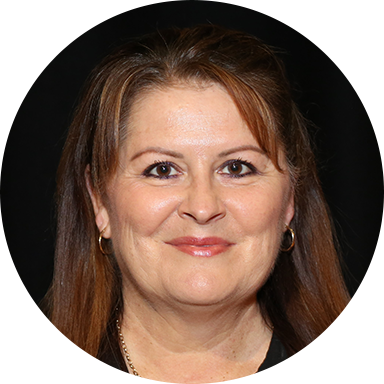
Loreta Fin

Loreta Fin is an Australian violist, educator, and composer with deep roots in string education. A graduate of the Sydney Conservatorium of Music, she has performed extensively in chamber and orchestral settings, including 25 years as Principal Viola with the Queensland Pops Orchestra. Since 1993, she has directed strings at Somerville House School in Brisbane, building a career as both a respected adjudicator at major Australian competitions and a mentor to emerging string players.

Fin has published over 100 works for string orchestra worldwide through Alfred Music, with particular recognition for her accessible writing for young ensembles. Her leadership roles within the Australian Strings Association and as State Advisor for Strings reflect her commitment to string pedagogy at a national level. She has conducted honors ensembles programs since 2015 and received the National Award for Services to Music and String Teaching in recognition of her sustained impact on Australian music education.

Why we love this

Fin writes with precise pedagogical intent for first-year orchestras. The stepwise melodic movement, clear rhythmic unisons, and built-in opportunities for string technique (slurs, string crossings, forearm rotation) mean students are practicing fundamental skills within a piece that actually sounds musical rather than exercises disguised as repertoire. The careful attention to dynamics transforms what could be a drill into a concert-ready performance.

What to expect

Straightforward and purposeful, One Step at a Time moves with quiet confidence. The stepwise melody and unison rhythms create a sense of clarity and forward motion, while careful dynamic shaping prevents the piece from feeling bare. Young musicians experience the satisfaction of executing clean string crossings and bowing articulation within a coherent musical statement.

Who it's for

This conductor score is essential for string directors building first-year orchestras or mixed-ability ensembles. Students who are still stabilizing fundamental bowing techniques and reading simple part writing benefit enormously from Fin's graduated approach. The piece works equally well as a festival selection or a program opener that sets technique standards without overwhelming young players.

How to get the most out of it

  • Observe dynamic markings with exactness; they're not decorative but essential to shaping phrases in this early-level work. Establish clear forte and piano through sectional work before full rehearsals.
  • Slow your string crossings in rehearsal to ensure clean, even tone. Once students execute them securely, the tempo will sit naturally without sacrifice of articulation.
  • Use the included piano part sparingly. Remove it once violins lock their parts; independence in the ensemble strengthens faster without harmonic scaffolding.
  • Lock retakes and forearm bowing action in the bass line first. A secure, articulate bass makes the unison rhythms land with clarity across all parts.

How to use it

Position this early in a concert when ensemble focus is fresh and technical execution matters most. It also serves as an excellent warm-up piece for festival or contest preparation, establishing articulation standards and ensemble precision before moving into more complex literature. Consider pairing it with a contrasting piece that explores sustained tone and legato playing.

Skills your students will build

  • Scale-based melodic reading (stepwise and skip movement)
  • String crossing technique with clear tone continuity
  • Forearm rotation for varied articulation and retakes
  • Dynamic control and phrase shaping
  • Rhythmic precision in unison passages
  • Slur execution and bow direction change coordination

You May Also Like