One Step at a Time Cover Image

One Step at a Time: String Orchestra Conductor Score & Parts

$45.00 USD
Sale price  $45.00 USD Regular price 
Skip to product information
One Step at a Time Cover Image

One Step at a Time: String Orchestra Conductor Score & Parts

By Loreta Fin

Grade: 1-1.5

Item: 76-49395

$45.00
Shipped

One moment…

Description
Using unison rhythms and simple part work, One Step at a Time by Loreta Fin moves mostly by steps and skips, reinforcing scale and arpeggio preparation and basic string crossing. There are some slurs in the 1st violin part and lots of retakes and forearm bowing action in all parts. Dynamics should be carefully observed. A piano part is included but is not essential. (2:15)

One Step at a Time: String Orchestra Conductor Score & Parts isn't in MakeMusic Cloud just yet...but it could be. Let us know you'd like to see it, and you'll help shape what comes next. In the meantime, start a free trial and dive into thousands of interactive titles your students can play along with today.

Sample Pages

Sample Audio
0:00
0:00
Sample Video
Additional Details
Series: Wilfin String Orchestra: Young String Ensemble Series
Publisher: Wilfin Music
ISBN10: 1-4706-4800-8
ISBN13: 978-1-4706-4800-8
UPC: 038081567235
SKU: 76-49395

More about this title

About the Composer: Loreta Fin
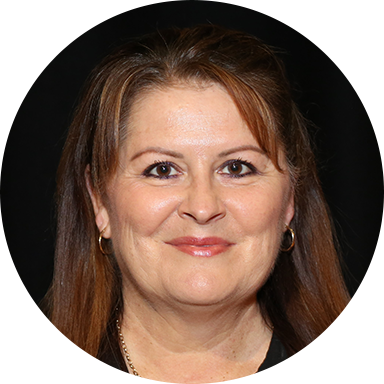
Loreta Fin

Loreta Fin AM is an Australian violist, string educator, and prolific composer with deep roots in both performance and pedagogy. A graduate of the Sydney Conservatorium of Music, she spent decades as Principal Viola with the Queensland Pops Orchestra while maintaining an active chamber and orchestral performance schedule. Since 1993, she has directed strings at Somerville House School in Brisbane, building her reputation as an innovative educator who bridges classical training with accessible compositional work.

Fin's influence extends throughout the Australian music education landscape. She served as State and National President of the Australian Strings Association, adjudicated major competitions across Australia, and presented at both Australian and American National String Teachers' Conferences. As State Advisor for Strings and regular conductor of Honours Ensembles Programs, she has shaped string pedagogy at the highest institutional levels. Her catalog of over 100 published works reflects a deep understanding of how students learn, earning her recognition including a National Award for Services to Music and String Teaching.

Why we love this

Fin writes with the clarity of someone who has taught thousands of young string players. The stepwise motion and simple part writing feel deliberate, never condescending, building confidence while reinforcing fundamental technique. Directors will appreciate how the piece demands careful dynamic shaping from the start, training ears and hands for expressive playing without overwhelming early learners.

What to expect

Straightforward and purposeful. The scale-based melodic material feels like a natural extension of warm-up work, transformed into something that moves forward with gentle momentum. There's an honesty to the orchestration that lets each student hear their own contribution clearly.

Who it's for

Beginning string orchestras with solid fundamentals in individual technique but still developing cohesion as an ensemble. This works well for players in their first or second year of group study who need repertoire that builds musicianship without introducing excessive complexity.

How to get the most out of it

  • Target the dynamics throughout. This piece uses volume contrast to create shape and interest, so avoid the early-level trap of playing at one comfortable level.
  • Work string crossings in sections before rehearsing tutti; the bow action that looks simple on paper requires isolation and repetition to sound clean across all parts.
  • Let the unison rhythms lock in first. Once all players hear the same pulse together, dividing into parts becomes natural and secure.
  • If you include piano, use it sparingly in rehearsals to strengthen the ensemble's internal security before adding accompaniment in performance.

How to use it

Program this early in a concert to establish comfort and confidence, or use it in a contest format where clean execution and dynamic control will be heard and valued. At just over two minutes, it fits efficiently alongside a longer work or as part of a multi-piece student showcase.

Skills your students will build

  • Stepwise scale reading and intervallic accuracy
  • String crossing coordination (forearm movement and bow control)
  • Slur execution in upper voices
  • Dynamic contrast and shaping (careful observation of specified levels)
  • Rhythmic unison and ensemble lock-in
  • Arpeggio preparation through part movement

You May Also Like