

O Say, Can You See: SAB Choral Octavo
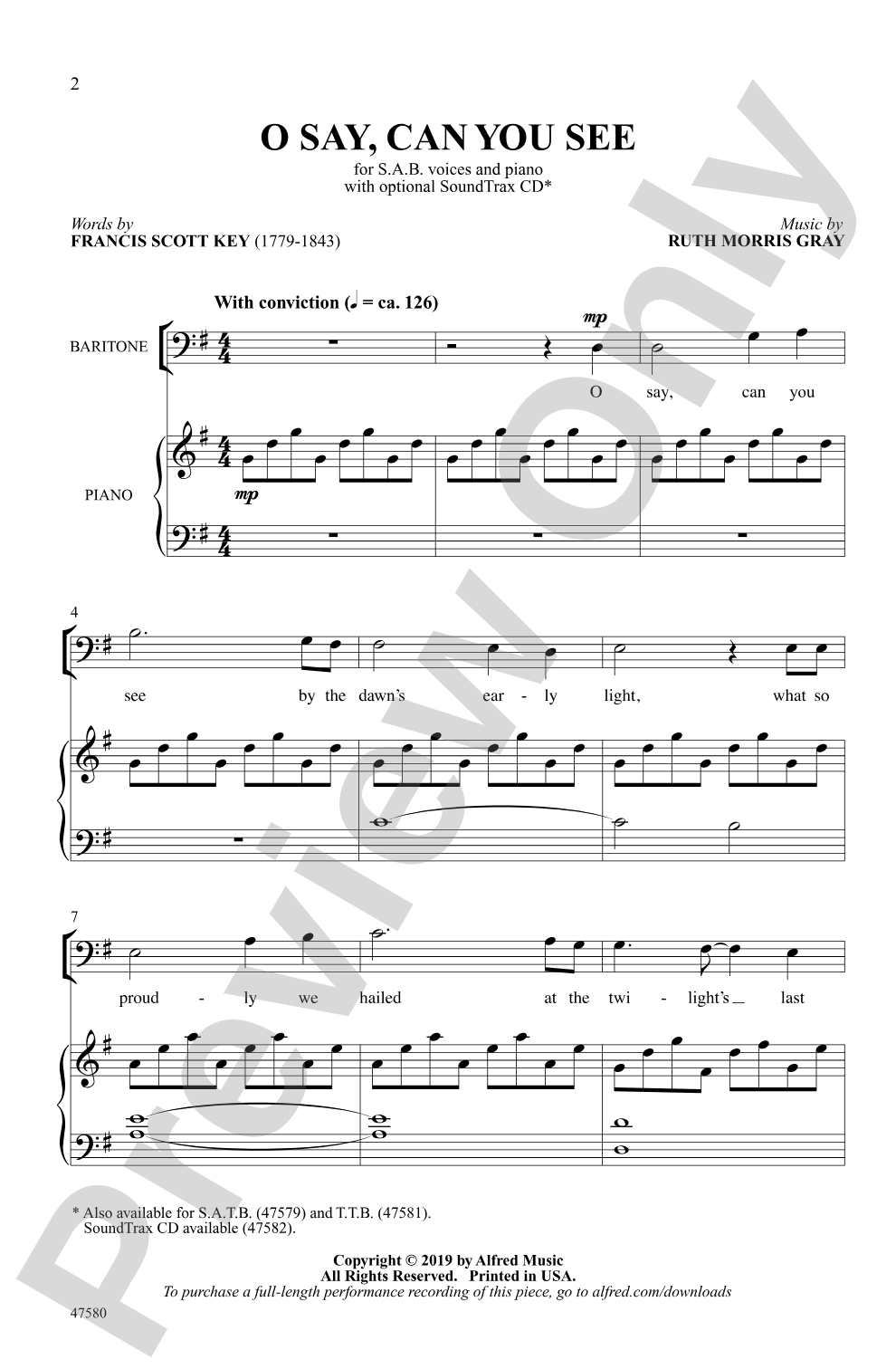
Words by Francis Scott Key, music by Ruth Morris Gray
Item: 00-PO-0005942
$2.05
Minimum order quantity: 20 copies
Pickup currently not available
Related Items
O Say, Can You See: SoundTrax Digital Audio Download |
$27.99
|
View | |
O Say, Can You See: SATB Choral Octavo |
$2.05
|
View | |
O Say, Can You See: TTB Choral Octavo |
$2.05
|
View | |
O Say, Can You See: SATB Choral Octavo |
$2.05
|
View | |
O Say, Can You See: SAB Choral Octavo |
$2.05
|
View | |
O Say, Can You See: TTB Choral Octavo |
$2.05
|
View | |
O Say, Can You See: Choral Octavo SoundTrax CD |
$27.99
|
View |
Description
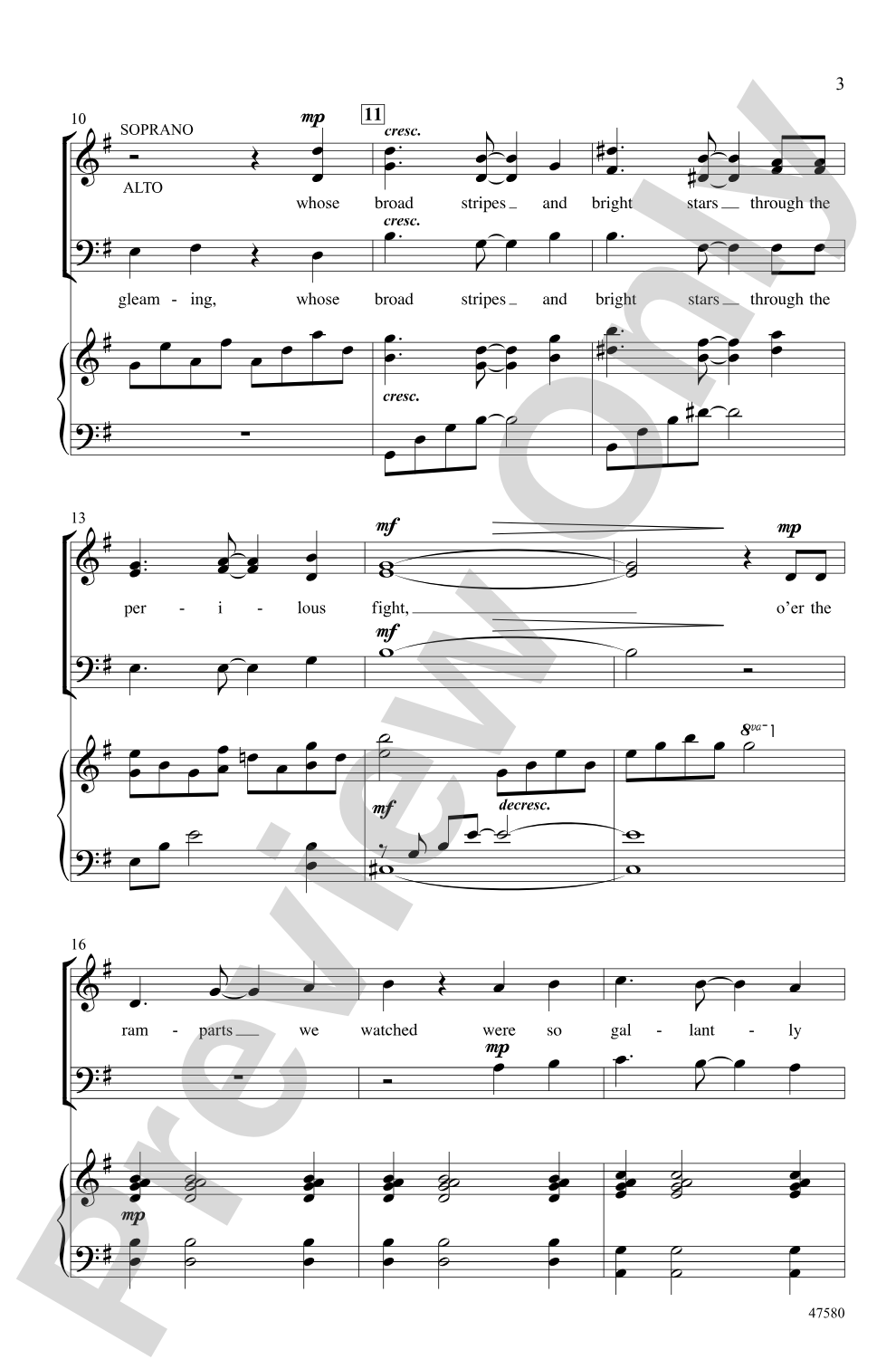
Program this moving patriotic piece to celebrate our country at any time of year. An all-new original melody and a shimmering accompaniment beautifully highlight Francis Scott Key's words from “The Star-Spangled Banner.” Toward the end, a lush musical quote from the national anthem blossoms into a final glorious refrain, a soaring penultimate cadence, and one last introspective accolade for “the brave!”


O Say, Can You See: SAB Choral Octavo isn't in MakeMusic Cloud just yet...but it could be. Let us know you'd like to see it, and you'll help shape what comes next. In the meantime, start a free trial and dive into thousands of interactive titles your students can play along with today.
Request This Title
Tell us you want it.
Start Your Free Trial
Explore everything that's ready to play right now.
Sample Audio
1
Audio File
--:--
0:00
0:00
Sample Video
Additional Details
Series:
Alfred Choral Designs
Publisher:
Alfred Music
Page Count:
12
SKU:
00-PO-0005942
More about this title
About the Composer: Ruth Morris Gray

Ruth Morris Gray directs choirs at Rosemead High School in California, where she has shaped the music program since 2004. She holds a Bachelor of Music in Piano Performance and Composition from Biola University and a Master of Arts in Music Composition from UC Santa Barbara, along with her California Single Subject Music Credential from Cal State Northridge.
With over 100 published choral compositions to her name, Gray has established herself as a prolific voice in contemporary choral writing. Beyond the rehearsal room and composition studio, she performs regularly and finds creative renewal through travel, reading, and cycling with her husband.
Why we love this
Ruth Morris Gray crafts an entirely fresh musical setting that honors Key's iconic text without relying on the familiar melody we all know. The strategic placement of an actual "Star-Spangled Banner" quotation near the end rewards listeners with a moment of recognition, making this piece both innovative and resonant. For directors seeking patriotic programming that feels contemporary rather than reverent, this offers genuine musical substance in an accessible SAB voicing.
What to expect
The piece unfolds with introspection and luminosity, drawing singers into Key's powerful words through Gray's original melody rather than relying on anthem familiarity. As the composition progresses, emotional intensity builds; when the actual "Star-Spangled Banner" melody finally emerges, it lands as a deeply satisfying musical statement, followed by a glorious final statement that honors both the text and the moment.
Who it's for
SAB choirs looking for contemporary patriotic music that works for concerts, festivals, and 4th of July celebrations year-round. This piece suits high school and community choirs seeking something more inventive than traditional national anthem arrangements.
How to get the most out of it
- Balance the accompaniment so it shimmers rather than overpowers; the SAB voices should remain clearly audible throughout.
- Shape the musical quote from the national anthem as a moment of emotional arrival; allow the tempo and dynamics to build intentionally into that passage.
- Give the final refrain on 'the brave' room to soar; this penultimate cadence is the emotional peak and deserves full voice support from all sections.
How to use it
Open a patriotic concert with this piece to set a thoughtful, contemporary tone, or place it as a powerful closer for maximum impact on the final cadence. It works equally well as a festival selection or concert feature and carries enough musical sophistication to serve as a meaningful standalone tribute on civic occasions.
Skills your students will build
- Singing original melodies with clear text delivery and emotional conviction
- Balancing three-part mixed voicing while maintaining ensemble blend
- Recognizing and performing musical quotations (identifying the national anthem melody within new harmonic context)
- Shaping dynamic and tempo changes to build toward structural peaks
- Sustaining pitch and tone through extended phrases and cadential moments