
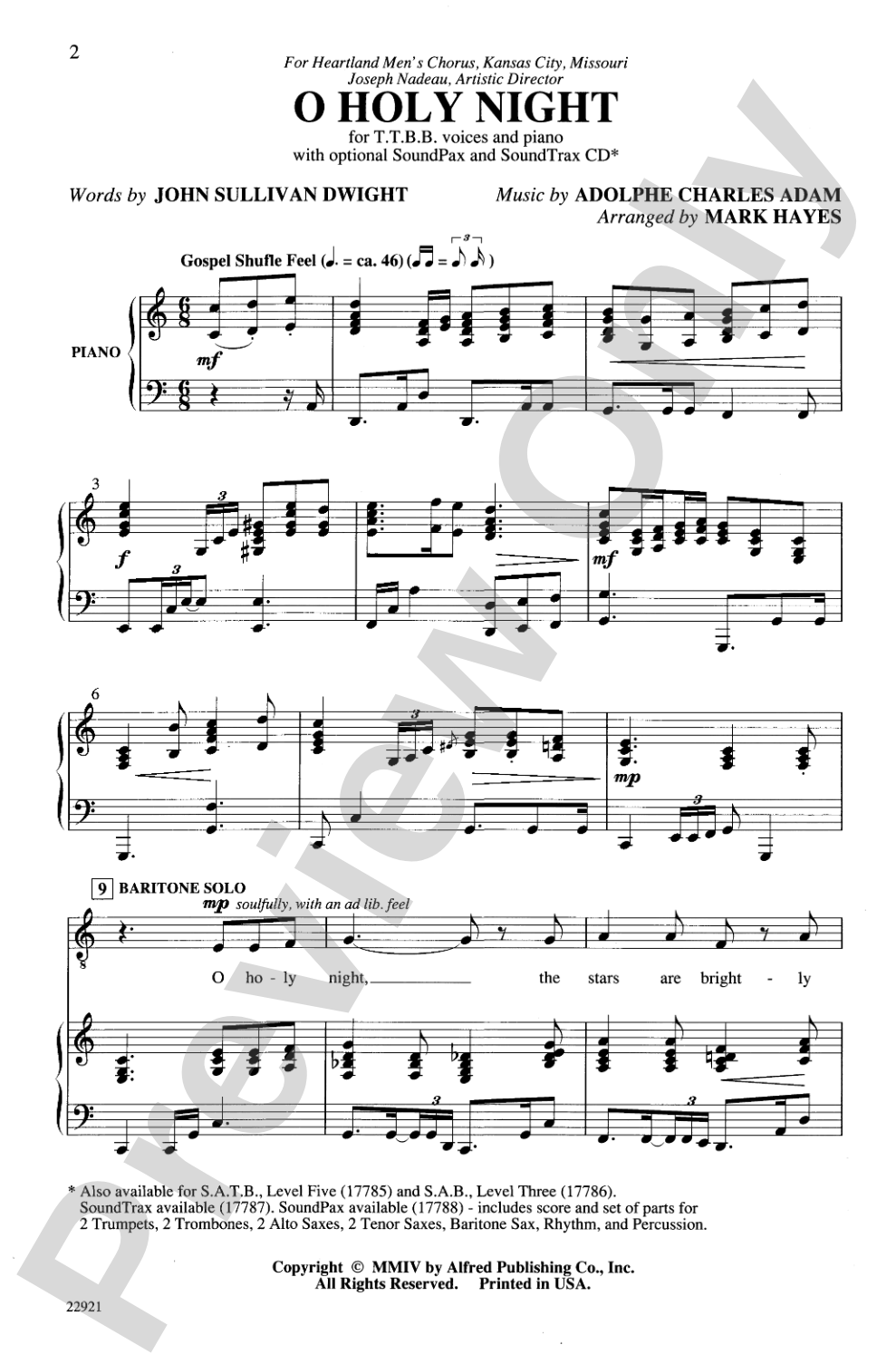
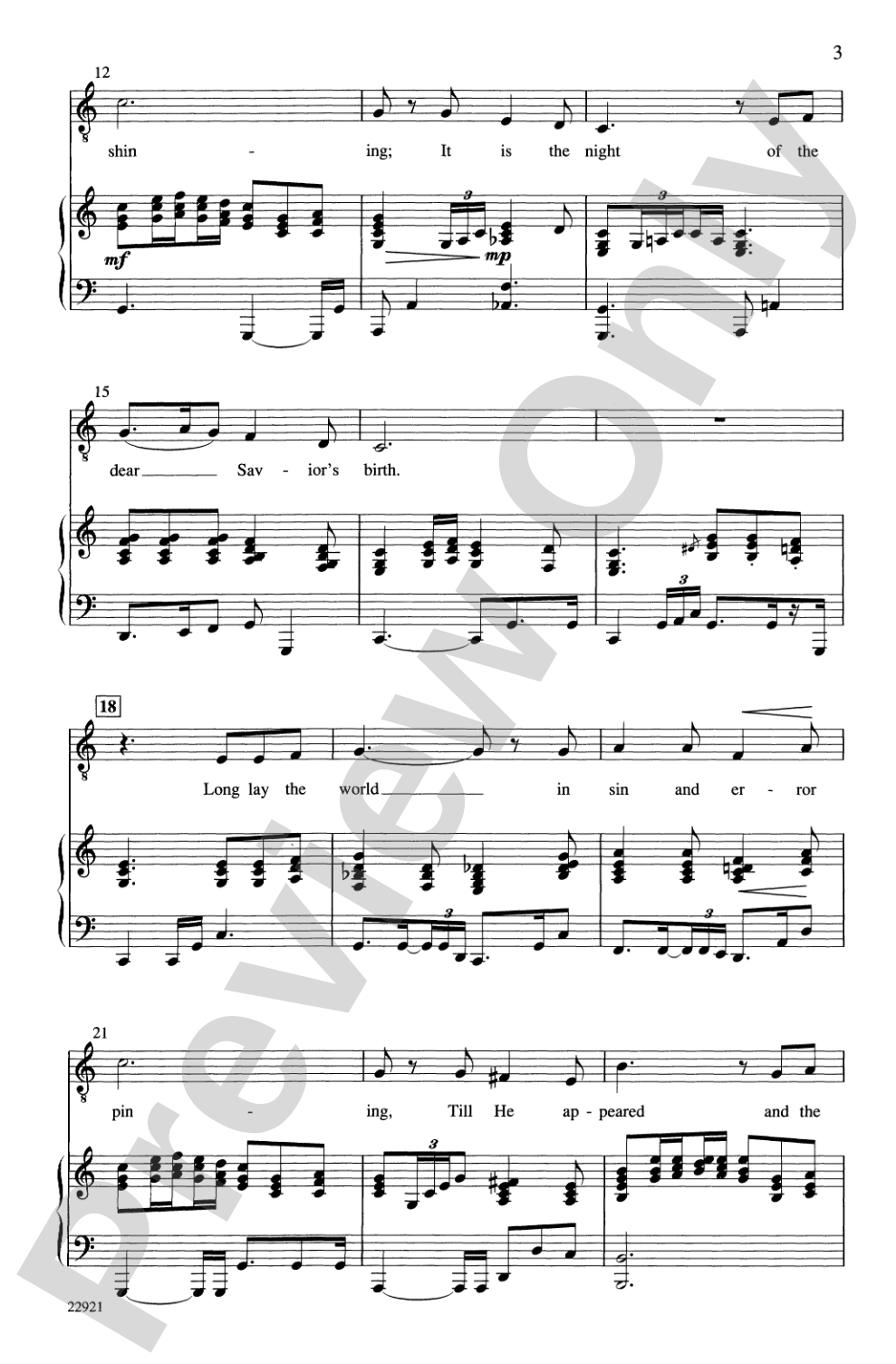
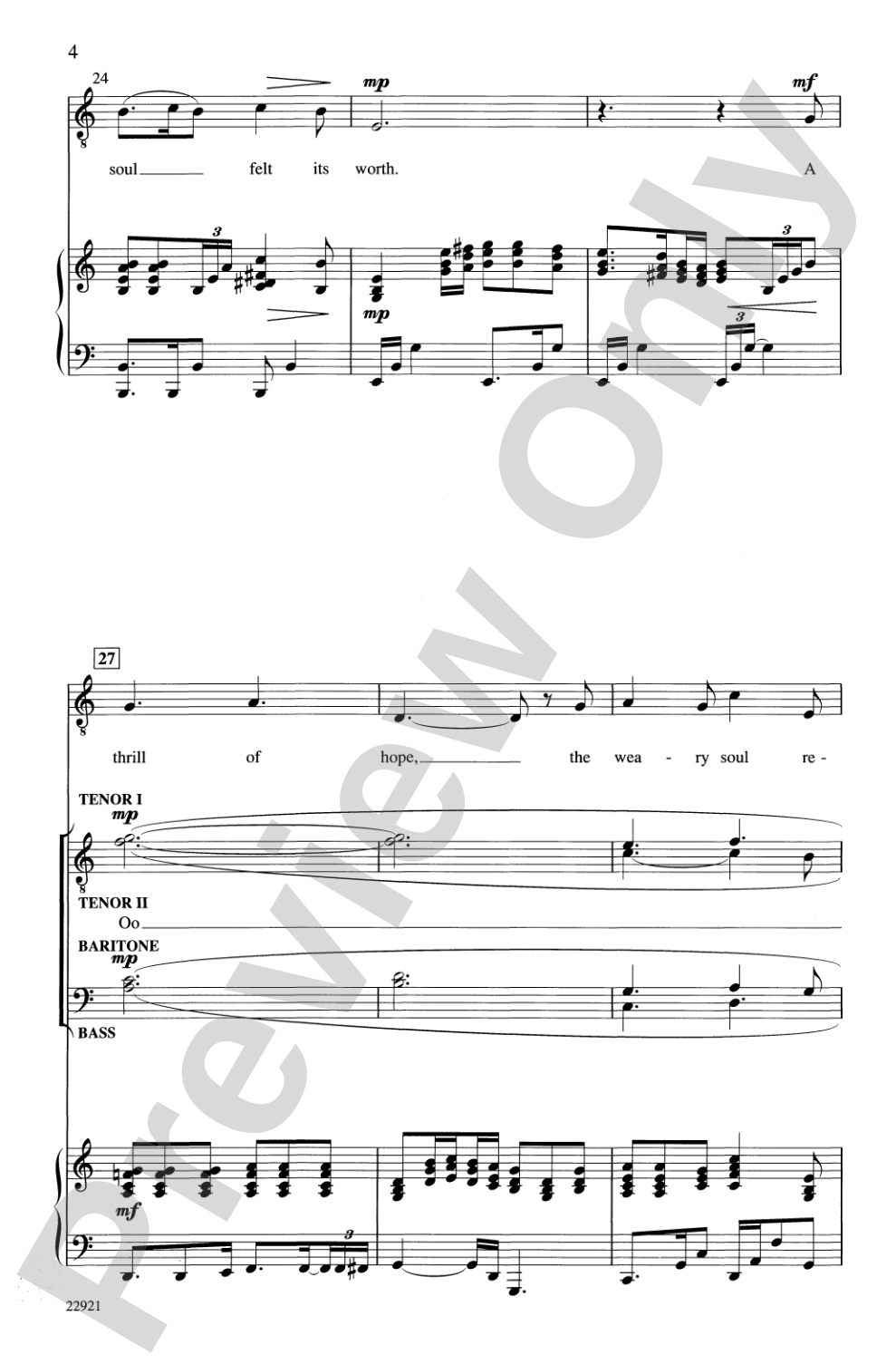

O Holy Night: TTBB Choral Octavo
Music by Adolphe Charles Adam / arr. Mark Hayes
Item: 00-PO-0004314
$2.95
Minimum order quantity: 20 copies
Pickup currently not available
Related Items
O Holy Night: SATB Choral Octavo |
$2.95
|
View | |
O Holy Night: SAB Choral Octavo |
$2.95
|
View | |
O Holy Night: Choral SoundPax |
$35.00
|
View | |
O Holy Night: SATB Choral Octavo |
$2.95
|
View | |
O Holy Night: TTBB Choral Octavo |
$2.95
|
View | |
O Holy Night: Choral Octavo SoundTrax CD |
$27.99
|
View | |
O Holy Night: Choral SoundPax |
$35.00
|
View |
Description
Here's an outstanding gospel-style arrangement by Mark Hayes of one of our most beloved Christmas works. Mark's fresh and contemporary approach makes it suitable for both school and sacred performance. It's big, it's powerful, and it's sure to elicit an emotional response from your singers and your audience. The arrangement builds to a powerful climax, then falls to mezzo piano before driving to a stunning and brilliant close. A top-seller, now available for your men.


O Holy Night: TTBB Choral Octavo isn't in MakeMusic Cloud just yet...but it could be. Let us know you'd like to see it, and you'll help shape what comes next. In the meantime, start a free trial and dive into thousands of interactive titles your students can play along with today.
Request This Title
Tell us you want it.
Start Your Free Trial
Explore everything that's ready to play right now.
Sample Audio
1
Audio File
--:--
0:00
0:00
Sample Video
No sample videos found.
Additional Details
Series:
Alfred Archive Edition: Alfred Choral Designs
Publisher:
Alfred Music
Page Count:
16
SKU:
00-PO-0004314
More about this title
About the Composer: Adolphe Charles Adam
Adolphe Charles Adam (1803-1856) was a prolific French composer whose gift for melody and dramatic pacing made him one of the most performed composers of the Romantic era. Though he wrote across multiple genres, his sacred and secular choral works remain standards in music education and worship settings, valued for their accessibility and emotional directness.
Adam's "O Holy Night" originated as part of his larger compositional output and has become synonymous with Christmas celebrations worldwide. His ability to craft memorable, singable lines ensured that his music would outlast many of his contemporaries and continue to serve musicians and audiences generations later.
Why we love this
Mark Hayes's gospel-influenced arrangement captures the spiritual urgency of this beloved carol while giving men's voices a chance to command the room. The architecture is masterful: the piece builds with genuine momentum, pulls back strategically to let the text breathe, then closes with unrelenting power that lands hard. Singers feel the drama immediately, and audiences respond to the conviction.
What to expect
Devotional yet driving, this arrangement pulses with the urgency of testimony. The gospel sensibility gives it a warmth and directness that feels immediate rather than ceremonial, while Hayes's compositional craft keeps it from tipping into sentimentality. When the climax hits and the harmony locks, it's transcendent.
Who it's for
Men's choirs and TTBB ensembles looking for a Christmas piece that combines spiritual substance with contemporary style. Directors who want their singers to experience the energy of gospel-influenced writing without sacrificing the reverence the text deserves.
How to get the most out of it
- Shape the dynamic rise carefully through the first sections rather than jumping to full volume too early; this gives the climax genuine impact when it arrives.
- Balance the four parts so that the lower voices anchor the harmony without drowning out the text, especially when the piece gets busy in the middle sections.
- Treat the mezzo piano moment as a genuine reduction in energy and resonance, not just a volume drop; let it create genuine vulnerability before the final drive.
- Use the recorded accompaniment to establish the contemporary groove that underpins the arrangement, then develop the men's part confidence independently.
How to use it
Position this as your concert's emotional centerpiece rather than an opening number. The power and length make it work best when your audience is already settled and ready to listen deeply. It pairs naturally with other arrangements of familiar carols, or as the anchor piece in a diverse holiday program.
Skills your students will build
- Reading and executing dynamic shifts across sustained harmonic passages
- Balancing four independent vocal lines while maintaining textural clarity
- Interpreting gospel-inflected phrasing and rhythmic language in a choral setting
- Building and sustaining ensemble resonance through strategic climactic moments
- Connecting emotional intent to vocal production and ensemble blend