
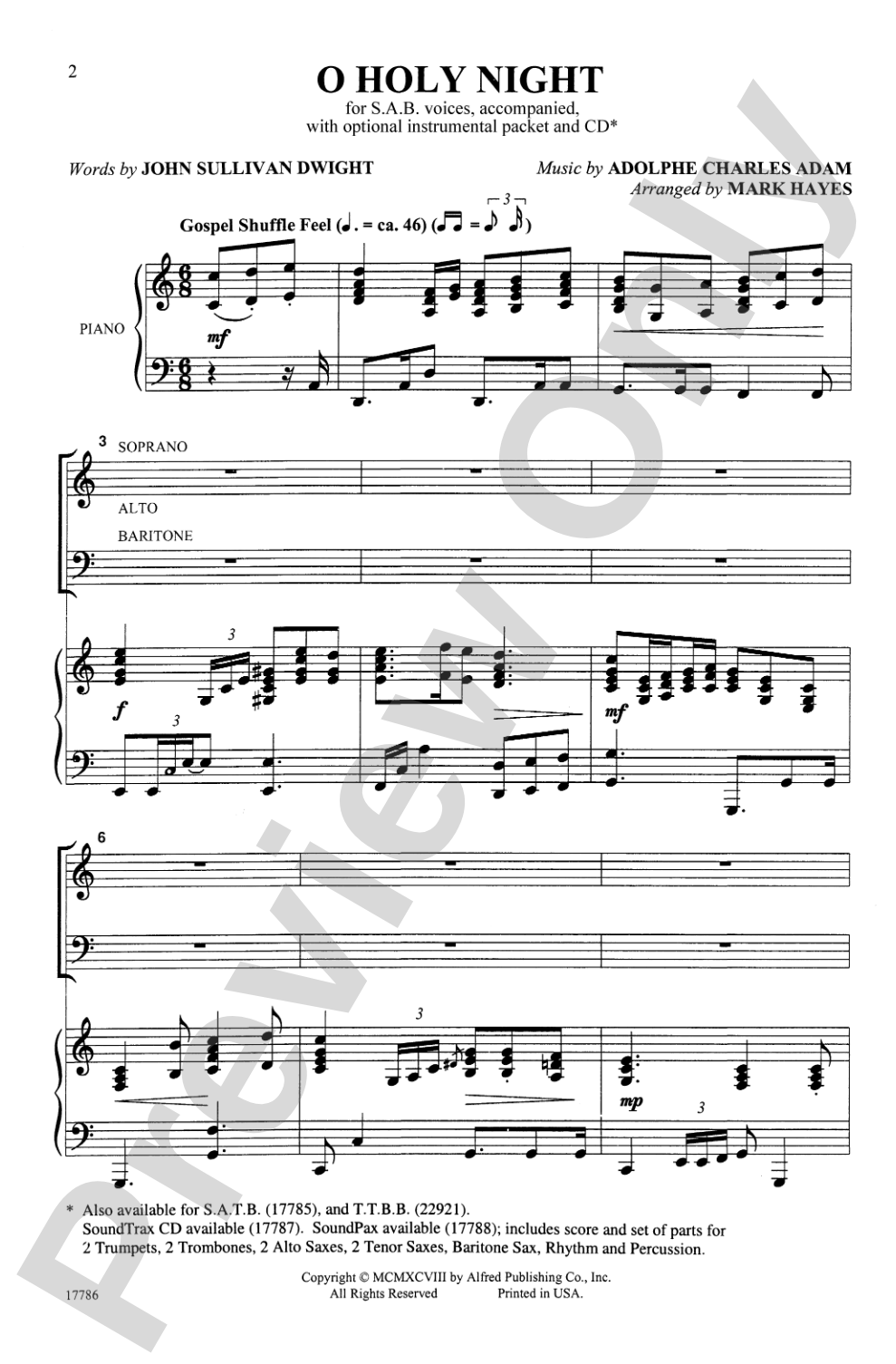
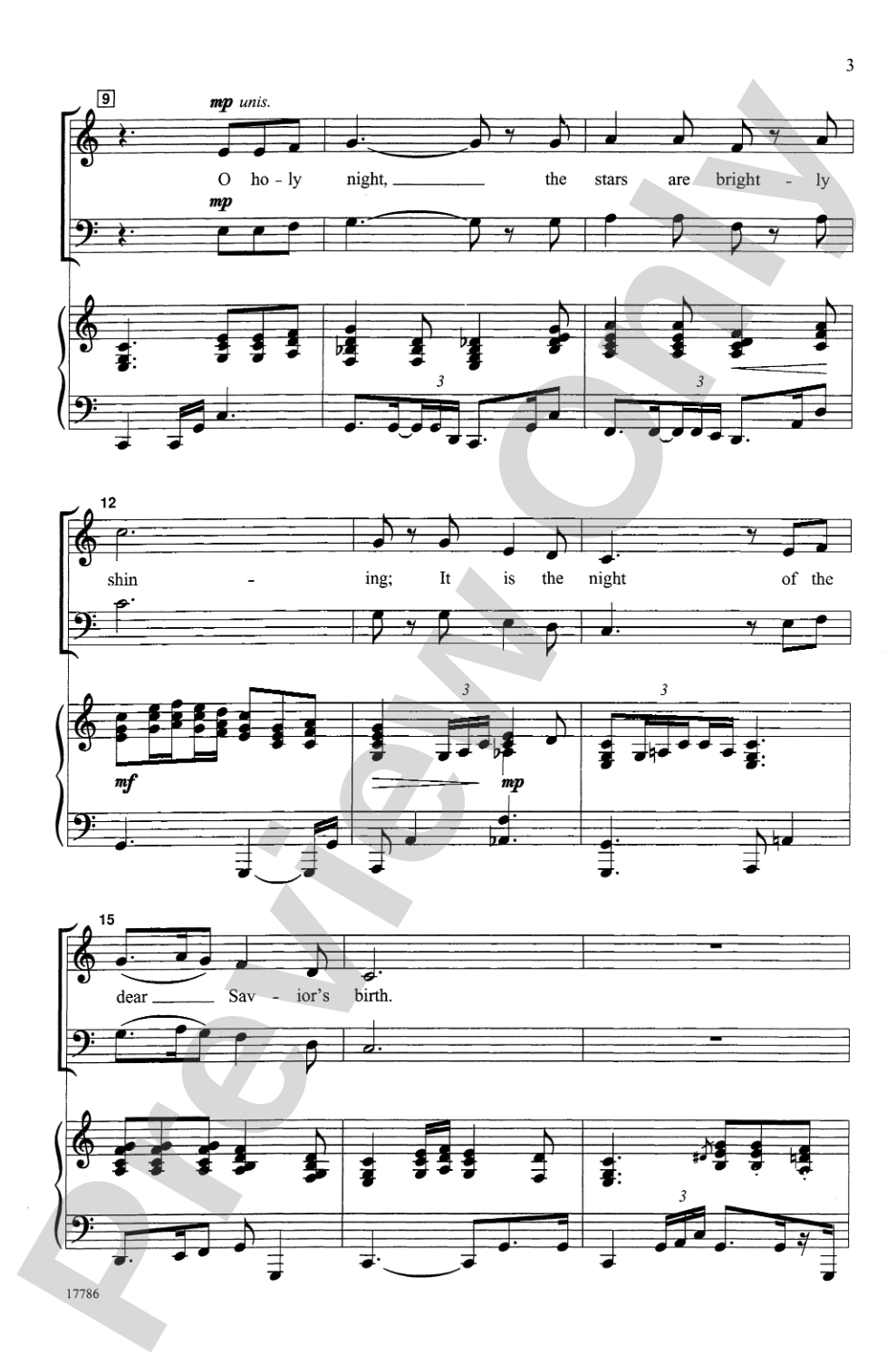
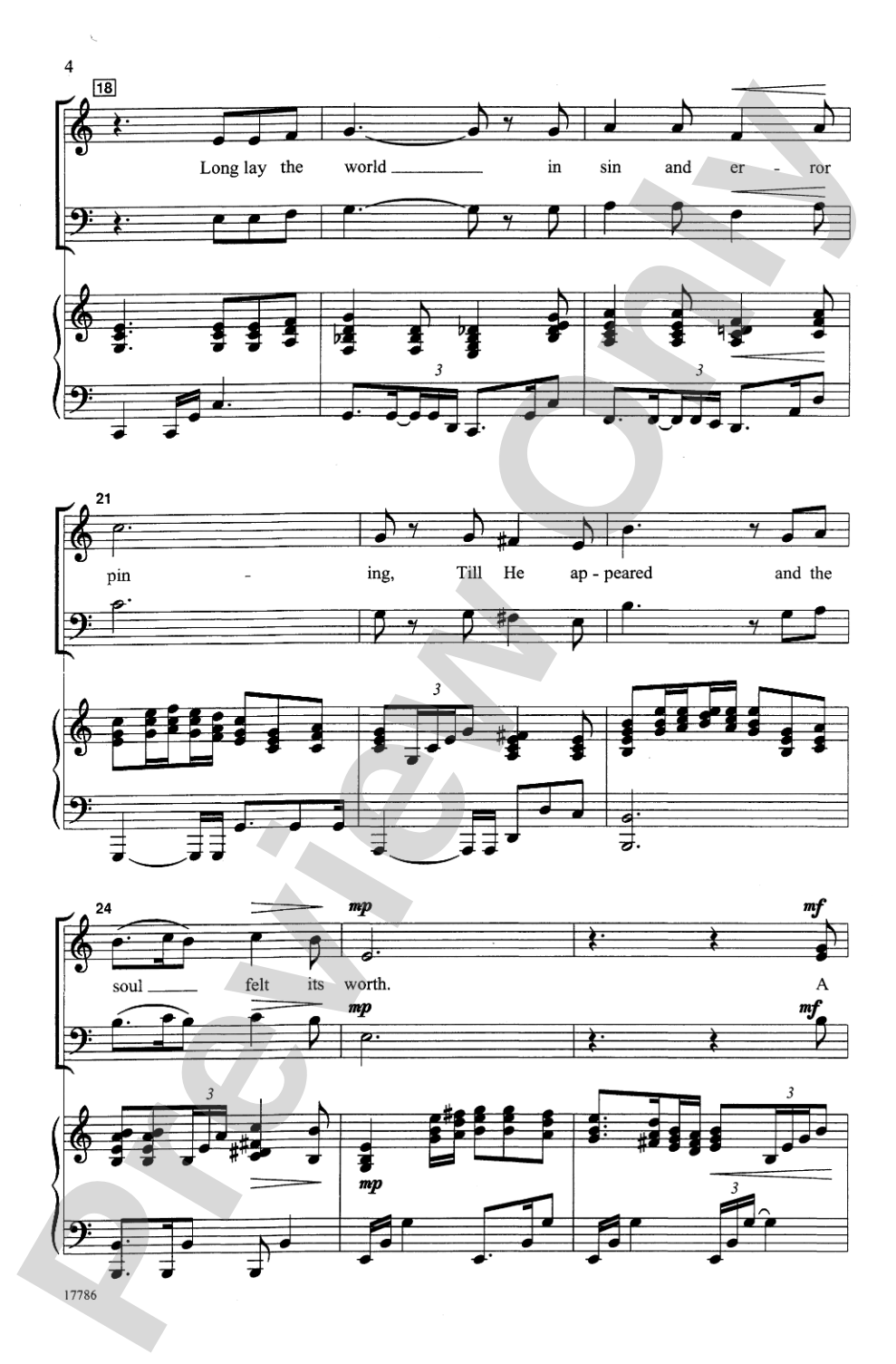

O Holy Night: SAB Choral Octavo
Words by John S. Dwight, music by Adolphe Charles Adam / arr. Mark Hayes
Item: 00-PO-0004021
$2.95
Minimum order quantity: 20 copies
Pickup currently not available
Related Items
O Holy Night: SATB Choral Octavo |
$2.95
|
View | |
O Holy Night: TTBB Choral Octavo |
$2.95
|
View | |
O Holy Night: Choral SoundPax |
$35.00
|
View | |
O Holy Night: SATB Choral Octavo |
$2.95
|
View | |
O Holy Night: TTBB Choral Octavo |
$2.95
|
View | |
O Holy Night: Choral Octavo SoundTrax CD |
$27.99
|
View | |
O Holy Night: Choral SoundPax |
$35.00
|
View |
Description
Superb gospel-style arrangement by Mark Hayes. Fresh, contemporary, big, powerful. Sure to elicit an emotional response from your singers and audiences.


O Holy Night: SAB Choral Octavo isn't in MakeMusic Cloud just yet...but it could be. Let us know you'd like to see it, and you'll help shape what comes next. In the meantime, start a free trial and dive into thousands of interactive titles your students can play along with today.
Request This Title
Tell us you want it.
Start Your Free Trial
Explore everything that's ready to play right now.
Sample Audio
1
Audio File
--:--
0:00
0:00
Sample Video
No sample videos found.
Additional Details
Series:
Alfred Archive Edition: Alfred Choral Designs
Publisher:
Alfred Music
Page Count:
16
SKU:
00-PO-0004021
More about this title
About the Composer: Adolphe Charles Adam
Adolphe Charles Adam (1803–1856) was a French composer and conductor whose gift for melody made him one of the most performed opera composers of his era. He wrote over 70 works for the stage, including the beloved ballet Giselle, and his music exemplifies the Romantic period's emphasis on direct emotional appeal and singable lines.
Adam's sacred works, including the original 'O Holy Night' (Cantique de Noël), blend his theatrical sensibilities with genuine devotional warmth. The piece has become a holiday staple precisely because its melody is unforgettable and its harmonic language speaks across centuries and stylistic boundaries.
Why we love this
Mark Hayes's gospel transformation reshapes this 19th-century carol into something that feels alive and immediate without losing the melody's sacred core. The SAB voicing opens this arrangement to choirs with limited tenor sections while the contemporary harmonic language and rhythmic energy give singers something genuinely exciting to sink their teeth into. Directors will find a piece that connects equally well with audiences and gives singers the satisfaction of singing something that sounds substantial and modern.
What to expect
The piece radiates warmth and immediacy from the opening, building steadily into something powerful and celebratory. Hayes respects the original melody's emotional weight while surrounding it with contemporary harmonies and rhythmic energy that make it feel urgent and alive, never stale or nostalgic.
Who it's for
This arrangement suits choirs with consistent attendance and secure sightreaders who can handle jazz-inflected harmony and syncopation. It works well for groups that want a substantial Christmas feature with contemporary style, or singers who gravitate toward gospel and popular idioms alongside traditional sacred music.
How to get the most out of it
- Let the rhythm section lock in early. The gospel feel depends on the percussive precision of the accompaniment, so run several full-voice rehearsals with the recorded accompaniment to establish the groove before isolating voice parts.
- Balance the soaring moments with restraint in ensemble sections. This arrangement builds dynamically, so resist the urge to sing forte throughout; save your power for the climactic phrases where Hayes has scored them.
- Shape the melody line through the altos and sopranos with clear phrasing rather than slavish note-to-note accuracy. The gospel idiom thrives on slight rhythmic flexibility and vocal inflection, not metronomic precision.
- Emphasize articulation in the accompaniment parts, especially baritone and second soprano lines that drive the harmonic rhythm. Clean diction and rhythmic clarity in the lower voices will lift the entire choir.
How to use it
Slot this as a substantial Christmas concert centerpiece or a secondary feature that pairs well with more traditional carols on the same program. The contemporary gospel style creates strong contrast if you program it alongside classical arrangements, and its emotional directness makes it an excellent closer that leaves audiences moved.
Skills your students will build
- Reading and performing gospel-style phrasing and inflection
- Balancing choral blend in contemporary harmonic contexts
- Executing syncopated rhythms and jazz-influenced articulation
- Interpreting dynamic shape across a large arc