
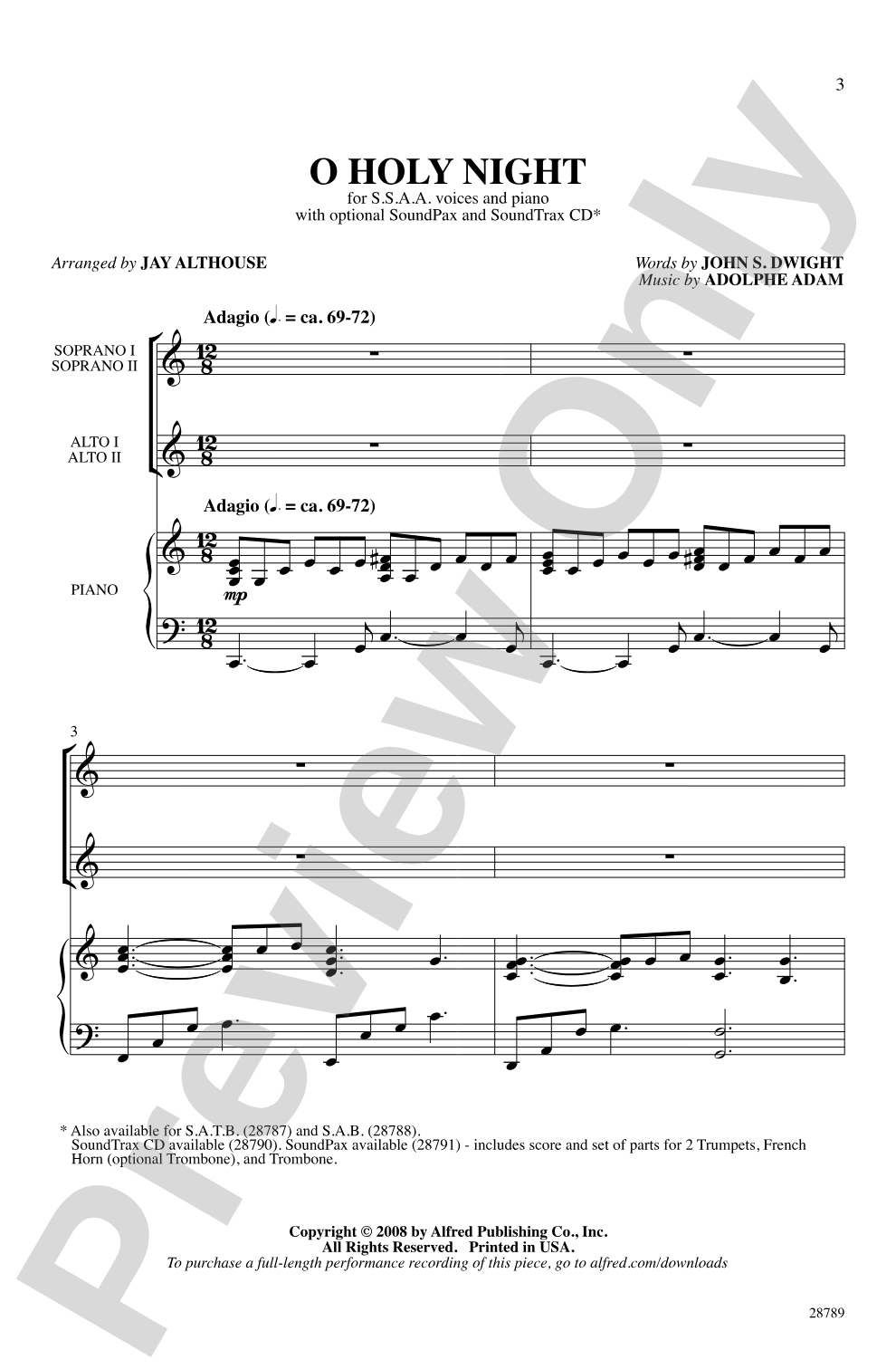
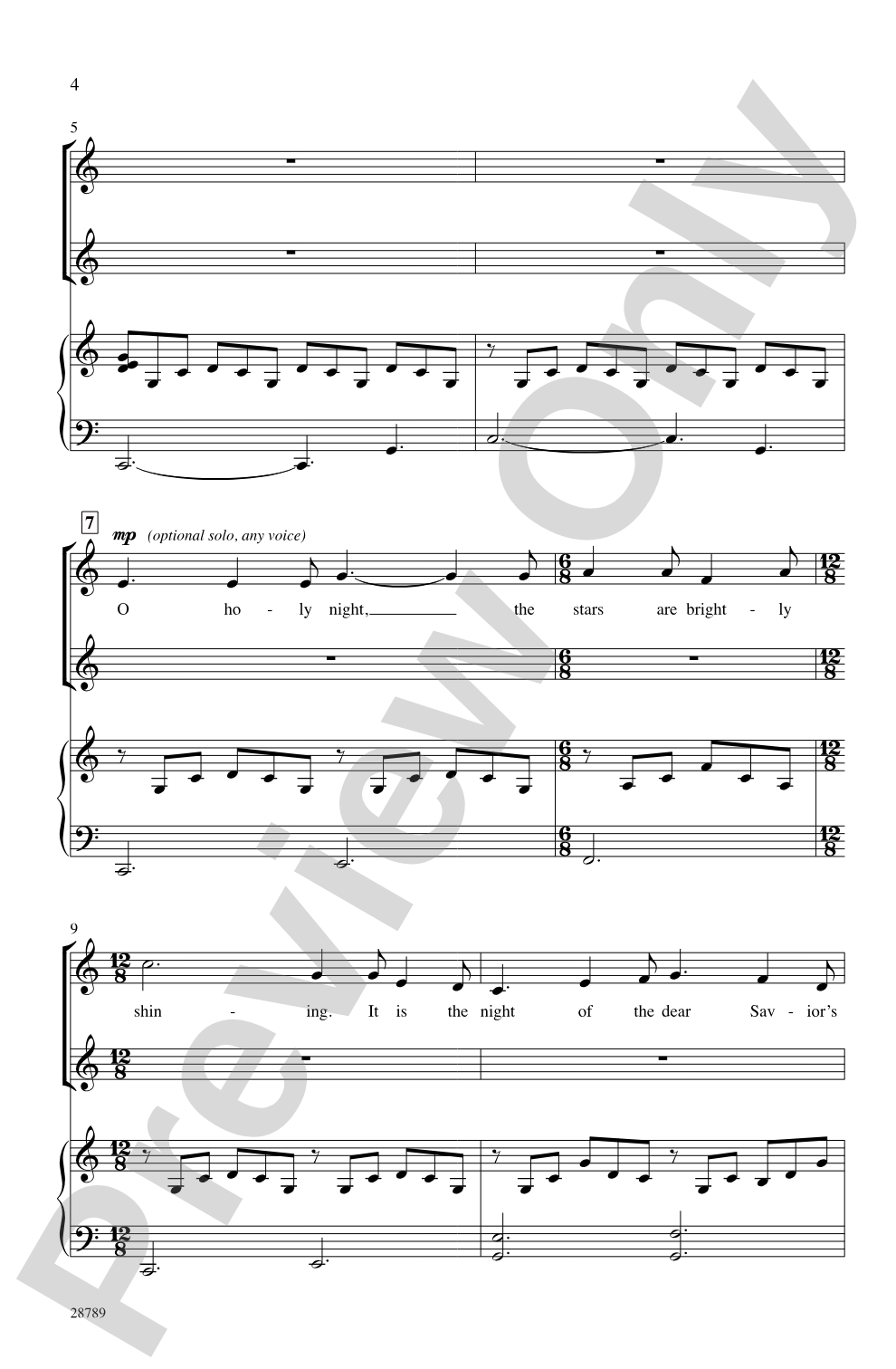

O Holy Night: SSAA Choral Octavo
French Carol
Words by John S. Dwight, music by Adolphe Adam / arr. Jay Althouse
Item: 00-PO-0000579
$1.75
Minimum order quantity: 20 copies
Pickup currently not available
Related Items
O Holy Night: SoundTrax Digital Audio Download |
$27.99
|
View | |
O Holy Night: SATB Choral Octavo |
$2.05
|
View | |
O Holy Night: SAB Choral Octavo |
$2.25
|
View | |
O Holy Night: Choral SoundPax |
$25.00
|
View | |
O Holy Night: SATB Choral Octavo |
$2.05
|
View | |
O Holy Night: SAB Choral Octavo |
$2.25
|
View | |
O Holy Night: SSAA Choral Octavo |
$1.75
|
View | |
O Holy Night: Choral Octavo SoundTrax CD |
$27.99
|
View | |
O Holy Night: Choral SoundPax |
$25.00
|
View |
Description
One of the best-loved Christmas works comes alive in this fresh new arrangement with optional brass. The parts are singable and the unique harmonies are powerful. This arrangement will make your school or church choir sound great.


O Holy Night: SSAA Choral Octavo isn't in MakeMusic Cloud just yet...but it could be. Let us know you'd like to see it, and you'll help shape what comes next. In the meantime, start a free trial and dive into thousands of interactive titles your students can play along with today.
Request This Title
Tell us you want it.
Start Your Free Trial
Explore everything that's ready to play right now.
Sample Audio
1
Audio File
--:--
0:00
0:00
Sample Video
No sample videos found.
Additional Details
Series:
Alfred Choral Designs
Publisher:
Alfred Music
Page Count:
12
SKU:
00-PO-0000579
More about this title
About the Composer: Adolphe Charles Adam
Adolphe Charles Adam (1803-1856) was a French composer whose gift for melody and theatrical storytelling made him one of the most performed composers of his era. Though he wrote operas, ballets, and symphonic works, Adam's music has endured because of its accessibility and emotional directness. His Christmas carol "O Holy Night" (originally "Cantique de Noël") remains a cornerstone of holiday repertoire across choirs, concert halls, and worship spaces worldwide.
Adam studied at the Paris Conservatoire and composed prolifically for the stage, creating works like the ballet "Giselle" that remain in active performance. His ability to craft memorable, singable melodies made his music popular during his lifetime and continues to attract arrangers seeking material with both familiarity and substance. For choirs, Adam's music offers clear harmonic language and expressive potential that rewards both musical development and audience connection.
Why we love this
Jay Althouse's arrangement strips away the sentimentality that can weigh down this beloved carol and gives it fresh harmonic life while keeping the melody front and center where it belongs. The optional brass parts elevate the piece without requiring them, making this flexible for different performance contexts and skill levels. Your singers will feel the power of well-crafted four-part writing combined with music they already love.
What to expect
The arrangement respects the carol's spiritual depth while bringing clarity and warmth to the harmony. Althouse's voicing opens space around the melody, creating a sense of reverence without heaviness, and the optional brass can add ceremony and resonance without losing the intimacy of the original.
Who it's for
School and church choirs singing SSAA voicing will find this arrangement both accessible and musically satisfying. Directors looking for a Christmas piece that sounds polished without excessive demands on range or musicianship will appreciate the singability and the optional brass flexibility.
How to get the most out of it
- Shape the melody with gentle dynamic curves rather than singing it straight through; Adam's tune has natural rise-and-fall contours that benefit from subtle shaping in the upper voice.
- Balance the harmony parts so they support the tune without overwhelming it; encourage lower voices to listen to the treble line and adjust dynamics accordingly.
- If using the optional brass parts, rehearse voices and instruments together at least once before performance so the choir hears how their part functions within the fuller texture.
- Pay attention to phrase breathing; mark staggered breath points in lower voices during longer phrases so the melodic line never feels interrupted.
How to use it
Program this as the emotional centerpiece of a Christmas concert, perhaps paired with lighter secular carols or festive instrumental music to create contrast. It also works beautifully in worship settings, holiday community events, or as a featured piece in a winter concert that mixes secular and sacred repertoire.
Skills your students will build
- Singing sustained lines with proper breath management
- Balancing four-part harmony while maintaining melodic clarity
- Interpreting sacred music with appropriate phrasing and dynamic control
- Ensemble coordination when combining voices with optional instrumental parts