
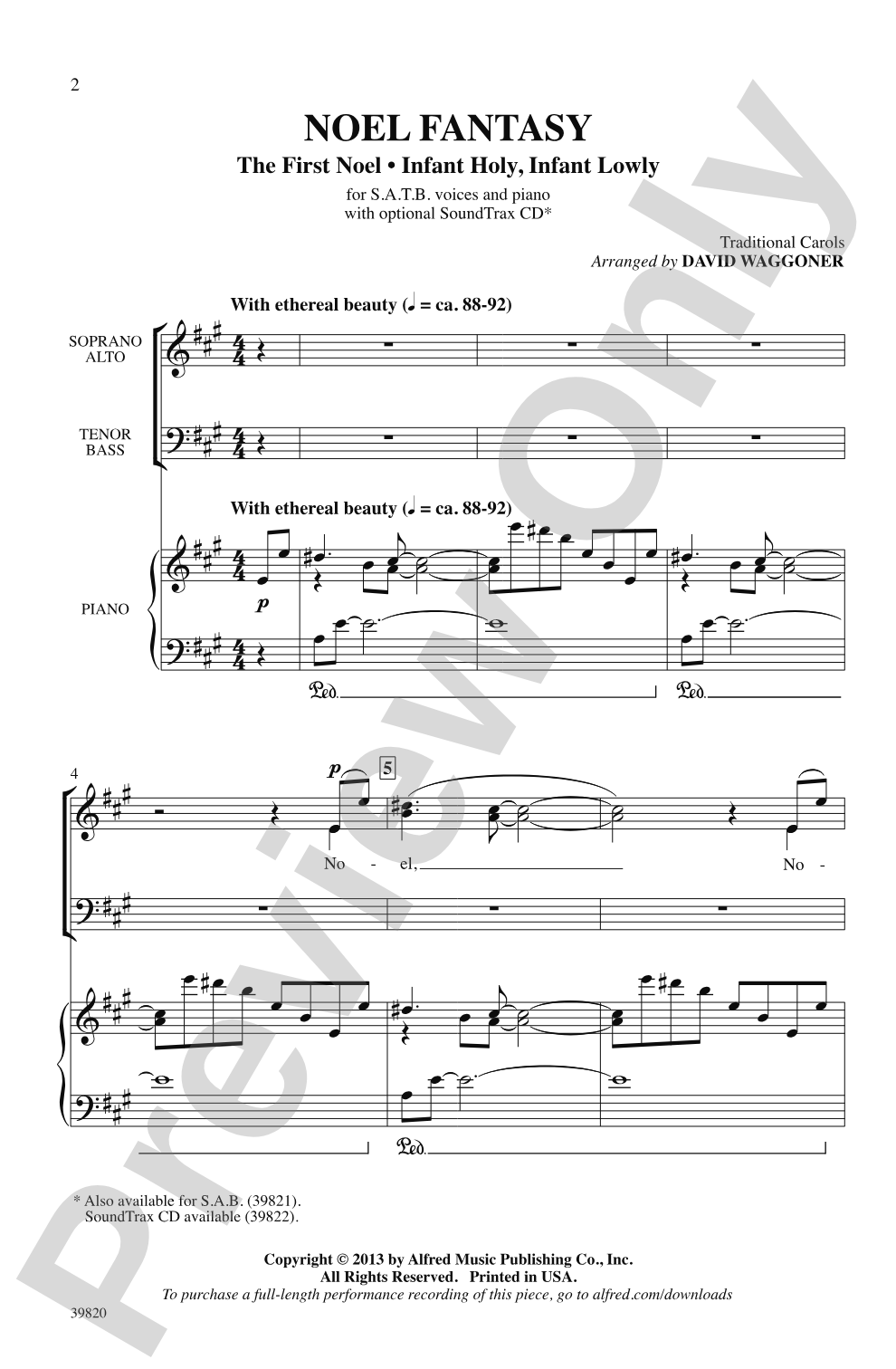

Noel Fantasy: SATB Choral Octavo
The First Noel / Infant Holy, Infant Lowly
Traditional Carols / arr. David Waggoner
Item: 00-PO-0001634
$1.85
Minimum order quantity: 20 copies
Pickup currently not available
Related Items
Noel Fantasy: SoundTrax Digital Audio Download |
$27.99
|
View | |
Noel Fantasy: SAB Choral Octavo |
$1.85
|
View | |
Noel Fantasy: SSA Choral Octavo |
$1.90
|
View | |
Noel Fantasy: SATB Choral Octavo |
$1.85
|
View | |
Noel Fantasy: SAB Choral Octavo |
$1.85
|
View | |
Noel Fantasy: SSA Choral Octavo |
$1.90
|
View | |
Noel Fantasy: Choral Octavo SoundTrax CD |
$27.99
|
View |
Description
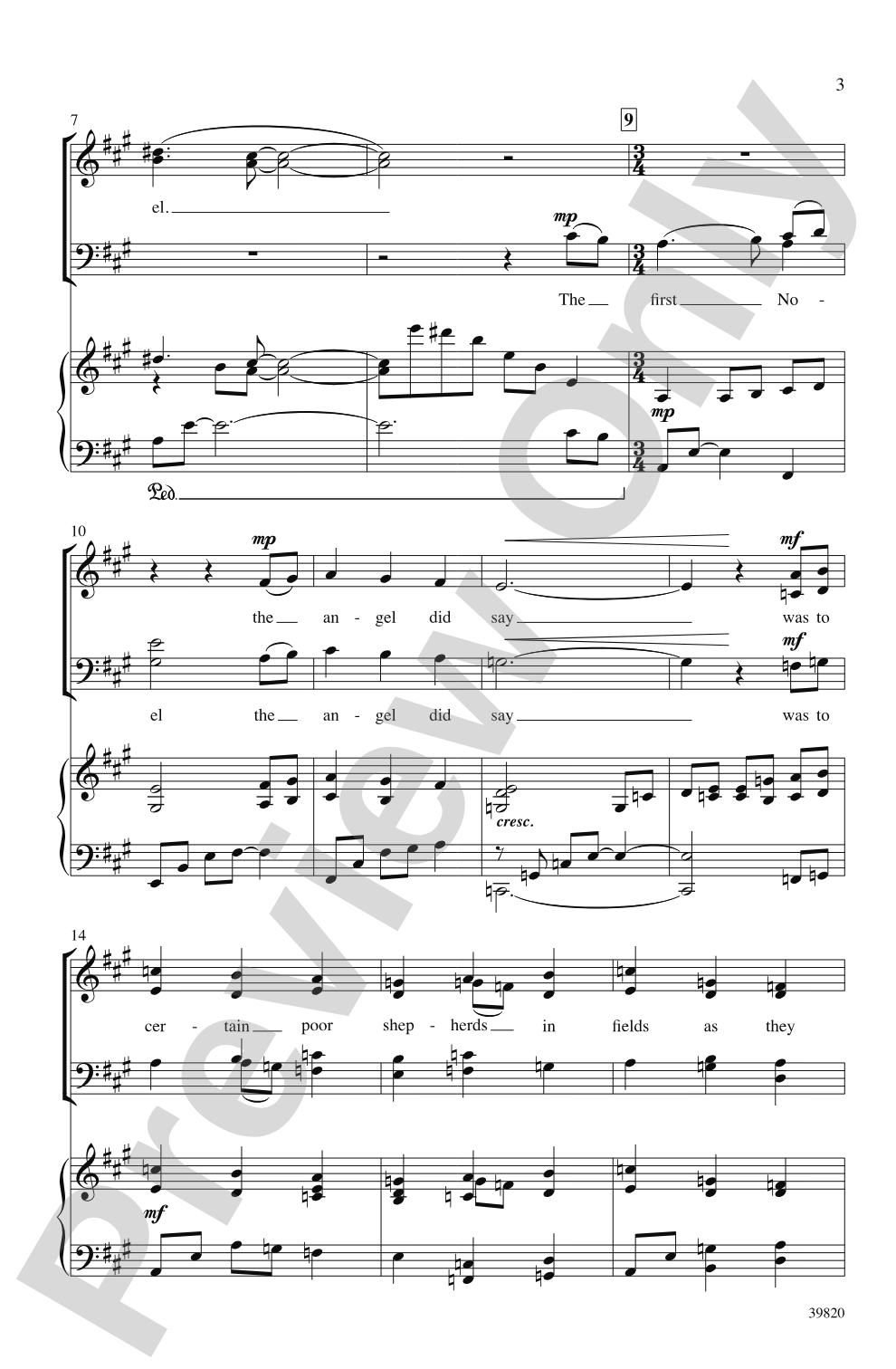
This carol coupling combines two beloved Christmas songs into one imaginative invention. A striking melodic motif opens the arrangement and whispers throughout, joining the familiar with the fresh. Absolutely ethereal.


Noel Fantasy: SATB Choral Octavo isn't in MakeMusic Cloud just yet...but it could be. Let us know you'd like to see it, and you'll help shape what comes next. In the meantime, start a free trial and dive into thousands of interactive titles your students can play along with today.
Request This Title
Tell us you want it.
Start Your Free Trial
Explore everything that's ready to play right now.
Sample Audio
1
Audio File
--:--
0:00
0:00
Sample Video
No sample videos found.
Additional Details
Series:
Alfred Choral Designs
Publisher:
Alfred Music
Page Count:
12
SKU:
00-PO-0001634
More about this title
About the Arranger: David Waggoner

David Waggoner holds degrees from the University of Michigan School of Music and a master's degree from Eastern Michigan University. His work spans choral music, handbells, and instrumental compositions, reflecting a deep commitment to serving music students and church musicians across multiple settings.
Waggoner teaches elementary music in Woodhaven, Michigan, and serves as Director of Music at First United Methodist Church in Wyandotte. His arrangements and compositions emerge from direct experience leading both school and church ensembles, grounding his work in the real needs and capabilities of volunteer and student choirs.
Why we love this
Waggoner's gift for interweaving melodic material creates an arrangement that feels both recognizable and inventive. The opening motif anchors the piece while allowing the two carol traditions to breathe independently, giving your singers a clear musical through-line even as the texture evolves. This is the kind of sophisticated simplicity that makes rehearsals satisfying and performances memorable.
What to expect
Ethereal and intimate, this arrangement hovers between reverence and joy. The recurring motif creates a sense of discovery, as if familiar melodies are being unveiled from within a delicate harmonic cloud. There's a contemplative quality to the piece, yet the blending of two beloved carols brings warmth and familiarity that audiences will recognize immediately.
Who it's for
This octavo suits choirs with solid four-part blend and basic independence in reading. High school choirs, semi-professional church ensembles, and adult community chorales will find the writing accessible without feeling thin. The arrangement also works well for directed youth choirs or skilled middle school groups seeking holiday repertoire with genuine musical substance.
How to get the most out of it
- Shape the recurring melodic motif with care in every voice part. This unifying gesture is what transforms two separate carols into one cohesive whole, so consistency and clarity matter more than volume.
- Attend to the balance between the familiar melody and the inner harmonic movement. Singers often over-emphasize the top line; remind your section leaders that Waggoner has written supporting material that deserves its own presence.
- Use the recorded accompaniment as a rehearsal tool to establish tempo and harmonic foundation, especially during early run-throughs when singers are still learning note relationships.
How to use it
Program this as a centerpiece carol during a mixed-repertoire Christmas concert, where it can anchor a set of contrasting holiday music. The arrangement's sophistication pairs well alongside instrumental works or more modern sacred selections, elevating a traditional carol to concert-worthy status. Its 12-page length and moderate difficulty also make it ideal for a winter church service where you want to move beyond standard congregational carols without demanding extensive rehearsal time.
Skills your students will build
- Blending sustained harmonic textures across four parts
- Tracking and maintaining a recurring motivic gesture across structural sections
- Reading SATB voice independence while maintaining ensemble unity
- Balancing melody and accompaniment within a single arranged piece