
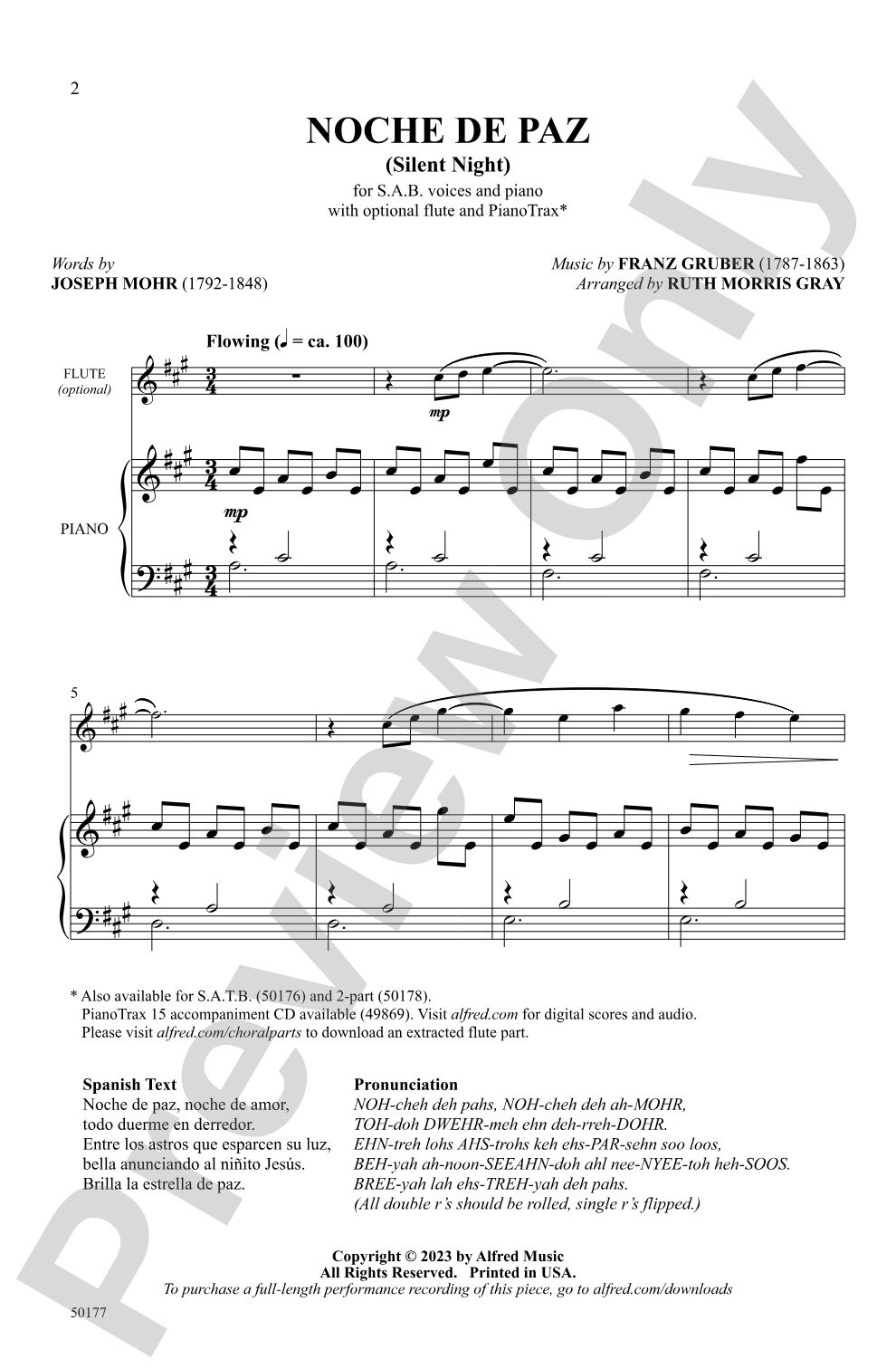
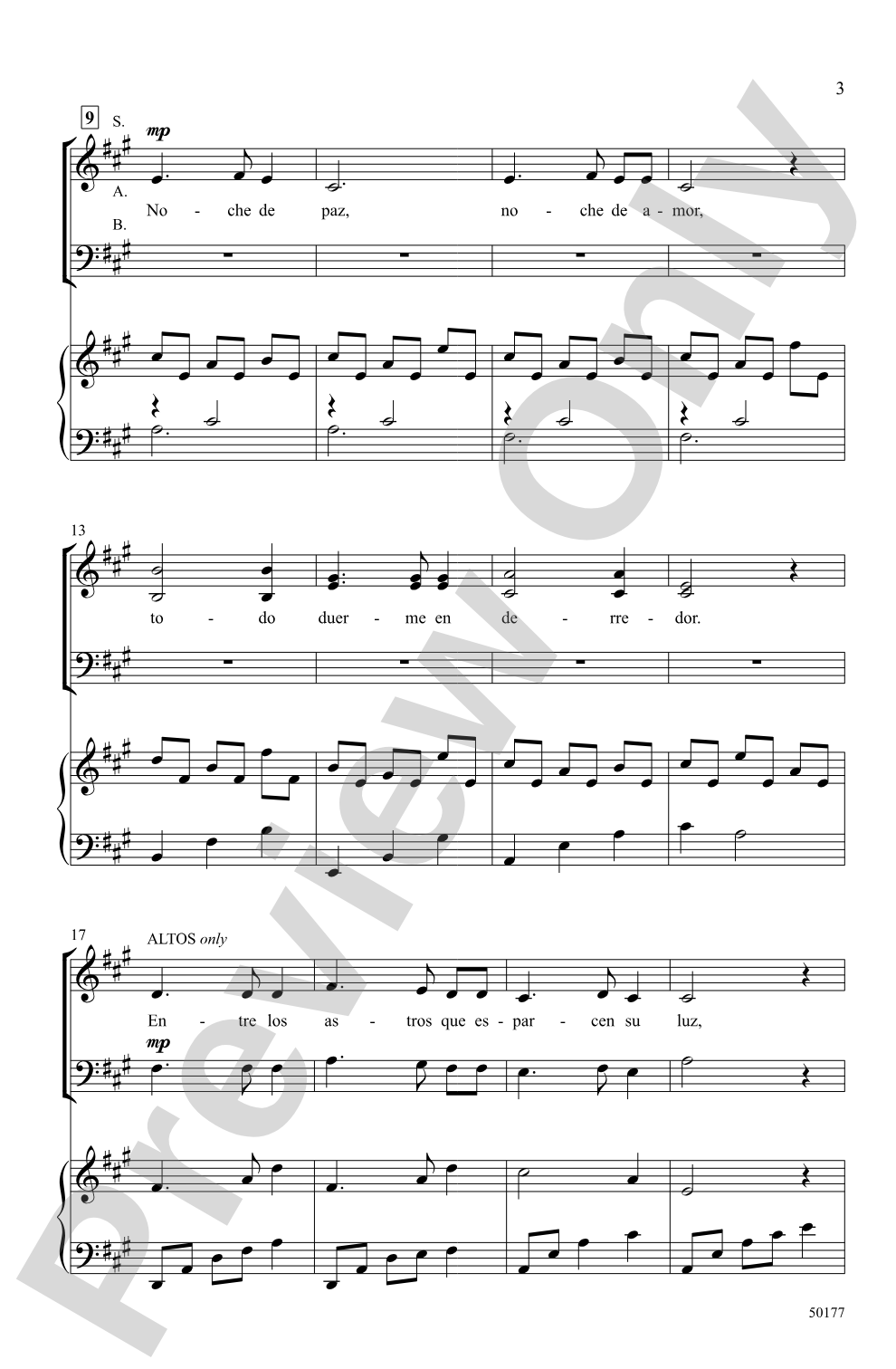
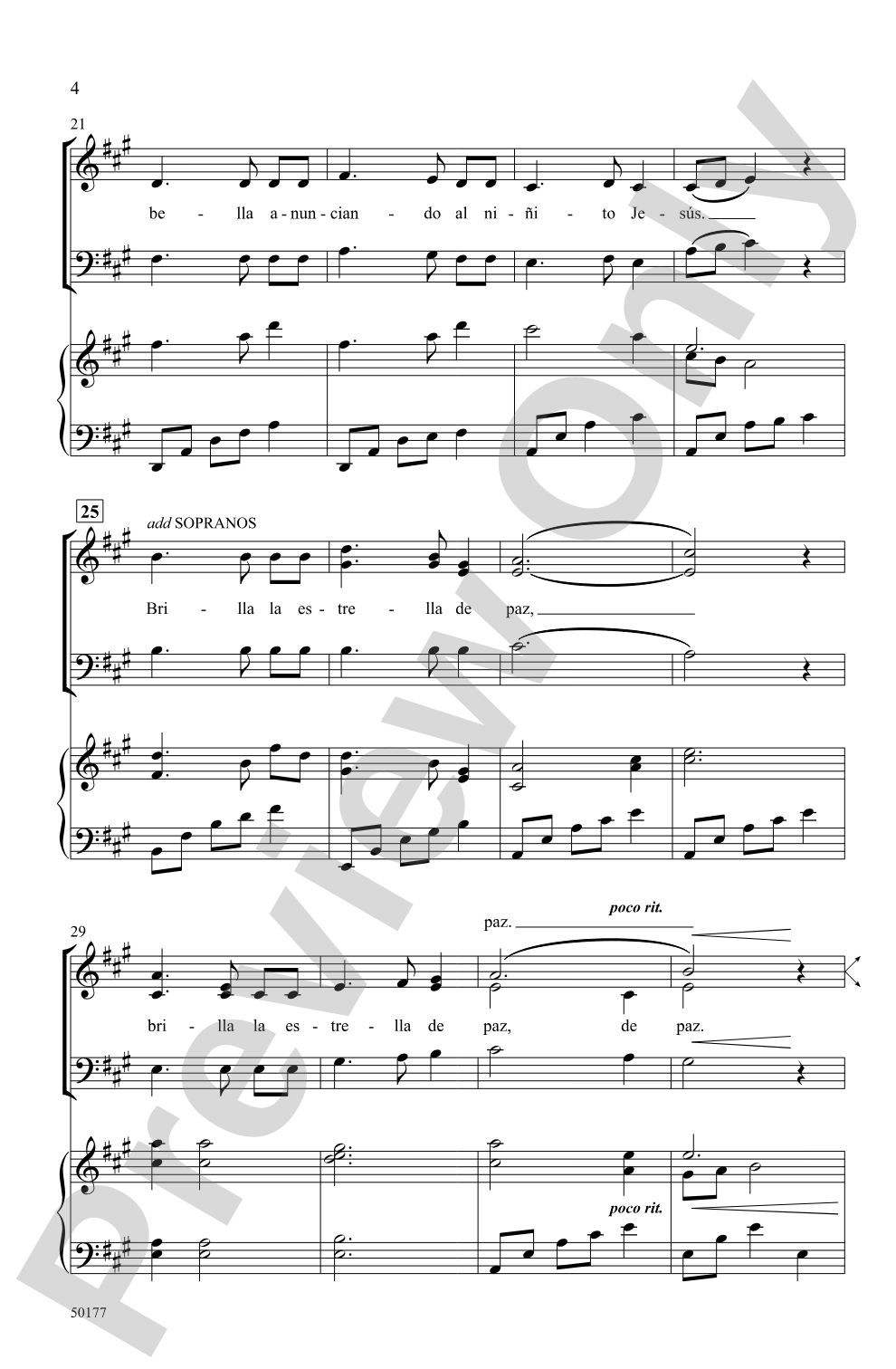

Noche de Paz: SAB Choral Octavo
(Silent Night)
Words by Joseph Mohr, music by Franz Gruber / arr. Ruth Morris Gray
Item: 00-PO-0007038
$2.05
Minimum order quantity: 20 copies
Pickup currently not available
Description
This bilingual arrangement of "Silent Night" alternates between Spanish and English verses. Ruth pays careful attention to expressive phrasing, voice leading, and tessitura, making it easy for school, community, and church choirs to prepare and perform. The flowing piano part and an optional flute obbligato bring a peaceful sense of reverence. Teach it this year and sing it for years to come.


Noche de Paz: SAB Choral Octavo isn't in MakeMusic Cloud just yet...but it could be. Let us know you'd like to see it, and you'll help shape what comes next. In the meantime, start a free trial and dive into thousands of interactive titles your students can play along with today.
Request This Title
Tell us you want it.
Start Your Free Trial
Explore everything that's ready to play right now.
Sample Audio
1
Audio File
--:--
0:00
0:00
Sample Video
Additional Details
Series:
Alfred Choral Designs
Publisher:
Alfred Music
Page Count:
12
SKU:
00-PO-0007038
More about this title
About the Composer: Franz Gruber
Franz Gruber (1787-1863) was an Austrian organist and composer whose single most enduring work has become synonymous with Christmas itself. Though he composed numerous sacred pieces and songs during his lifetime, "Silent Night" (original title "Stille Nacht, Heilige Nacht") emerged from a humble circumstance in 1818 when he composed the melody for a poem by Joseph Mohr at the Church of St. Nikolaus in Oberndorf, Austria.
Gruber's gift was his ability to marry profound spiritual emotion with melodic simplicity. The tune requires no virtuosity, yet its arc and phrasing carry deep devotional weight. For music educators, Gruber's work represents a masterclass in how a genuinely singable melody can transcend centuries and cultures, becoming a touchstone for choirs of all levels.
Why we love this
Ruth Morris Gray's arrangement honors the intimacy of Gruber's original while solving a real need for bilingual choral programming. The SAB voicing keeps the piece accessible without simplifying it, and the attention to tessitura means your singers will feel supported rather than strained. This is the arrangement that makes "Silent Night" feel fresh in December without losing an ounce of reverence.
What to expect
Peaceful and grounded, never precious. The alternating Spanish and English verses create a gentle conversation between languages, while the flowing piano and optional flute weave together like candlelight. Despite its familiarity, the bilingual approach gives the eternal melody a quiet sense of discovery, inviting both singers and listeners into a moment of genuine stillness.
Who it's for
This arrangement serves choirs that perform across school, community, and church settings and want a "Silent Night" that honors both English and Spanish traditions in one seamless performance. Singers with intermediate reading skills will find the SAB voicing straightforward while the sensitive text-setting keeps emotional maturity at a premium. The piece works equally well for holiday concerts and contemplative winter services.
How to get the most out of it
- Balance the Spanish and English verses by treating them as equal musical statements rather than translations. Each language brings its own color; let that distinction breathe in the performance.
- Shape the optional flute obbligato with restraint. It enhances the piano's reverent accompaniment rather than competing with the choir; keep it conversational.
- Pay close attention to Gray's phrasing marks in the score. Her voice leading creates natural breathing points that prevent the piece from becoming static, even at a contemplative tempo.
- Use the recorded accompaniment to establish the flowing piano part and obbligato texture during early rehearsals, then transition to live accompaniment for the spaciousness it provides.
How to use it
Program this in the second half of a holiday concert where you need to shift the emotional temperature toward quiet reflection. It pairs well before or after other seasonal music in Spanish, or use it as the bookend to an evening that celebrates multicultural holiday traditions. The 12-page score fits easily into December calendars even with late preparation, making it ideal for concert planning when scheduling is tight.
Skills your students will build
- Singing in Spanish with correct vowel sounds and phrase shape
- Balancing SAB voice independence while maintaining harmonic blend
- Interpreting expressive phrasing and text declamation across two languages
- Sustaining a sustained, legato line at a contemplative tempo
- Listening to and blending with optional flute obbligato