

Noche de Paz: SATB Choral Octavo
(Silent Night)
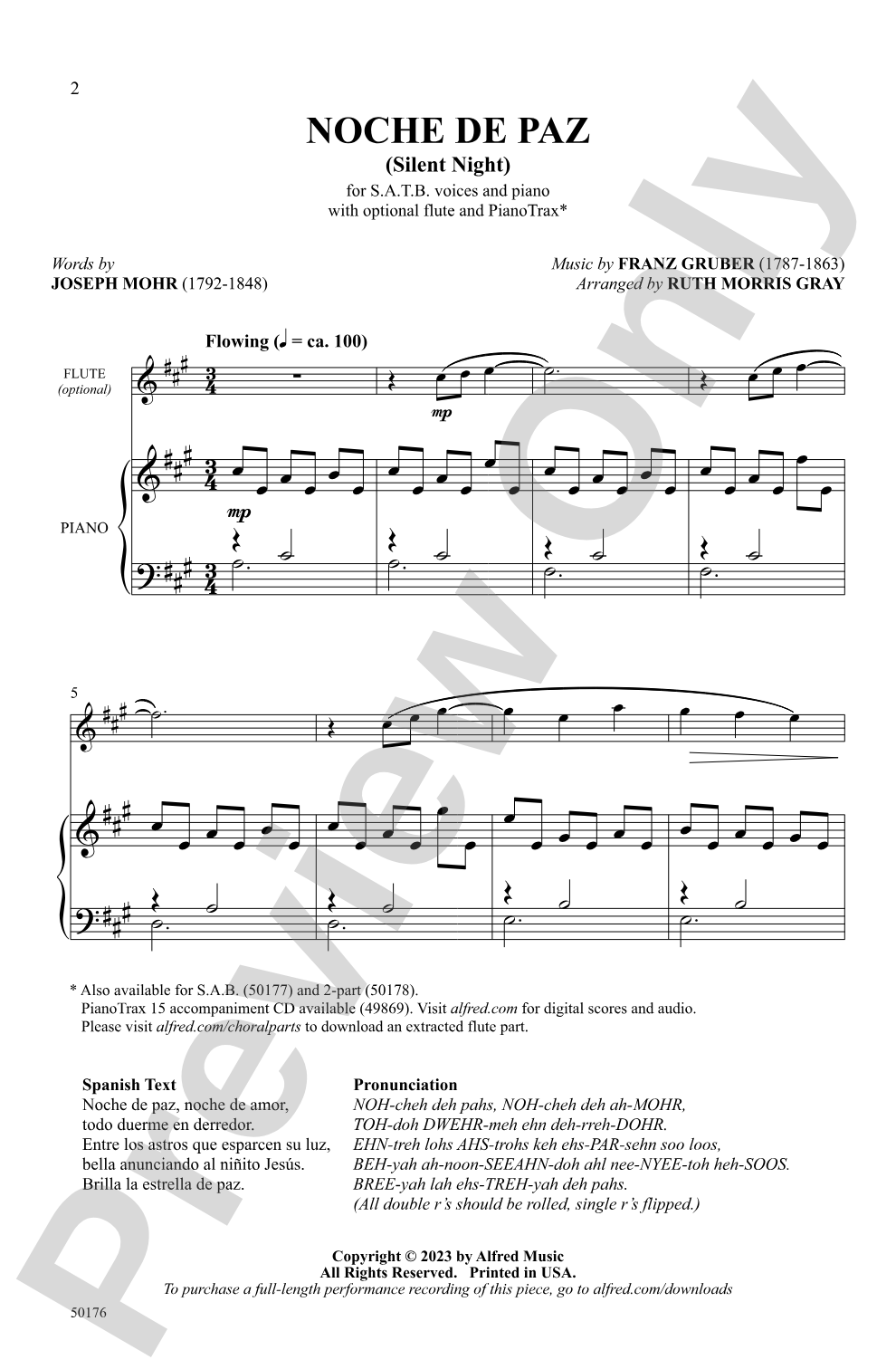
Words by Joseph Mohr, music by Franz Gruber / arr. Ruth Morris Gray
Item: 00-PO-0007037
$2.05
Minimum order quantity: 20 copies
Pickup currently not available
Description
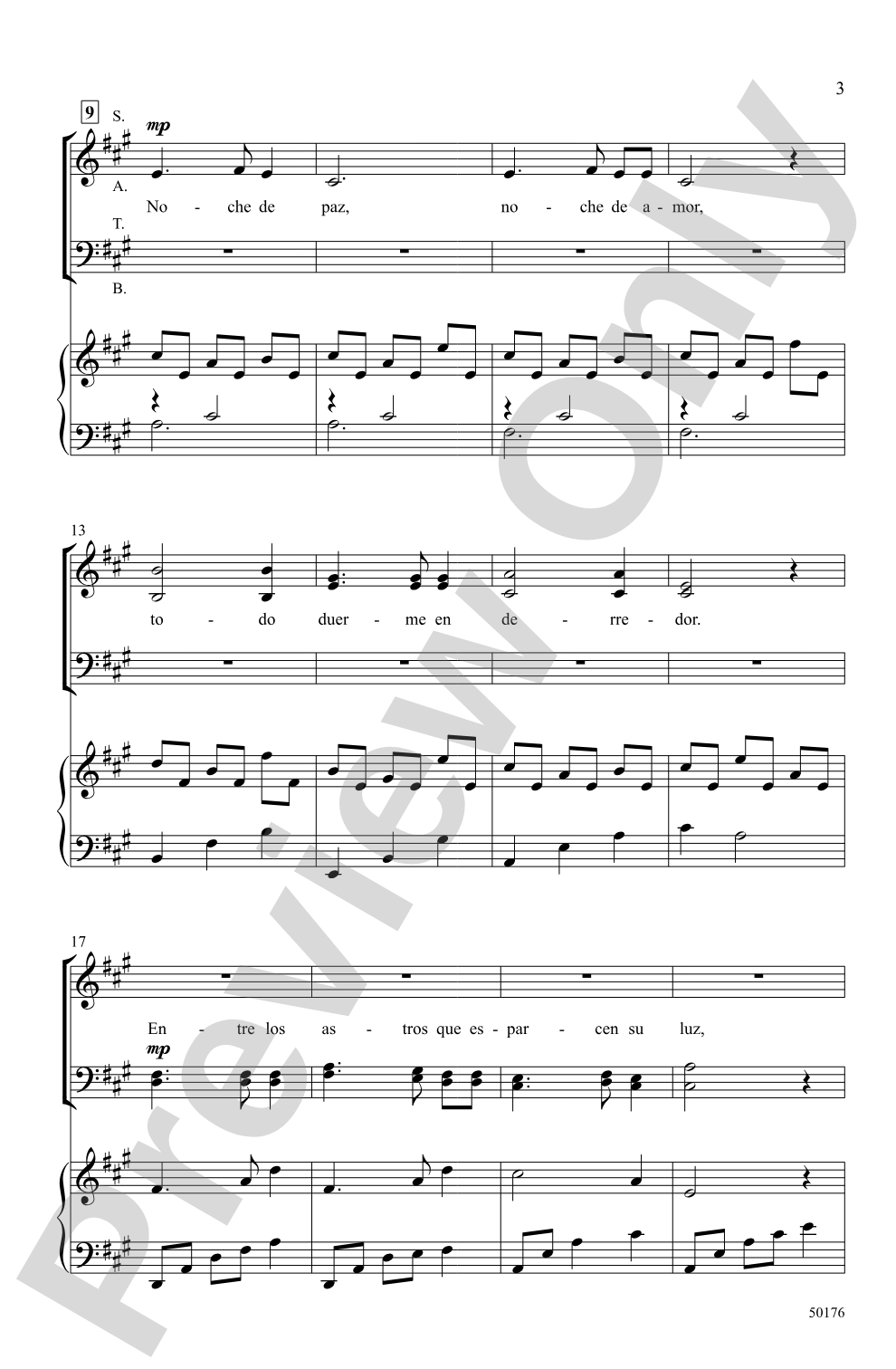
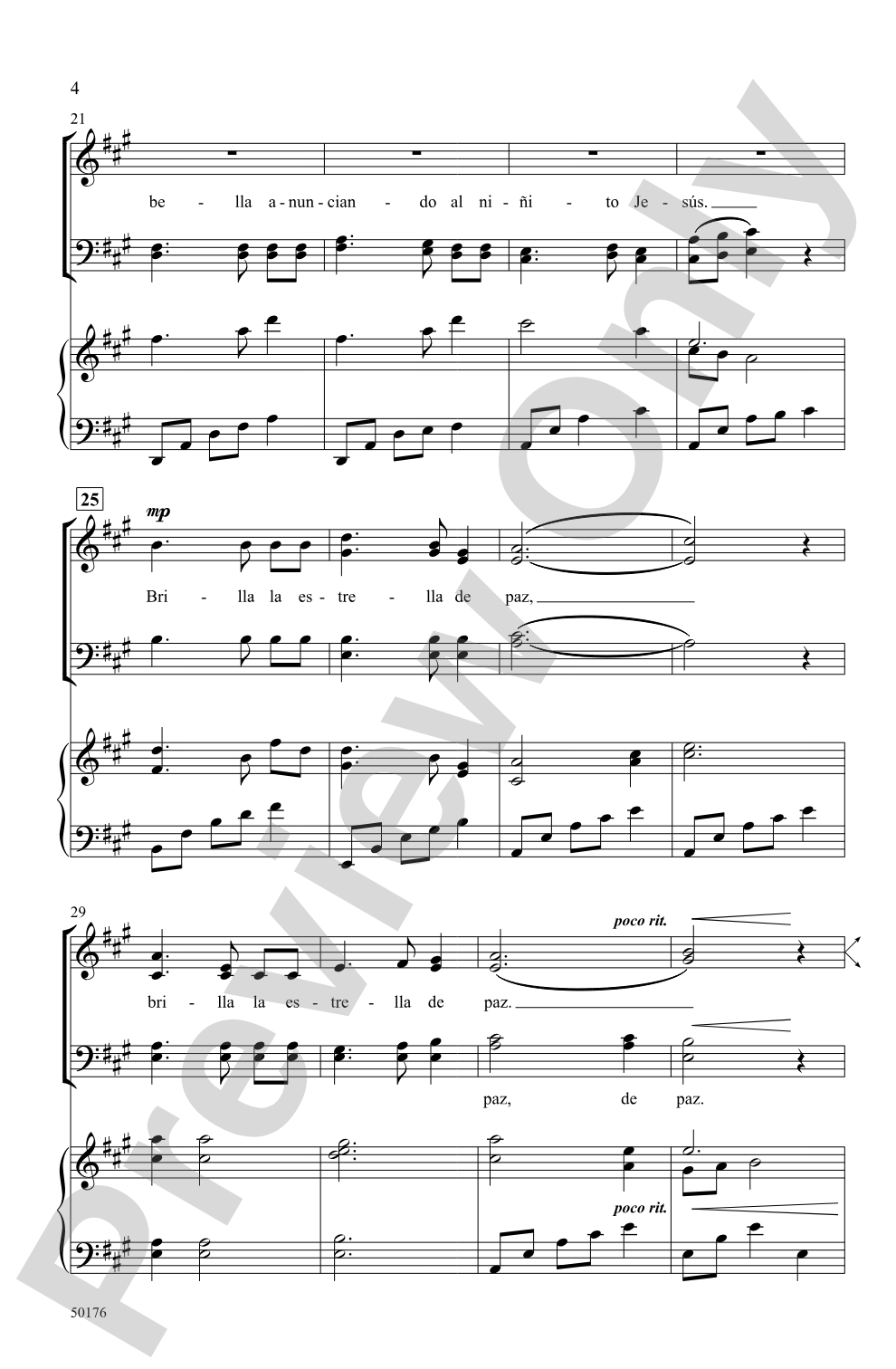
This bilingual arrangement of "Silent Night" alternates between Spanish and English verses. Ruth pays careful attention to expressive phrasing, voice leading, and tessitura, making it easy for school, community, and church choirs to prepare and perform. The flowing piano part and an optional flute obbligato bring a peaceful sense of reverence. Teach it this year and sing it for years to come.


Noche de Paz: SATB Choral Octavo isn't in MakeMusic Cloud just yet...but it could be. Let us know you'd like to see it, and you'll help shape what comes next. In the meantime, start a free trial and dive into thousands of interactive titles your students can play along with today.
Request This Title
Tell us you want it.
Start Your Free Trial
Explore everything that's ready to play right now.
Sample Audio
1
Audio File
--:--
0:00
0:00
Sample Video
Additional Details
Series:
Alfred Choral Designs
Publisher:
Alfred Music
Page Count:
12
SKU:
00-PO-0007037
More about this title
About the Composer: Franz Gruber
Franz Gruber (1787-1863) was an Austrian organist and composer whose modest output belies his lasting influence on sacred music. Though trained as a schoolmaster, Gruber's gift for melody and harmonic clarity shaped one of the world's most beloved Christmas carols. His "Silent Night," composed in 1818 for a small parish church in Oberndorf, Austria, transcended its humble origins to become a cornerstone of holiday repertoire across cultures and denominations.
Gruber's approach to sacred music prioritized accessibility without sacrificing musical integrity. His melodies sit naturally in the voice, his harmonies support rather than obscure the text, and his forms invite congregational participation. For modern choral directors, Gruber's work models how simplicity and sincerity can achieve enduring power.
Why we love this
Ruth Morris Gray's bilingual treatment honors the carol's universality while avoiding the predictable. The alternation between Spanish and English verses creates natural phrase variety and keeps singers engaged across twelve pages. Her careful attention to voice leading and tessitura means your singers won't strain, and the optional flute obbligato adds textural sophistication without requiring orchestral resources.
What to expect
Hushed and contemplative, with the gentle momentum of the piano part creating forward motion while the choir rests into long, open vowels. The shift between languages adds an unexpected warmth, as if the same prayer is being sung in two voices of the same community.
Who it's for
School choirs (middle and high school), community choirs, and church choirs looking for a carol that works equally well in December concerts, holiday services, or spring programs. The accessible tessitura and clear voice leading make it realistic for groups with mixed ability levels.
How to get the most out of it
- Balance the choir's tone toward warmth rather than brightness. A slightly warmer sound in each section will enhance the reverent character Ruth's arrangement aims for.
- If using the optional flute obbligato, rehearse it independently first so the player can shape the line expressively without the choir underneath. Then layer the voices gradually.
- Shape the piano part as a partner to the choir, not an accompaniment. Ruth's flowing figures deserve attention to voicing and dynamic shaping in rehearsal.
- Mark the transitions between Spanish and English verses clearly in your score. Soprano and alto parts especially benefit from visual cues to signal language switches.
How to use it
Program this early in a winter concert to set a reflective tone, or close a holiday service with it as a quieter alternative to more energetic carol arrangements. The bilingual text also makes it valuable for celebrating cultural diversity in school settings.
Skills your students will build
- Singing in Spanish with clear vowels and natural pronunciation
- Balancing legato phrasing across language shifts
- Maintaining dynamic control in soft, extended passages
- Blending with an optional instrumental obbligato
- Vocal part-singing in SATB texture with independent melodic lines