
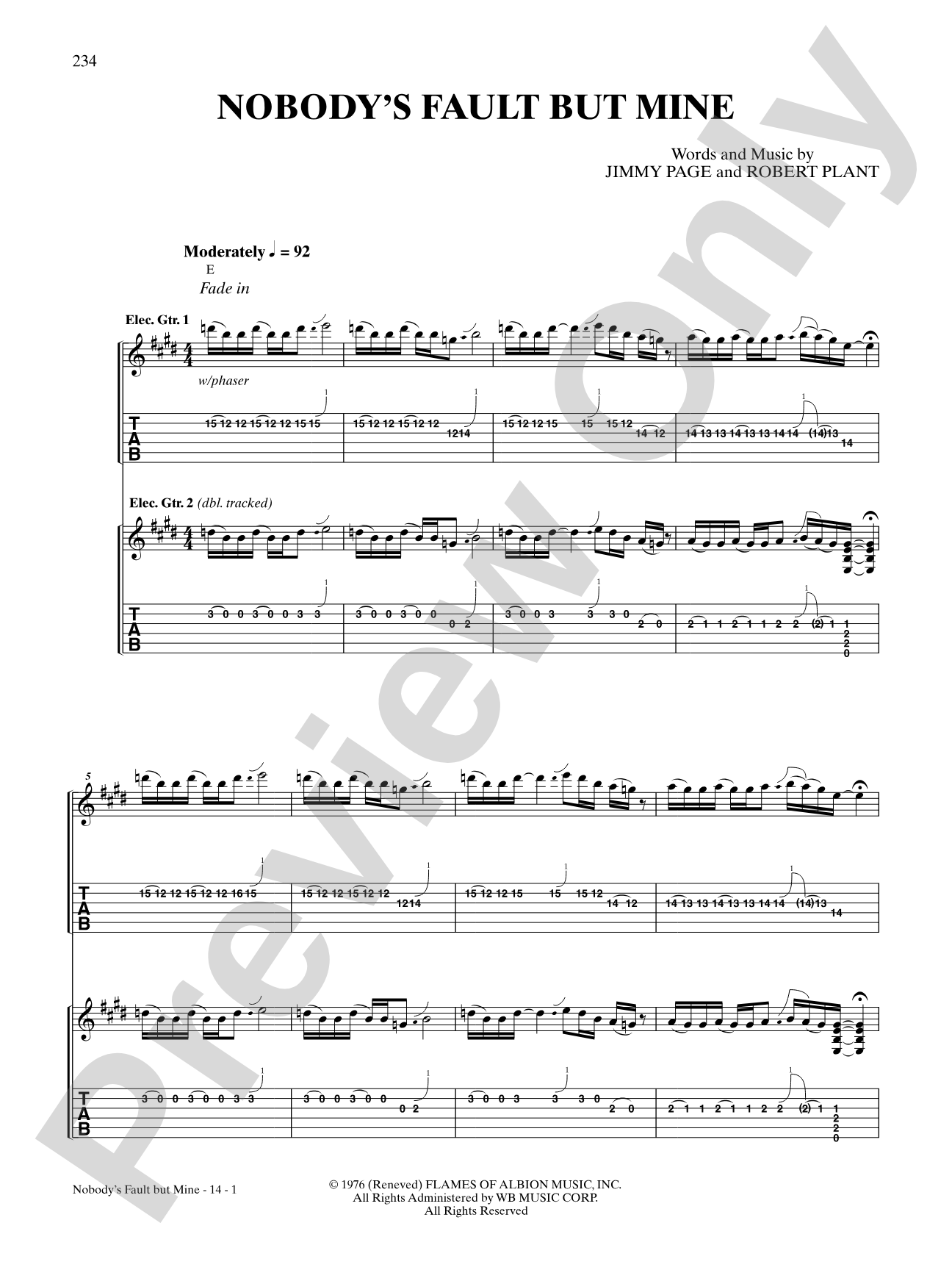
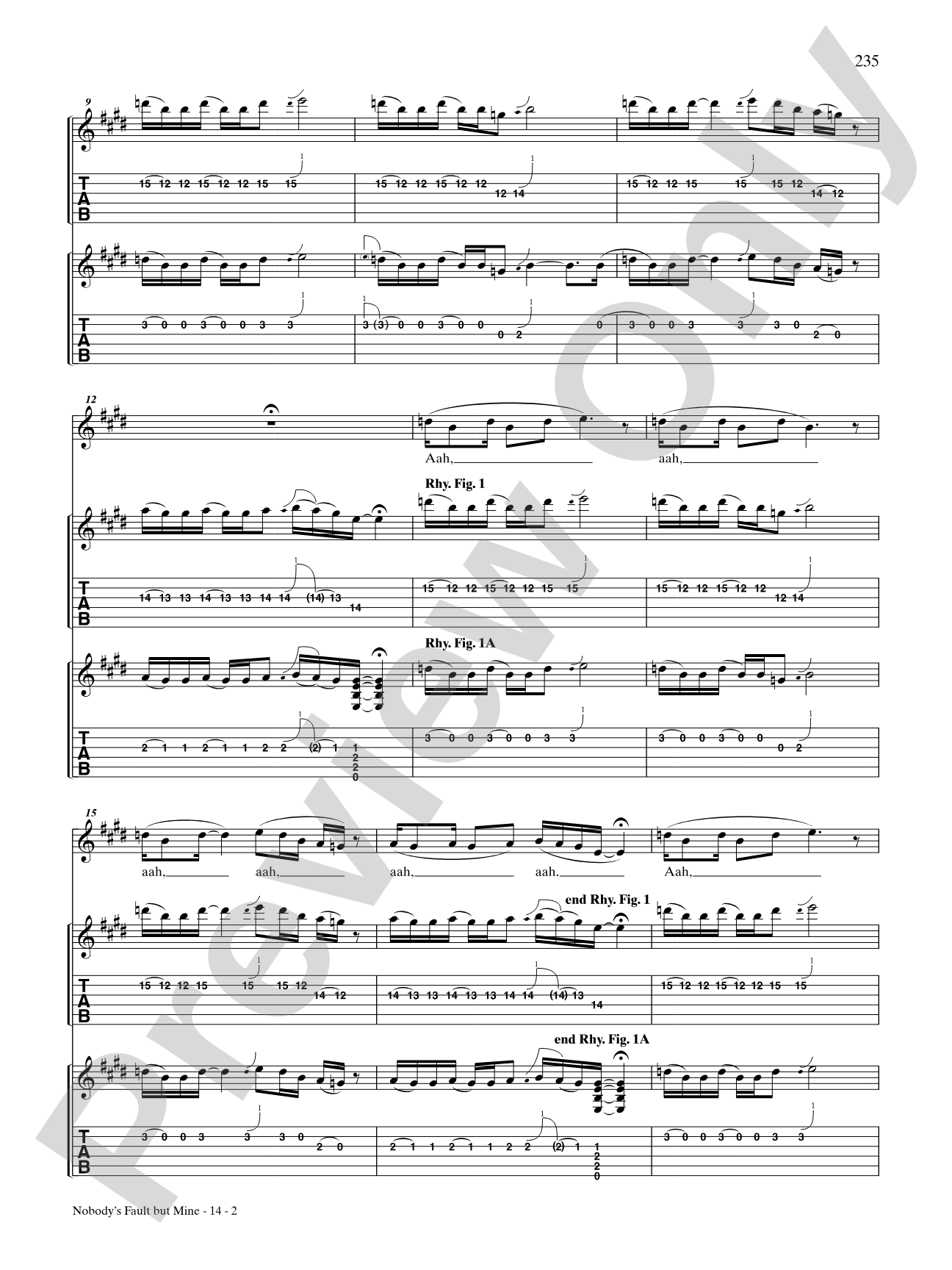
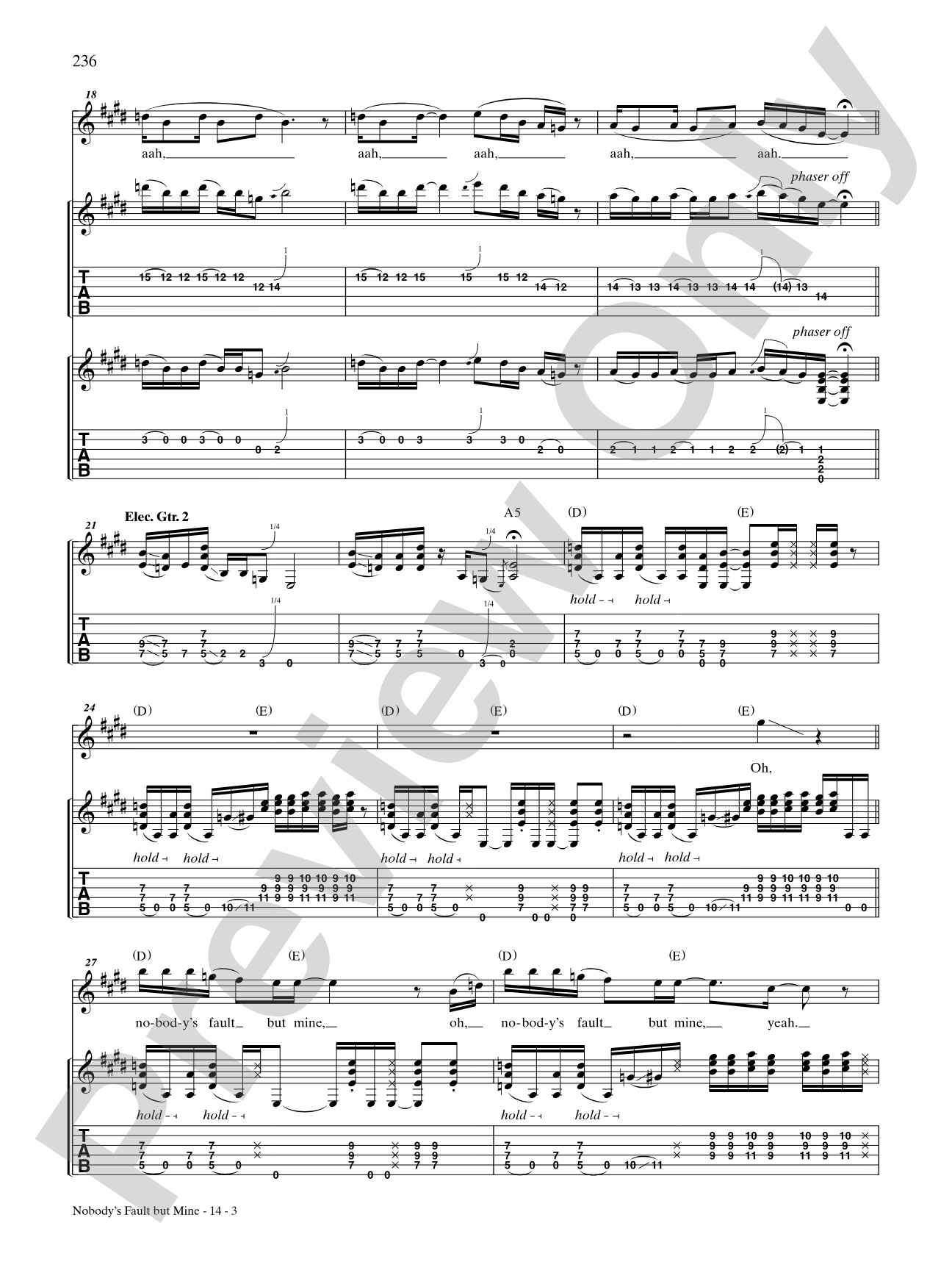

Nobody's Fault But Mine: Authentic Guitar TAB
Led Zeppelin
Item: 00-PS-0000029
$9.99
Pickup currently not available
Related Items
All My Love: Authentic Guitar TAB |
$5.99
|
View | |
In the Evening: Authentic Guitar TAB |
$9.99
|
View | |
Achilles Last Stand: Authentic Guitar TAB |
$9.99
|
View | |
Houses of the Holy: Authentic Guitar TAB |
$5.99
|
View | |
Kashmir: Authentic Guitar TAB |
$9.99
|
View | |
Trampled Under Foot: Authentic Guitar TAB |
$9.99
|
View | |
Stairway to Heaven: Piano/Vocal/Chords |
$3.99
|
View | |
Heartbreaker: Authentic Guitar TAB |
$9.99
|
View | |
Immigrant Song: Authentic Guitar TAB |
$5.99
|
View | |
No Quarter: Authentic Guitar TAB |
$5.99
|
View | |
Ramble On: Authentic Guitar TAB |
$9.99
|
View | |
Since I've Been Loving You: Authentic Guitar TAB |
$9.99
|
View | |
The Song Remains the Same: Authentic Guitar TAB |
$9.99
|
View | |
When the Levee Breaks: Authentic Guitar TAB |
$5.99
|
View | |
Whole Lotta Love: Authentic Guitar TAB |
$5.99
|
View | |
Babe I'm Gonna Leave You: Authentic Guitar TAB |
$9.99
|
View | |
Communication Breakdown: Authentic Guitar TAB |
$5.99
|
View | |
Dazed and Confused: Authentic Guitar TAB |
$9.99
|
View | |
Good Times, Bad Times: Authentic Guitar TAB |
$5.99
|
View | |
All My Love: Authentic Guitar TAB |
$5.99
|
View | |
In the Evening: Authentic Guitar TAB |
$9.99
|
View | |
Black Dog: Authentic Guitar TAB |
$9.99
|
View | |
Rock and Roll: Authentic Guitar TAB |
$9.99
|
View | |
Stairway to Heaven: Authentic Guitar TAB |
$9.99
|
View | |
D'yer Mak'er: Authentic Guitar TAB |
$5.99
|
View | |
Over the Hills and Far Away: Authentic Guitar TAB |
$9.99
|
View | |
Achilles Last Stand: Authentic Guitar TAB |
$9.99
|
View | |
Nobody's Fault but Mine: Authentic Guitar TAB |
$9.99
|
View | |
Houses of the Holy: Authentic Guitar TAB |
$5.99
|
View | |
Kashmir: Authentic Guitar TAB |
$9.99
|
View | |
Trampled Under Foot: Authentic Guitar TAB |
$9.99
|
View | |
Led Zeppelin: Mothership: Authentic Guitar TAB Book |
$39.99
|
View | |
Led Zeppelin: Mothership: Piano/Vocal/Chords Book |
$24.95
|
View |
Description
Page, Plant, and Jones hand-selected the songs for the unprecedented, career-spanning Mothership. Now, Alfred Music is proud to present this 300-page sheet music collection of note-for-note guitar TAB. Featuring all-new transcriptions based on years of compiled documentation, videos, and interviews, this is the must-have book for all fans of Led Zeppelin and the immortal guitar work of Jimmy Page. Titles: Good Times Bad Times * Communication Breakdown * Dazed and Confused * Babe I'm Gonna Leave You * Whole Lotta Love * Ramble On * Heartbreaker * Immigrant Song * Since I've Been Loving You * Rock and Roll * Black Dog * When the Levee Breaks * Stairway to Heaven * The Song Remains the Same * Over the Hills and Far Away * D'yer Mak'er * No Quarter * Trampled Under Foot * Houses of the Holy * Kashmir * Nobody's Fault but Mine * Achilles Last Stand * In the Evening * All My Love.


Discover MakeMusic Cloud: thousands of interactive titles your students can play along with today.
Sample Audio
No sample audio found.
Sample Video
No sample videos found.
Additional Details
Publisher:
Alfred Music
Page Count:
296
SKU:
00-PS-0000029
More about this title
About the Composer: Jimmy Page
Jimmy Page shaped rock music's sonic possibilities through relentless experimentation with the electric guitar. His work with Led Zeppelin established templates for heavy music, folk-rock fusion, and studio innovation that still influence guitarists across genres. As a composer and arranger, Page understood how to layer textures, manipulate tone, and build arrangements that showcased the guitar as both rhythmic engine and lead voice.
Why we love this
This collection captures the full arc of Led Zeppelin's influence on rock guitar playing, from the blues-rooted simplicity of "Good Times Bad Times" to the orchestral complexity of "Kashmir." The note-for-note transcriptions preserve Page's distinctive fingerprints: his use of alternate tunings, his approach to tone shaping, and the rhythmic sophistication that made his playing instantly recognizable. Students gain access to serious compositional architecture disguised as rock music.
What to expect
Dense with possibility. These songs contain the DNA of modern rock guitar playing: the spatial clarity of open tunings, the weight of doubled guitars creating new harmonic colors, and rhythmic grooves that sit somewhere between blues pocket and progressive sophistication. Working through this material feels like gaining access to a master class taught directly through the music itself.
Who it's for
Guitarists seeking to understand how rock composition works through direct study of canonical material. Band directors and music teachers can assign individual songs as technical studies or programming options for advanced ensembles. Serious students will find detailed transcriptions that reward careful attention and reveal Page's approach to arrangement and orchestration.
How to get the most out of it
- Study the alternate tunings documented in each song's introduction before attempting the tab; many Zeppelin classics rely on open tunings that change how the guitar responds to technique.
- Listen to the original recordings while reading the transcriptions to understand Page's phrasing and dynamics, which tab alone cannot capture.
- Isolate the rhythm guitar voicings first, then layer in the lead elements; this mirrors how these songs were built in the studio and strengthens your understanding of arrangement.
- Pay attention to the distinction between fingerstyle and pick techniques marked in the transcriptions; Page's tone choices are inseparable from his picking approach.
How to use it
Feature individual transcriptions as technical studies within a guitar curriculum focused on historical literacy and arrangement techniques. The sheer catalog offers flexibility: program shorter pieces like "Communication Breakdown" in ensemble settings, reserve sprawling arrangements like "Stairway to Heaven" for solo recital contexts, or build a thematic concert around specific Zeppelin-era innovations in rock composition.
Skills your students will build
- Reading and executing complex guitar tab notation
- Playing in alternate and open tunings
- Distinguishing between rhythmic and lead guitar roles in ensemble contexts
- Interpreting fingerstyle versus pick-based articulation from written notation
- Understanding how tone shaping and equipment choice affect performance of notated material
- Analyzing harmonic relationships across open-tuning voicings