
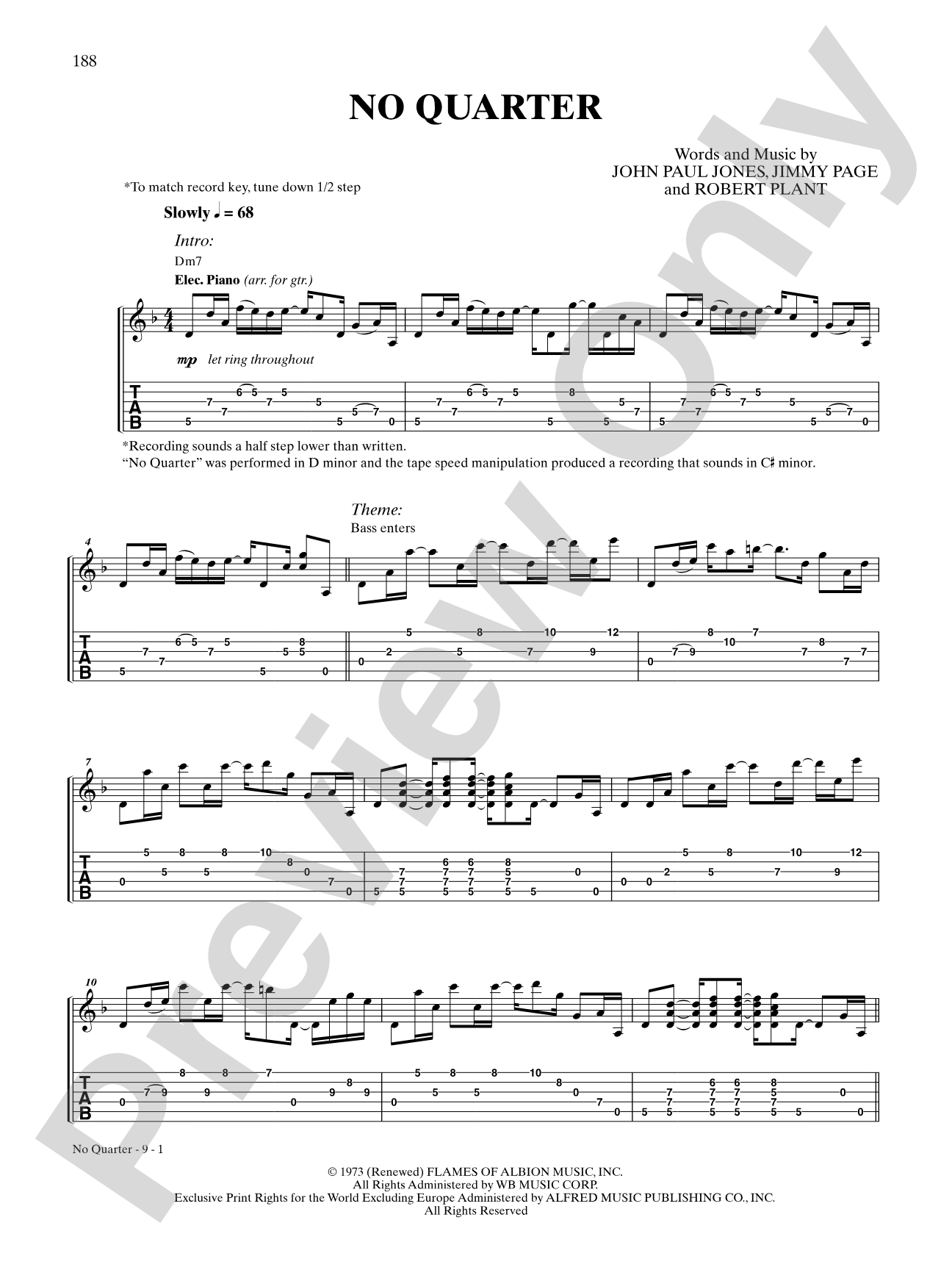
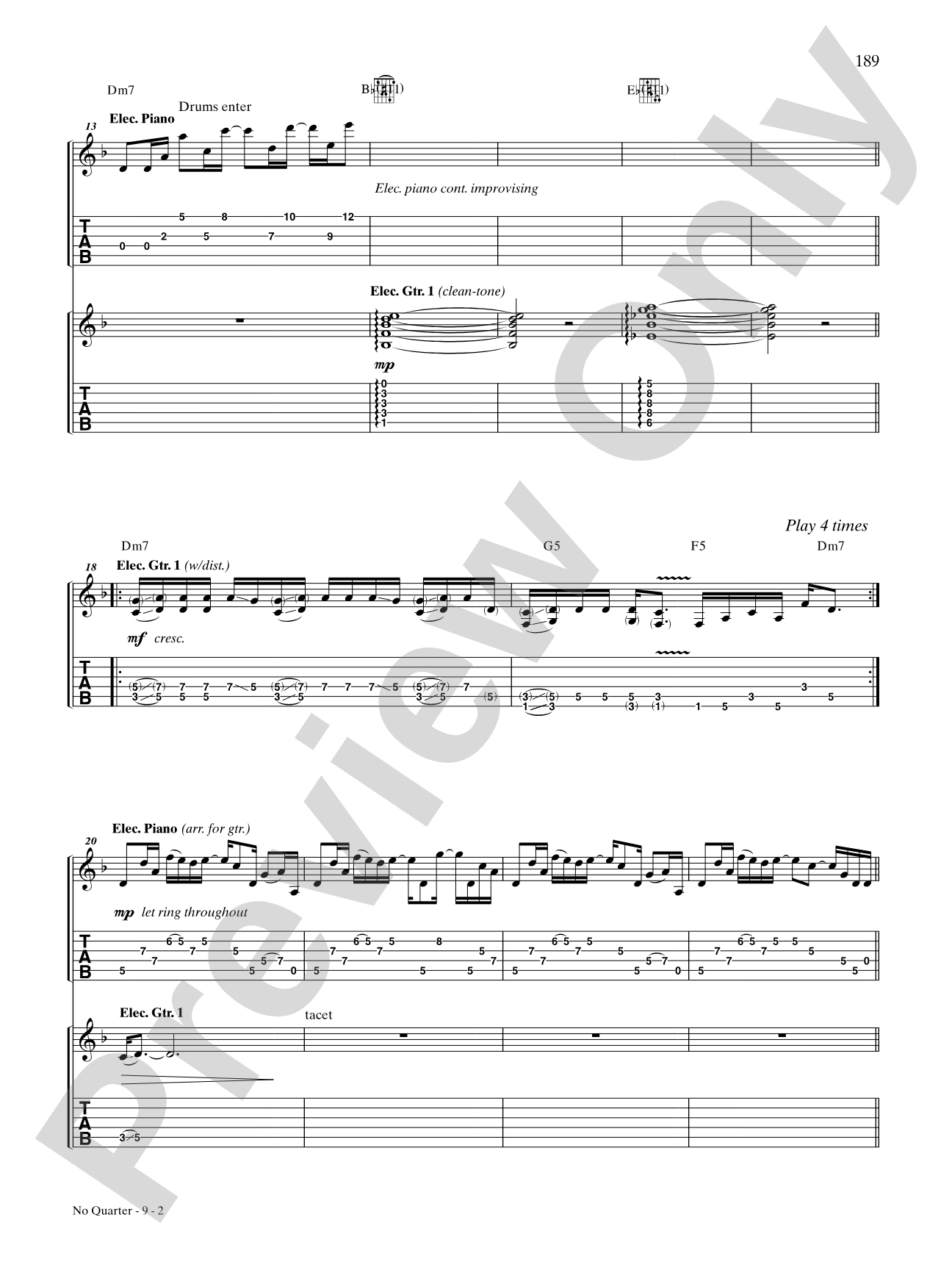

No Quarter: Authentic Guitar TAB
Led Zeppelin
Item: 00-PS-0013677
$5.99
Pickup currently not available
Related Items
All My Love: Authentic Guitar TAB |
$5.99
|
View | |
In the Evening: Authentic Guitar TAB |
$9.99
|
View | |
Achilles Last Stand: Authentic Guitar TAB |
$9.99
|
View | |
Nobody's Fault But Mine: Authentic Guitar TAB |
$9.99
|
View | |
Houses of the Holy: Authentic Guitar TAB |
$5.99
|
View | |
Kashmir: Authentic Guitar TAB |
$9.99
|
View | |
Trampled Under Foot: Authentic Guitar TAB |
$9.99
|
View | |
Stairway to Heaven: Piano/Vocal/Chords |
$3.99
|
View | |
Heartbreaker: Authentic Guitar TAB |
$9.99
|
View | |
Immigrant Song: Authentic Guitar TAB |
$5.99
|
View | |
Ramble On: Authentic Guitar TAB |
$9.99
|
View | |
Since I've Been Loving You: Authentic Guitar TAB |
$9.99
|
View | |
The Song Remains the Same: Authentic Guitar TAB |
$9.99
|
View | |
When the Levee Breaks: Authentic Guitar TAB |
$5.99
|
View | |
Whole Lotta Love: Authentic Guitar TAB |
$5.99
|
View | |
Babe I'm Gonna Leave You: Authentic Guitar TAB |
$9.99
|
View | |
Communication Breakdown: Authentic Guitar TAB |
$5.99
|
View | |
Dazed and Confused: Authentic Guitar TAB |
$9.99
|
View | |
Good Times, Bad Times: Authentic Guitar TAB |
$5.99
|
View | |
All My Love: Authentic Guitar TAB |
$5.99
|
View | |
In the Evening: Authentic Guitar TAB |
$9.99
|
View | |
Black Dog: Authentic Guitar TAB |
$9.99
|
View | |
Rock and Roll: Authentic Guitar TAB |
$9.99
|
View | |
Stairway to Heaven: Authentic Guitar TAB |
$9.99
|
View | |
D'yer Mak'er: Authentic Guitar TAB |
$5.99
|
View | |
Over the Hills and Far Away: Authentic Guitar TAB |
$9.99
|
View | |
Achilles Last Stand: Authentic Guitar TAB |
$9.99
|
View | |
Nobody's Fault but Mine: Authentic Guitar TAB |
$9.99
|
View | |
Houses of the Holy: Authentic Guitar TAB |
$5.99
|
View | |
Kashmir: Authentic Guitar TAB |
$9.99
|
View | |
Trampled Under Foot: Authentic Guitar TAB |
$9.99
|
View | |
Led Zeppelin: Mothership: Authentic Guitar TAB Book |
$39.99
|
View | |
Led Zeppelin: Mothership: Piano/Vocal/Chords Book |
$24.95
|
View |
Description
Page, Plant, and Jones hand-selected the songs for the unprecedented, career-spanning Mothership. Now, Alfred Music is proud to present this 300-page sheet music collection of note-for-note guitar TAB. Featuring all-new transcriptions based on years of compiled documentation, videos, and interviews, this is the must-have book for all fans of Led Zeppelin and the immortal guitar work of Jimmy Page. Titles: Good Times Bad Times * Communication Breakdown * Dazed and Confused * Babe I'm Gonna Leave You * Whole Lotta Love * Ramble On * Heartbreaker * Immigrant Song * Since I've Been Loving You * Rock and Roll * Black Dog * When the Levee Breaks * Stairway to Heaven * The Song Remains the Same * Over the Hills and Far Away * D'yer Mak'er * No Quarter * Trampled Under Foot * Houses of the Holy * Kashmir * Nobody's Fault but Mine * Achilles Last Stand * In the Evening * All My Love.


Discover MakeMusic Cloud: thousands of interactive titles your students can play along with today.
Sample Audio
No sample audio found.
Sample Video
No sample videos found.
Additional Details
Publisher:
Alfred Music
Page Count:
296
SKU:
00-PS-0013677
More about this title
About the Composer: Jimmy Page
Jimmy Page stands as one of rock music's most innovative and technically accomplished guitarists. His approach to the instrument combined blues vocabulary with experimental studio techniques, exotic scales, and orchestral arrangements that fundamentally expanded what electric guitar could express in popular music.
Why we love this
This collection captures the full breadth of Led Zeppelin's catalog at a level of accuracy that only a career-spanning project can deliver. The transcriptions, developed through documented research and official sources, give guitarists legitimate access to the techniques and voicings that defined a generation of rock playing.
What to expect
These songs move across multiple landscapes: crushing blues-rock power, fingerpicked acoustic introspection, Eastern modal explorations, and studio-crafted soundscapes. The collection captures both the raw energy of the band's live approach and the layered, experimental textures that defined their recorded output.
Who it's for
Intermediate to advanced guitarists who want authoritative transcriptions of Led Zeppelin's essential works. This collection serves musicians preparing recital material, guitarists building a deeper understanding of Page's compositional voice, and teachers seeking repertoire that engages serious students.
How to get the most out of it
- Study the original recordings alongside the tab. Page's tone and articulation choices often carry as much information as the note selection itself.
- Work through the simpler arrangements first (Communication Breakdown, Rock and Roll) to build comfort with the transcription style before tackling pieces like Kashmir or Stairway to Heaven.
- Pay attention to alternate tunings and capo placements noted in the tab; many of these songs rely on specific tuning choices that Page used to achieve their signature sounds.
- Approach fingerstyle passages methodically. Several pieces use hybrid picking or classical techniques that reward slow, deliberate practice before performance tempo.
How to use it
Feature individual transcriptions as recital pieces, or use selections as concert anchors that demonstrate the evolution of rock composition across the 1970s. Guitarists might program shorter pieces early in a recital, building toward extended works like Stairway to Heaven or Kashmir.
Skills your students will build
- Fingerstyle technique across acoustic and electric contexts
- Alternate tuning fluency and capo usage
- Reading hybrid picking and classical finger patterns on tab
- Understanding blues phrasing and bending technique in rock contexts
- Interpreting rhythmic notation in songs with complex time divisions