
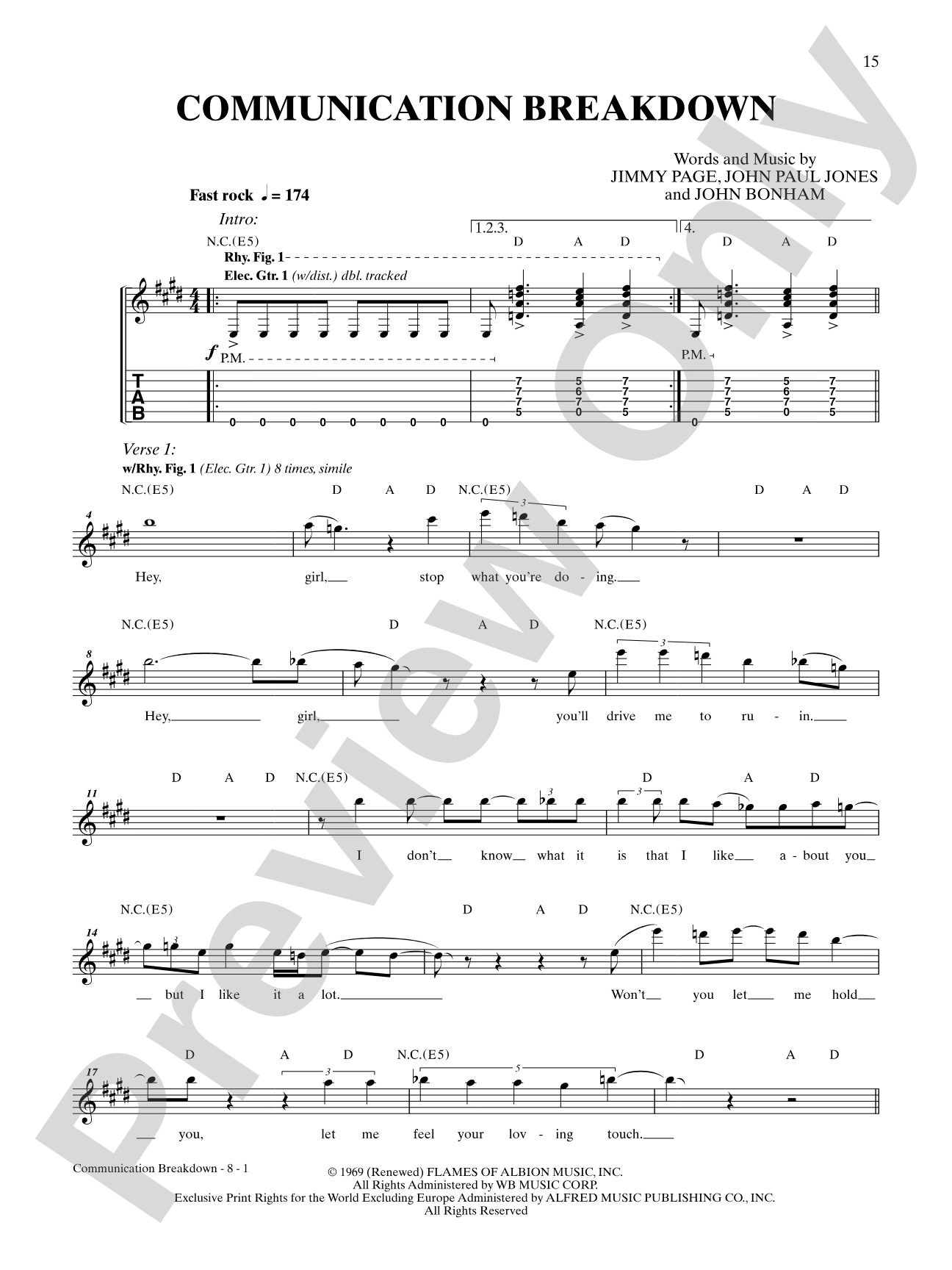
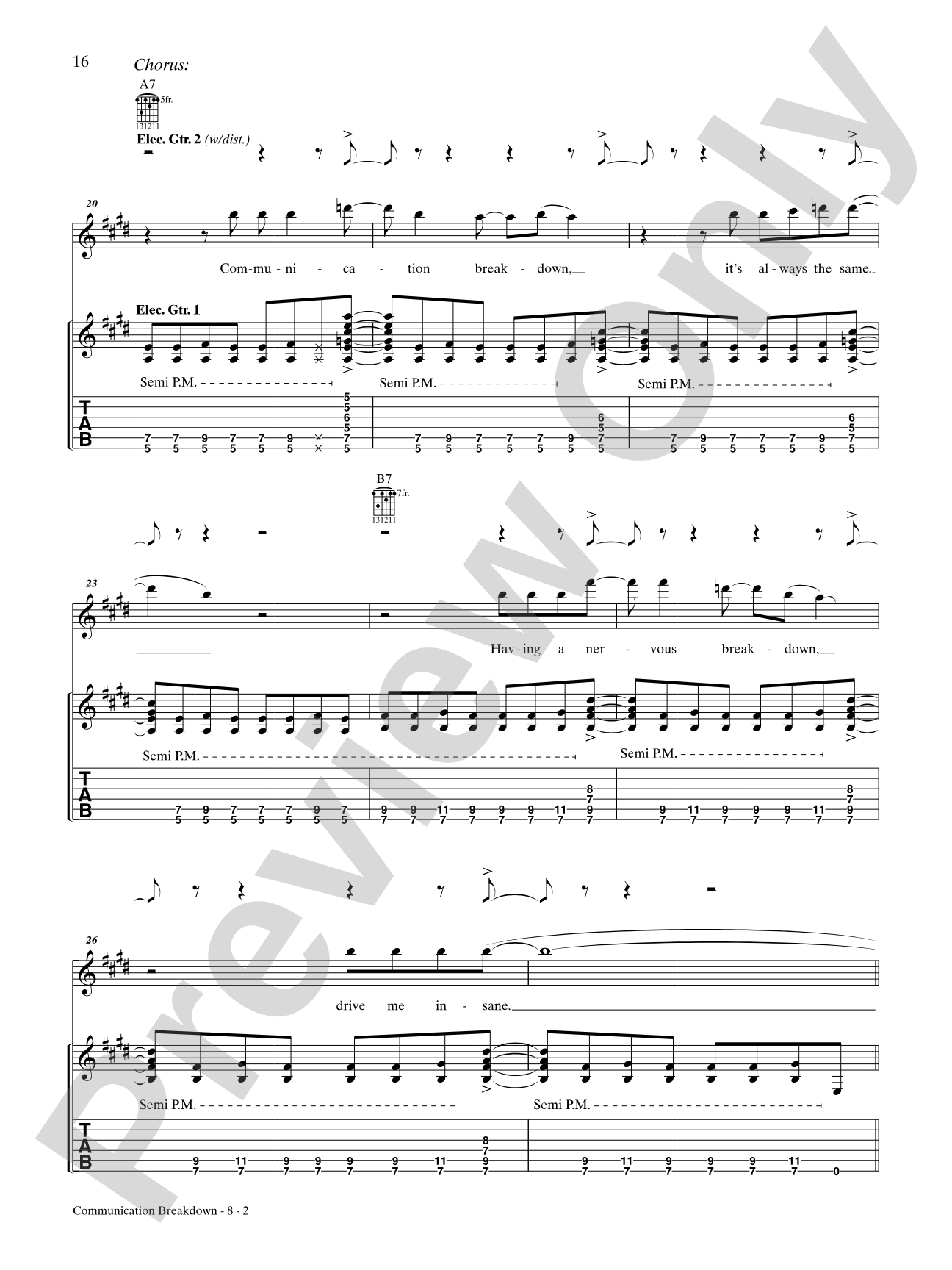

Communication Breakdown: Authentic Guitar TAB
Led Zeppelin
Item: 00-PS-0013684
$5.99
Pickup currently not available
Related Items
All My Love: Authentic Guitar TAB |
$5.99
|
View | |
In the Evening: Authentic Guitar TAB |
$9.99
|
View | |
Achilles Last Stand: Authentic Guitar TAB |
$9.99
|
View | |
Nobody's Fault But Mine: Authentic Guitar TAB |
$9.99
|
View | |
Houses of the Holy: Authentic Guitar TAB |
$5.99
|
View | |
Kashmir: Authentic Guitar TAB |
$9.99
|
View | |
Trampled Under Foot: Authentic Guitar TAB |
$9.99
|
View | |
Stairway to Heaven: Piano/Vocal/Chords |
$3.99
|
View | |
Heartbreaker: Authentic Guitar TAB |
$9.99
|
View | |
Immigrant Song: Authentic Guitar TAB |
$5.99
|
View | |
No Quarter: Authentic Guitar TAB |
$5.99
|
View | |
Ramble On: Authentic Guitar TAB |
$9.99
|
View | |
Since I've Been Loving You: Authentic Guitar TAB |
$9.99
|
View | |
The Song Remains the Same: Authentic Guitar TAB |
$9.99
|
View | |
When the Levee Breaks: Authentic Guitar TAB |
$5.99
|
View | |
Whole Lotta Love: Authentic Guitar TAB |
$5.99
|
View | |
Babe I'm Gonna Leave You: Authentic Guitar TAB |
$9.99
|
View | |
Dazed and Confused: Authentic Guitar TAB |
$9.99
|
View | |
Good Times, Bad Times: Authentic Guitar TAB |
$5.99
|
View | |
All My Love: Authentic Guitar TAB |
$5.99
|
View | |
In the Evening: Authentic Guitar TAB |
$9.99
|
View | |
Black Dog: Authentic Guitar TAB |
$9.99
|
View | |
Rock and Roll: Authentic Guitar TAB |
$9.99
|
View | |
Stairway to Heaven: Authentic Guitar TAB |
$9.99
|
View | |
D'yer Mak'er: Authentic Guitar TAB |
$5.99
|
View | |
Over the Hills and Far Away: Authentic Guitar TAB |
$9.99
|
View | |
Achilles Last Stand: Authentic Guitar TAB |
$9.99
|
View | |
Nobody's Fault but Mine: Authentic Guitar TAB |
$9.99
|
View | |
Houses of the Holy: Authentic Guitar TAB |
$5.99
|
View | |
Kashmir: Authentic Guitar TAB |
$9.99
|
View | |
Trampled Under Foot: Authentic Guitar TAB |
$9.99
|
View | |
Led Zeppelin: Mothership: Authentic Guitar TAB Book |
$39.99
|
View | |
Led Zeppelin: Mothership: Piano/Vocal/Chords Book |
$24.95
|
View |
Description
Page, Plant, and Jones hand-selected the songs for the unprecedented, career-spanning Mothership. Now, Alfred Music is proud to present this 300-page sheet music collection of note-for-note guitar TAB. Featuring all-new transcriptions based on years of compiled documentation, videos, and interviews, this is the must-have book for all fans of Led Zeppelin and the immortal guitar work of Jimmy Page. Titles: Good Times Bad Times * Communication Breakdown * Dazed and Confused * Babe I'm Gonna Leave You * Whole Lotta Love * Ramble On * Heartbreaker * Immigrant Song * Since I've Been Loving You * Rock and Roll * Black Dog * When the Levee Breaks * Stairway to Heaven * The Song Remains the Same * Over the Hills and Far Away * D'yer Mak'er * No Quarter * Trampled Under Foot * Houses of the Holy * Kashmir * Nobody's Fault but Mine * Achilles Last Stand * In the Evening * All My Love.


Discover MakeMusic Cloud: thousands of interactive titles your students can play along with today.
Sample Audio
No sample audio found.
Sample Video
No sample videos found.
Additional Details
Publisher:
Alfred Music
Page Count:
296
SKU:
00-PS-0013684
More about this title
About the Composer: Jimmy Page
Jimmy Page stands as one of rock music's most influential and technically innovative guitarists. His work as composer and guitarist for Led Zeppelin defined heavy rock's sonic possibilities, blending blues traditions with experimental studio techniques, Eastern influences, and dynamic song architecture that shaped generations of musicians across all genres.
Why we love this
This collection captures the full scope of Led Zeppelin's catalog with transcriptions grounded in documented performances and studio sessions. For advanced guitarists, having note-for-note TAB of these songs means learning directly from one of rock's greatest players without guesswork about tunings, techniques, or studio effects.
What to expect
These songs span from raw, blues-driven energy to intricate, multi-layered arrangements that reveal new details with each listen. You'll encounter moments of crushing heaviness, delicate fingerpicking, and passages that showcase Page's mastery of both electric and acoustic guitar as compositional tools.
Who it's for
Intermediate to advanced guitarists who want to master Led Zeppelin's catalog with accuracy and depth. This collection serves serious students of rock guitar, tribute band musicians, and players looking to understand how blues vocabulary and studio innovation combine to create enduring compositions.
How to get the most out of it
- Study the open tunings and alternate voicings throughout the collection; several pieces require detuned strings or unusual tuning systems that fundamentally shape the guitar's tone and response.
- Listen to multiple recorded versions of each song before playing; studio arrangements often differ from live renditions, and knowing both versions deepens your interpretive choices.
- Pay attention to dynamics and space, not just note accuracy. Many of these songs rely on restraint and contrast between sparse passages and dense sections to create their power.
- Experiment with the effects and tone shaping suggested in the transcriptions. The guitar work depends on specific textures that TAB alone cannot convey.
How to use it
Feature individual songs in student recitals or ensemble contexts where rock repertoire fits your program's identity. The range of difficulty and style within this collection allows you to select pieces appropriate for various performance levels throughout the year.
Skills your students will build
- Reading and executing alternate tunings (dropped D, open G, open A, and others)
- Translating studio effects and tone techniques into live performance
- Fingerpicking patterns and fingerstyle-to-pick transitions
- Blues-based phrasing and bending techniques
- Dynamic control across extended song forms
- Adapting arrangements for solo performance versus ensemble contexts