
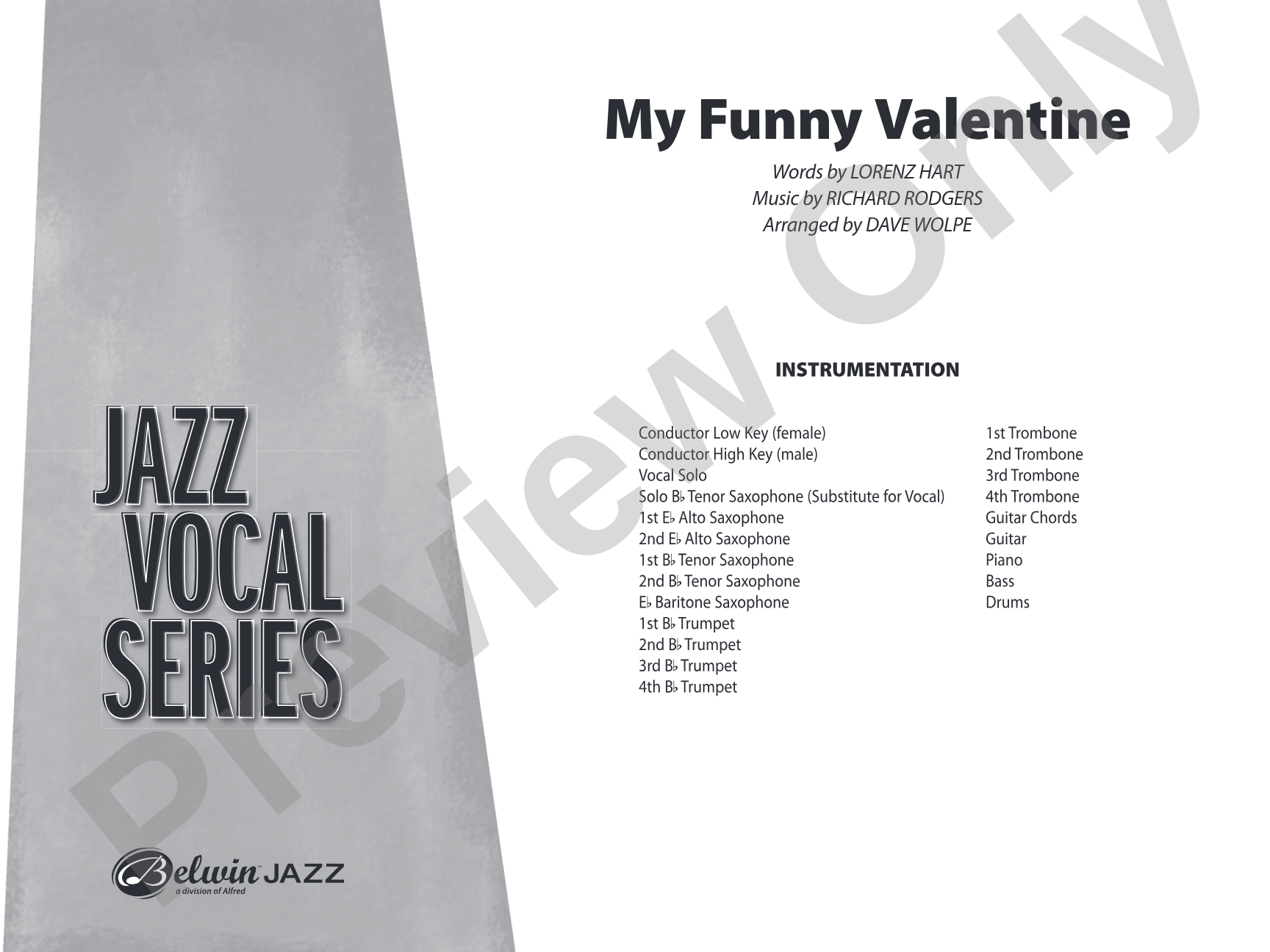
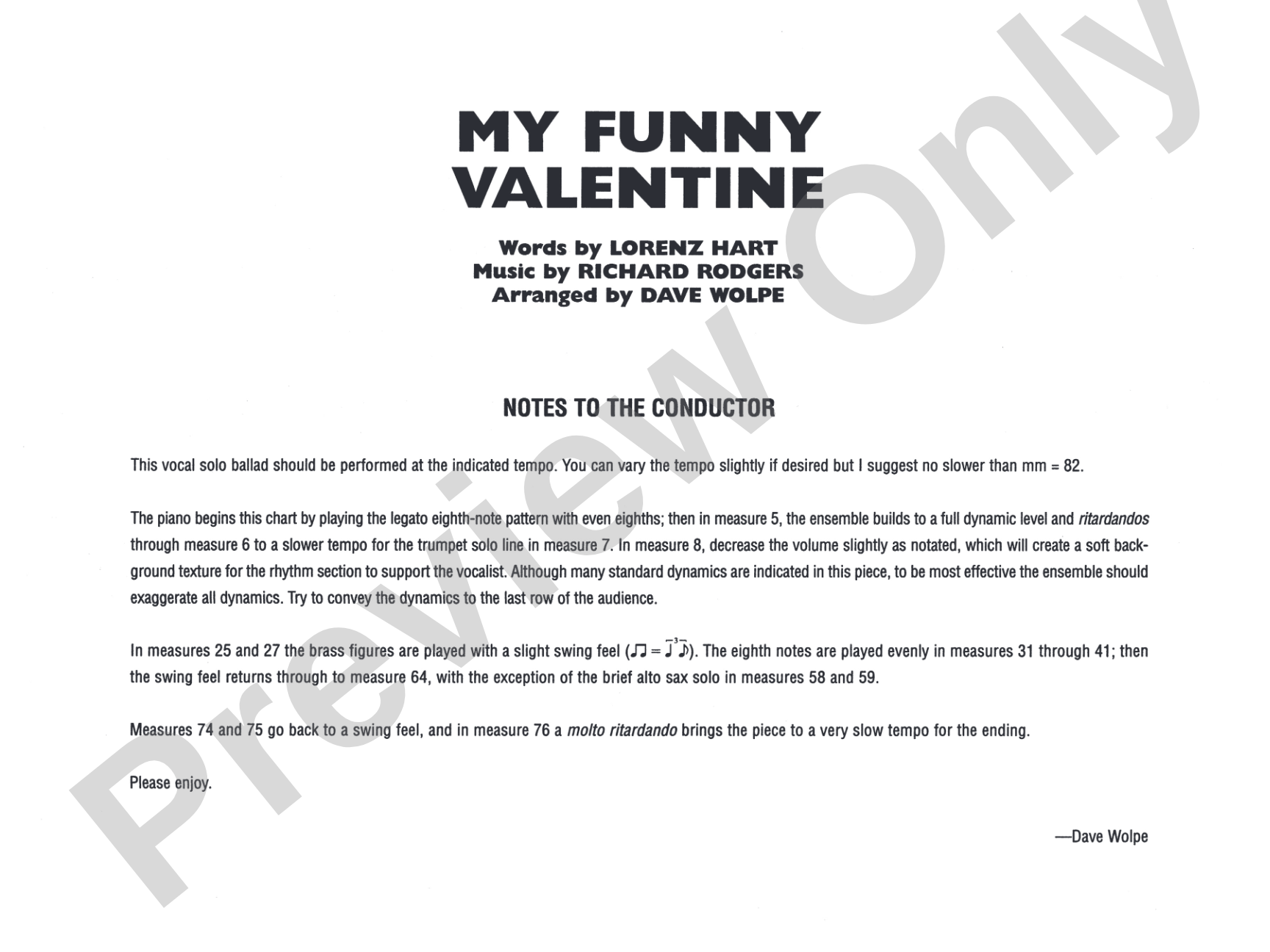
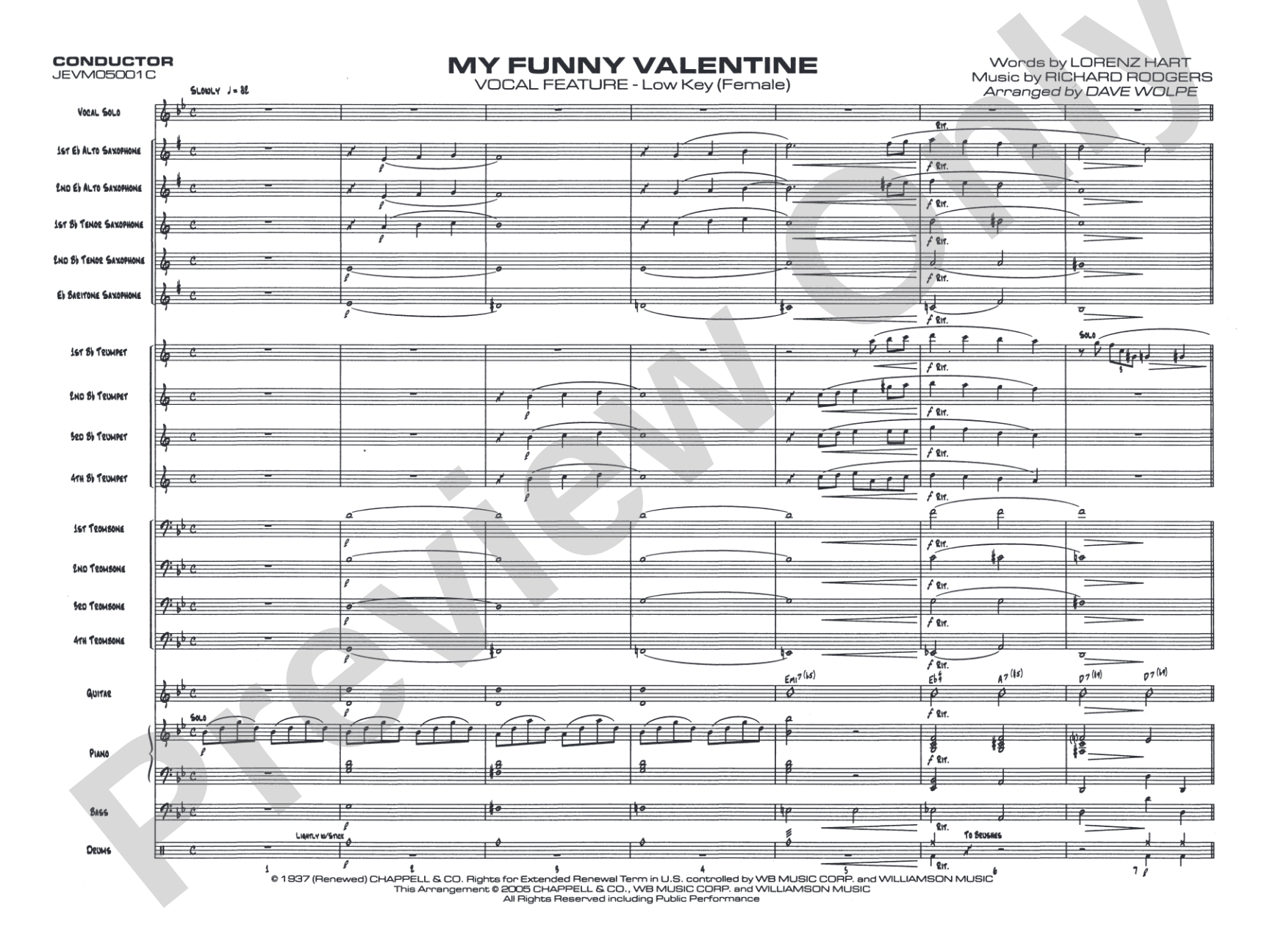
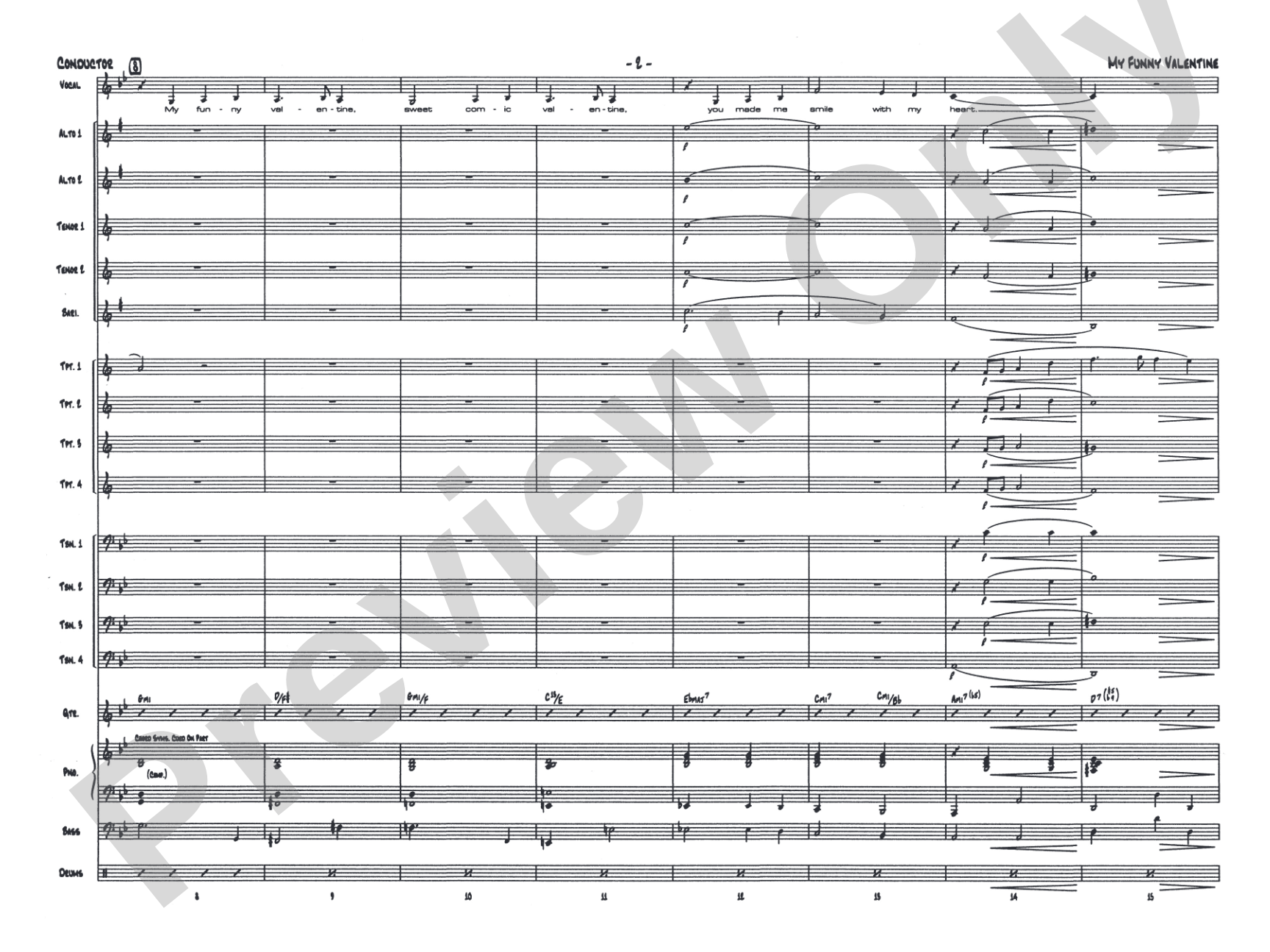
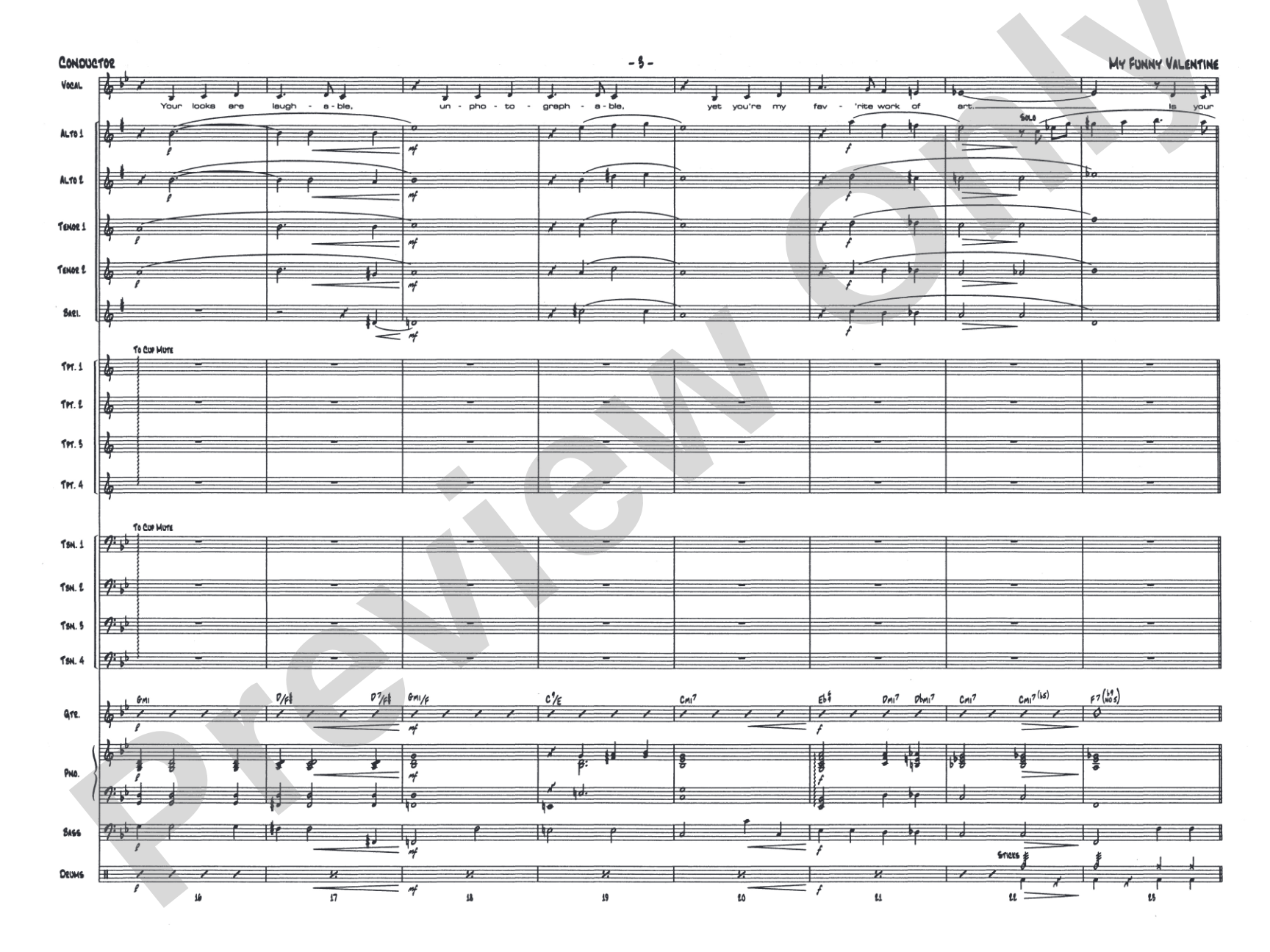
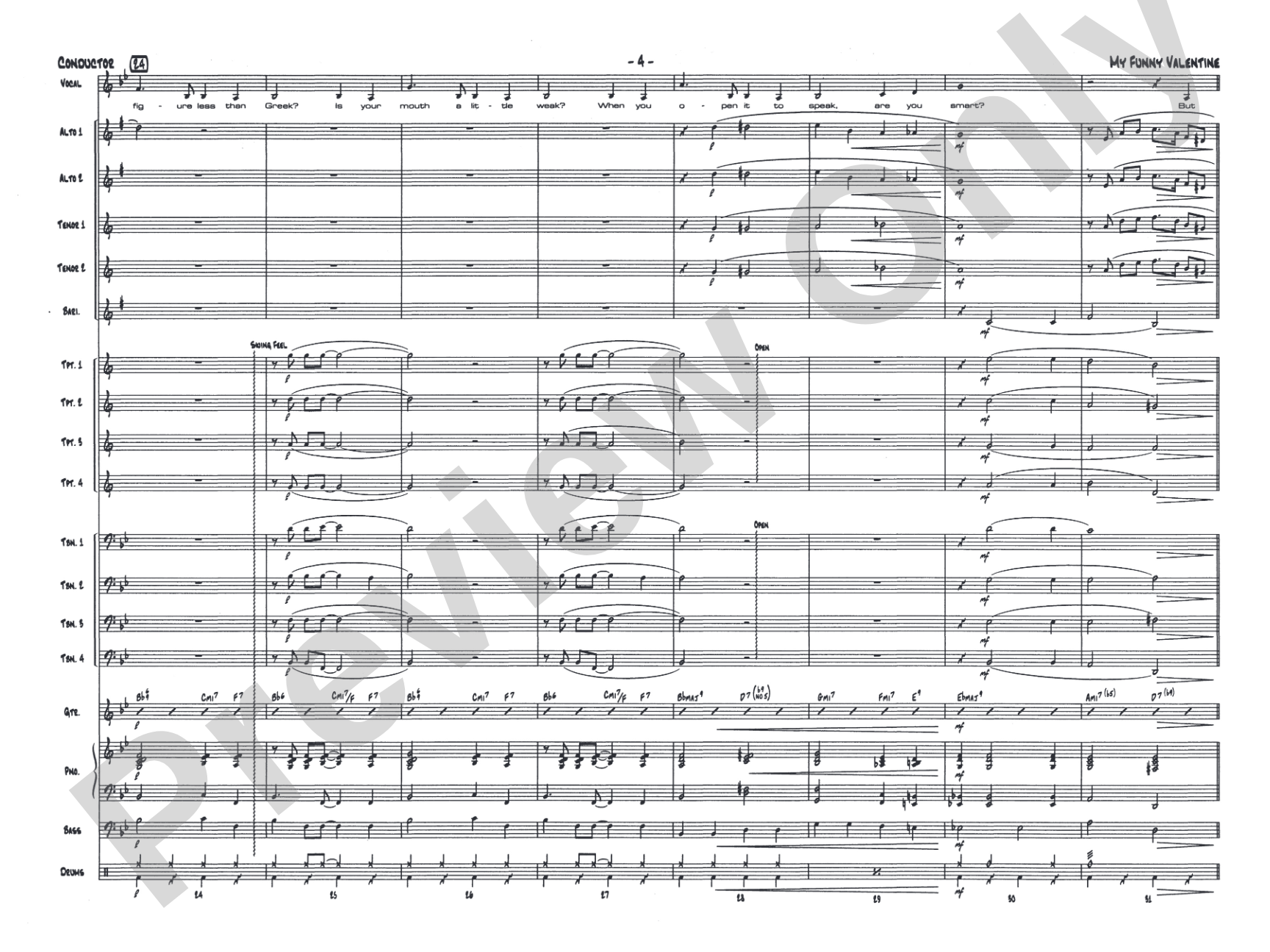
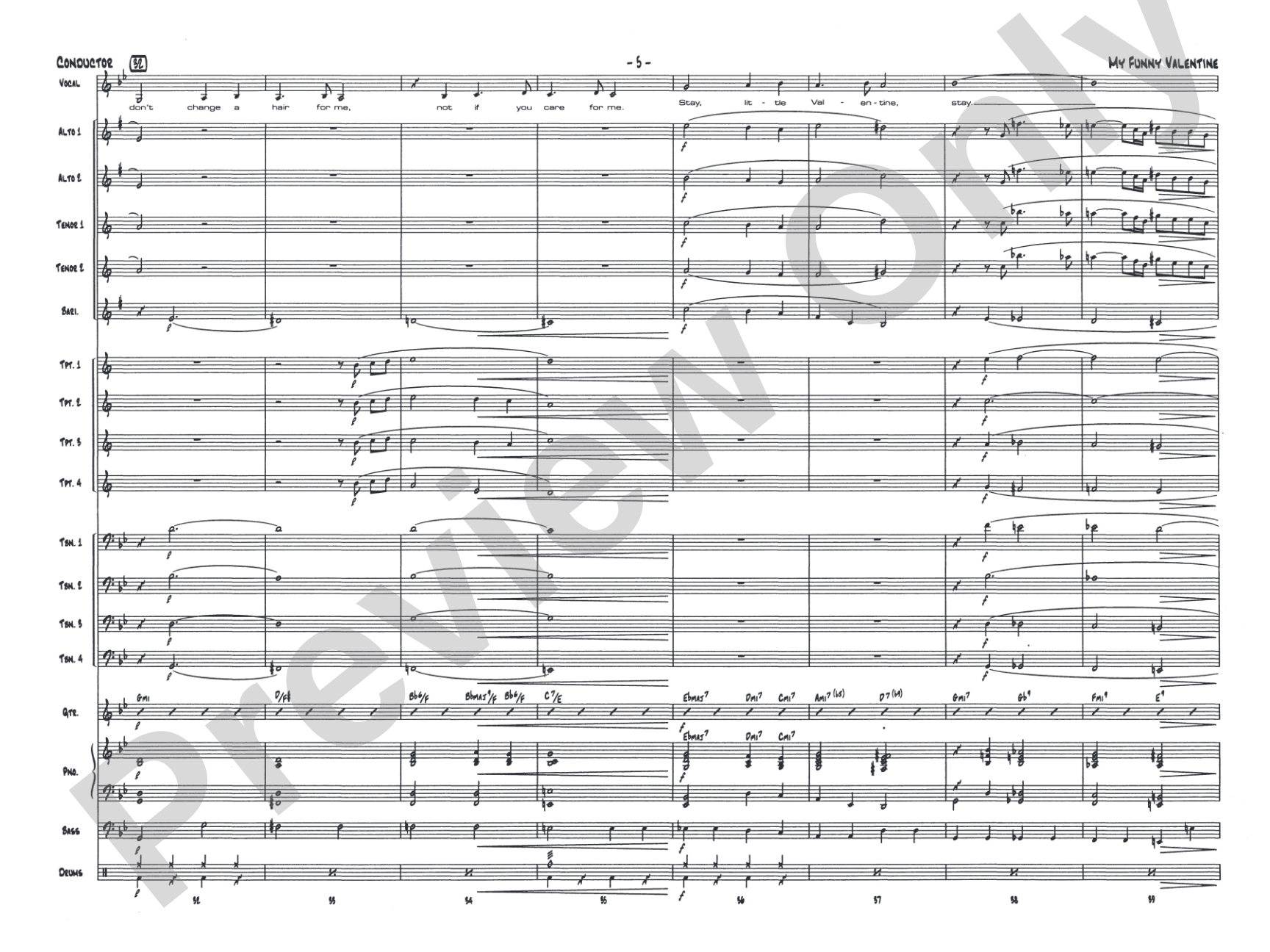
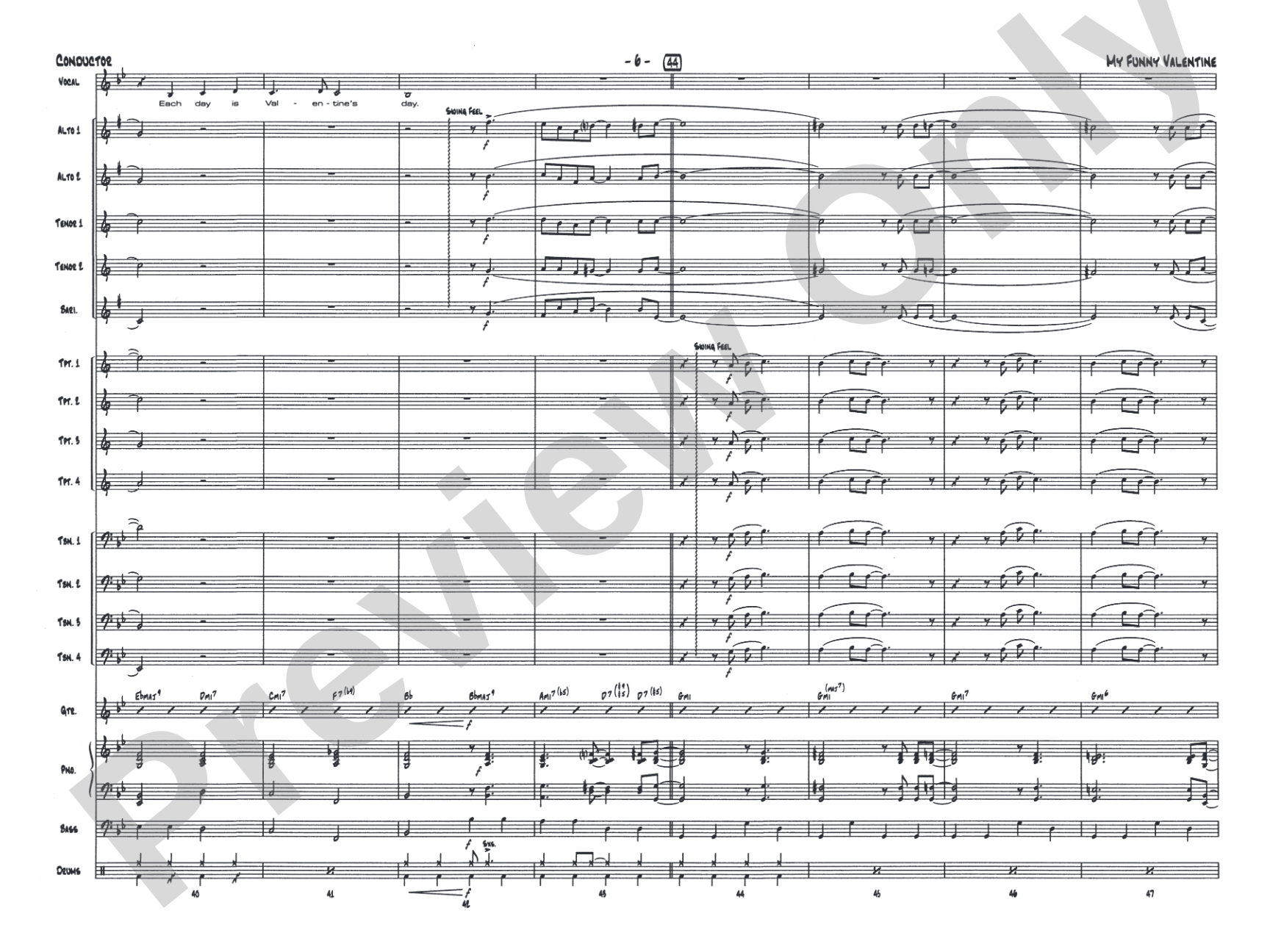
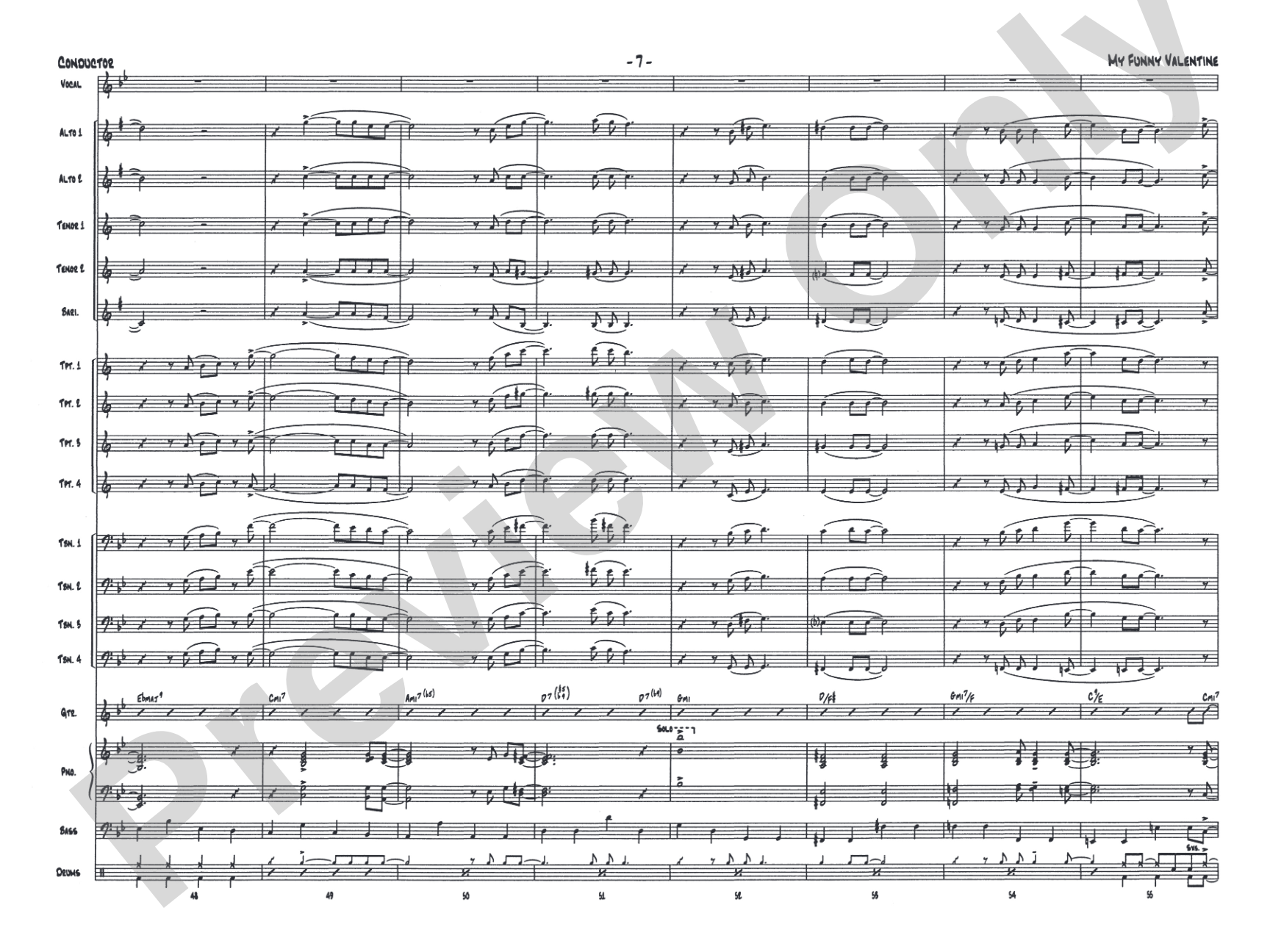
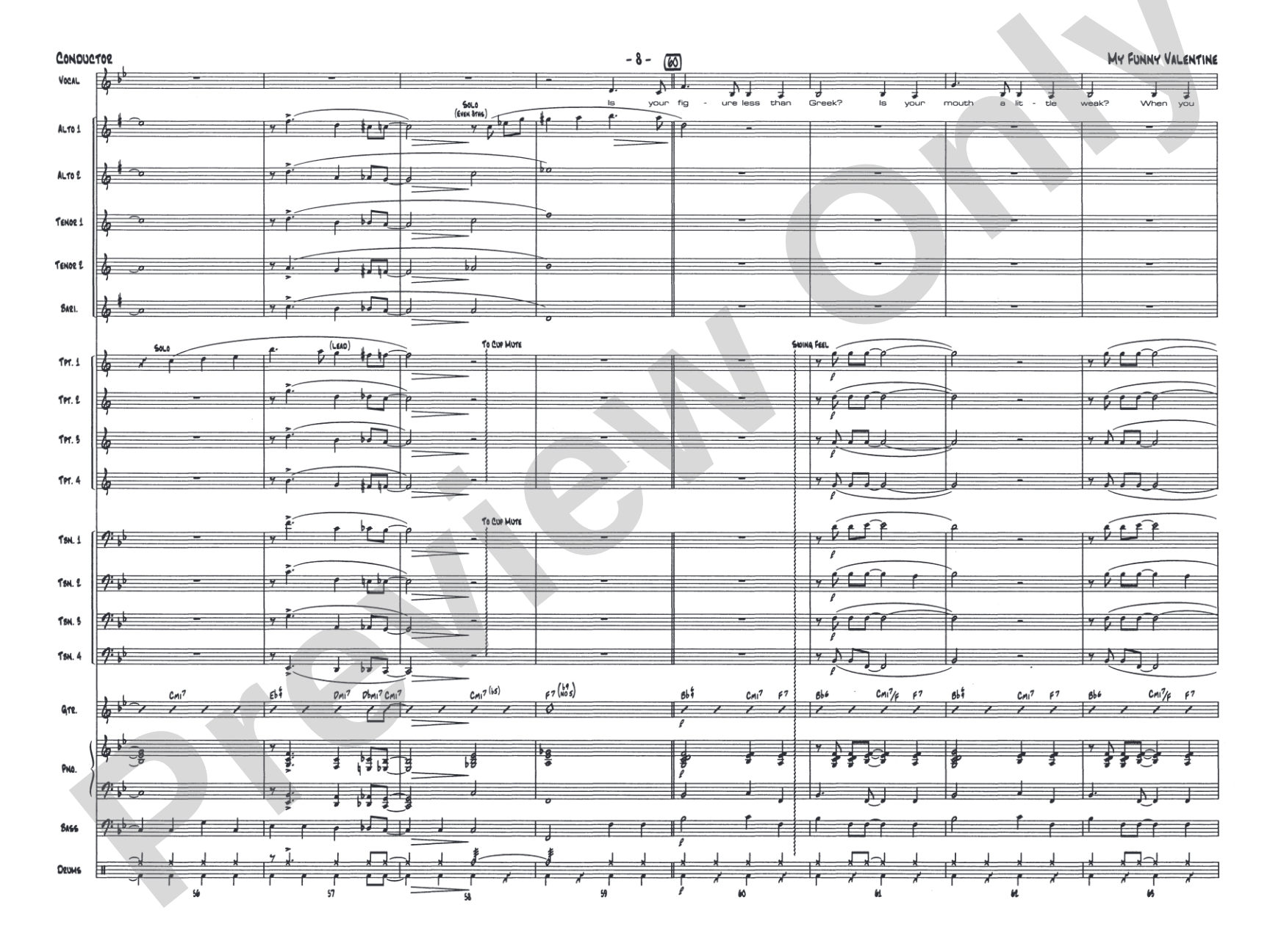
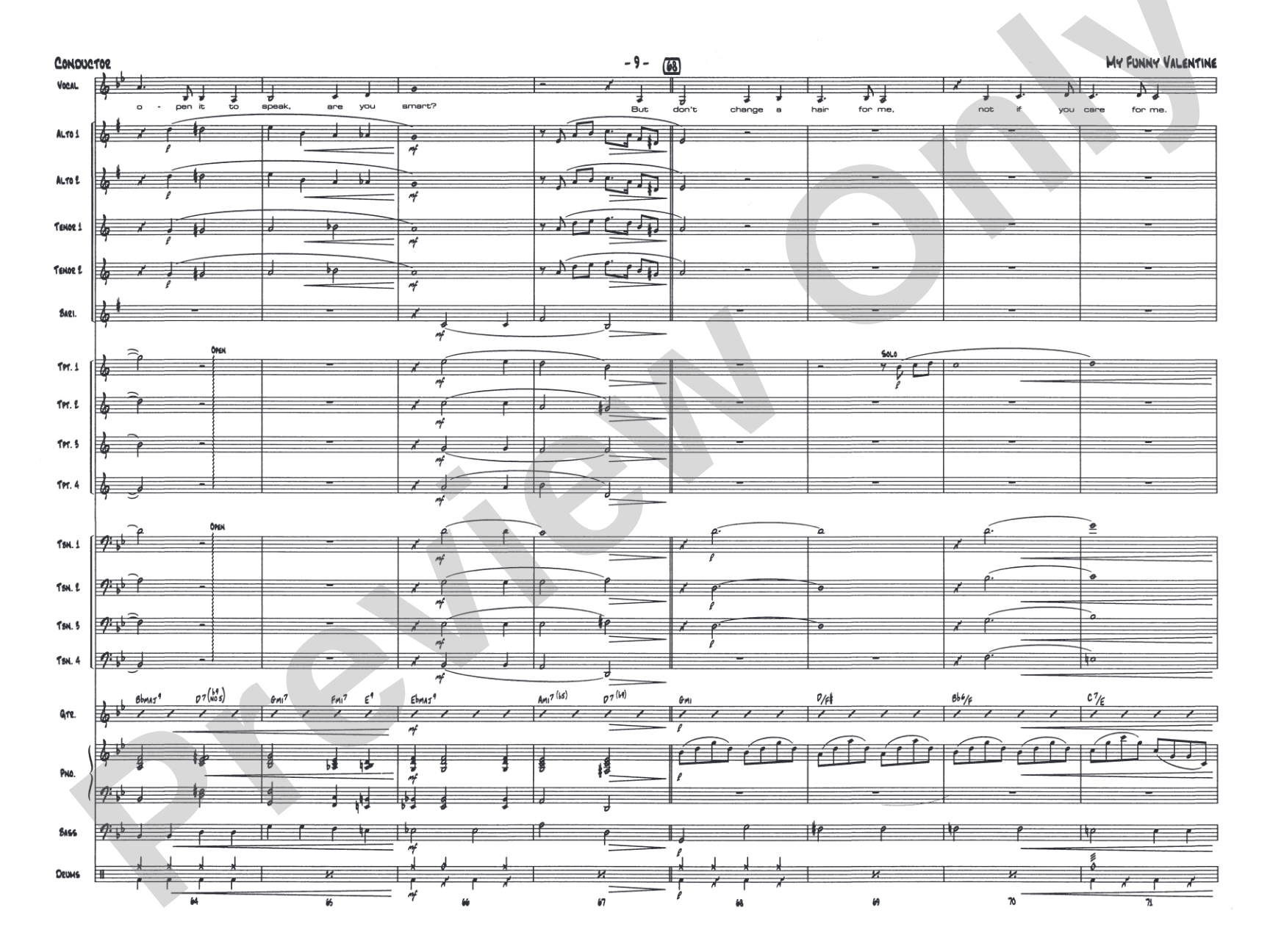
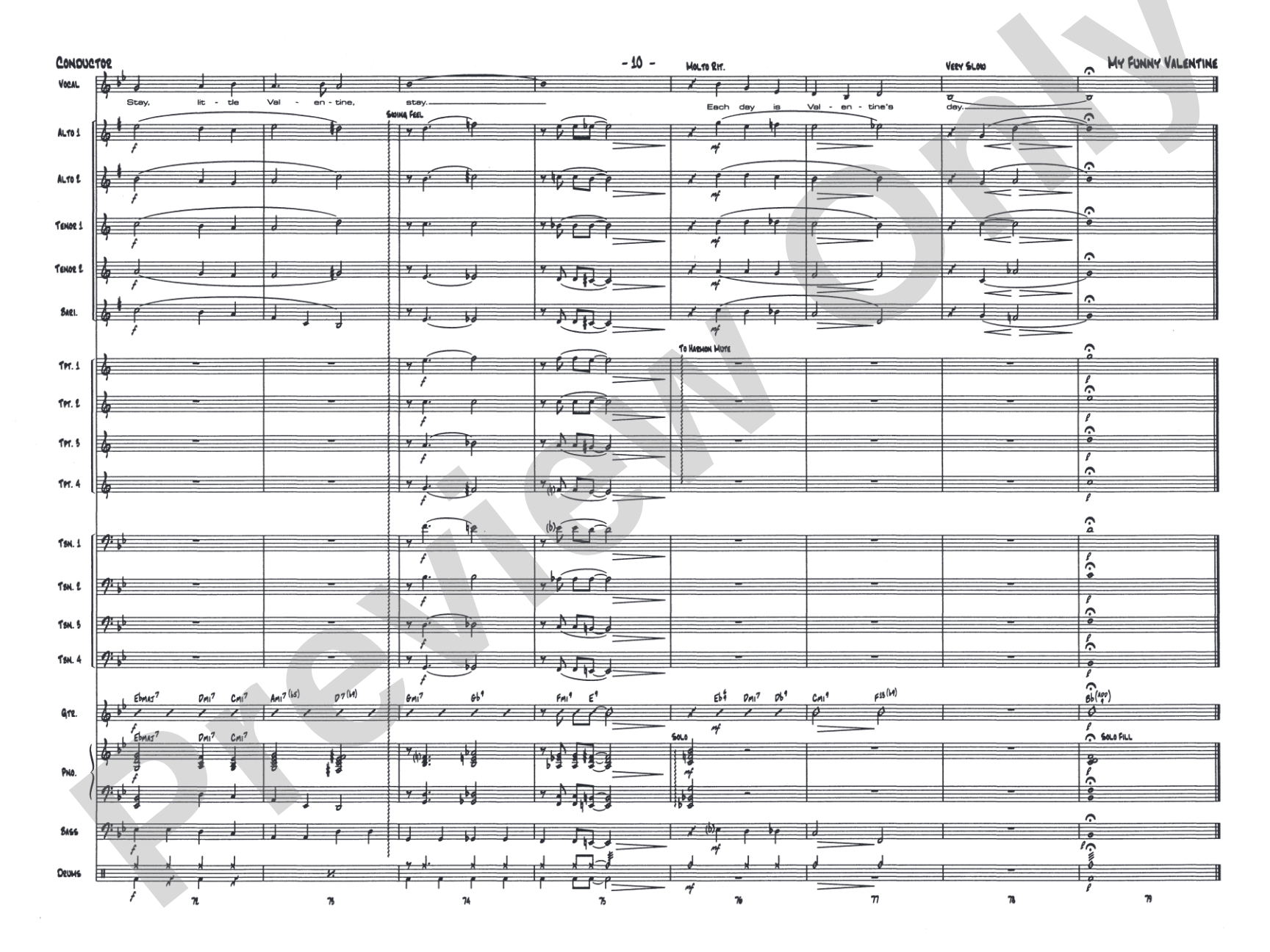
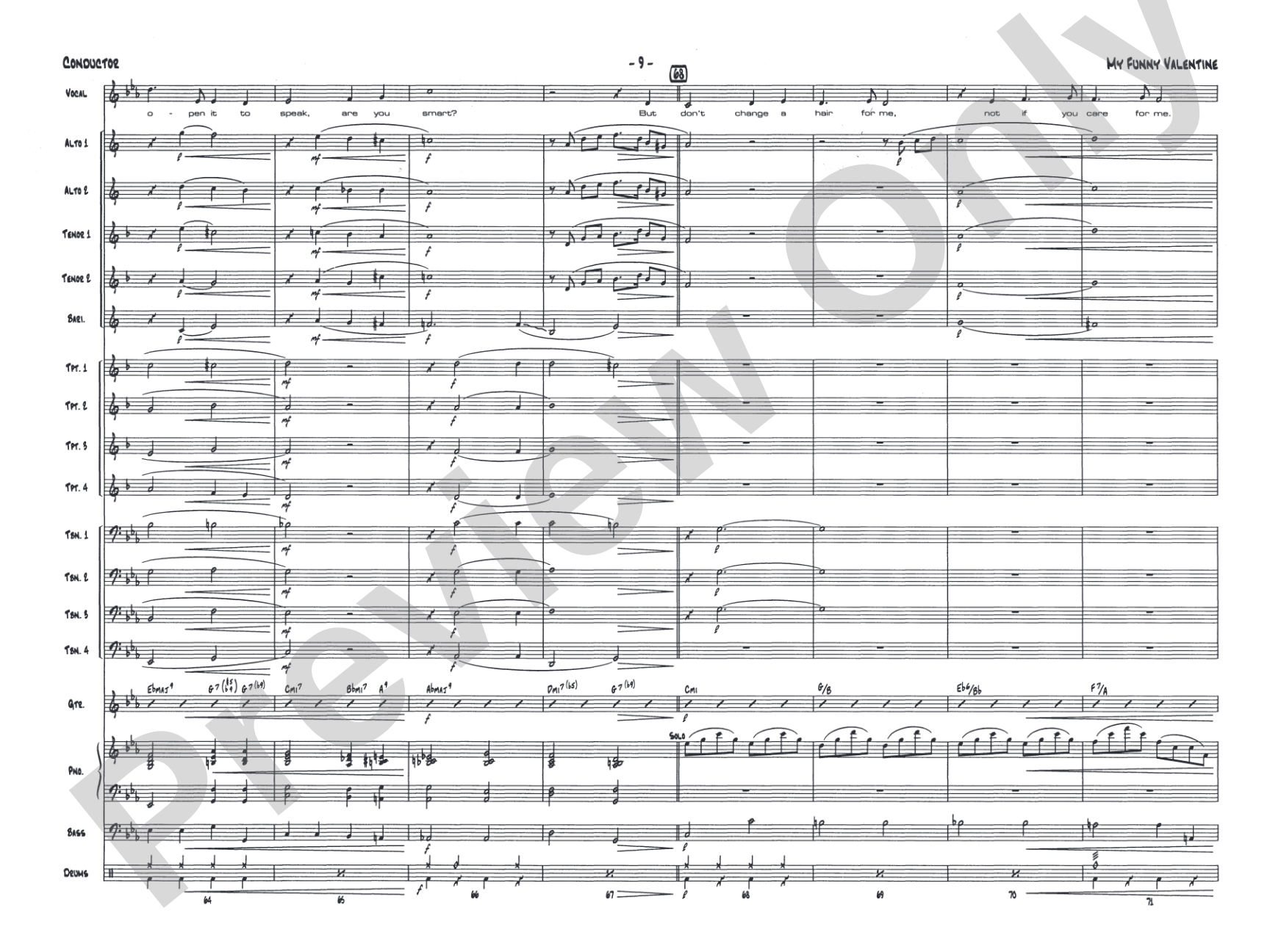
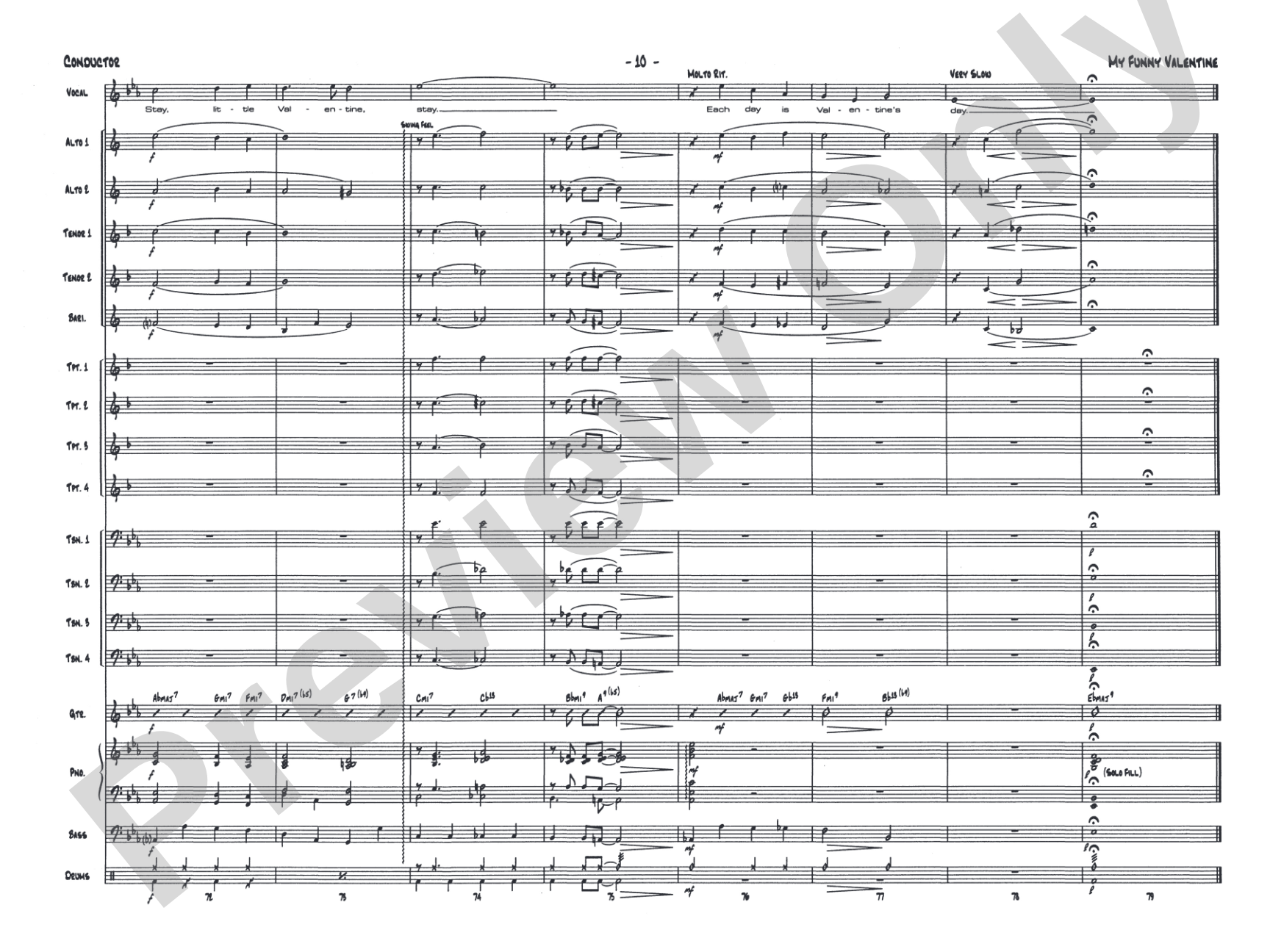

My Funny Valentine: Vocal Solo with Jazz Ensemble Conductor Score & Parts
Vocal Feature
Music by Richard Rodgers, lyrics by Lorenz Hart / arr. Dave Wolpe
Grade: 3.5 (Medium)
Item: 00-PK-0004988

$62.00
One moment…
Related Items
My Funny Valentine: Jazz Ensemble Conductor Score & Parts |
$50.00
|
View | |
My Funny Valentine: Jazz Ensemble Conductor Score & Parts |
$50.00
|
View | |
My Funny Valentine: Jazz Ensemble Conductor Score |
$9.00
|
View | |
My Funny Valentine: Vocal Solo with Jazz Ensemble Conductor Score & Parts |
$62.00
|
View | |
My Funny Valentine: Vocal Solo with Jazz Ensemble Conductor Score |
$11.00
|
View |
Description
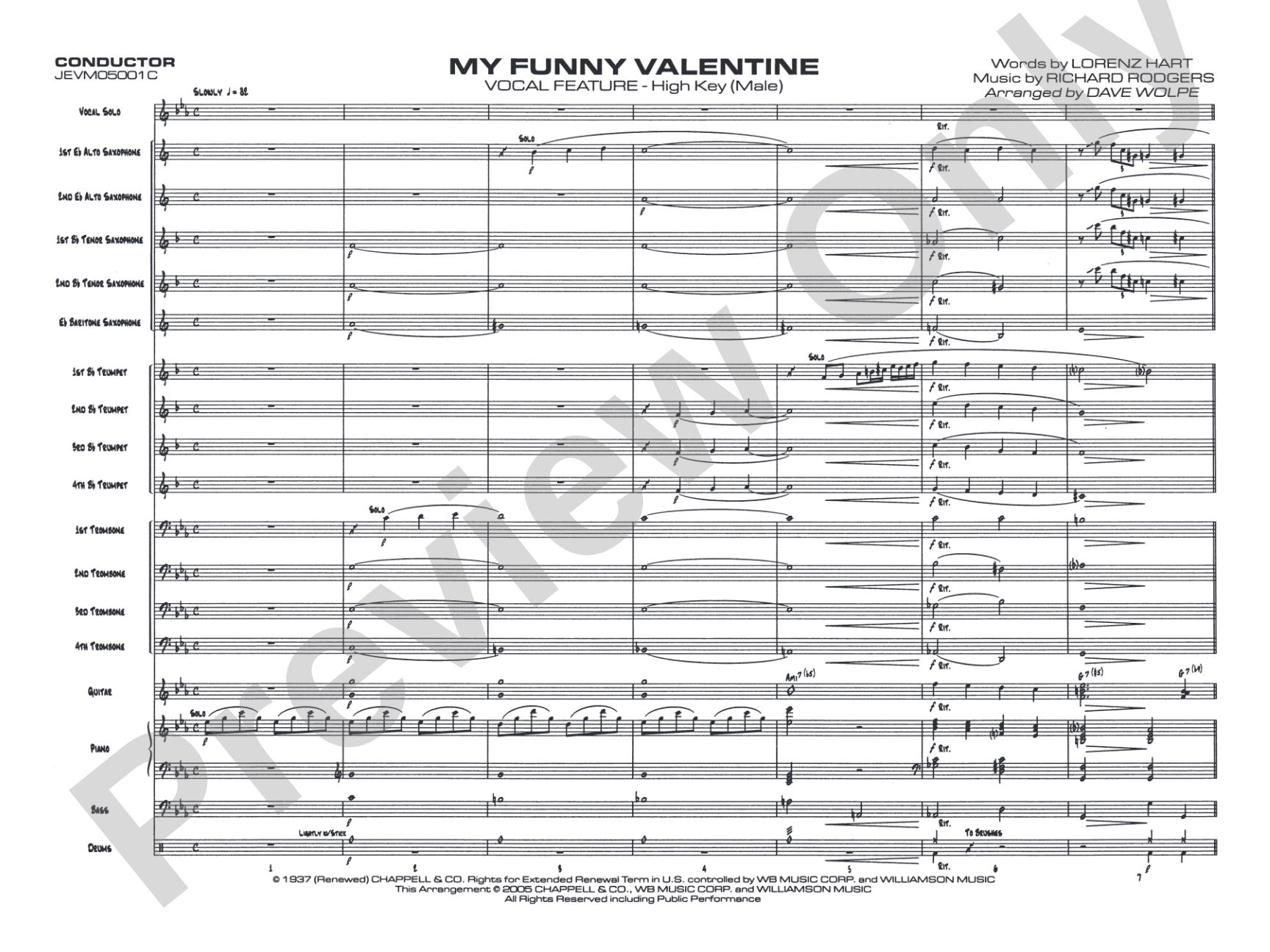
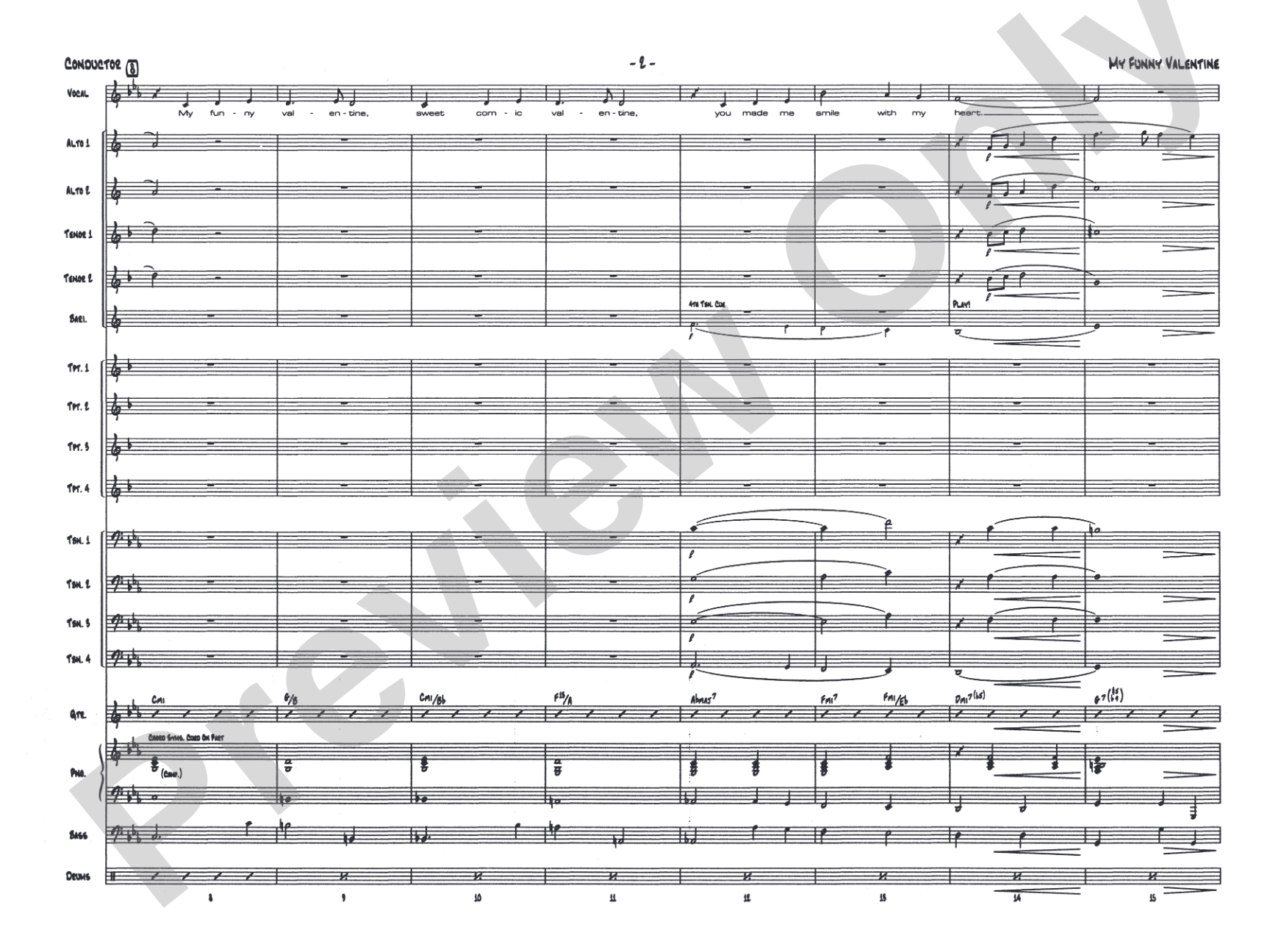
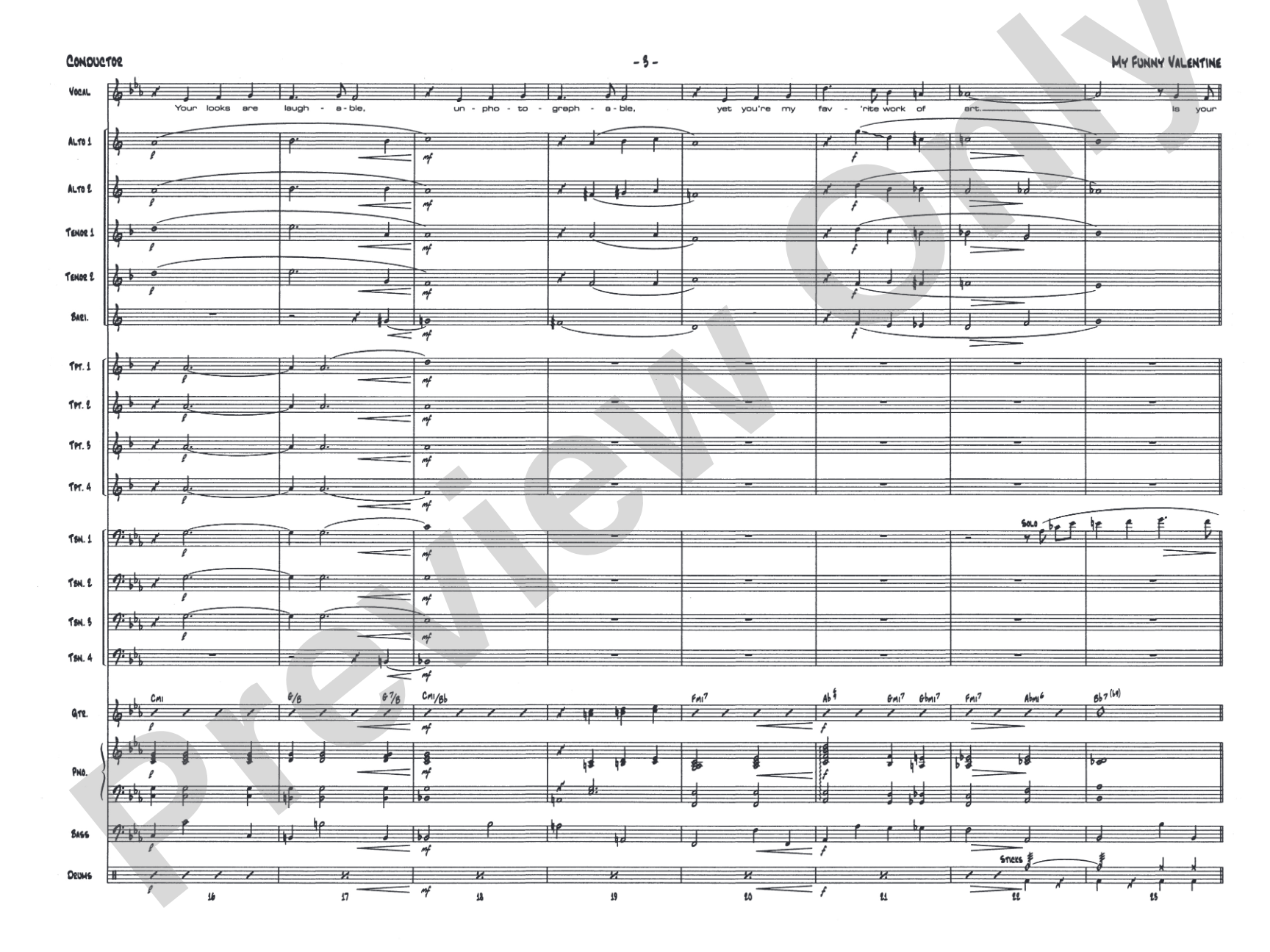
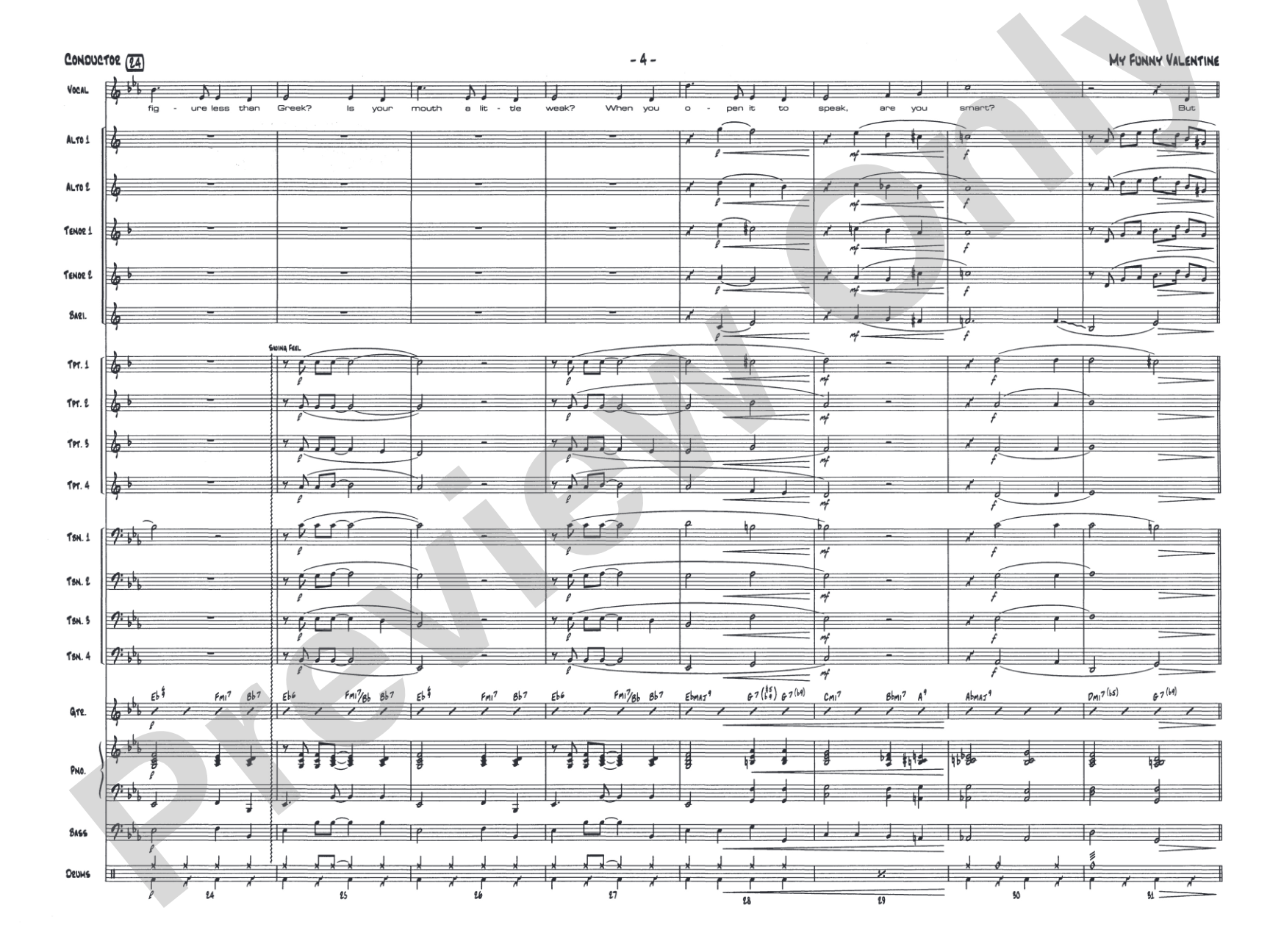
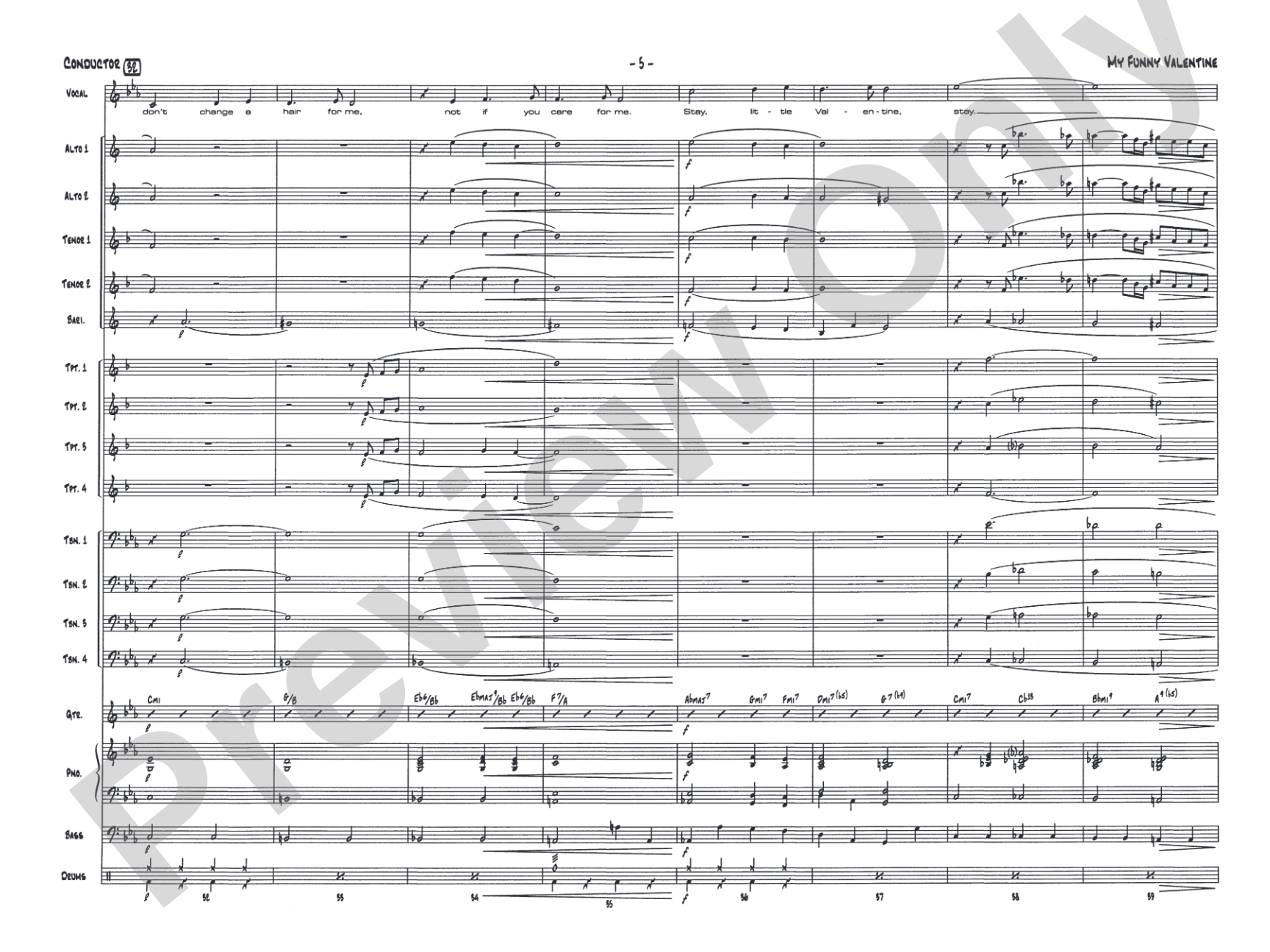
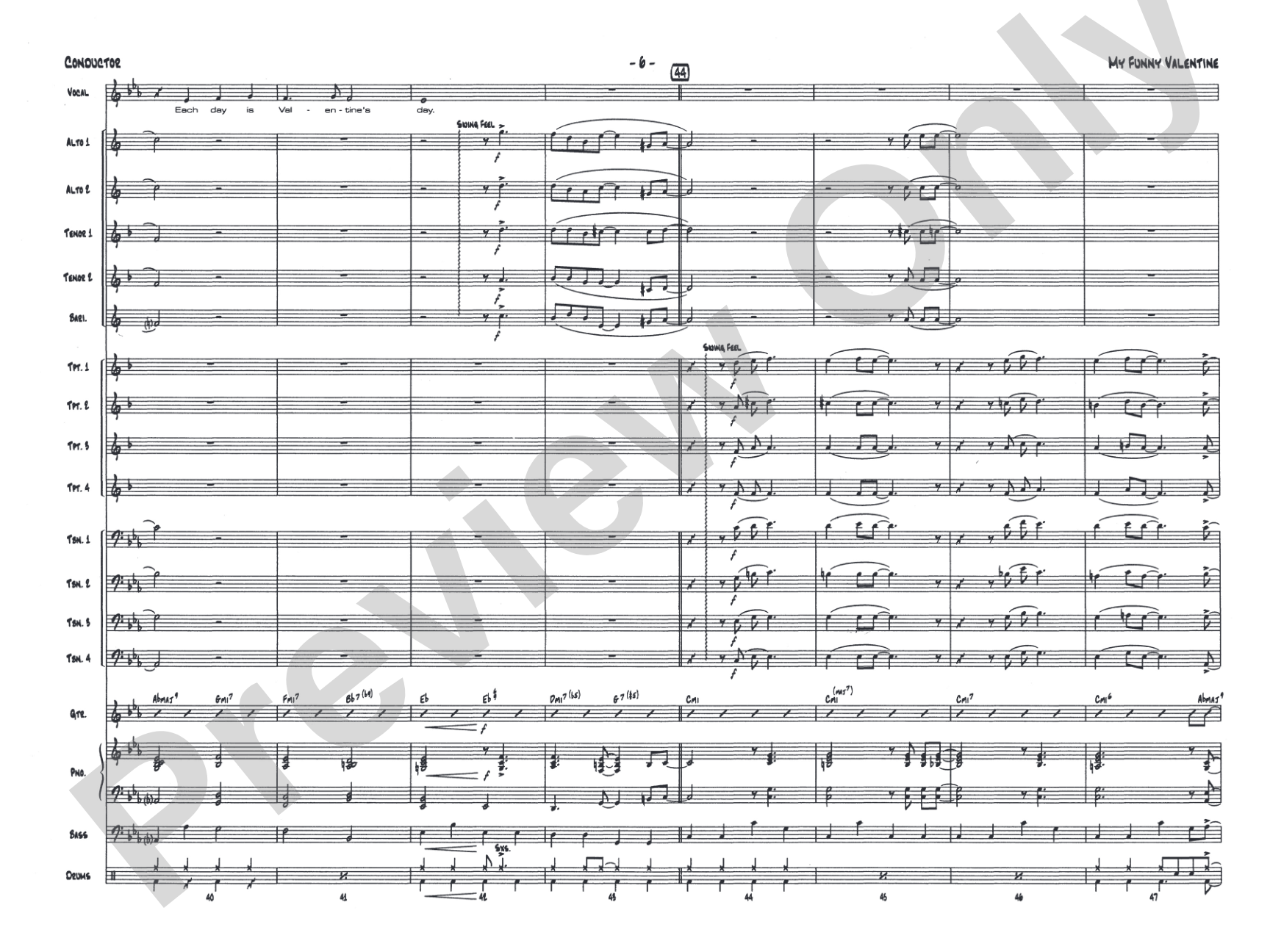
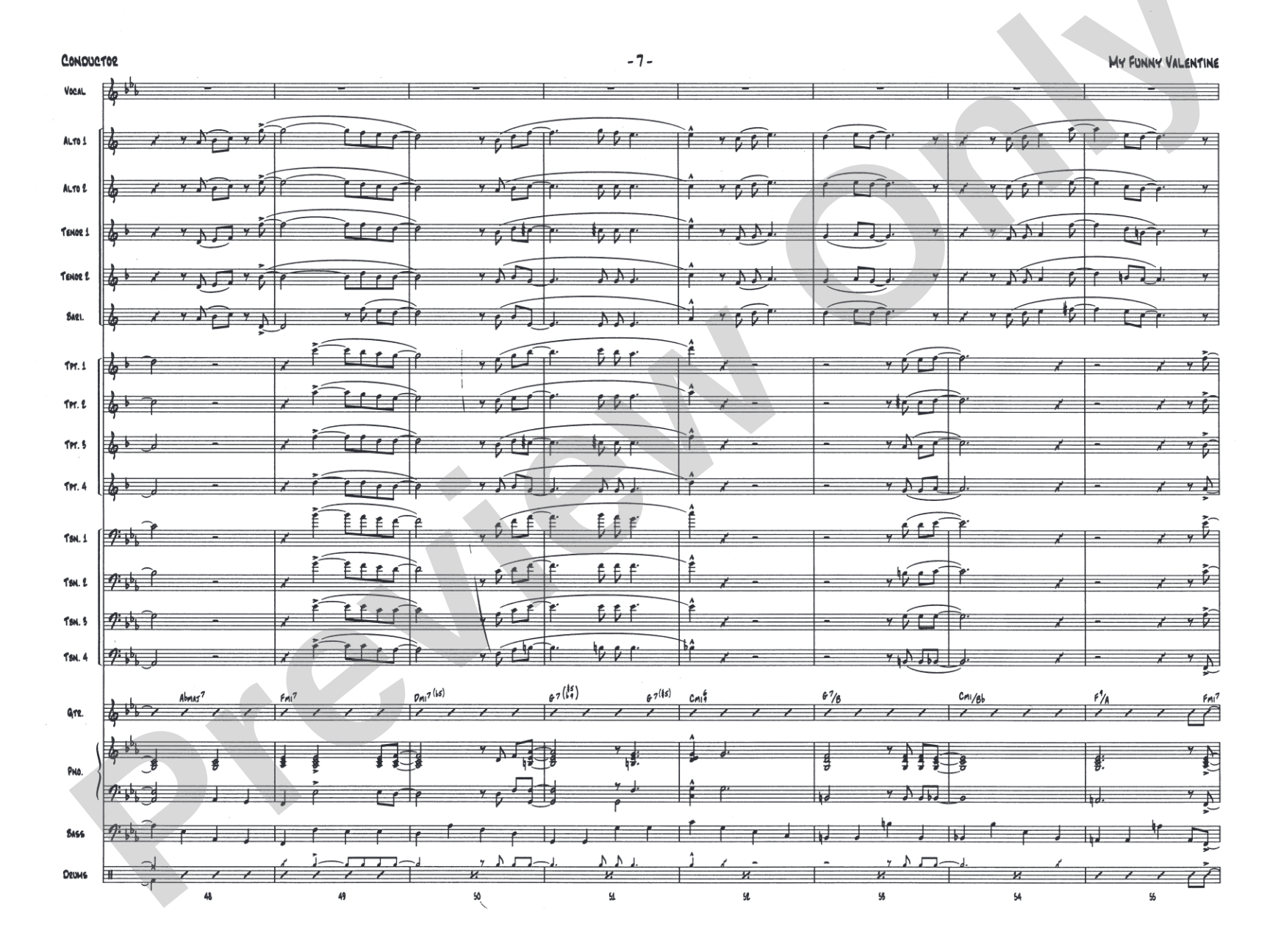
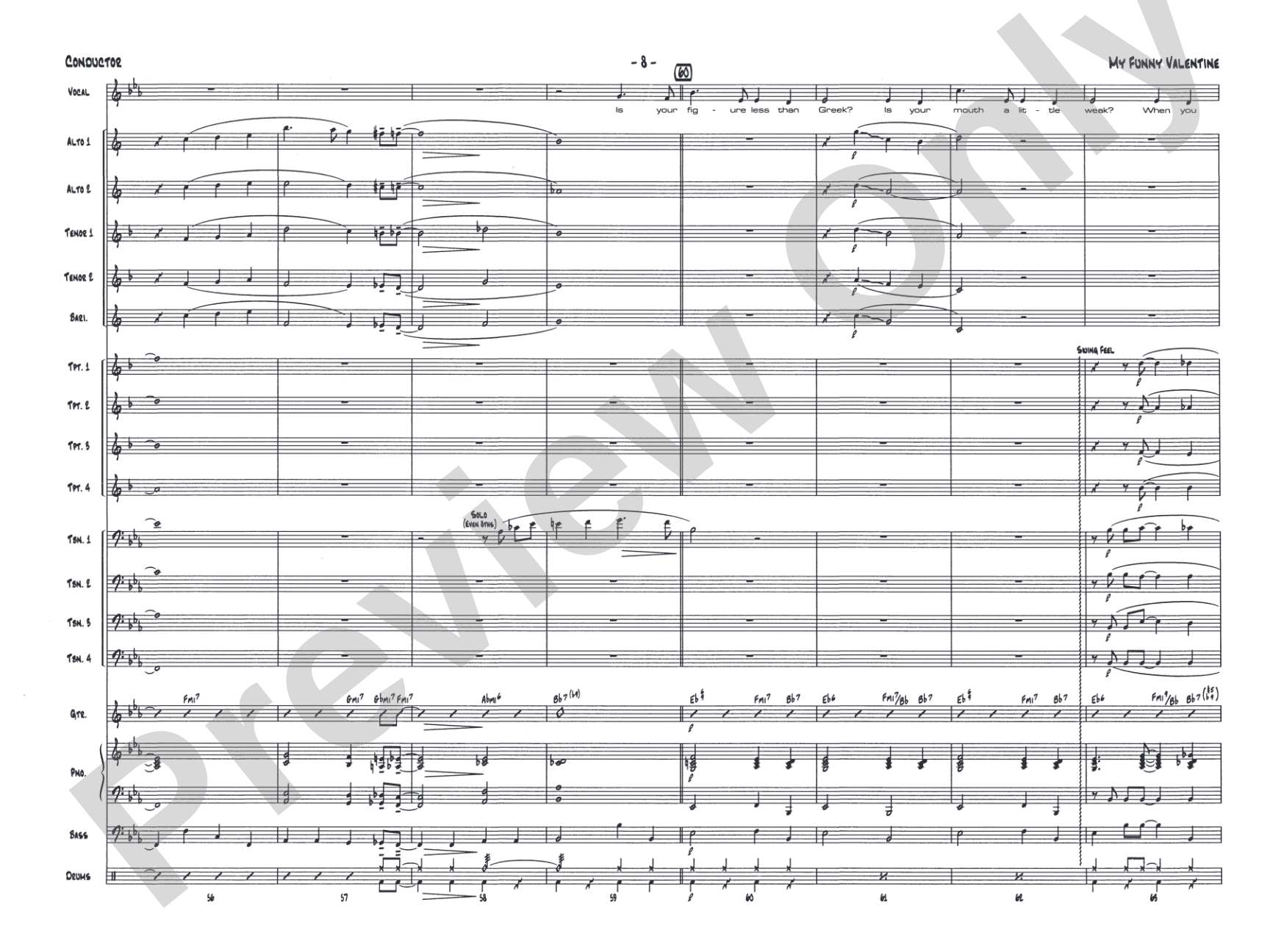
A wonderful ballad for the solo vocalist written in two keys for flexibility. Arranger Dave Wolpe, one of the best in the business, has written this swing ballad in G minor and C minor with reversible parts---just flip the page. No individual solos, but plenty of superb ensemble work. Vocal range low key (G minor): G below middle C to third line B-flat, high key (C minor): middle C to fourth space E-flat. This chart is first class. (3:53)


Don't just read it, hear it, play along with it, and watch your students grow with it. In MakeMusic Cloud, My Funny Valentine: Vocal Solo with Jazz Ensemble Conductor Score & Parts comes alive with professional accompaniment, adjustable tempo, and built-in practice tools that turn solo practice into real progress.
Open in the Player
Jump straight in and assign it today.
Start Your Free Trial
Open this title and explore the full library in minutes.
Sample Audio
1
Audio File
--:--
0:00
0:00
Sample Video
No sample videos found.
Additional Details
Series:
Jazz Vocal Series
Publisher:
Alfred Music
Page Count:
84
SKU:
00-PK-0004988
More about this title
About the Composer: Richard Rodgers
Richard Rodgers (1902-1979) shaped American musical theater across five decades, creating melodies that became the sound of Broadway itself. His gift for writing memorable, singable lines paired with sophisticated harmonic language made him one of the most recorded composers in history. In the classroom and rehearsal hall, his standards remain essential repertoire for understanding how to write for the human voice with both accessibility and depth.
Why we love this
Dave Wolpe's arrangement strikes that rare balance between serving the soloist and creating genuine ensemble interest. The reversible parts (G minor and C minor on facing pages) eliminate the need to print two separate sets, which is practical gold for directors managing budgets and storage. This is sophisticated enough to satisfy an advanced jazz ensemble while keeping the focus exactly where it belongs: on the vocalist's performance of a timeless melody.
What to expect
A slow, intimate moment with elegant sophistication. The minor key gives the melody a tender, introspective quality that invites the soloist to explore dynamics and phrasing with real nuance. The ensemble provides warm support without overwhelming the lyrical line.
Who it's for
Jazz ensembles with a strong vocalist who can carry a sophisticated ballad. The Grade 3.5 difficulty assumes seasoned players comfortable with swing interpretation and ensemble listening. This works equally well for a featured soloist in a jazz recital or a signature closer for a spring concert.
How to get the most out of it
- Build ensemble precision around the vocalist's phrasing. The swing feel and ballad tempo require the band to listen intently and respond dynamically to where the singer sits in the pocket.
- Choose your key during rehearsal planning based on the soloist's range and what sits most naturally in their voice. The reversible parts mean you can flip the page to accommodate different singers across seasons.
- Shape the ensemble voicings with restraint, especially in the quieter sections. The ballad character depends on space and transparency; let the silence breathe.
How to use it
Close a set or concert with this ballad when you want to shift the energy toward reflection and intimacy. It pairs well after up-tempo swing charts and can anchor a vocalist-focused program segment. The three-minute-fifty-three-second duration fits naturally into a mixed set without dominating the program.
Skills your students will build
- Swing interpretation and relaxed rhythmic phrasing in a ballad context
- Ensemble listening and dynamic response to a soloist's rubato
- Jazz voicing clarity at soft dynamics
- Flexibility between two keys without disruption to rehearsal workflow