
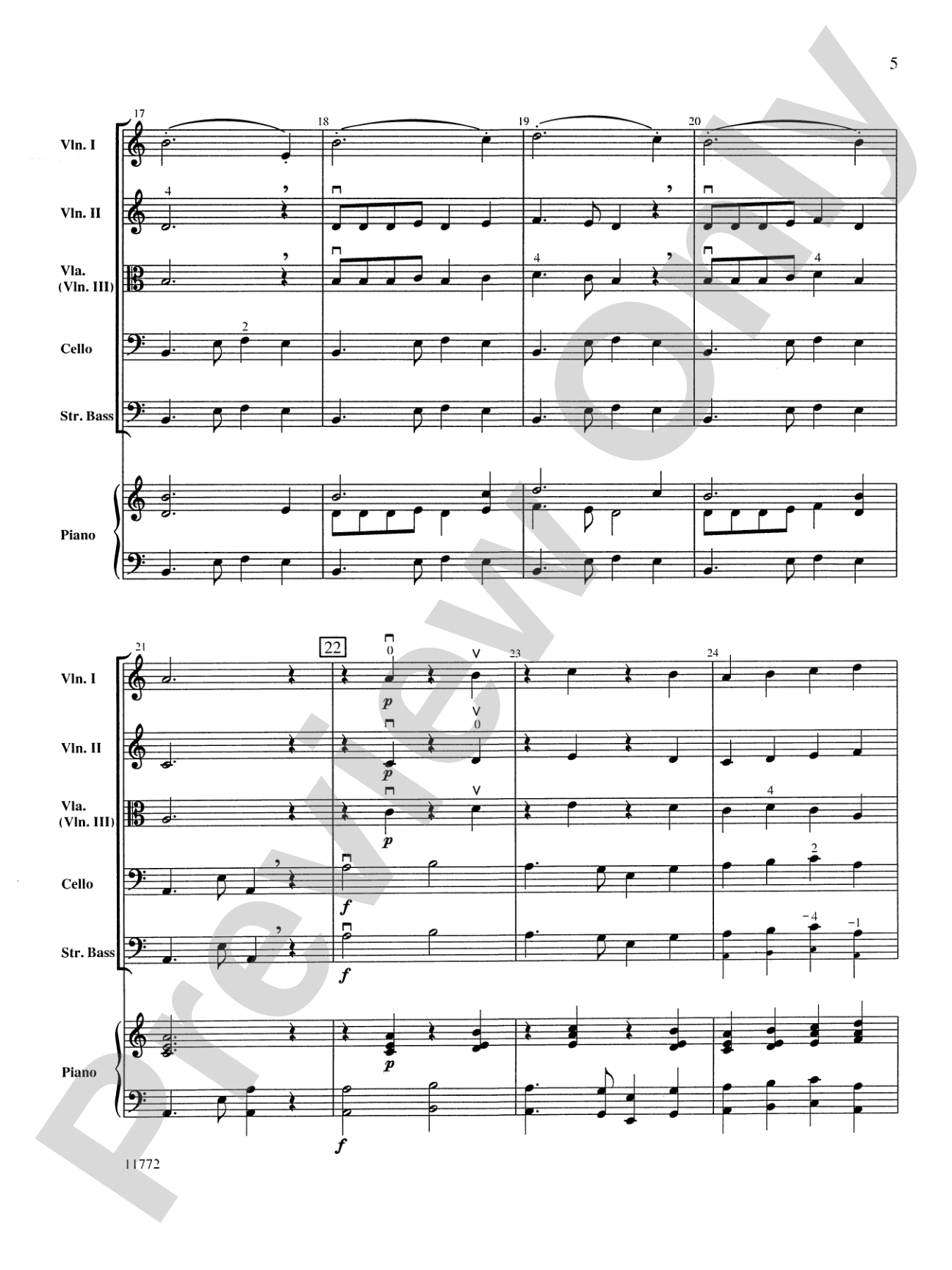
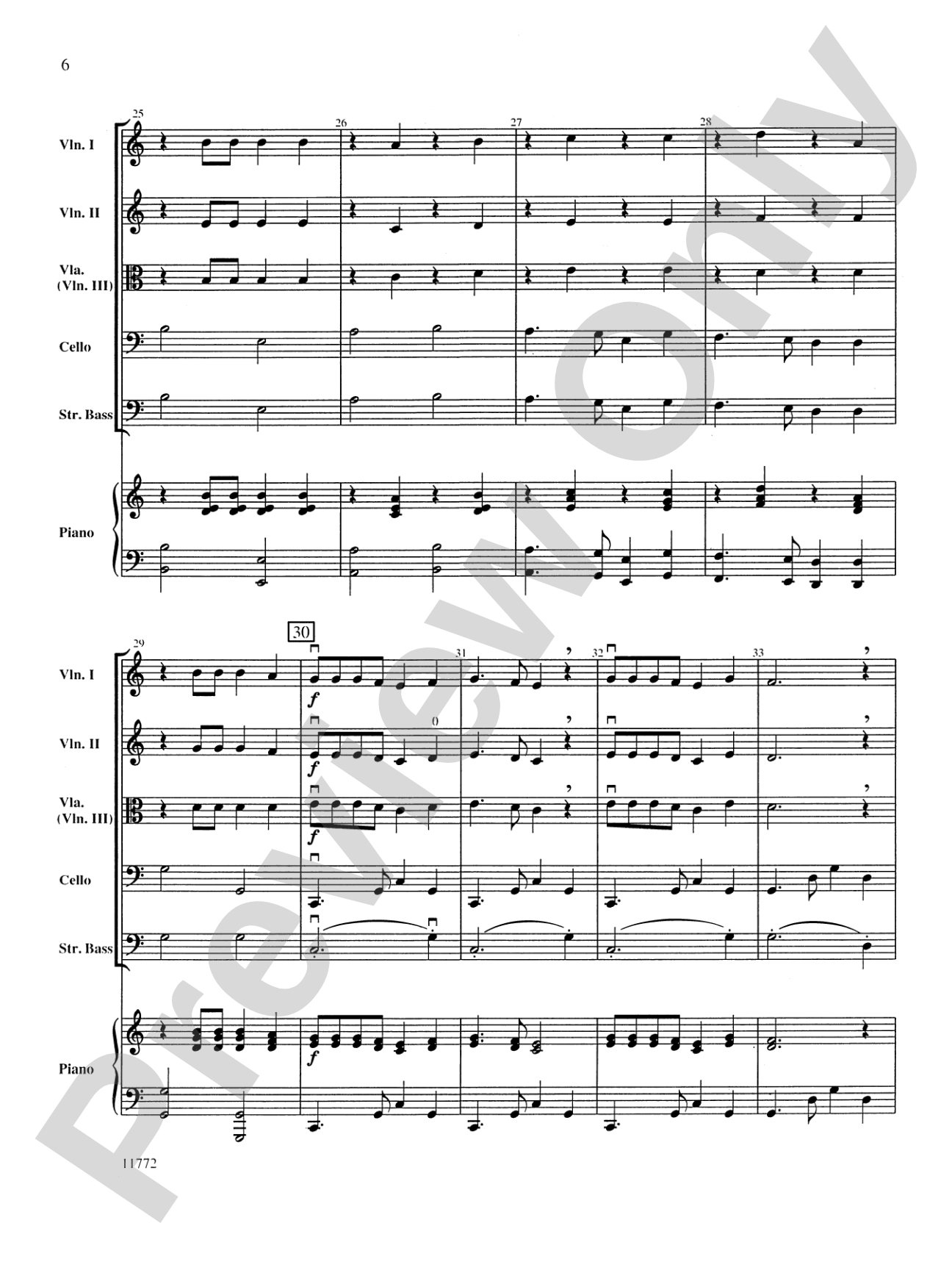
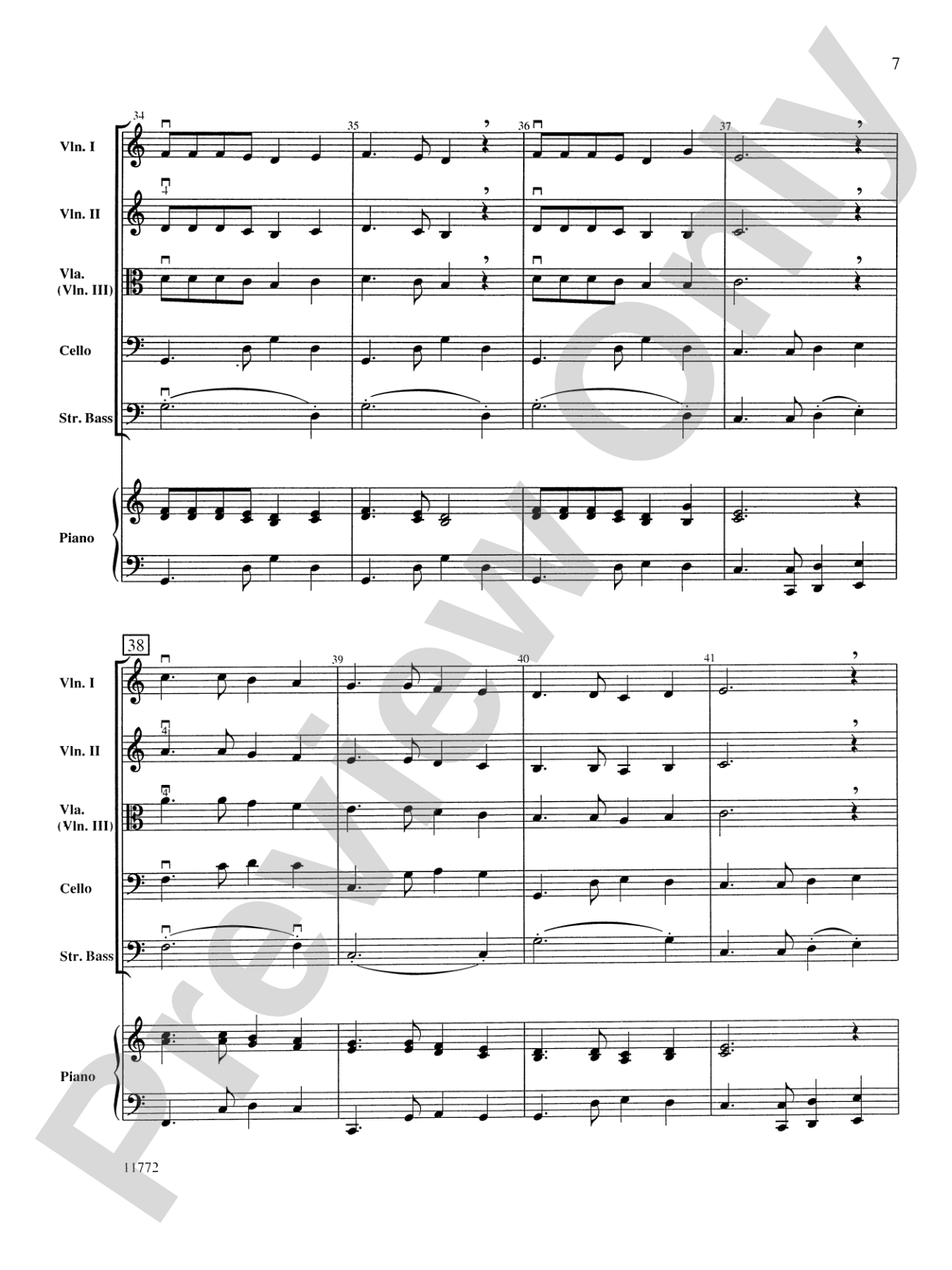
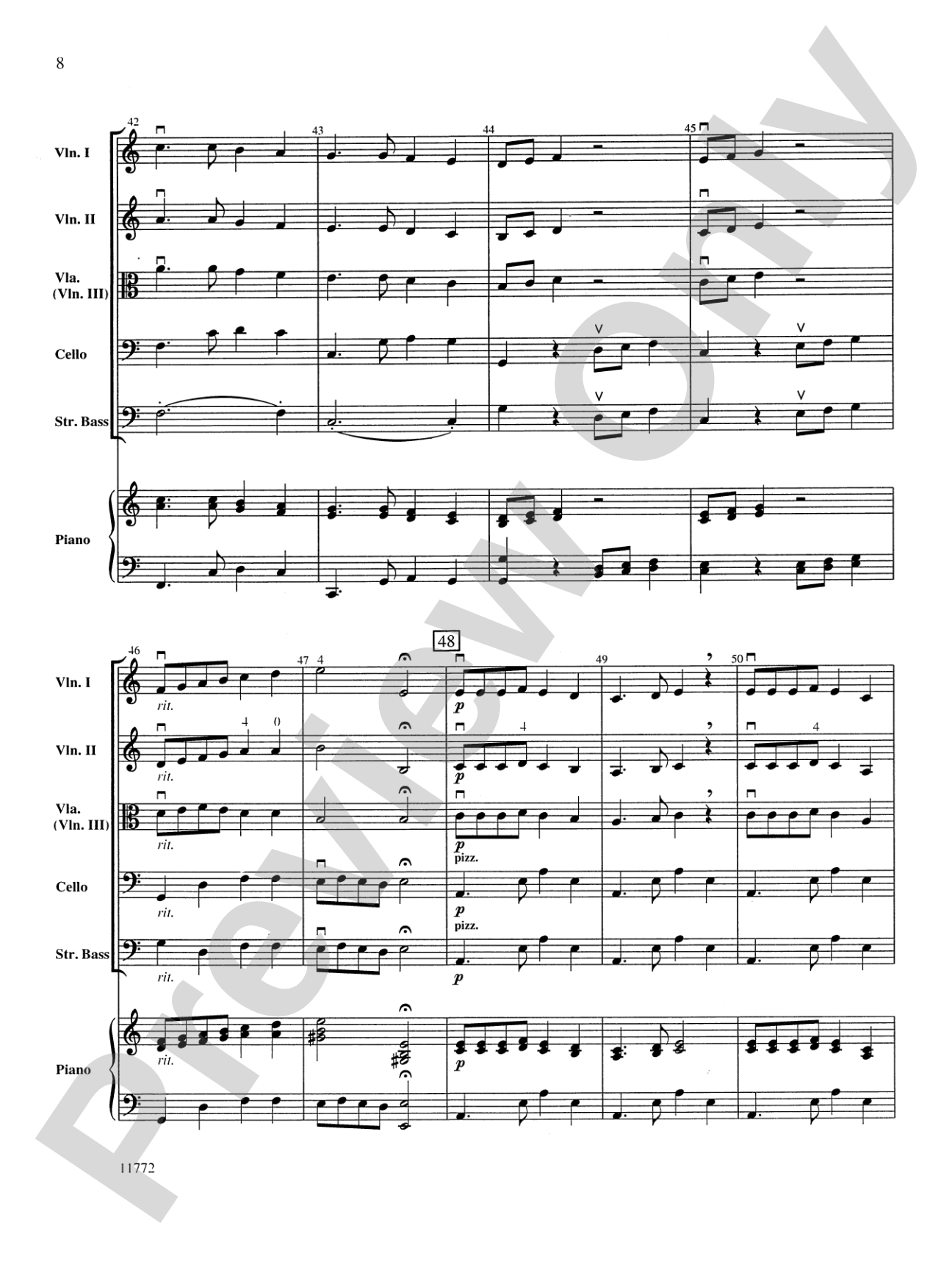
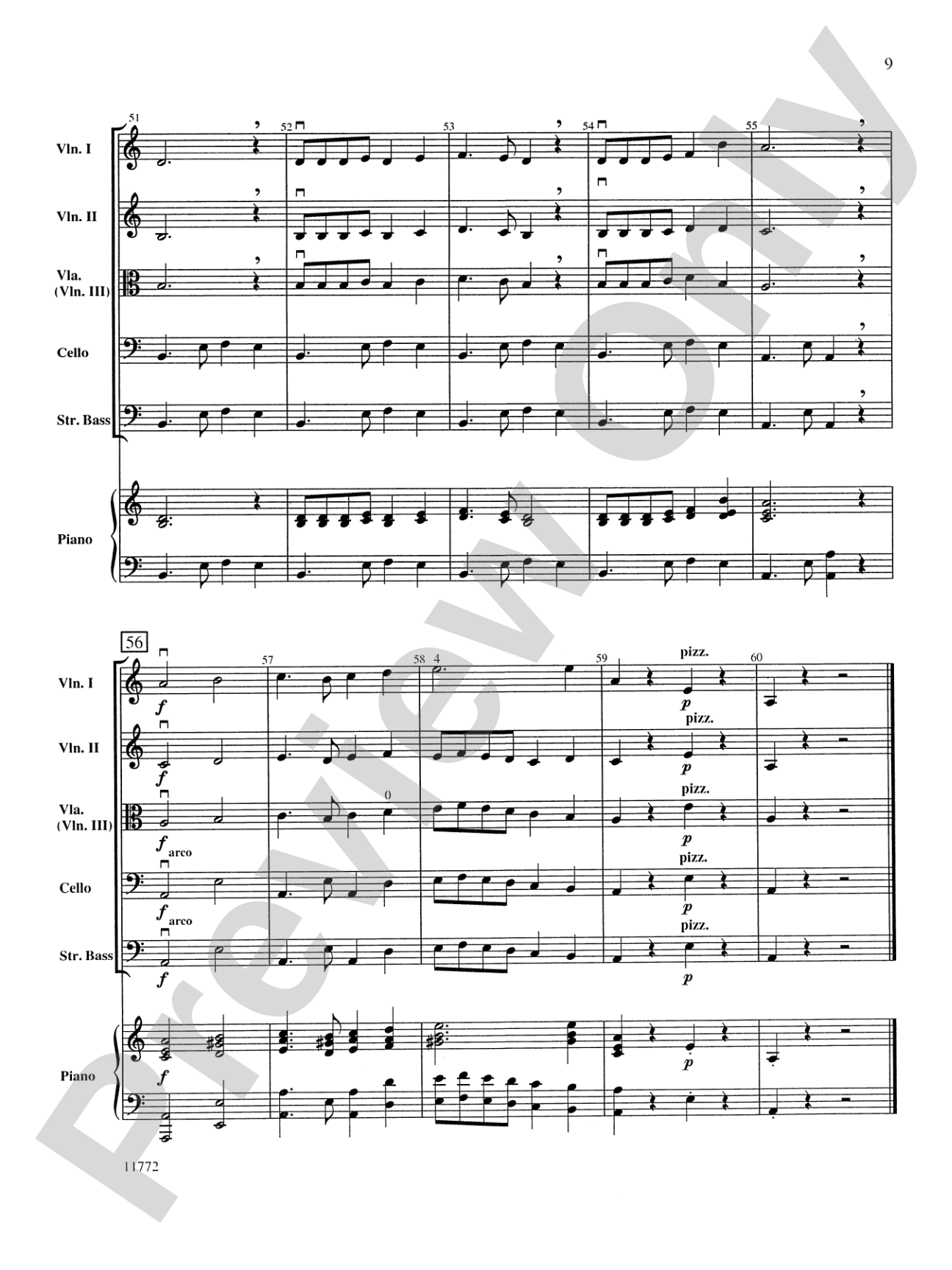




Moonlight Tango: String Orchestra Conductor Score & Parts
By Richard Meyer
Grade: 1
Item: 00-PK-0000023

$46.00
Pickup currently not available
Buy Extra Parts (Digital PDF Download)
| Product | Price | Quantity |
|---|---|---|
| Moonlight Tango: Score | $8.00 | |
| Moonlight Tango: 1st Violin | $5.99 | |
| Moonlight Tango: 2nd Violin | $5.99 | |
| Moonlight Tango: 3rd Violin (Viola [TC]) | $5.99 | |
| Moonlight Tango: Viola | $5.99 | |
| Moonlight Tango: Cello | $5.99 | |
| Moonlight Tango: String Bass | $5.99 | |
| Moonlight Tango: Piano Accompaniment | $5.99 |
Parts Added to Cart!
Description
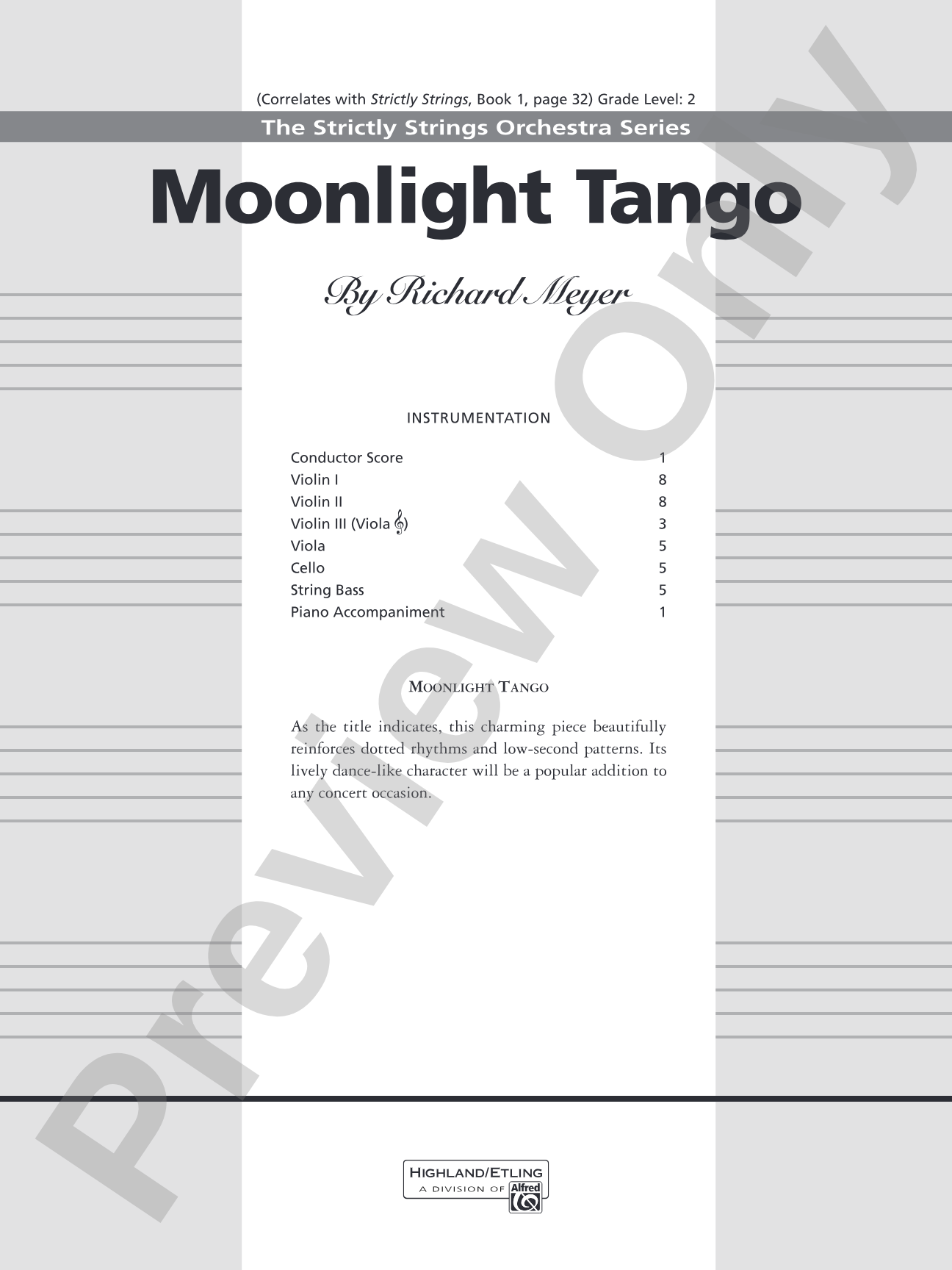
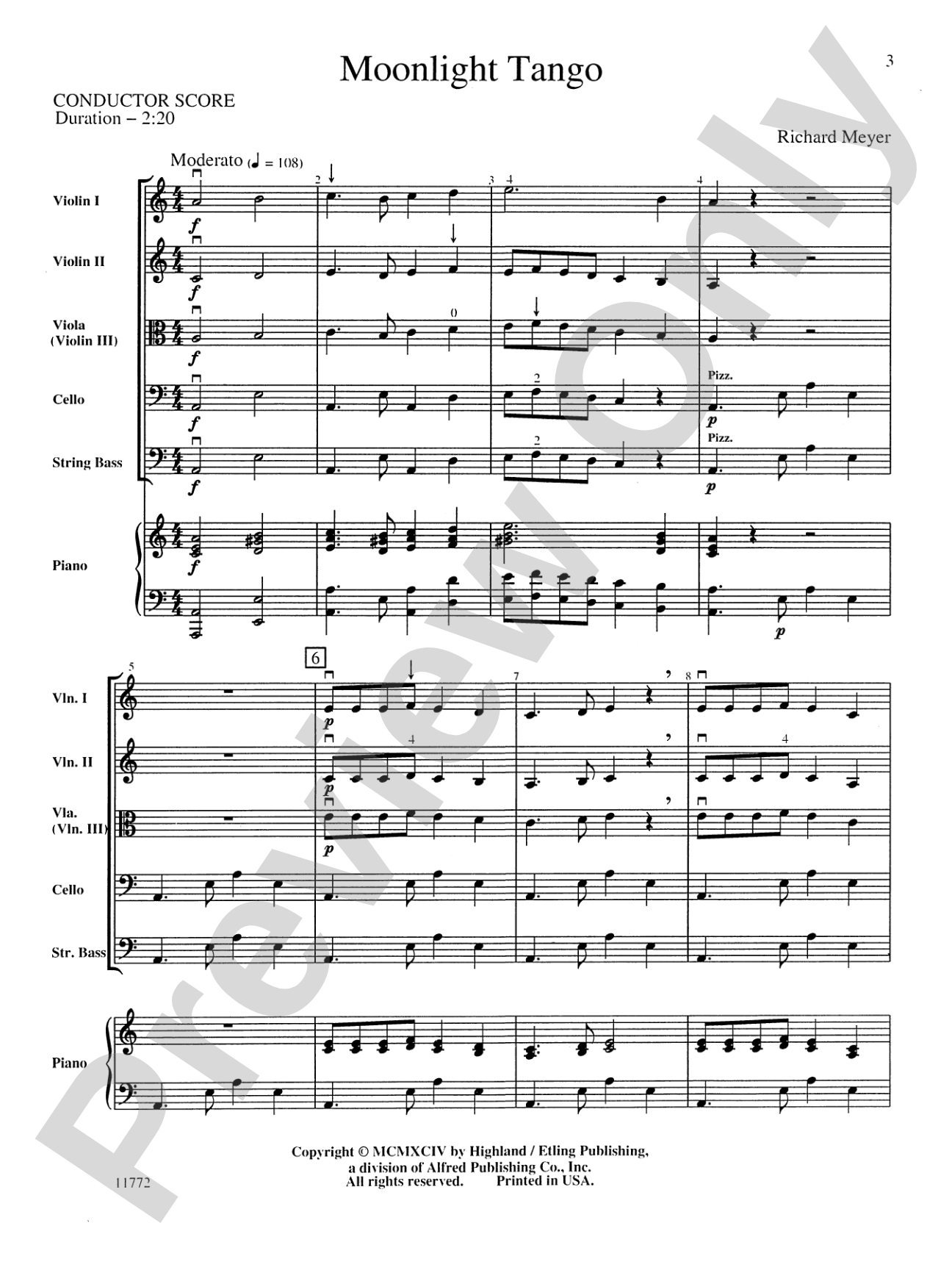
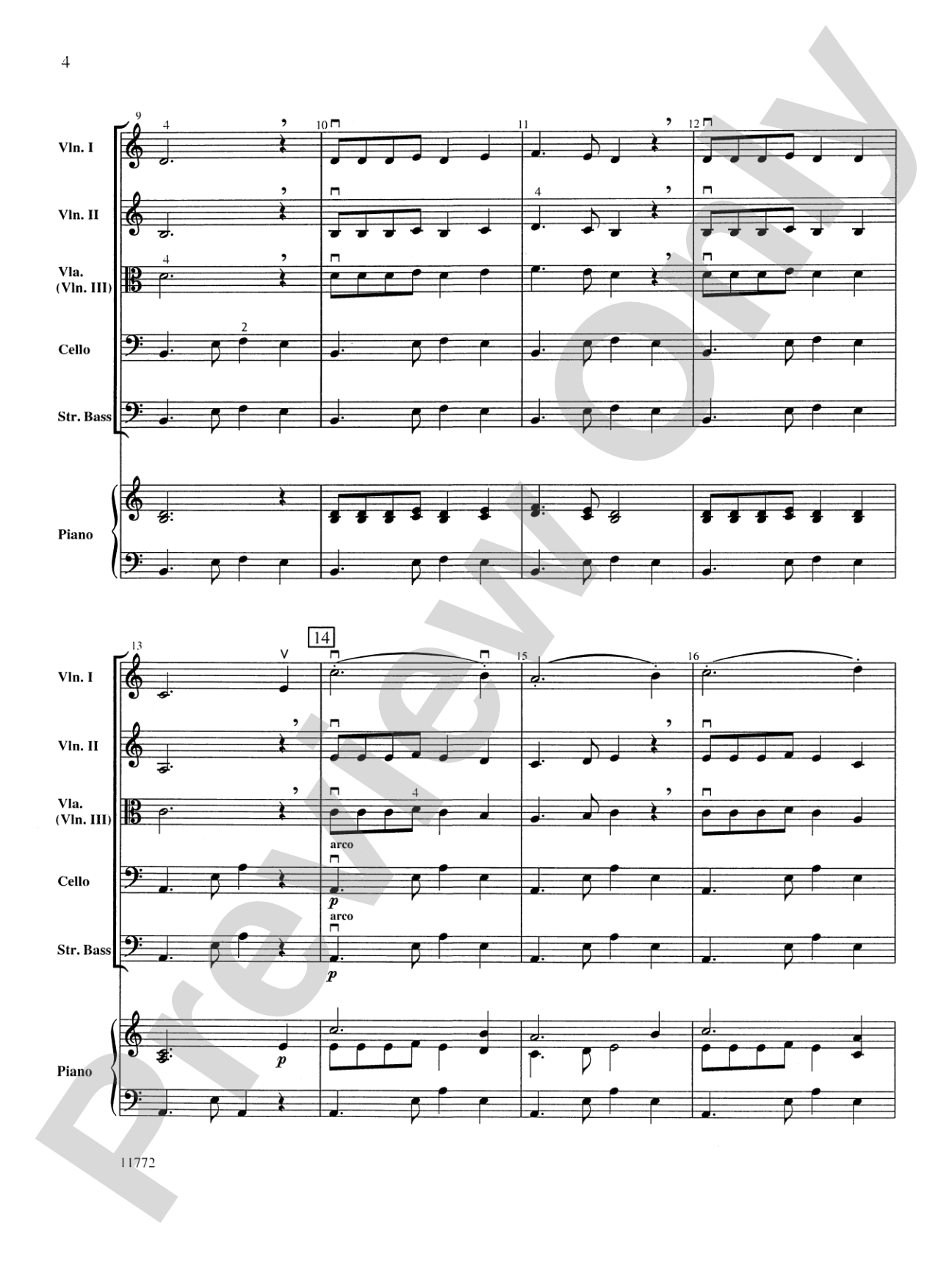
As the title indicates, this charming piece beautifully reinforces dotted rhythms and low-second patterns. Its lively dance-like character will be a popular addition to any concert occasion. This title is available in MakeMusic Cloud.


Don't just read it, hear it, play along with it, and watch your students grow with it. In MakeMusic Cloud, Moonlight Tango: String Orchestra Conductor Score & Parts comes alive with professional accompaniment, adjustable tempo, and built-in practice tools that turn solo practice into real progress.
Open in the Player
Jump straight in and assign it today.
Start Your Free Trial
Open this title and explore the full library in minutes.
Sample Audio
1
Audio File
--:--
0:00
0:00
Sample Video
No sample videos found.
Additional Details
Series:
Highland/Etling Strictly Strings
Publisher:
Alfred Music
Page Count:
72
SKU:
00-PK-0000023
More about this title
About the Composer: Richard Meyer
Richard Meyer brings three decades of string teaching experience into every composition he writes. After 35 years directing orchestras across elementary, middle, and high school levels, he grew the Oak Avenue Intermediate School program from 29 students to 200 and led the Pasadena Youth Symphony Orchestra for 16 years, taking them on performance tours across North America, Europe, and Australia. His work as a guest conductor and clinician has taken him to the A.S.T.A. National Conference, state honor orchestras, and universities nationwide.
Beyond the podium, Meyer is a prolific composer with nearly 200 works in print and served as string editor for Alfred Publishing Company for over a decade. He co-authored the String Explorer Series and Sight-read It for Strings, educational resources widely used in school programs. His "Giving Bach" initiative, launched in 2009, uses interactive concerts to reach special needs and underserved students throughout Southern California, demonstrating his commitment to music access as a core educational value.
Why we love this
Meyer writes Grade 1 repertoire that doesn't condescend. Moonlight Tango pairs a genuinely appealing tango character with focused technical work (dotted rhythms and low second position patterns), so students experience real musical satisfaction while building foundational skills. The piece works equally well in concert or festival contexts, giving you programming flexibility without sacrificing artistic substance.
What to expect
There's an immediacy to this piece that draws audiences in. The tango rhythm establishes itself quickly, creating that subtle sway and forward motion that makes the ensemble sound more assured than Grade 1 groups typically do. Moonlight evokes a gentle, nocturnal character while the tango pulse keeps everything buoyant and alive.
Who it's for
Beginning string orchestras tackling their first concert pieces will find Moonlight Tango both achievable and rewarding. The Grade 1 difficulty level sits well for groups with 1-2 years of experience, and the tango idiom engages young players in a style that feels fresh compared to typical beginner repertoire.
How to get the most out of it
- Balance the dotted rhythm figures across your violin sections so the characteristic tango pulse emerges clearly without any part overshadowing the line.
- Give attention to intonation in second position; use isolated scale passages in rehearsal to ensure low second is secure before running full sections.
- Shape the phrase contours with gentle dynamics rather than abrupt changes; this reinforces the dance-like character Meyer composed into the piece.
- Let the ensemble settle into the tango's rhythmic pocket early in your rehearsal process so students can focus on accurate position work rather than fighting the meter.
How to use it
Program this as a confident opener on a mixed-repertoire concert, or pair it with a lyrical piece and a faster finale to create a complete arc for your Grade 1 students. It also serves well as a festival selection where you want to showcase both musicality and technical foundation without overwhelming young players.
Skills your students will build
- Reading and executing dotted rhythms with rhythmic precision
- Intonation accuracy in low second position
- Understanding and playing in tango meter and stylistic idiom
- Ensemble balance and phrase shaping at the beginner level