
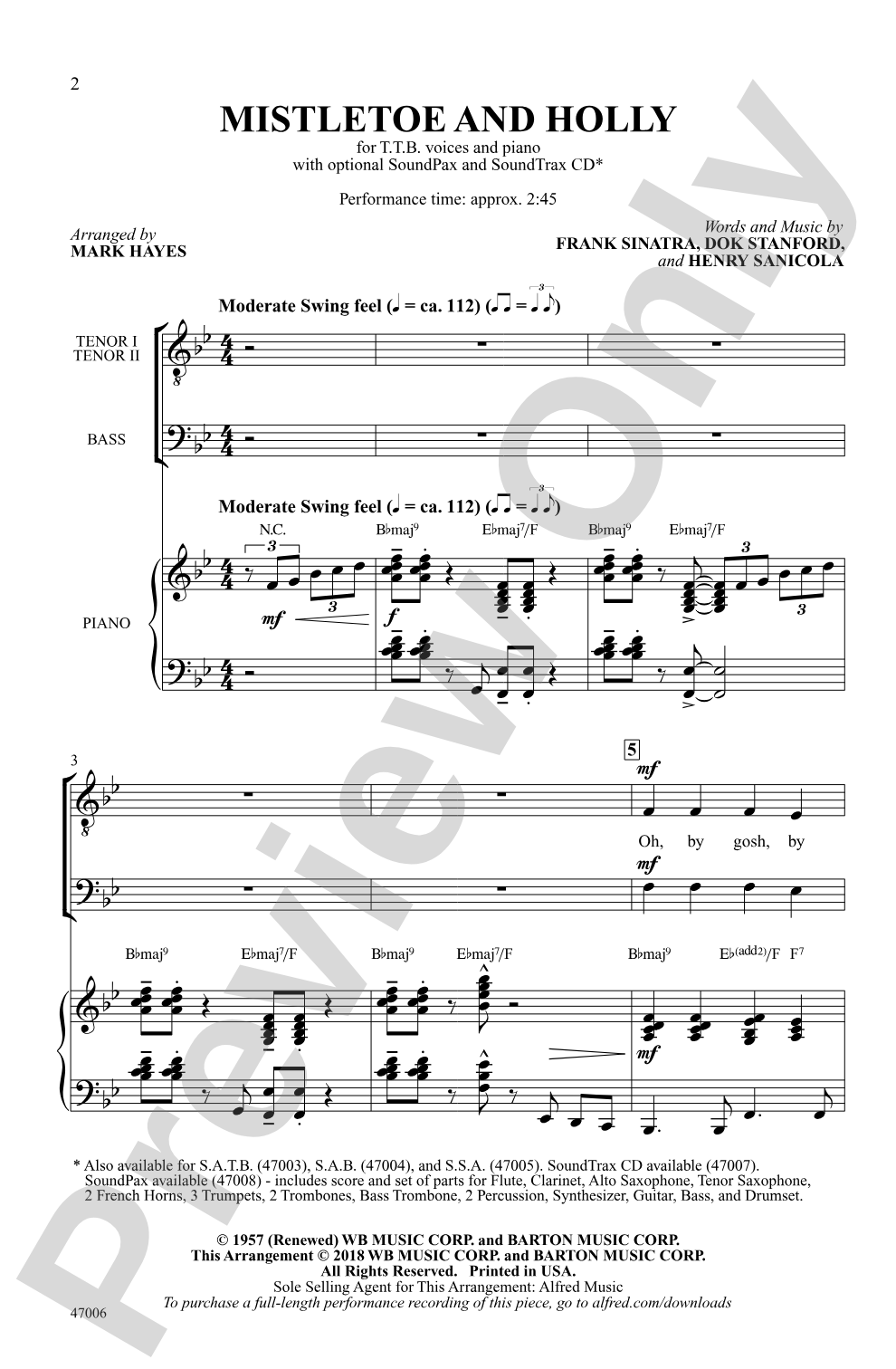

Mistletoe and Holly: TTB Choral Octavo
Words and music by Frank Sinatra, Dok Stanford, and Henry Sanicola / arr. Mark Hayes
Item: 00-PO-0005860
$2.10
Minimum order quantity: 20 copies
One moment…
Related Items
Mistletoe and Holly: SoundTrax Digital Audio Download |
$27.99
|
View | |
Mistletoe and Holly: SATB Choral Octavo |
$2.10
|
View | |
Mistletoe and Holly: SAB Choral Octavo |
$2.10
|
View | |
Mistletoe and Holly: SSA Choral Octavo |
$2.10
|
View | |
Mistletoe and Holly: Choral SoundPax |
$60.00
|
View | |
Mistletoe and Holly: SATB Choral Octavo |
$2.10
|
View | |
Mistletoe and Holly: SAB Choral Octavo |
$2.10
|
View | |
Mistletoe and Holly: SSA Choral Octavo |
$2.10
|
View | |
Mistletoe and Holly: TTB Choral Octavo |
$2.10
|
View | |
Mistletoe and Holly: Choral Octavo SoundTrax CD |
$29.99
|
View |
Description
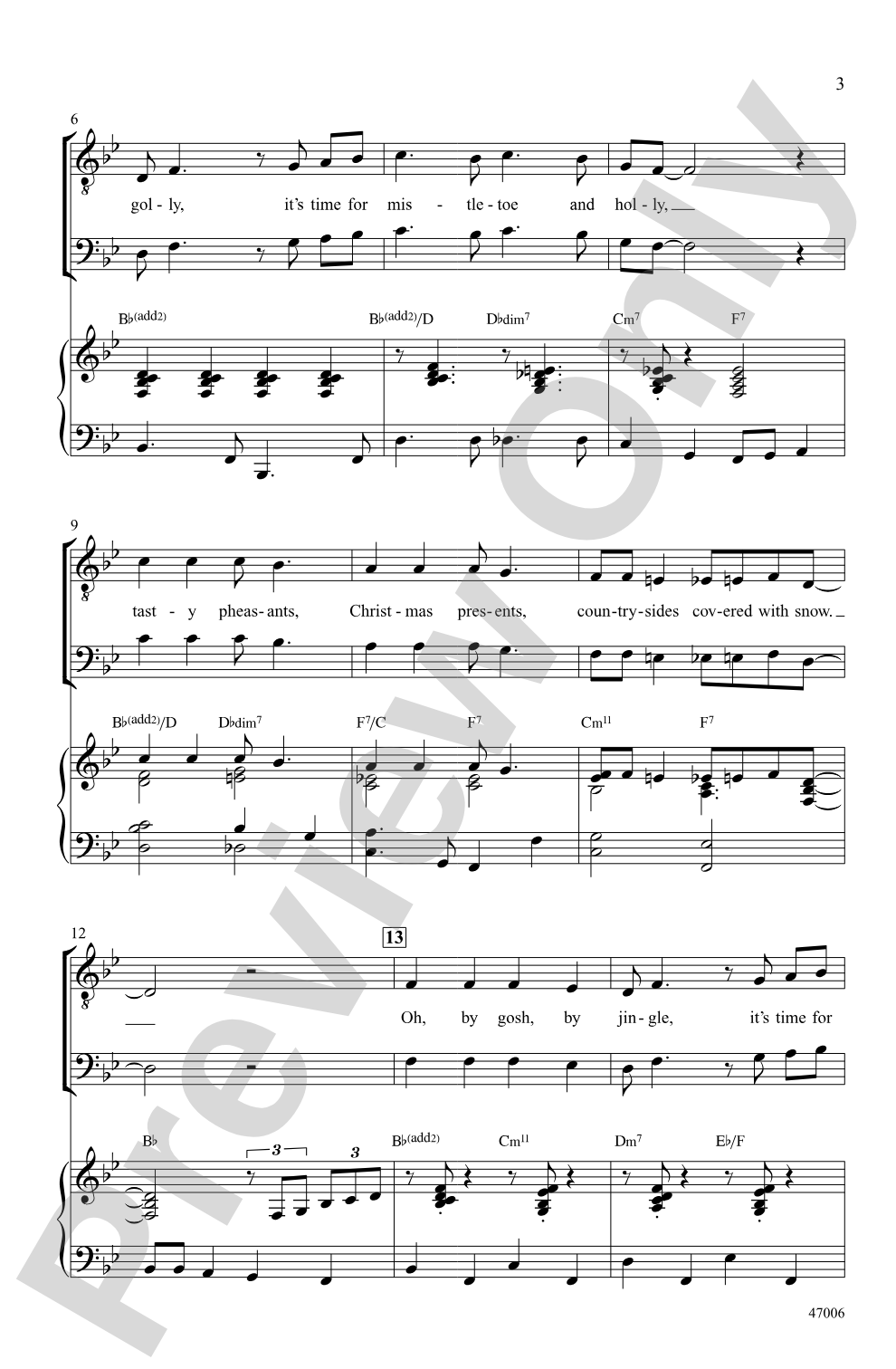
A holiday pops tune straight out of the Rat Pack era, co-written by Ol' Blue Eyes himself! This nostalgic mid-tempo swing arrangement starts with voices swapping the melody, then blossoms into sweet choral sonorities. "Oh, by gosh, by golly," consider using the SoundTrax CD or SoundPax parts to take full advantage of Mark Hayes's snazzy, jazzy arrangement.


Mistletoe and Holly: TTB Choral Octavo isn't in MakeMusic Cloud just yet...but it could be. Let us know you'd like to see it, and you'll help shape what comes next. In the meantime, start a free trial and dive into thousands of interactive titles your students can play along with today.
Request This Title
Tell us you want it.
Start Your Free Trial
Explore everything that's ready to play right now.
Sample Audio
1
Audio File
--:--
0:00
0:00
Sample Video
No sample videos found.
Additional Details
Series:
Alfred Pop Choral Series
Publisher:
Alfred Music
Page Count:
12
SKU:
00-PO-0005860
More about this title
About the Composer: Frank Sinatra
Frank Sinatra (1915-1998) shaped American popular song across seven decades, defining the vocal standards that still anchor jazz and pop repertoire. His artistry extended beyond performance into songwriting and production; collaborating with composers like Dok Stanford and Henry Sanicola, he understood how melody and lyric could capture a moment in time. For music educators, Sinatra's legacy offers a bridge between classical training and contemporary idiom, demonstrating how disciplined technique serves interpretive maturity.
Why we love this
Mark Hayes's arrangement transforms a mid-century novelty into genuine choral writing, trading cuteness for genuine swing sophistication. The voice-swapping opening and layered sonorities give every section musical substance, making this holiday selection feel earned rather than obligatory. TTB singers will find themselves navigating real harmonic interest while the accessibility never demands extreme ranges or chromatic density.
What to expect
Stepping into a lounge where the lights are warm and everyone knows the words. The melody trades between voices like old friends passing a story, voices weaving together into rich, relaxed harmonies that feel both polished and effortless. There's humor in the holiday novelty, but the music takes itself seriously enough to matter.
Who it's for
TTB choirs seeking holiday repertoire that skips the cloying sentiment and delivers genuine musicality. Directors programming a winter concert with pop or jazz elements will find this a sophisticated option that respects the vocal writing while capturing nostalgia without apology.
How to get the most out of it
- Balance the melody exchanges in the opening so each voice part lands clearly without one section dominating; this clarity pays off when the full voicing arrives.
- Treat the swing feel as a rhythmic lifestyle, not just dotted figures. Work triplet subdivisions in rehearsal so the ensemble maintains that relaxed Rat Pack pocket even when harmony thickens.
- Pair this with the SoundTrax CD or SoundPax parts to hear how the full arrangement breathes; the instrumental color will anchor phrasing choices and lift the energy of any performance.
- Shape the "sweet choral sonorities" phrase with genuine legit tone rather than oversinging; this piece rewards restraint and letting the harmony do the work.
How to use it
Slot this into the second half of a winter concert, after you've built rapport with the audience through your more serious selections. The nostalgic swing idiom pairs naturally with other mid-20th century pops repertoire or provides a stylistic bridge between choral classics and contemporary material. This is the piece that reminds audiences why holidays and music belong together.
Skills your students will build
- Swing rhythmic feel and triplet-based subdivision
- Voice leading in close harmony voicings
- Melodic exchange and independence between parts
- Jazz-inflected phrasing and articulation
- Ensemble balance in layered, homophonic texture