
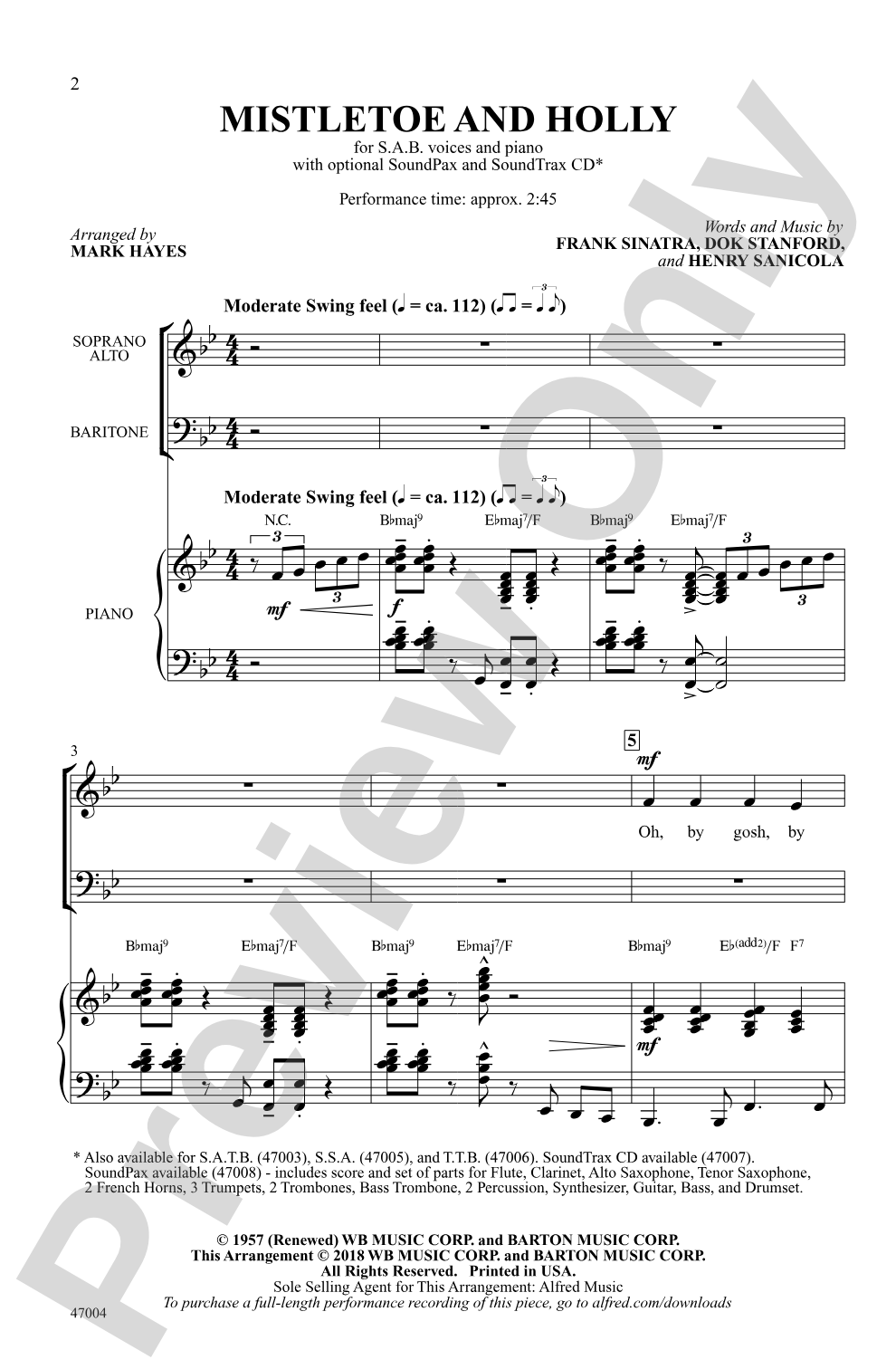

Mistletoe and Holly: SAB Choral Octavo
Words and music by Frank Sinatra, Dok Stanford, and Henry Sanicola / arr. Mark Hayes
Item: 00-PO-0005858
$2.10
Minimum order quantity: 20 copies
One moment…
Related Items
Mistletoe and Holly: SoundTrax Digital Audio Download |
$27.99
|
View | |
Mistletoe and Holly: SATB Choral Octavo |
$2.10
|
View | |
Mistletoe and Holly: SSA Choral Octavo |
$2.10
|
View | |
Mistletoe and Holly: TTB Choral Octavo |
$2.10
|
View | |
Mistletoe and Holly: Choral SoundPax |
$60.00
|
View | |
Mistletoe and Holly: SATB Choral Octavo |
$2.10
|
View | |
Mistletoe and Holly: SAB Choral Octavo |
$2.10
|
View | |
Mistletoe and Holly: SSA Choral Octavo |
$2.10
|
View | |
Mistletoe and Holly: TTB Choral Octavo |
$2.10
|
View | |
Mistletoe and Holly: Choral Octavo SoundTrax CD |
$29.99
|
View |
Description
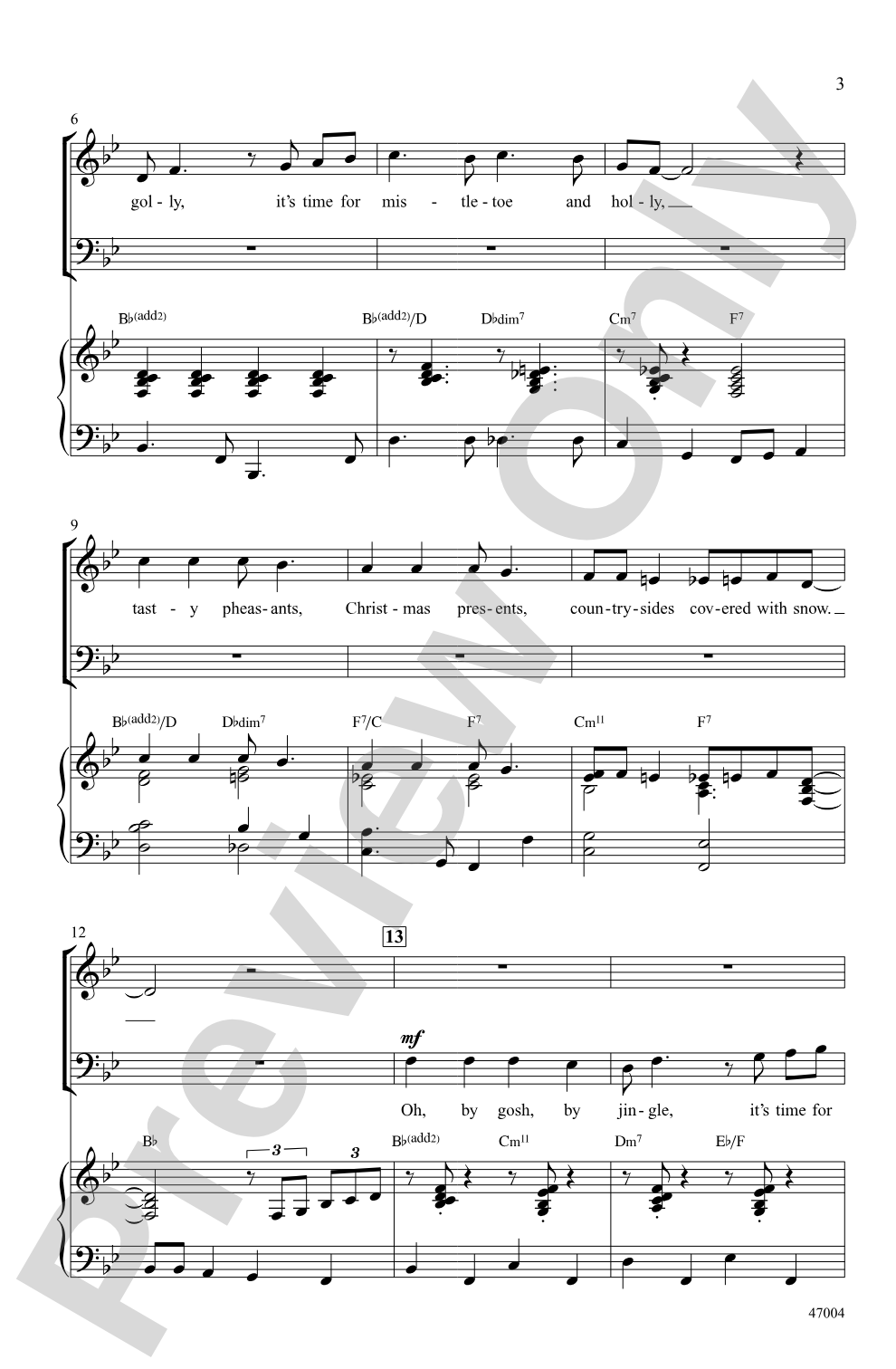
A holiday pops tune straight out of the Rat Pack era, co-written by Ol' Blue Eyes himself! This nostalgic mid-tempo swing arrangement starts with voices swapping the melody, then blossoms into sweet choral sonorities. "Oh, by gosh, by golly," consider using the SoundTrax CD or SoundPax parts to take full advantage of Mark Hayes's snazzy, jazzy arrangement.


Mistletoe and Holly: SAB Choral Octavo isn't in MakeMusic Cloud just yet...but it could be. Let us know you'd like to see it, and you'll help shape what comes next. In the meantime, start a free trial and dive into thousands of interactive titles your students can play along with today.
Request This Title
Tell us you want it.
Start Your Free Trial
Explore everything that's ready to play right now.
Sample Audio
1
Audio File
--:--
0:00
0:00
Sample Video
No sample videos found.
Additional Details
Series:
Alfred Pop Choral Series
Publisher:
Alfred Music
Page Count:
12
SKU:
00-PO-0005858
More about this title
About the Composer: Frank Sinatra
Frank Sinatra (1915-1998) shaped American popular song across seven decades, recording over 1,400 songs and defining the standards repertoire. His phrasing, pacing, and interpretive choices influenced generations of singers and remain central to jazz and pop vocal pedagogy. Sinatra co-wrote several standards, including this holiday classic, bringing his performer's instinct for melody and lyric to composition.
Why we love this
Mark Hayes captures the swagger and warmth of the original while building in genuine four-part writing that keeps all voices engaged. The voice trading at the beginning gives singers ownership of the melody before the arrangement blooms into lush textures, and the mid-tempo swing feel remains accessible without sacrificing style. Programming this puts your choir in touch with American popular song history while delivering an audience-pleasing holiday moment that sounds effortless.
What to expect
Nostalgic and buoyant, this arrangement channels the ease and warmth of mid-century holiday traditions. The opening melody exchange feels conversational, like singers passing the story around a room, before building into rich, cohesive harmonies that capture the generosity of the season without sentimentality.
Who it's for
Choirs with secure SAB readers who enjoy pop and jazz repertoire and want a holiday selection with genuine musical substance rather than novelty. The three-part voicing makes it accessible for community and school choirs, while the arrangement's sophistication appeals to groups ready for swing style and close harmony work.
How to get the most out of it
- Anchor the swing feel in the rhythm section parts; without clarity in the walking bass line and percussion, the arrangement loses its groove, so secure those elements first.
- Shape the melody trading in the opening section so each voice part takes a true "solo" moment; resist the urge to blend away individual lines before the texture thickens.
- Attend to the lyrical moments between the swinging sections; the "sweet choral sonorities" Mark Hayes mentions require breath placement and vowel matching that contrast with the rhythmic drive.
- If using recorded accompaniment, rehearse enough times without it to ensure your choir owns the harmonic language and doesn't become dependent on the recording for pitch or phrasing cues.
How to use it
Slot this into a holiday or winter concert as a pops moment that gives your singers and audience permission to relax and enjoy themselves. It pairs well alongside more traditional holiday choral literature, offering tonal contrast and energy, and works equally well as a standalone holiday performance or as part of a broader American songbook program.
Skills your students will build
- Swing style and rhythmic interpretation in a choral setting
- Voice independence through melody trading and part exchange
- Jazz harmony and extended chord sonorities
- Ensemble blend across SAB ranges
- Stylistic contrast between driving rhythmic sections and lyrical, sustained passages