
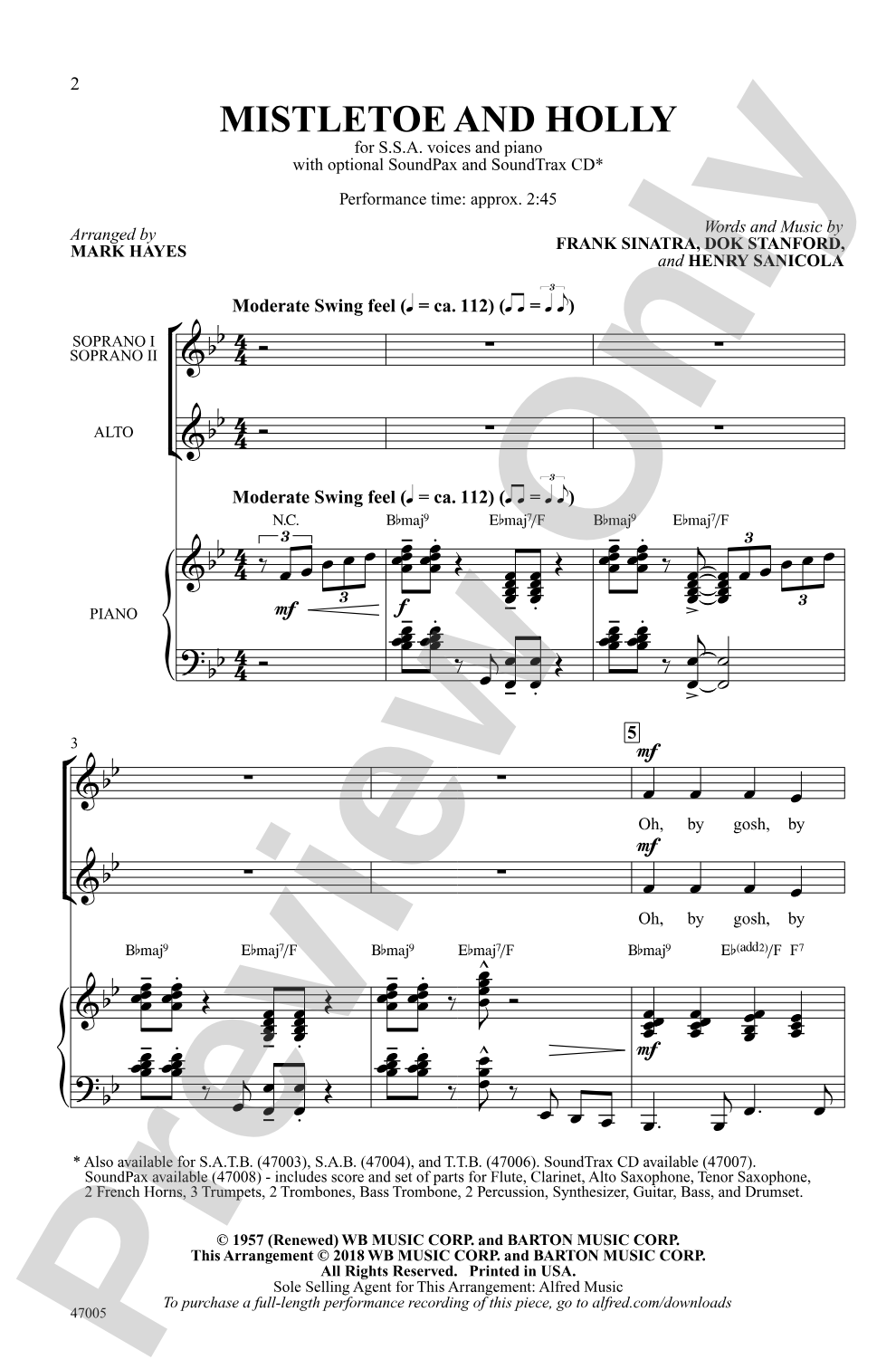
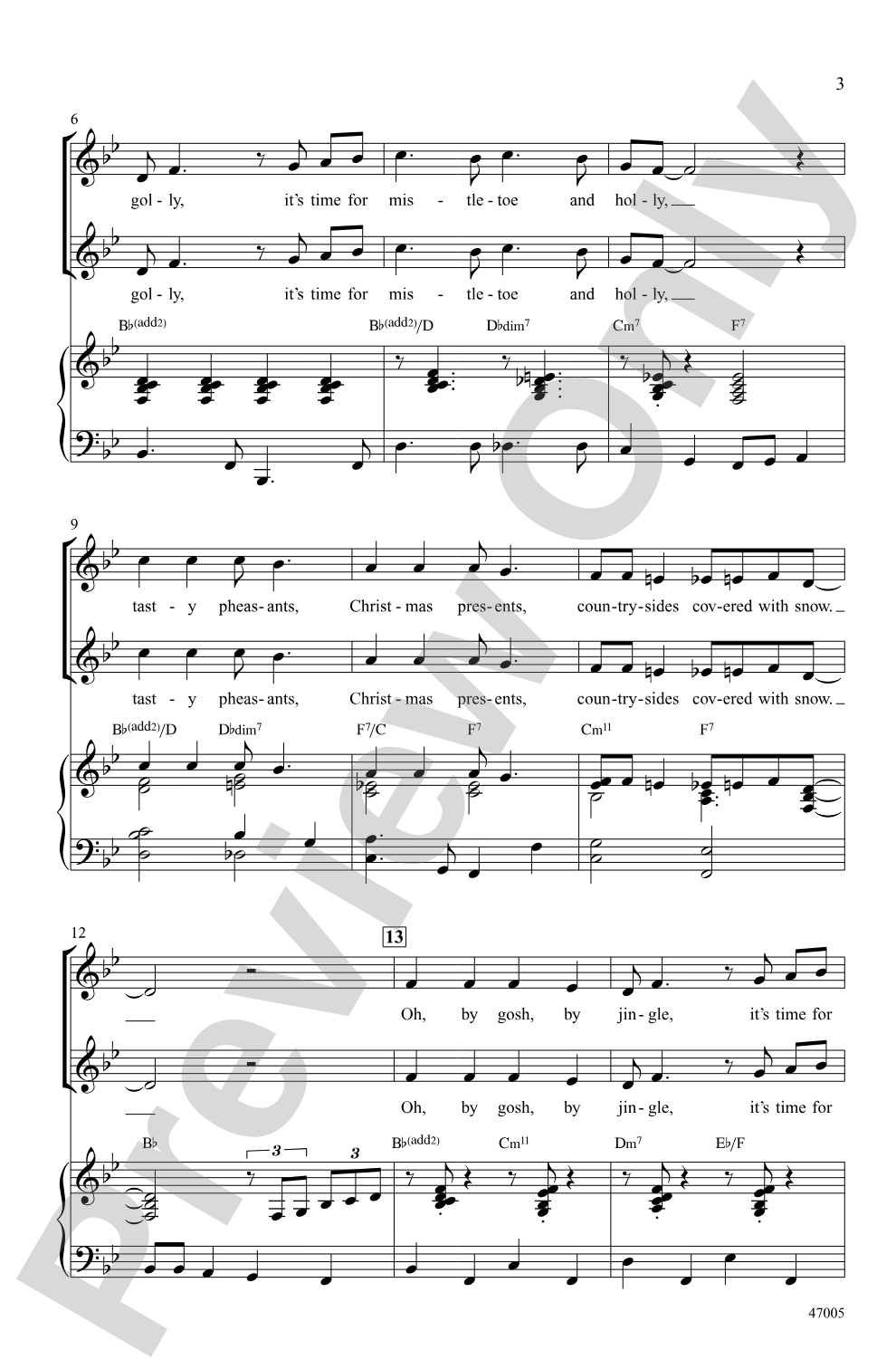

Mistletoe and Holly: SSA Choral Octavo
Words and music by Frank Sinatra, Dok Stanford, and Henry Sanicola / arr. Mark Hayes
Item: 00-PO-0005859
$2.10
Minimum order quantity: 20 copies
One moment…
Related Items
Mistletoe and Holly: SoundTrax Digital Audio Download |
$27.99
|
View | |
Mistletoe and Holly: SATB Choral Octavo |
$2.10
|
View | |
Mistletoe and Holly: SAB Choral Octavo |
$2.10
|
View | |
Mistletoe and Holly: TTB Choral Octavo |
$2.10
|
View | |
Mistletoe and Holly: Choral SoundPax |
$60.00
|
View | |
Mistletoe and Holly: SATB Choral Octavo |
$2.10
|
View | |
Mistletoe and Holly: SAB Choral Octavo |
$2.10
|
View | |
Mistletoe and Holly: SSA Choral Octavo |
$2.10
|
View | |
Mistletoe and Holly: TTB Choral Octavo |
$2.10
|
View | |
Mistletoe and Holly: Choral Octavo SoundTrax CD |
$29.99
|
View |
Description
A holiday pops tune straight out of the Rat Pack era, co-written by Ol' Blue Eyes himself! This nostalgic mid-tempo swing arrangement starts with voices swapping the melody, then blossoms into sweet choral sonorities. "Oh, by gosh, by golly," consider using the SoundTrax CD or SoundPax parts to take full advantage of Mark Hayes's snazzy, jazzy arrangement.


Mistletoe and Holly: SSA Choral Octavo isn't in MakeMusic Cloud just yet...but it could be. Let us know you'd like to see it, and you'll help shape what comes next. In the meantime, start a free trial and dive into thousands of interactive titles your students can play along with today.
Request This Title
Tell us you want it.
Start Your Free Trial
Explore everything that's ready to play right now.
Sample Audio
1
Audio File
--:--
0:00
0:00
Sample Video
No sample videos found.
Additional Details
Series:
Alfred Pop Choral Series
Publisher:
Alfred Music
Page Count:
12
SKU:
00-PO-0005859
More about this title
About the Composer: Frank Sinatra
Frank Sinatra (1915-1998) was an American singer and actor whose influence on popular music and culture remains unmatched. Beyond his iconic vocal career, Sinatra co-wrote several standards that have become staples of American songbooks, including "Mistletoe and Holly" with Dok Stanford and Henry Sanicola. His understanding of melody, phrasing, and what makes a song resonate with audiences shaped not only his own interpretations but also the compositions he created.
For music educators, Sinatra's legacy offers a direct connection to the Great American Songbook. Programming his work reminds students that composers and performers are inseparable in popular music, and that the songs we teach carry real cultural weight. "Mistletoe and Holly" exemplifies Sinatra's gift for writing memorable, singable melodies that feel both sophisticated and approachable.
Why we love this
Mark Hayes's arrangement captures the warmth and swagger of the original without losing the charm that makes this song feel like a holiday favorite rather than a holiday obligation. The voice-swapping opening keeps singers engaged before settling into rich SSA textures, giving you a piece that works equally well as a concert closer or a showcase for singers who thrive in laid-back, jazz-inflected arrangements.
What to expect
You're in a room with good company, a warm fire, and a piano player who knows all the good songs. The arrangement glides between unison melody and intimate three-part harmony, with a tempo that invites you to settle in rather than rush. There's nostalgia here, but it's the kind that feels lived-in and genuine, not saccharine.
Who it's for
Directors programming holiday concerts who want something that swings rather than sleighs, and choirs with secure SSA voicing who can handle the relaxed phrasing and jazz harmonies without losing pitch. Singers enjoy this piece because the melody is singable, the arrangement feels contemporary, and the holiday framing makes it immediately appealing to audiences.
How to get the most out of it
- Establish the swing feel early in rehearsal by listening to how the rhythm section sits with the melody. The groove matters more than perfect note accuracy; singers who understand the pocket will sound more natural than those who sing metronomically.
- Balance the melody trading section so that each soprano or alto voice feels like a featured soloist passing the tune to the next singer. This calls for careful dynamic shaping and real ownership of each phrase.
- Let the harmonies bloom in the fuller passages without losing the conversational tone of the arrangement. Hayes writes jazz voicings that should sound easy and human, not stiff or overly rehearsed.
- If you use the SoundTrax or SoundPax parts, run at least one rehearsal where singers hear the full instrumentation to understand where their voices sit in the overall texture.
How to use it
Place this in the second half of a holiday concert after you've established a festive mood with more traditional material. The Rat Pack energy makes an excellent palate cleanser before a final seasonal favorite, or use it as an encore that lets your audience leave smiling. The piece also works well as a spring concert opener if you're programming American songbook repertoire.
Skills your students will build
- Swing phrasing and relaxed articulation in contemporary contexts
- Voice-leading and melody trading between upper voices
- Reading and performing jazz voicings and chromatic harmony
- Balance and blend in three-part textures over a groove