
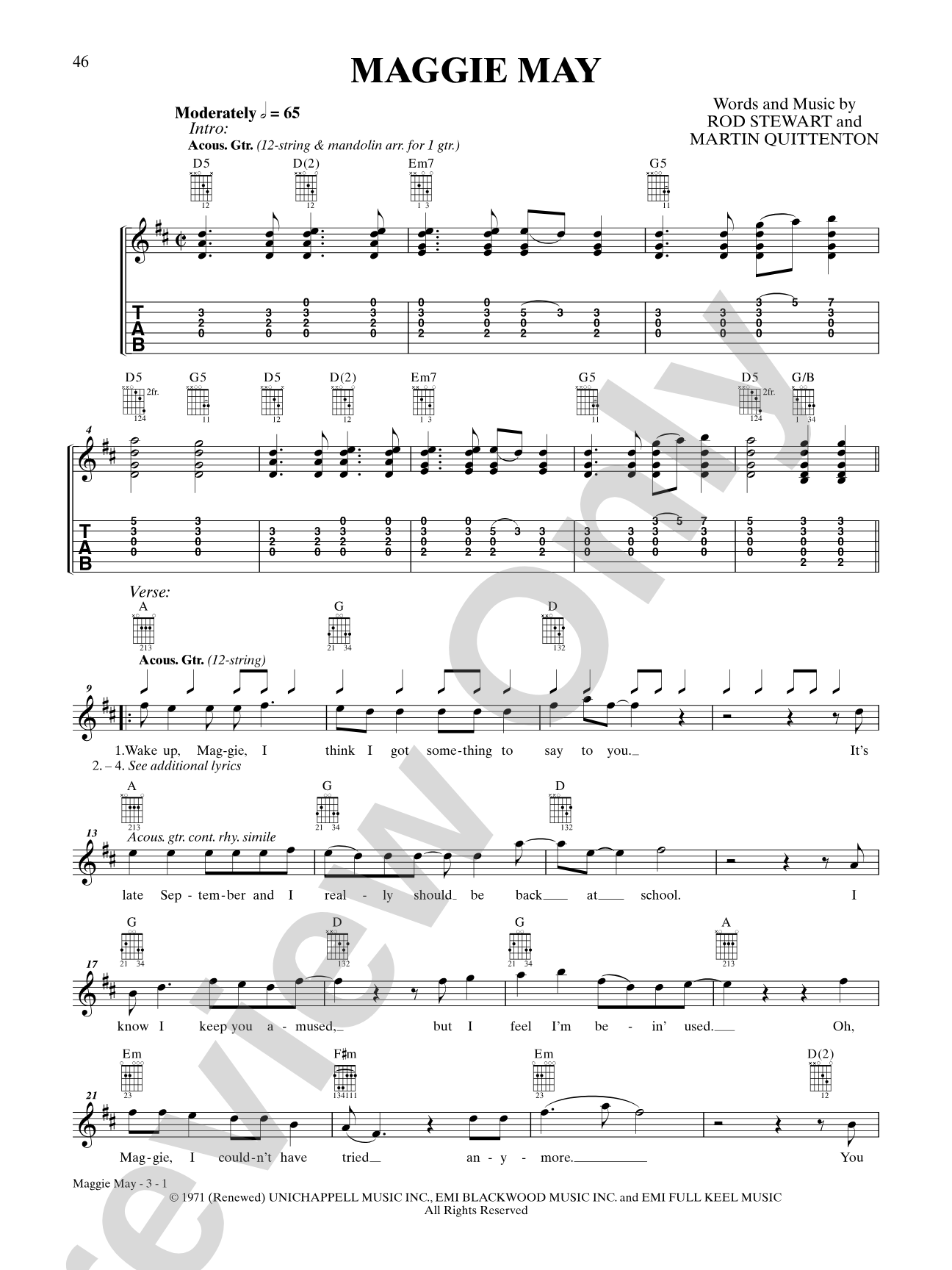

Maggie May: Easy Guitar
Item: 00-PSG-000852
$4.99
One moment…
Description
Who says the greatest hits have to be for advanced guitarists? Now favorite songs from the '60s and the '70s are at every guitarist's fingertips. Pick up both of these books filled with classic hits and start playing songs from your favorite artists and bands of the '60s and '70s now.
Titles: American Woman (The Guess Who) * Bad Company (Bad Company) * Hotel California (Eagles) * Layla (Derek and the Dominos) * Lola (Kinks) * Lonely Days (The Bee Gees) * Long Train Runnin' (The Doobie Brothers) * Maggie May (Rod Stewart) * Melissa (The Allman Brothers) * Nights in White Satin (The Moody Blues) * Whipping Post (The Allman Brothers) * Wish You were Here (Pink Floyd).


Titles: American Woman (The Guess Who) * Bad Company (Bad Company) * Hotel California (Eagles) * Layla (Derek and the Dominos) * Lola (Kinks) * Lonely Days (The Bee Gees) * Long Train Runnin' (The Doobie Brothers) * Maggie May (Rod Stewart) * Melissa (The Allman Brothers) * Nights in White Satin (The Moody Blues) * Whipping Post (The Allman Brothers) * Wish You were Here (Pink Floyd).
Maggie May: Easy Guitar isn't in MakeMusic Cloud just yet...but it could be. Let us know you'd like to see it, and you'll help shape what comes next. In the meantime, start a free trial and dive into thousands of interactive titles your students can play along with today.
Request This Title
Tell us you want it.
Start Your Free Trial
Explore everything that's ready to play right now.
Sample Audio
No sample audio found.
Sample Video
No sample videos found.
Additional Details
Series:
Hits for Easy Guitar Series
Publisher:
Alfred Music
Page Count:
56
SKU:
00-PSG-000852
More about this title
About the Artist: Rod Stewart
Rod Stewart emerged as one of rock's most distinctive voices in the early 1970s, bringing gravelly charm and storytelling prowess to songs that ranged from introspective ballads to driving rockers. His work with The Faces and his solo career established him as a master of the classic rock idiom, crafting anthems and character studies that remain fixtures of rock radio and live performance.
Why we love this
This collection captures a generation of rock songwriting at its most accessible without sacrificing the songs' character and hook-driven appeal. Students encounter the exact repertoire they hear on classic rock stations and in casual listening, which translates motivation directly into practice time. The easy arrangement level removes technical barriers that might otherwise prevent guitarists from playing these enduring hits.
What to expect
These songs carry the swagger and soulfulness of classic rock at its peak, filtered through arrangements that keep technical demands in check without flattening the emotional weight. You'll feel the satisfaction of playing something substantial, something people actually want to hear, rather than studying technique in isolation.
Who it's for
Guitarists with basic open chord knowledge and developing fingerpicking or strumming technique who want to play recognizable, satisfying songs without waiting years to reach them. Teachers working with intermediate beginners benefit from having legitimate catalog songs at hand rather than generic exercises. This collection also serves guitarists returning to the instrument after time away.
How to get the most out of it
- Study the original recordings to internalize the groove and feel of each song; these arrangements preserve the essential character of the records but benefit enormously from that reference point.
- Pay close attention to dynamics within simpler passages. Easy arrangements still require expressive playing, particularly in the quieter moments of ballads like 'Wish You Were Here' and 'Layla'.
- Practice chord changes at performance tempo using a metronome or backing track to build the fluidity needed for these song-based arrangements to sound polished.
How to use it
Use these as milestone repertoire in a guitar curriculum, assigning one song per unit or grading period as students master specific techniques (barre chords, fingerpicking patterns, rhythm variations). This folio also works beautifully for student recitals or casual performance opportunities where players want to showcase songs listeners know.
Skills your students will build
- Chord transitions in rock progressions (major, minor, seventh, and suspended chords)
- Rhythm accuracy in swing-based and straight eighth-note feels
- Fingerpicking patterns over chord changes
- Dynamic control in both driven and ballad contexts
- Sustain and muting technique for clarity in TAB-based playing