
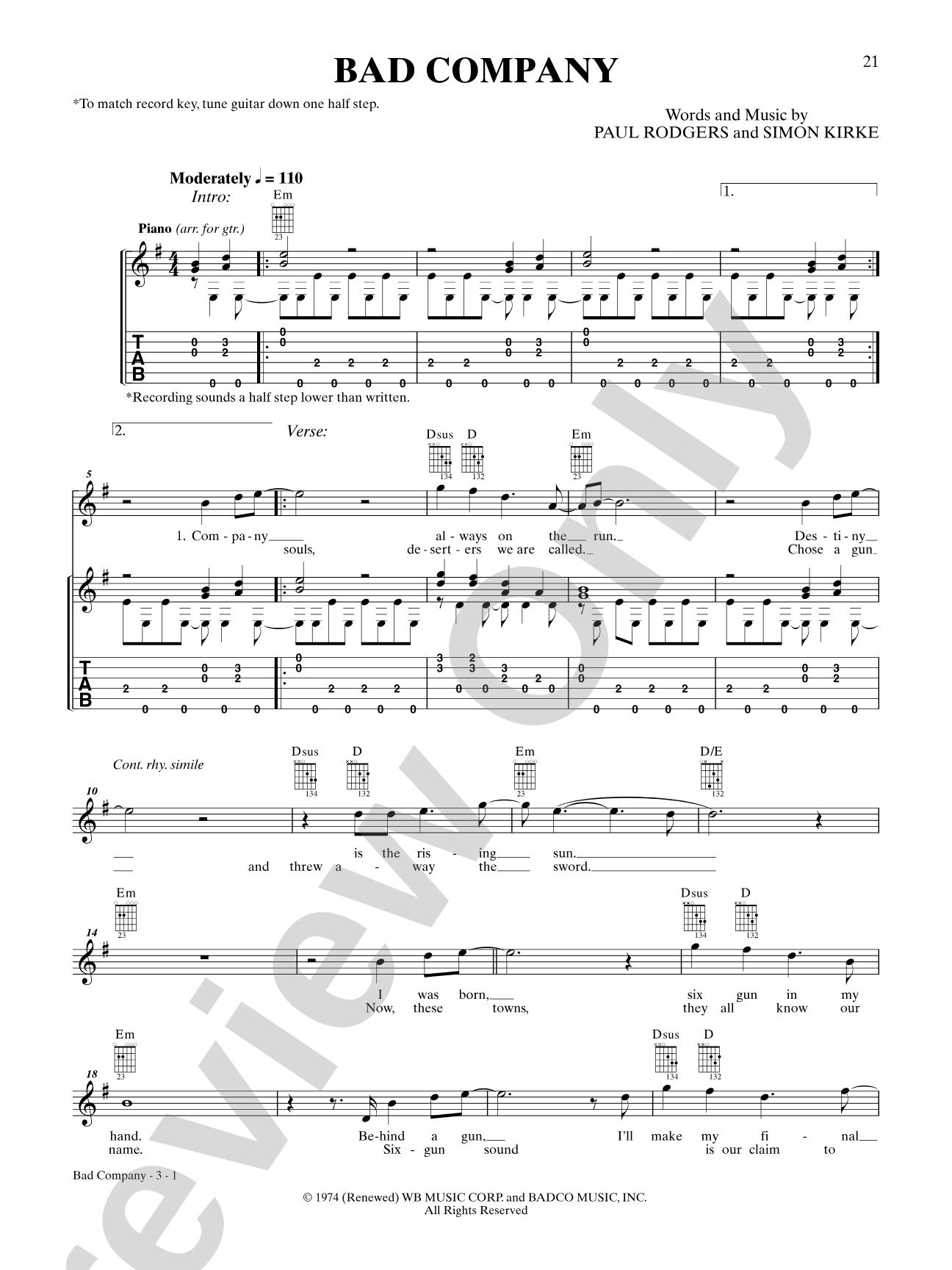

Bad Company: Easy Guitar
Item: 00-PSG-000784
$4.99
One moment…
Description
Who says the greatest hits have to be for advanced guitarists? Now favorite songs from the '60s and the '70s are at every guitarist's fingertips. Pick up both of these books filled with classic hits and start playing songs from your favorite artists and bands of the '60s and '70s now.
Titles: American Woman (The Guess Who) * Bad Company (Bad Company) * Hotel California (Eagles) * Layla (Derek and the Dominos) * Lola (Kinks) * Lonely Days (The Bee Gees) * Long Train Runnin' (The Doobie Brothers) * Maggie May (Rod Stewart) * Melissa (The Allman Brothers) * Nights in White Satin (The Moody Blues) * Whipping Post (The Allman Brothers) * Wish You were Here (Pink Floyd).


Titles: American Woman (The Guess Who) * Bad Company (Bad Company) * Hotel California (Eagles) * Layla (Derek and the Dominos) * Lola (Kinks) * Lonely Days (The Bee Gees) * Long Train Runnin' (The Doobie Brothers) * Maggie May (Rod Stewart) * Melissa (The Allman Brothers) * Nights in White Satin (The Moody Blues) * Whipping Post (The Allman Brothers) * Wish You were Here (Pink Floyd).
Bad Company: Easy Guitar isn't in MakeMusic Cloud just yet...but it could be. Let us know you'd like to see it, and you'll help shape what comes next. In the meantime, start a free trial and dive into thousands of interactive titles your students can play along with today.
Request This Title
Tell us you want it.
Start Your Free Trial
Explore everything that's ready to play right now.
Sample Audio
No sample audio found.
Sample Video
No sample videos found.
Additional Details
Series:
Hits for Easy Guitar Series
Publisher:
Alfred Music
Page Count:
56
SKU:
00-PSG-000784
More about this title
About the Artist: Bad Company
Bad Company formed in 1973 from the remnants of Free, bringing together Paul Rodgers' commanding vocals with Mick Ralphs' bluesy guitar work. The band became synonymous with arena rock, crafting anthems that balanced hard rock power with accessible melodies and storytelling. Their influence on rock guitar playing extends far beyond the '70s, as their emphasis on riff-driven songs and memorable hooks shaped how generations of guitarists approach songwriting and performance.
Why we love this
This collection pairs classic rock's most recognizable riffs and progressions with guitar arrangements that actually let students play them confidently. Early learners get to sound like seasoned players immediately, which builds both technical competence and genuine enthusiasm for practicing. The song selection spans decades of rock DNA, from blues-based grooves to more textured arrangements, offering meaningful variety without overwhelming complexity.
What to expect
Playing these songs evokes the swagger and groove of classic rock's golden age. Whether you're diving into the swagger of a Bad Company anthem or the atmospheric shimmer of Pink Floyd, each piece carries the weight of songs that defined how rock music sounds. The arrangements preserve enough of each song's character that players feel genuinely connected to the original recordings.
Who it's for
Guitarists in their first or second year of study who want immediate access to songs they actually recognize and want to play. Teachers using these pieces will find students motivated to practice material that sounds like real rock music rather than beginner exercises. This collection also works well for adult learners returning to guitar or picking it up for the first time.
How to get the most out of it
- Anchor the rhythm guitar parts by locking into the beat; these songs depend on steady groove more than technical flash, so nail the timing first and the feel will follow.
- Pay close attention to string bending and vibrato notations in the TAB. Even simplified arrangements of these classic tracks benefit from the expressive touches that define their original character.
- Use the song's dynamic arc to shape your phrasing. Many of these pieces build momentum gradually, so let verses sit a bit lighter before hitting the chorus with full voice.
- Practice sections in isolation before running the complete song. Several tracks have distinct sections with different rhythmic feels, and learning them as separate units prevents stumbling during transitions.
How to use it
Program individual songs as recital pieces throughout the year, selecting tracks that match each student's developing ability. These pieces work equally well as ensemble material if you have multiple guitarists at similar levels, or as performance vehicles for guitar showcase concerts. The accessible arrangements make them perfect for mid-year milestones when students need evidence of real progress.
Skills your students will build
- Reading guitar TAB and standard notation together
- Playing fundamental rock rhythms and strumming patterns
- Executing basic bends, vibrato, and articulation techniques
- Understanding song structure through verse, chorus, and bridge sections
- Developing consistent timing and groove within a steady beat