

Mack the Knife: SATB Choral Octavo
from The Threepenny Opera
English words by Marc Blitzstein, original German words by Bert Brecht, music by Kurt Weill / arr. Mark Hayes
Item: 00-PO-0006067
$2.25
Minimum order quantity: 20 copies
One moment…
Related Items
Mack the Knife: SoundTrax Digital Audio Download |
$29.99
|
View | |
Mack the Knife: SAB Choral Octavo |
$2.25
|
View | |
Mack the Knife: TTBB Choral Octavo |
$2.25
|
View | |
Mack the Knife: SATB Choral Octavo |
$2.25
|
View | |
Mack the Knife: SAB Choral Octavo |
$2.25
|
View | |
Mack the Knife: TTBB Choral Octavo |
$2.25
|
View | |
Mack the Knife: Choral SoundTrax CD |
$29.99
|
View |
Description
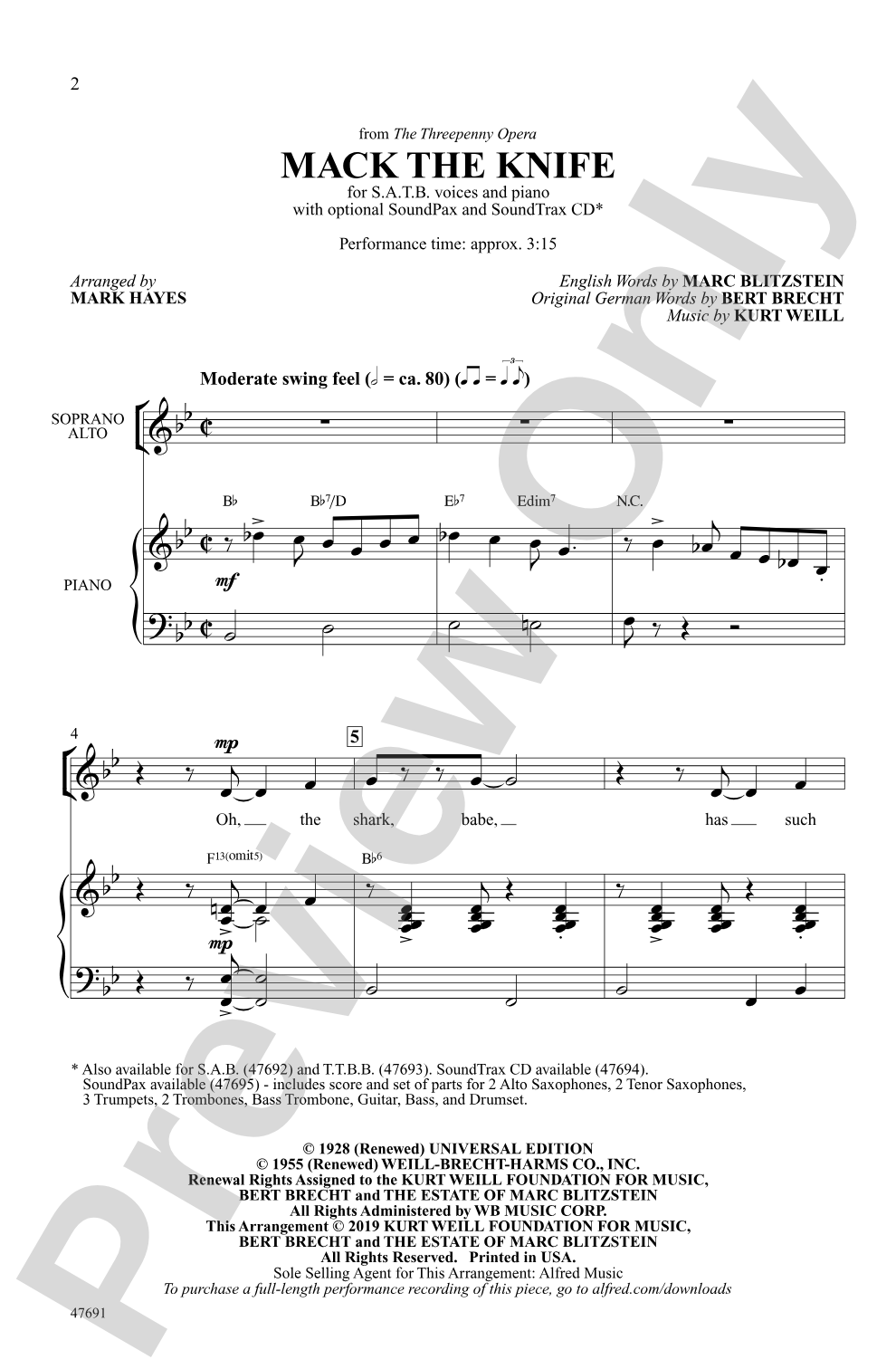
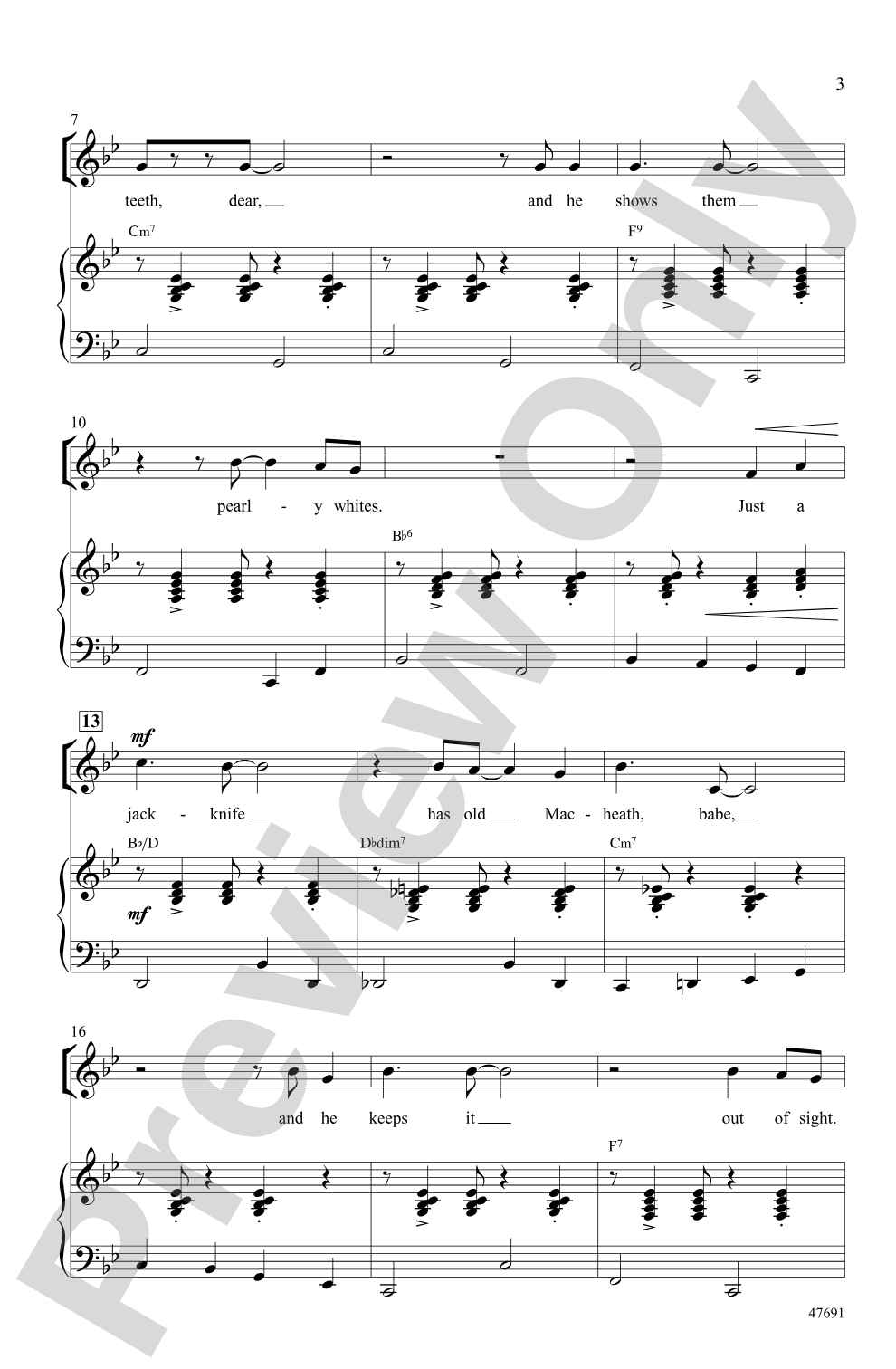
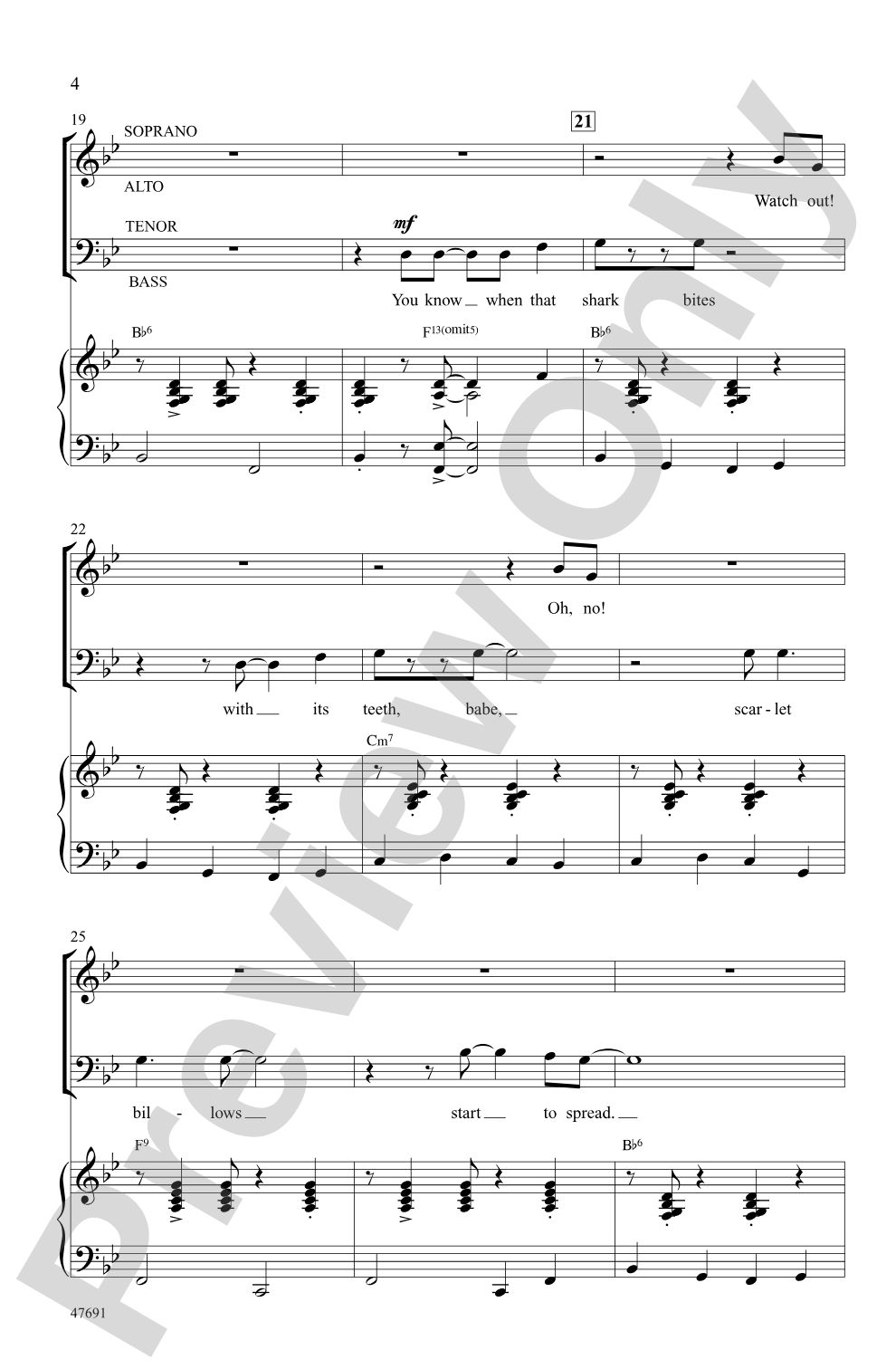
Originally written for The Threepenny Opera and famously covered by the likes of Louis Armstrong, Bobby Darin, and Frank Sinatra, this song has become one of the best-known jazz standards of the twentieth century. Mark's arrangement captures all the style of Kurt Weill's original score, building in excitement right to the very end. Perform with the swingin' piano accompaniment, add live horns and rhythm with the optional SoundPax, or check out our hip live-instrument SoundTrax CD.


Mack the Knife: SATB Choral Octavo isn't in MakeMusic Cloud just yet...but it could be. Let us know you'd like to see it, and you'll help shape what comes next. In the meantime, start a free trial and dive into thousands of interactive titles your students can play along with today.
Request This Title
Tell us you want it.
Start Your Free Trial
Explore everything that's ready to play right now.
Sample Audio
1
Audio File
--:--
0:00
0:00
Sample Video
Additional Details
Series:
Alfred Pop Choral Series
Publisher:
Alfred Music
Page Count:
16
SKU:
00-PO-0006067
More about this title
About the Composer: Kurt Weill
Kurt Weill (1900-1950) was a German composer who revolutionized musical theater by fusing classical composition with popular idiom. His collaboration with lyricist Bertolt Brecht on The Threepenny Opera created works that spoke directly to audiences without pretense, proving that serious artistry and accessibility weren't mutually exclusive. After emigrating to America, Weill continued this approach, composing for Broadway shows that influenced generations of songwriters and remain essential repertoire for understanding twentieth-century music.
Why we love this
Mark Hayes understands the particular swagger this piece demands. Rather than sanitizing the material for choir, he preserves the streetwise character of Weill's original while giving your singers genuinely satisfying parts to sing. The arrangement builds momentum beautifully, turning what could be a novelty into a showcase moment that audiences remember.
What to expect
Dark and streetwise with a wink. There's menace in the minor key and the chromatic writing, but the rhythm section keeps things moving with style rather than dread. It feels like opening a door onto a smoky club where something interesting is about to happen.
Who it's for
Any choir that can handle jazz idiom and wants to program something with real cultural weight. Your audience knows this tune, which means your singers get the reward of performing something meaningful rather than exotic.
How to get the most out of it
- Establish the groove early in rehearsal. This needs to sit in your singers' bodies before they worry about blend; the swing feel is non-negotiable.
- Balance the text clarity with the jazz aesthetic. The story of Mack matters, so articulation and diction should cut through even when voices are blending smoothly.
- If you add the optional horn parts, let them breathe in the spaces your choir creates rather than doubling every entrance. That's where the arrangement gets its energy.
- The recorded accompaniment gives you freedom with tempo, but commit to one groove and stick with it through rehearsals so your singers can lock in.
How to use it
Pair this with other American songbook standards for a jazz-focused concert, or use it as the anchor for a program exploring how classical composers engaged with popular music. It works equally well as a second-half opener that resets audience energy after heavier repertoire.
Skills your students will build
- Reading and performing jazz articulation and phrasing conventions
- Swing feel and rhythmic precision in a syncopated idiom
- Balancing individual character with ensemble blend
- Text painting and storytelling through musical style