
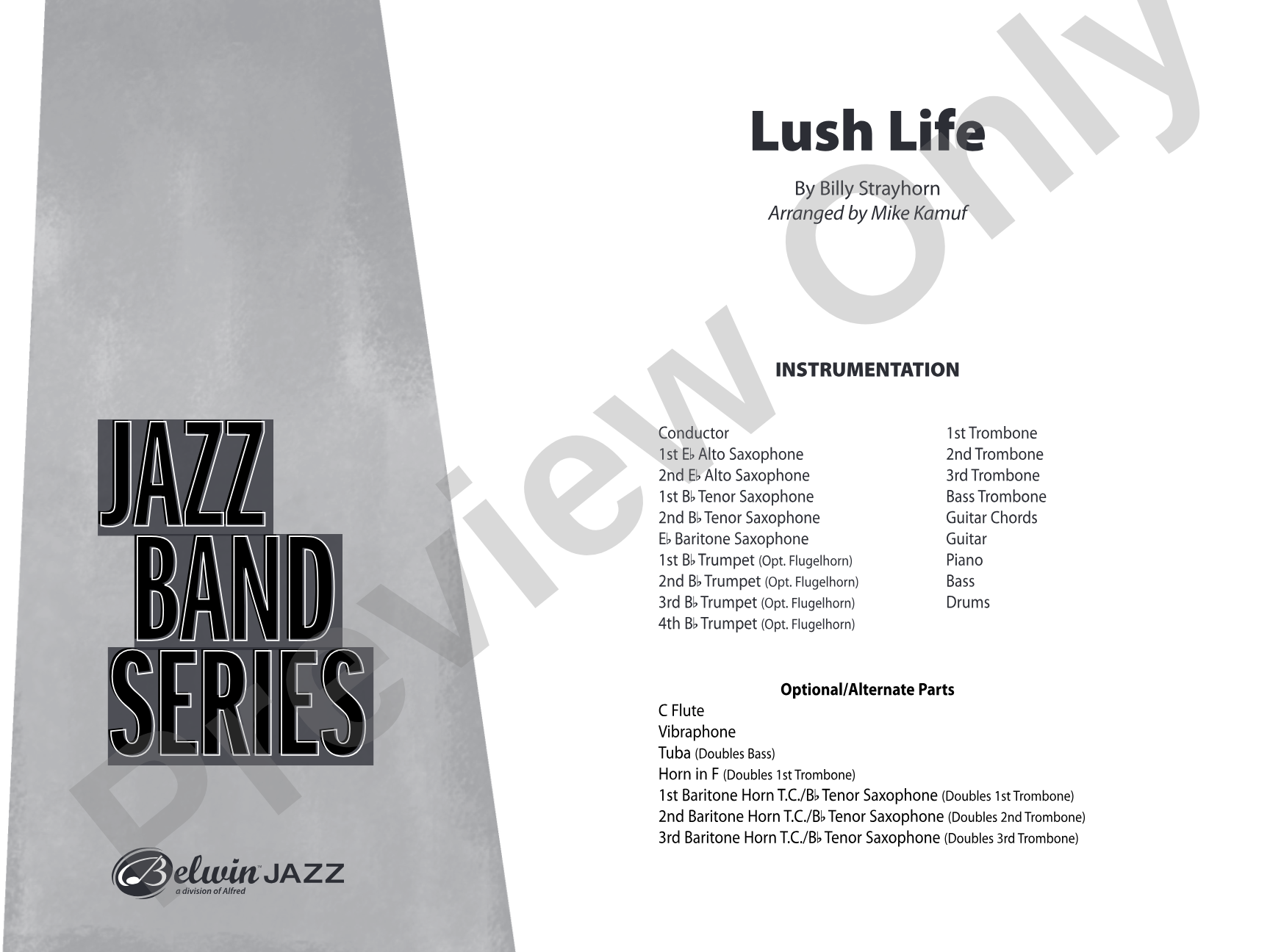
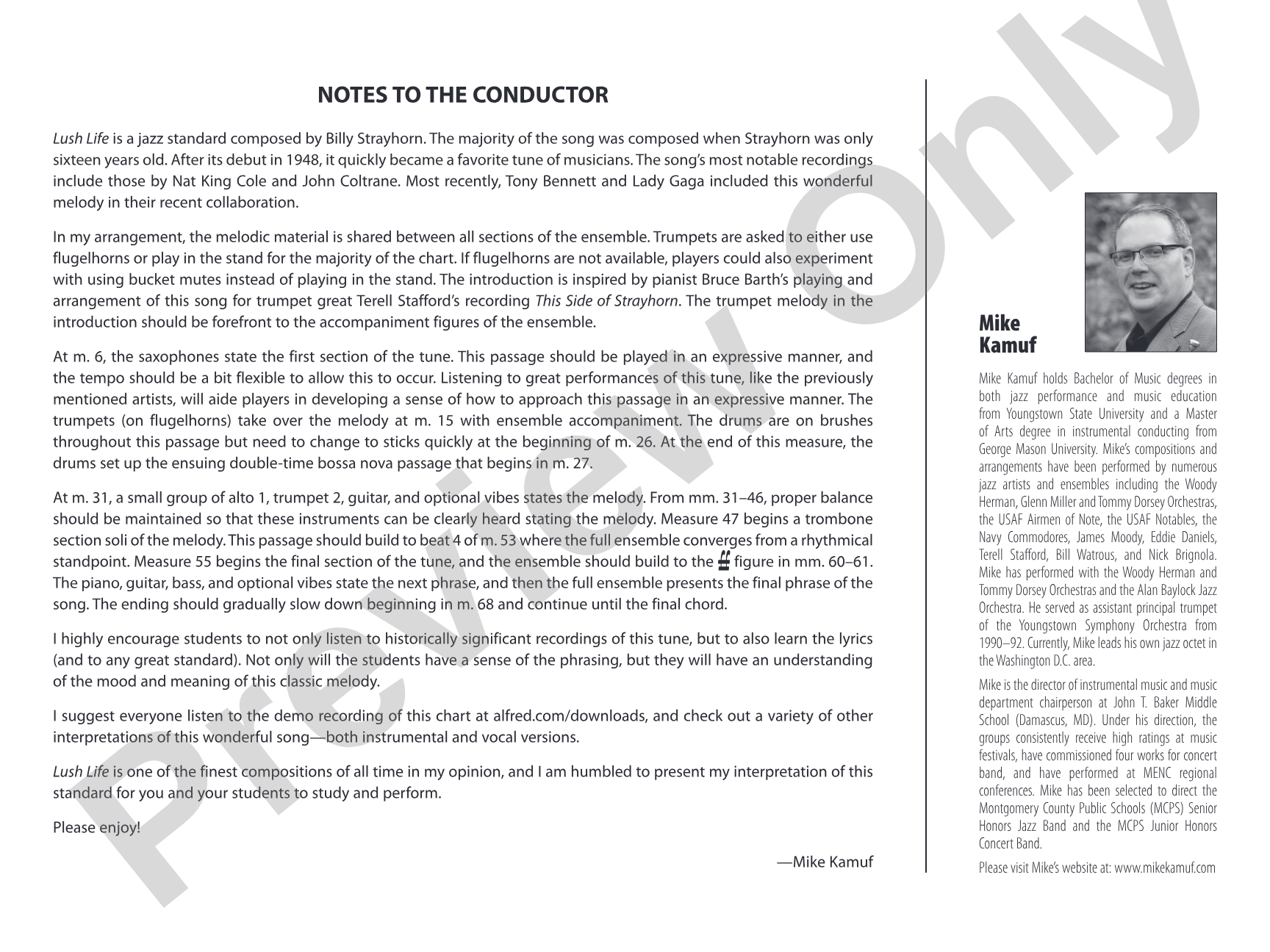
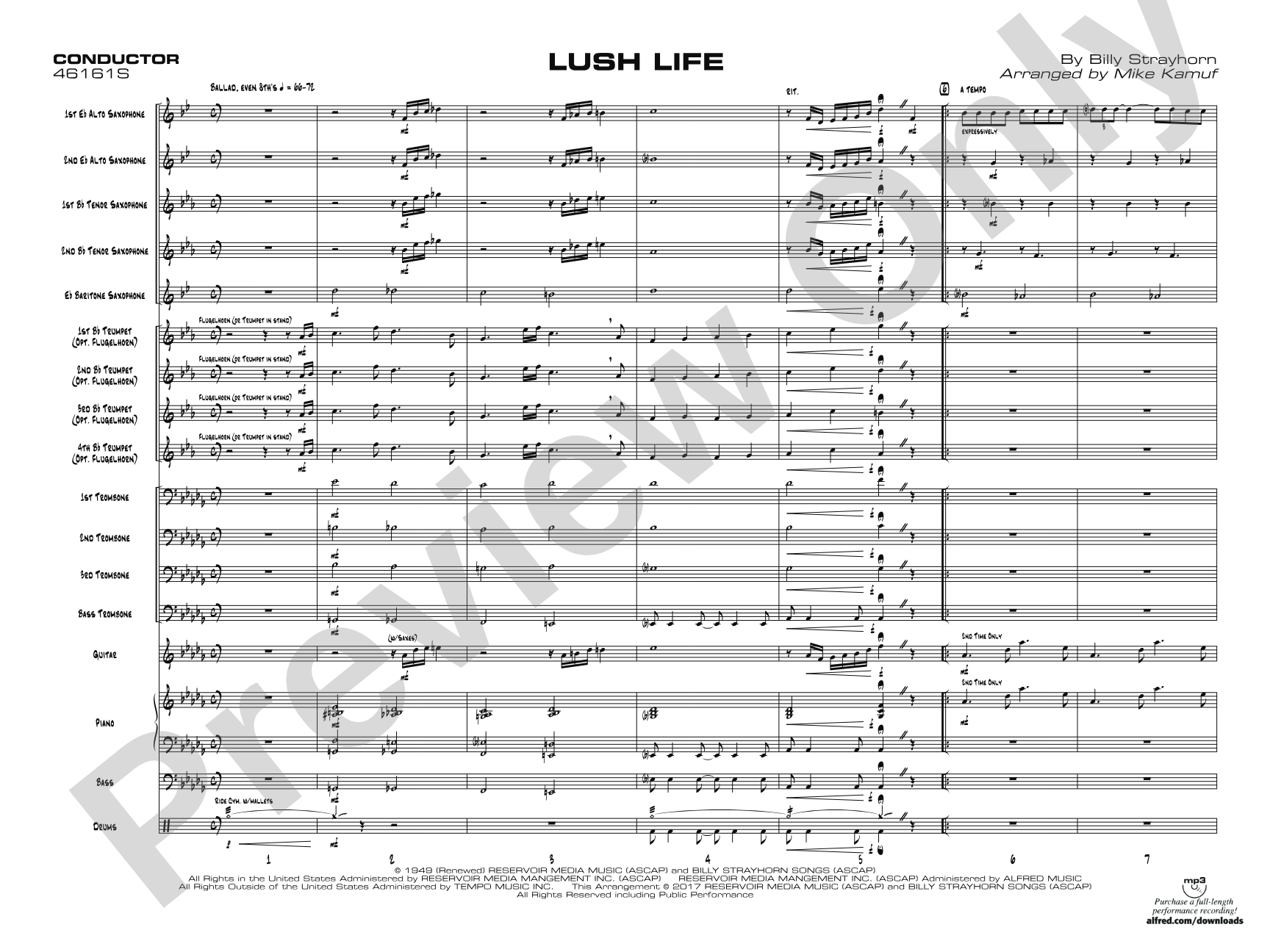
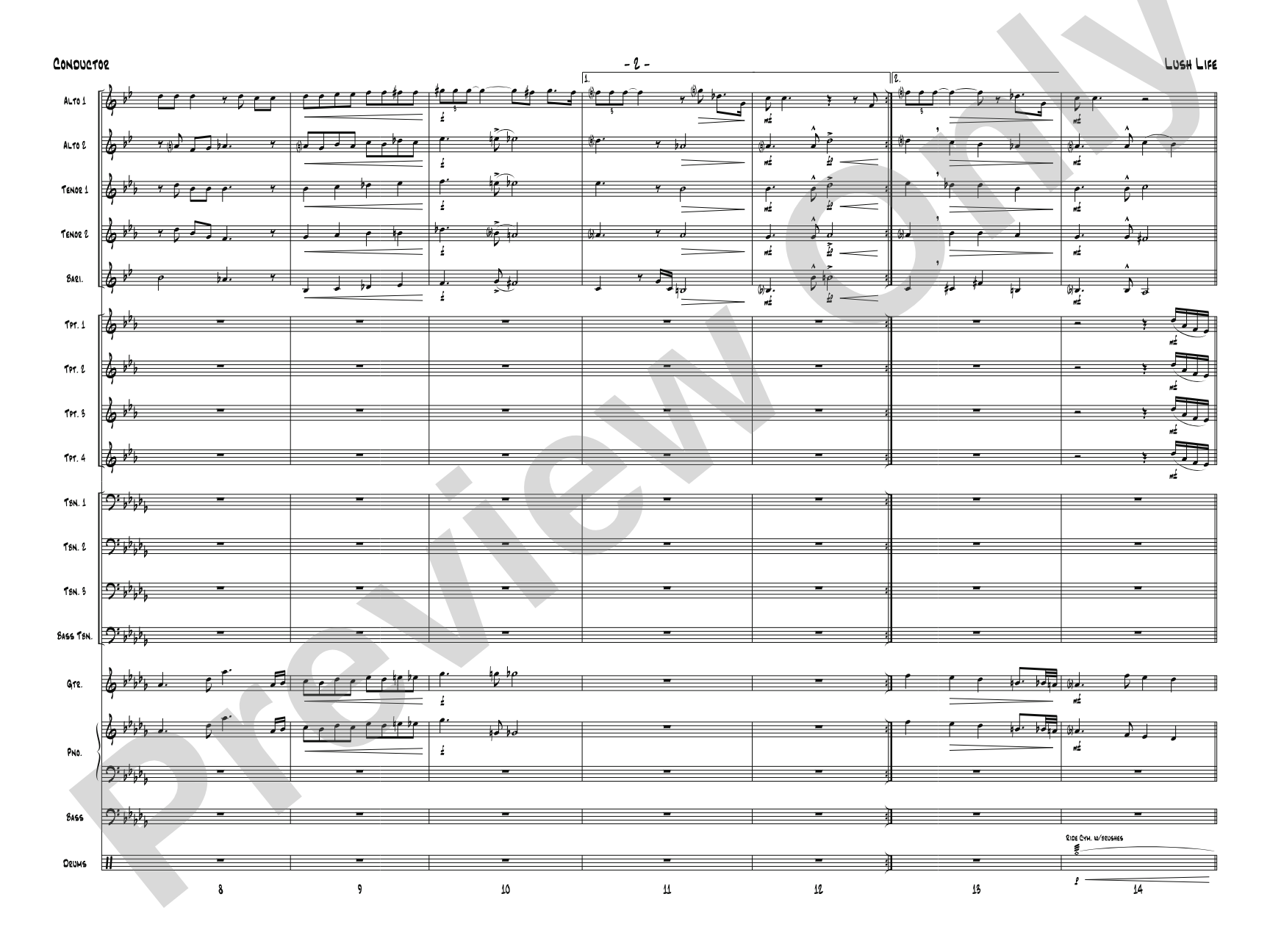
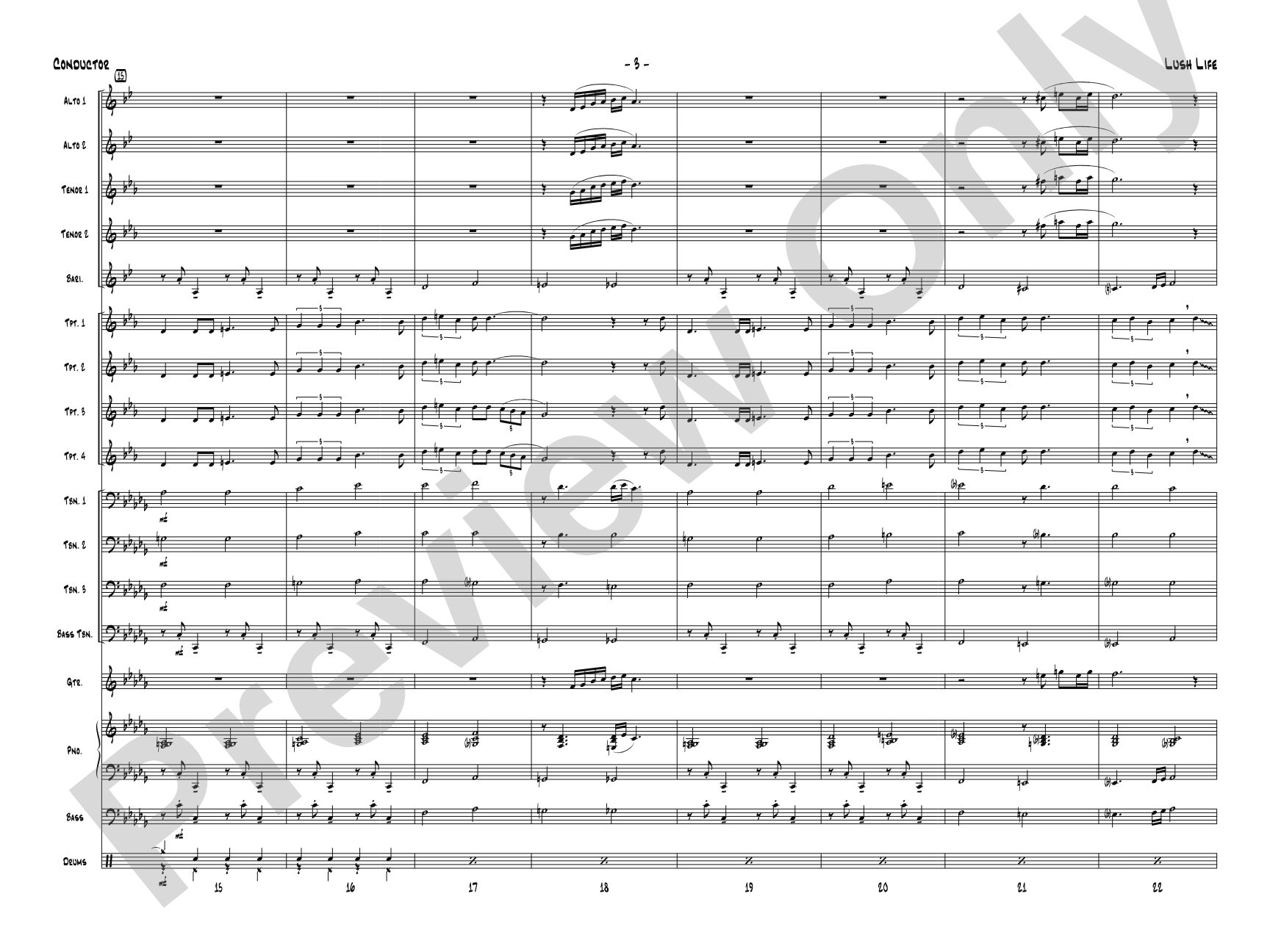
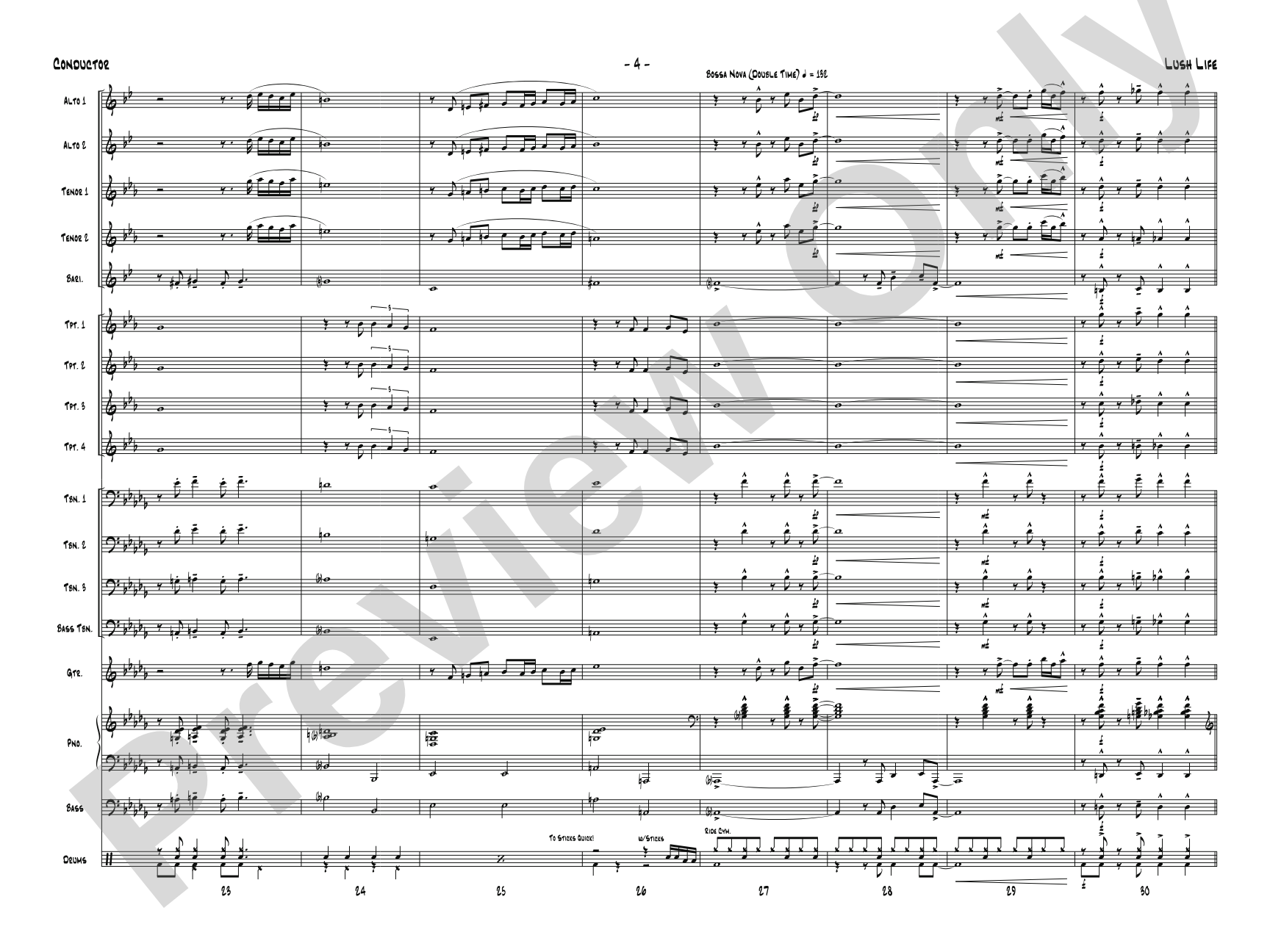
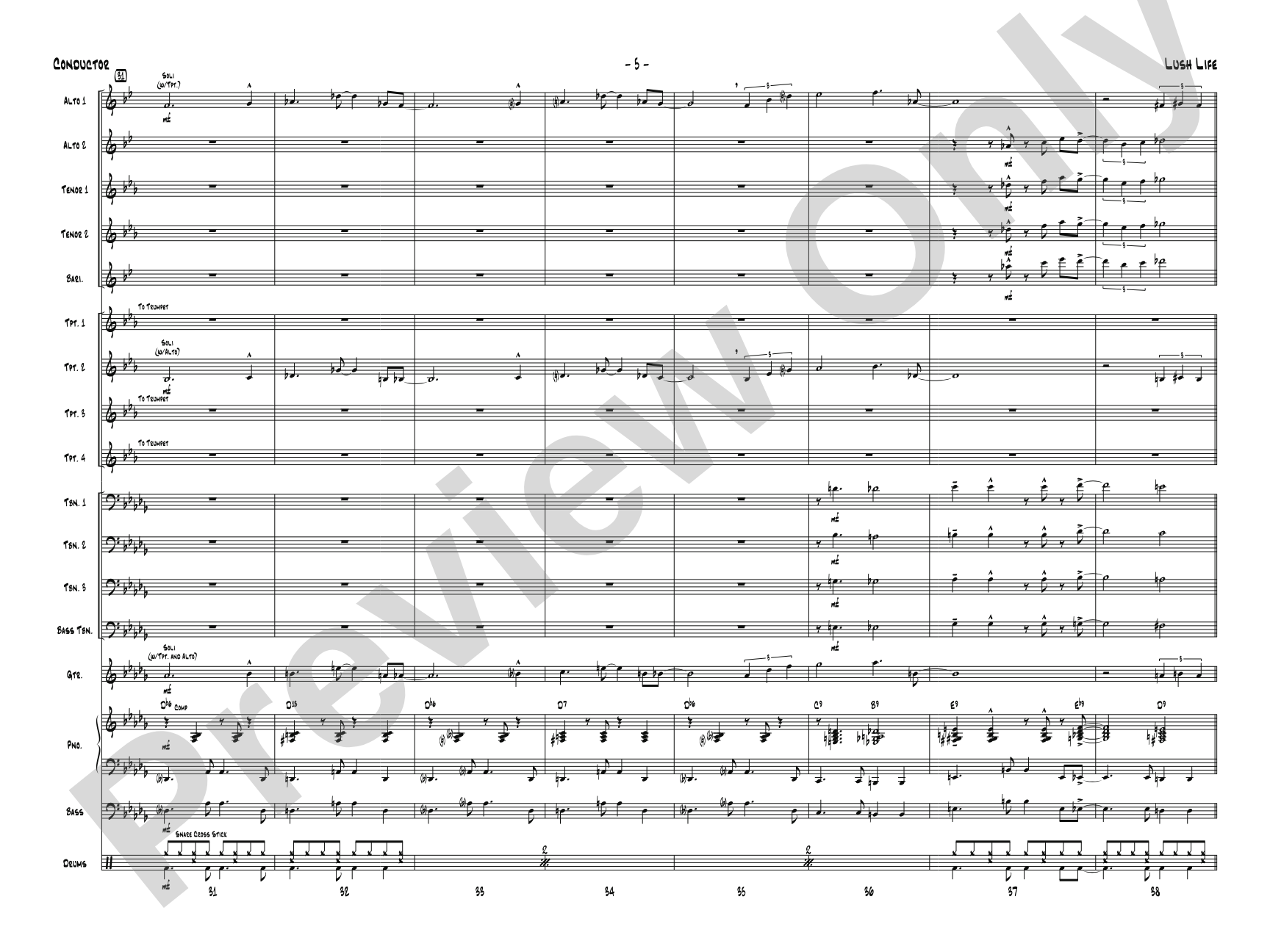
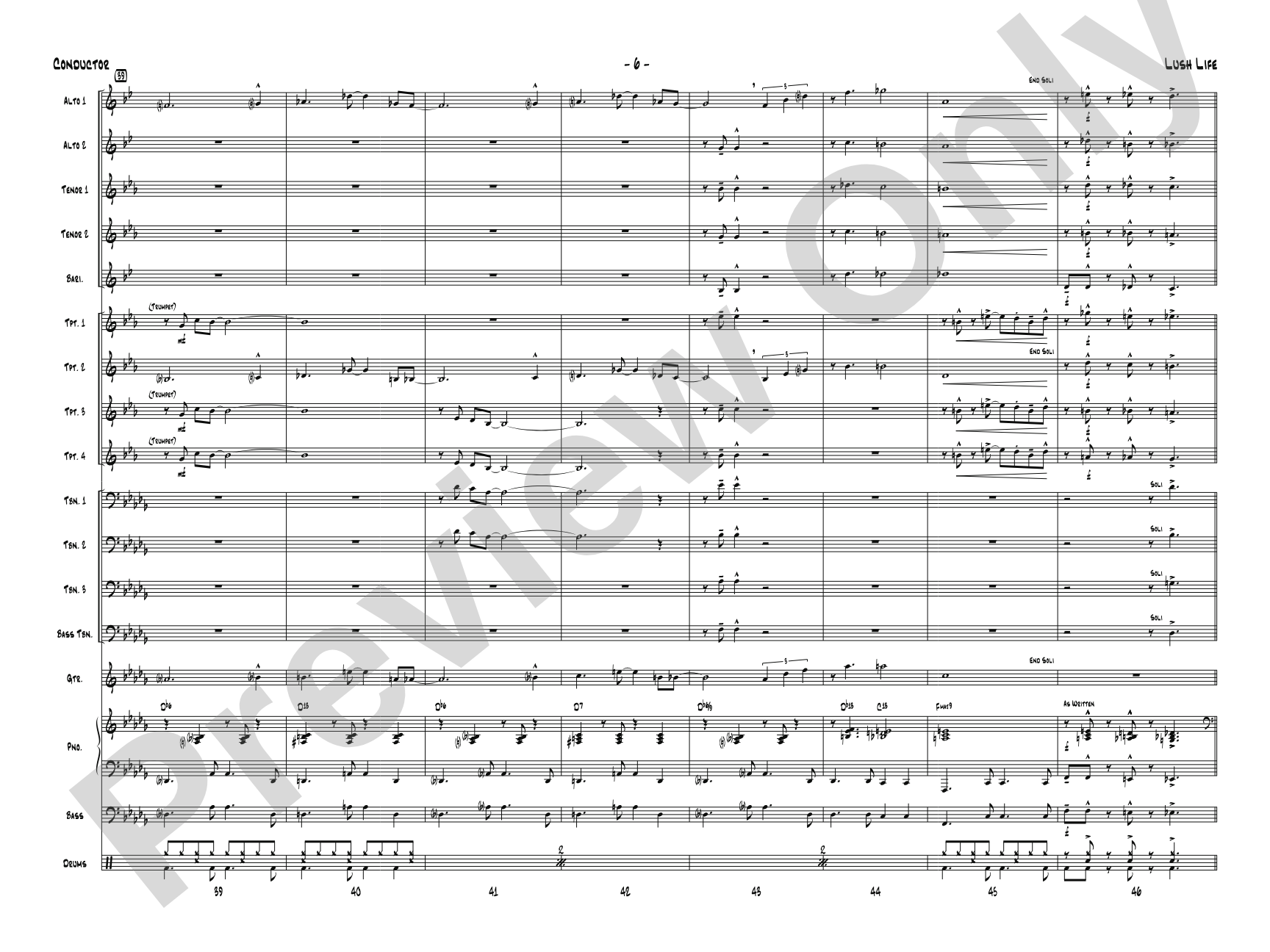
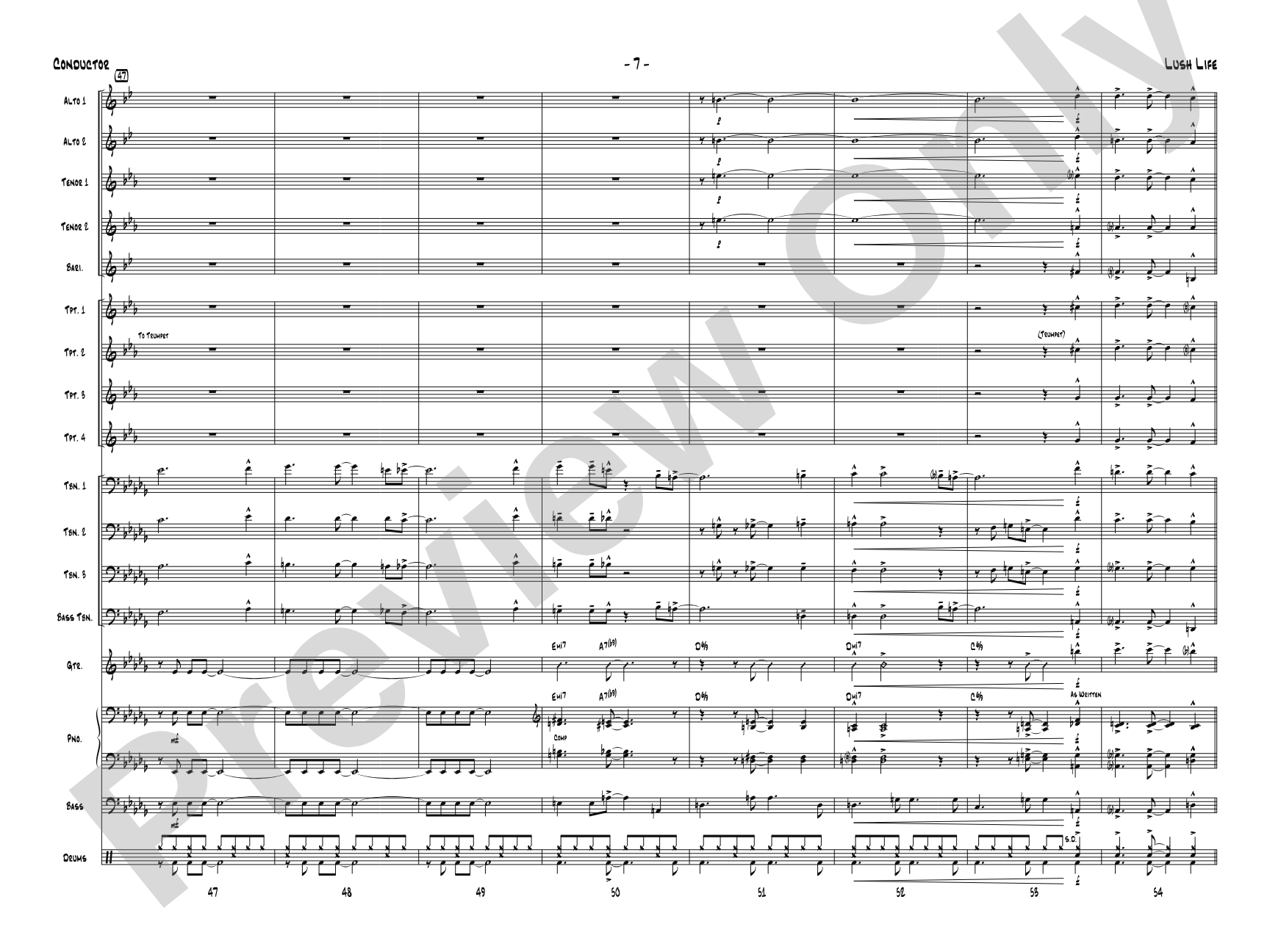
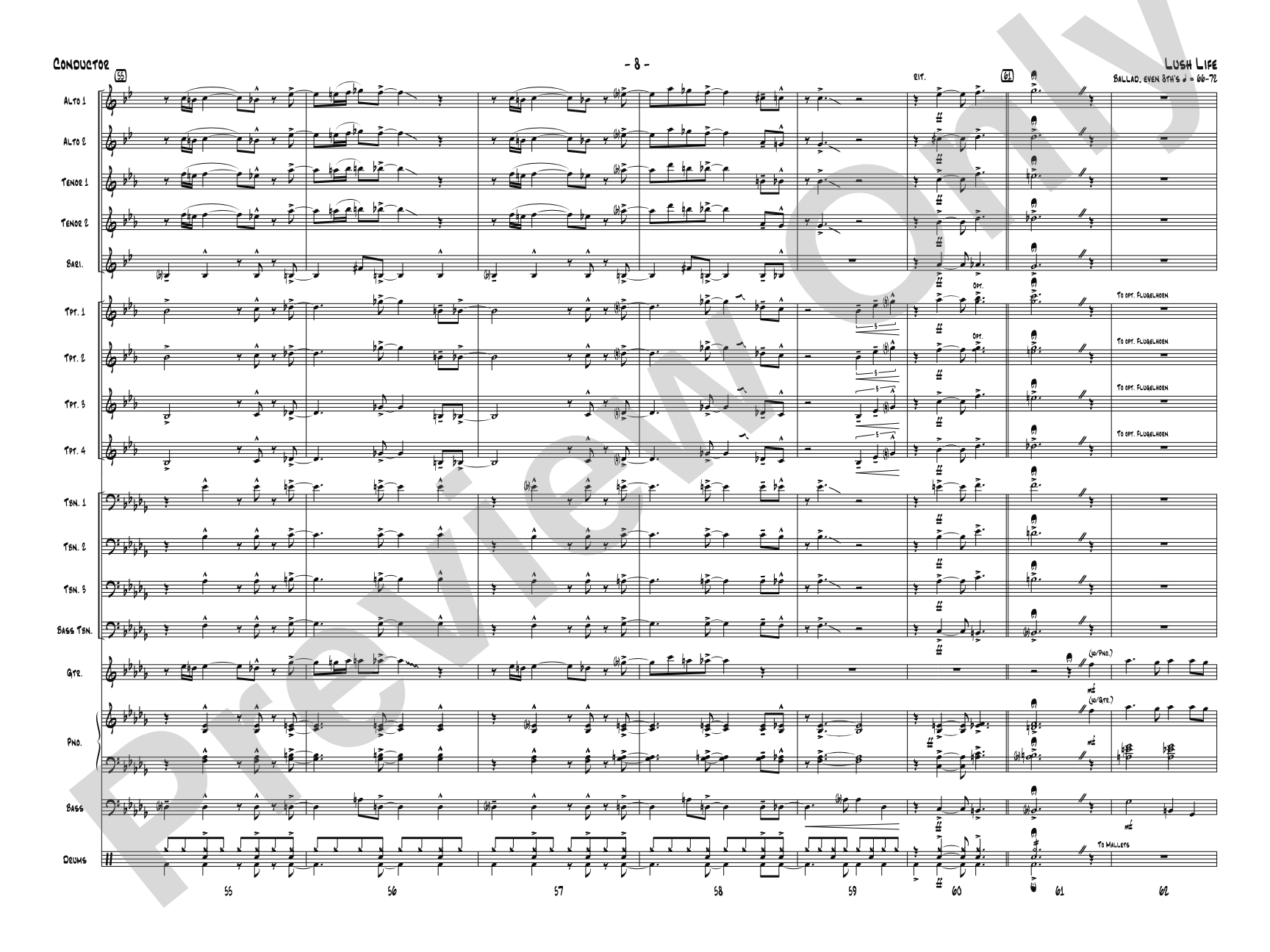
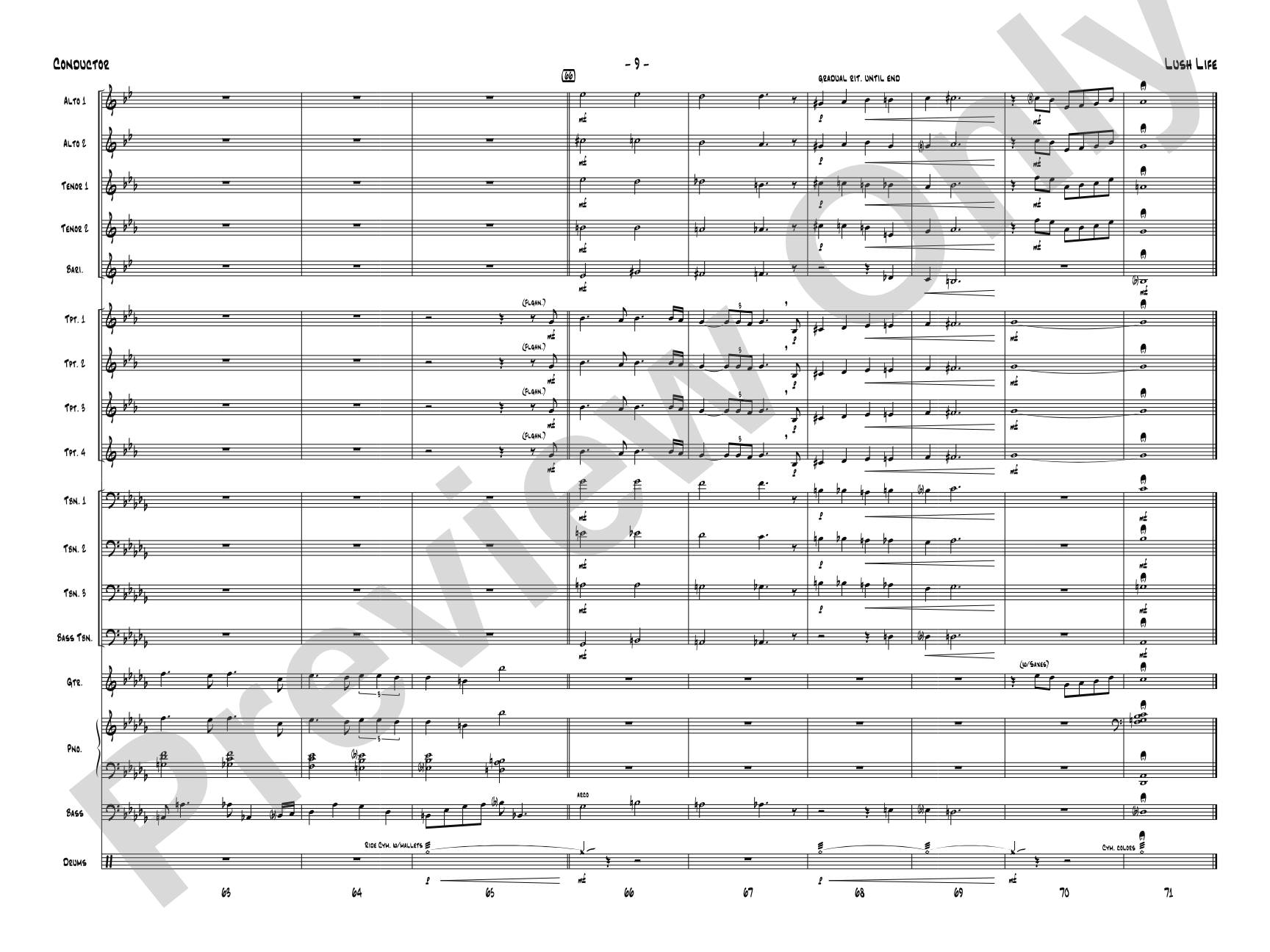

Lush Life: Jazz Ensemble Conductor Score & Parts
By Billy Strayhorn / arr. Mike Kamuf
Grade: 3.5 (Medium)
Item: 00-PK-0007460

$52.00
One moment…
Description
One of the finest ballads ever by a brilliant composer and gifted arranger. Played at around 88 BPM moving into a double-time bossa section leading into the finale, you'll enjoy every measure of this excellent chart. Only written melody solos for alto and trumpet, no improv, and all the usual optional parts plus vibes. You'll love this chart! (3:40) This title is available in MakeMusic Cloud.


Don't just read it, hear it, play along with it, and watch your students grow with it. In MakeMusic Cloud, Lush Life: Jazz Ensemble Conductor Score & Parts comes alive with professional accompaniment, adjustable tempo, and built-in practice tools that turn solo practice into real progress.
Open in the Player
Jump straight in and assign it today.
Start Your Free Trial
Open this title and explore the full library in minutes.
Sample Audio
1
Audio File
--:--
0:00
0:00
Sample Video
Additional Details
Series:
Jazz Band Series
Publisher:
Alfred Music
Page Count:
98
SKU:
00-PK-0007460
More about this title
About the Composer: Billy Strayhorn
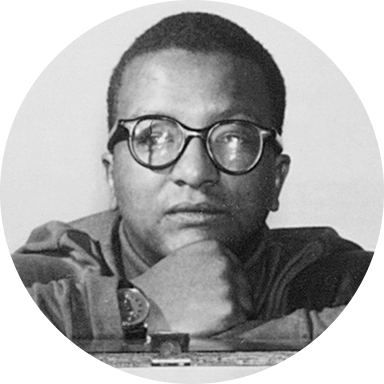
Billy Strayhorn (1915-1967) emerged as one of the defining voices in jazz composition, yet spent much of his career in relative obscurity despite creating some of the most enduring standards in American music. His partnership with Duke Ellington, which began in 1939, produced countless masterworks; "Take the 'A' Train" became the Ellington Orchestra's signature theme and remains a jazz cornerstone nearly a century after its composition.
Strayhorn wrote "Lush Life" at just 16 years old, establishing himself as a composer unafraid of harmonic sophistication and emotional depth. The piece has since become the definitive ballad standard, recorded by Nat King Cole, John Coltrane, and virtually every serious jazz vocalist who dares approach its complex harmonic landscape. Though his name remained less widely recognized than his influence during his lifetime, Strayhorn's catalog reads like a master class in jazz composition, and his legacy as a fearless artist and innovator has only grown since his death.
Why we love this
Mike Kamuf's arrangement captures the sophisticated soul of Strayhorn's composition while keeping the ensemble engaged from start to finish. The structure (standard ballad tempo moving into double-time bossa) provides compelling contrast without requiring improvisation, making it accessible for concert settings yet musically substantial enough to hold the room. This is the kind of chart that teaches students what it means to play with maturity and restraint.
What to expect
"Lush Life" breathes with the melancholy sophistication of a late-night jazz club, where elegance and introspection carry more weight than technical display. The ballad section envelops the listener in Strayhorn's rich harmonic palette, then the double-time bossa infuses the piece with subtle momentum that propels toward a satisfying resolution.
Who it's for
Jazz ensembles at the Grade 3.5 level with solid fundamentals, reliable section musicians, and players ready to tackle sophisticated jazz vocabulary. This arrangement rewards groups that can commit to the emotional arc of a ballad and execute rhythmic precision during the tempo-shifted midsection.
How to get the most out of it
- Lock the tempo transition between the ballad section and the double-time bossa carefully in rehearsal; the 88 BPM feel should breathe naturally before the rhythmic energy shifts, not jolt.
- Shape the alto and trumpet melody solos with genuine lyrical intention since there's no room to fill space with improvisation; every note carries the emotional weight of the arrangement.
- Balance the vibes and melody voices so the vibraphone supports without overwhelming the primary harmonic and melodic lines.
- Let the ensemble find the groove in the bossa section by emphasizing the ride cymbal and bass line relationships, which ground the ensemble's forward motion.
How to use it
This works beautifully as a concert centerpiece that demonstrates your ensemble's musicality and harmonic maturity, or as a contest selection where the balance of technical demand and emotional substance makes a strong impression. Pair it with uptempo swing numbers to showcase the ensemble's range, or program it as the emotional anchor in a set of Strayhorn compositions.
Skills your students will build
- Interpreting advanced jazz harmony with accuracy and phrasing
- Executing tempo transitions between ballad and bossa sections
- Balancing rhythm section communication with ensemble melody
- Playing written melody solos with lyrical intention rather than relying on improvisation
- Sustaining ensemble focus through a sophisticated 3:40 arrangement