Lush Life Cover Image

Lush Life: Jazz Ensemble Conductor Score

$11.00 USD
Sale price  $11.00 USD Regular price 
Skip to product information
Lush Life Cover Image

Lush Life: Jazz Ensemble Conductor Score

By Billy Strayhorn / arr. Mike Kamuf

Grade: 3.5 (Medium)

Item: 00-46161S

$11.00
Shipped

One moment…

Description
One of the finest ballads ever by a brilliant composer and gifted arranger. Played at around 88 BPM moving into a double-time bossa section leading into the finale, you'll enjoy every measure of this excellent chart. Only written melody solos for alto and trumpet, no improv, and all the usual optional parts plus vibes. You'll love this chart! (3:40) This title is available in MakeMusic Cloud.

Lush Life: Jazz Ensemble Conductor Score isn't in MakeMusic Cloud just yet...but it could be. Let us know you'd like to see it, and you'll help shape what comes next. In the meantime, start a free trial and dive into thousands of interactive titles your students can play along with today.

Sample Pages

Sample Audio
0:00
0:00
Sample Video
Additional Details
Series: Jazz Band Series
Publisher: Alfred Music
Page Count: 12
UPC: 038081525419
SKU: 00-46161S

More about this title

About the Composer: Billy Strayhorn
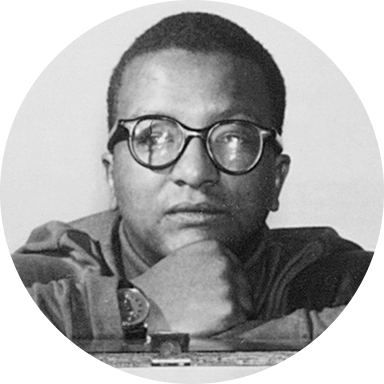
Billy Strayhorn

Billy Strayhorn (1915–1967) emerged as one of the defining voices in American jazz composition, though his contributions were often overshadowed by his collaborative partnership with Duke Ellington beginning in 1939. Writing "Lush Life" at just 16 years old, Strayhorn demonstrated a gift for harmonic sophistication and melodic elegance that would define his career. His influence on jazz standards remains profound; countless recordings by artists ranging from Nat King Cole to John Coltrane to Sarah Vaughn attest to the enduring power of his work.

Strayhorn's legacy as a composer extends far beyond any single piece. He created some of the 20th century's most recorded jazz compositions, including the iconic "Take the 'A' Train," which has served as the Duke Ellington Orchestra's theme since the 1940s. Despite the historical significance of his music and his openness about his identity as a gay Black American, Strayhorn remained underrecognized during his lifetime. Today, historians recognize him as one of America's most essential yet underappreciated composers, whose harmonic language and structural sophistication continue to influence musicians across all genres.

Why we love this

Mike Kamuf's arrangement captures the soul of Strayhorn's masterpiece while making it accessible for mid-level ensembles. The structure unfolds naturally: a contemplative ballad section flows into a double-time bossa groove, sustaining interest across the full 3:40 runtime without relying on improvisation. Alto and trumpet carry memorable melody solos over written parts, allowing your musicians to deliver a polished, concert-ready performance that showcases both Strayhorn's harmonic richness and Kamuf's skillful orchestration.

What to expect

The piece opens with the tender vulnerability of one of jazz's greatest ballads, inviting deep listening and emotional engagement. As it accelerates into bossa rhythms, the energy shifts from introspection to sophisticated groove, creating a journey that feels both relaxed and propulsive.

Who it's for

Jazz ensembles at the intermediate level will find this arrangement sits perfectly in their range. Your musicians need solid fundamental skills but not advanced improvisational chops, making it ideal for players building their jazz vocabulary and for directors programming a ballad that sounds mature without demanding virtuosic soloing.

How to get the most out of it

  • Establish the ballad's languorous phrasing at 88 BPM by having your rhythm section focus on space and restraint rather than filling every beat; let the piano and bass breathe.
  • Mark the transition into double-time bossa clearly in rehearsal so rhythm players understand the tempo relationship and melodic soloists can lock in without hesitation.
  • Balance the alto and trumpet solos so each voice emerges with warmth but never overwhelms the harmonic foundation; these written lines should sing, not compete.
  • Use the vibes as a coloristic anchor through the bossa section; their sustained tones will anchor the ensemble's forward motion and add textural sophistication.

How to use it

Program this as a centerpiece for a jazz-focused concert or festival set, where it can anchor a program between more uptempo charts and offer your audience a moment of harmonic and emotional depth. Its contest-appropriate length and polished arrangement make it equally effective in festival competitions or as a showcase for your ensemble's musicianship at a formal recital.

Skills your students will build

  • Ballad phrasing and rubato at moderate tempos
  • Transitions between straight eighths and bossa-jazz rhythms
  • Harmonic listening and support for written melody solos
  • Ensemble blend and dynamic control in a sparse, lyrical setting
  • Section-specific coordination (rhythm section independence, horn section balance)

You May Also Like