

Lullaby of Broadway (and Forty-Second Street): SATB Choral Octavo
From the Musical 42nd Street
By Al Dubin and Harry Warren / arr. Jay Althouse
Item: 00-PO-0002236

$2.10
Minimum order quantity: 20 copies
Pickup currently not available
Related Items
Lullaby of Broadway (and "Forty-Second Street"): SoundTrax Digital Audio Download |
$27.99
|
View | |
Lullaby of Broadway (and Forty-Second Street): SAB Choral Octavo |
$2.25
|
View | |
Lullaby of Broadway (and Forty-Second Street): SSA Choral Octavo |
$2.25
|
View | |
Lullaby of Broadway (and "Forty-Second Street"): 2-Part Choral Octavo |
$2.25
|
View | |
Lullaby of Broadway (and Forty-Second Street): Choral SoundPax |
$30.00
|
View | |
Lullaby of Broadway (and "Forty-Second Street"): SATB Choral Octavo |
$2.10
|
View | |
Lullaby of Broadway (and "Forty-Second Street"): SAB Choral Octavo |
$2.25
|
View | |
Lullaby of Broadway (and "Forty-Second Street"): SSA Choral Octavo |
$2.25
|
View | |
Lullaby of Broadway (and "Forty-Second Street"): 2-Part Choral Octavo |
$2.25
|
View | |
Lullaby of Broadway (and "Forty-Second Street"): Choral Octavo SoundTrax CD |
$27.99
|
View | |
Lullaby of Broadway (and "Forty-Second Street"): Choral SoundPax |
$30.00
|
View |
Description
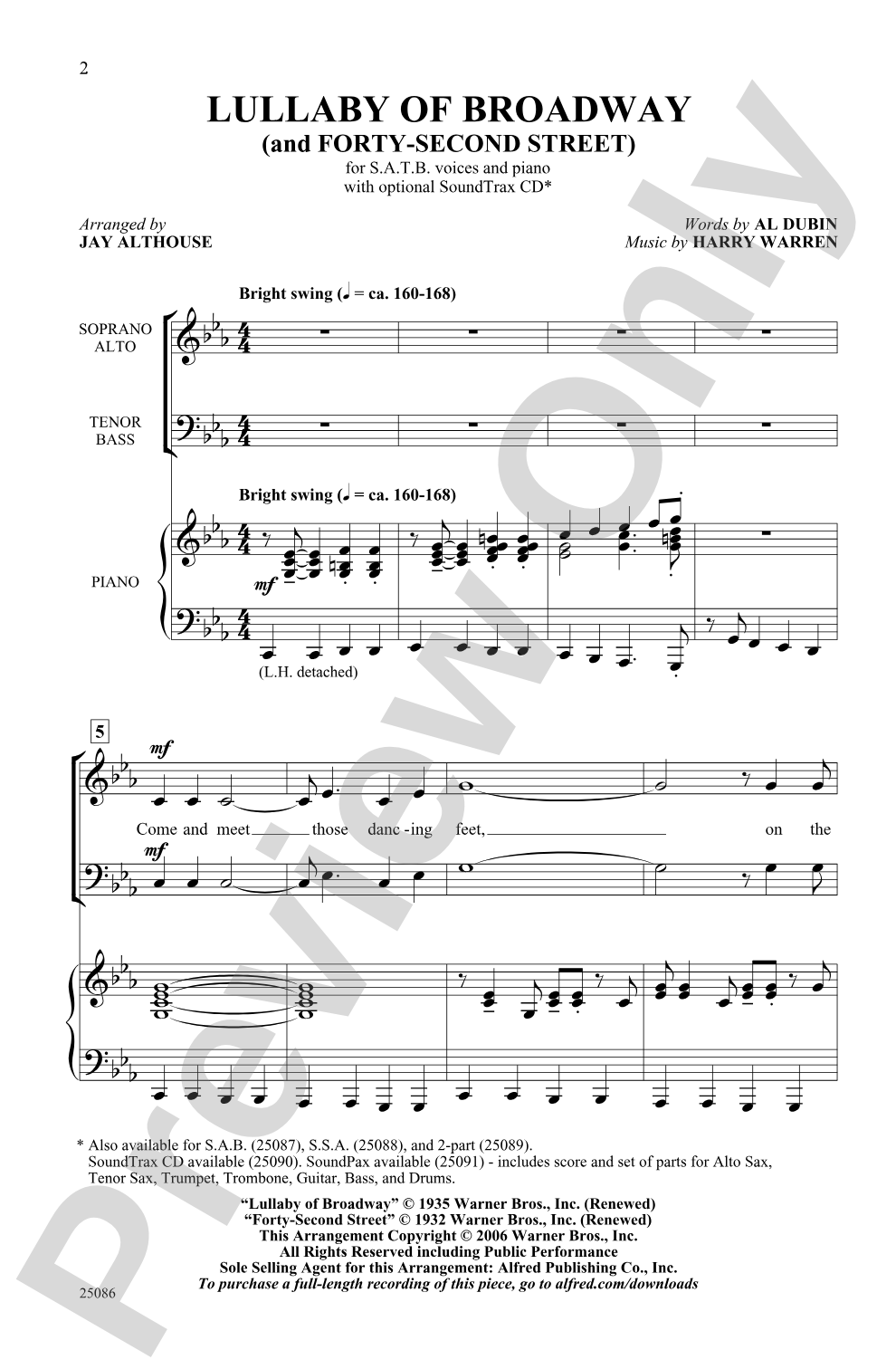
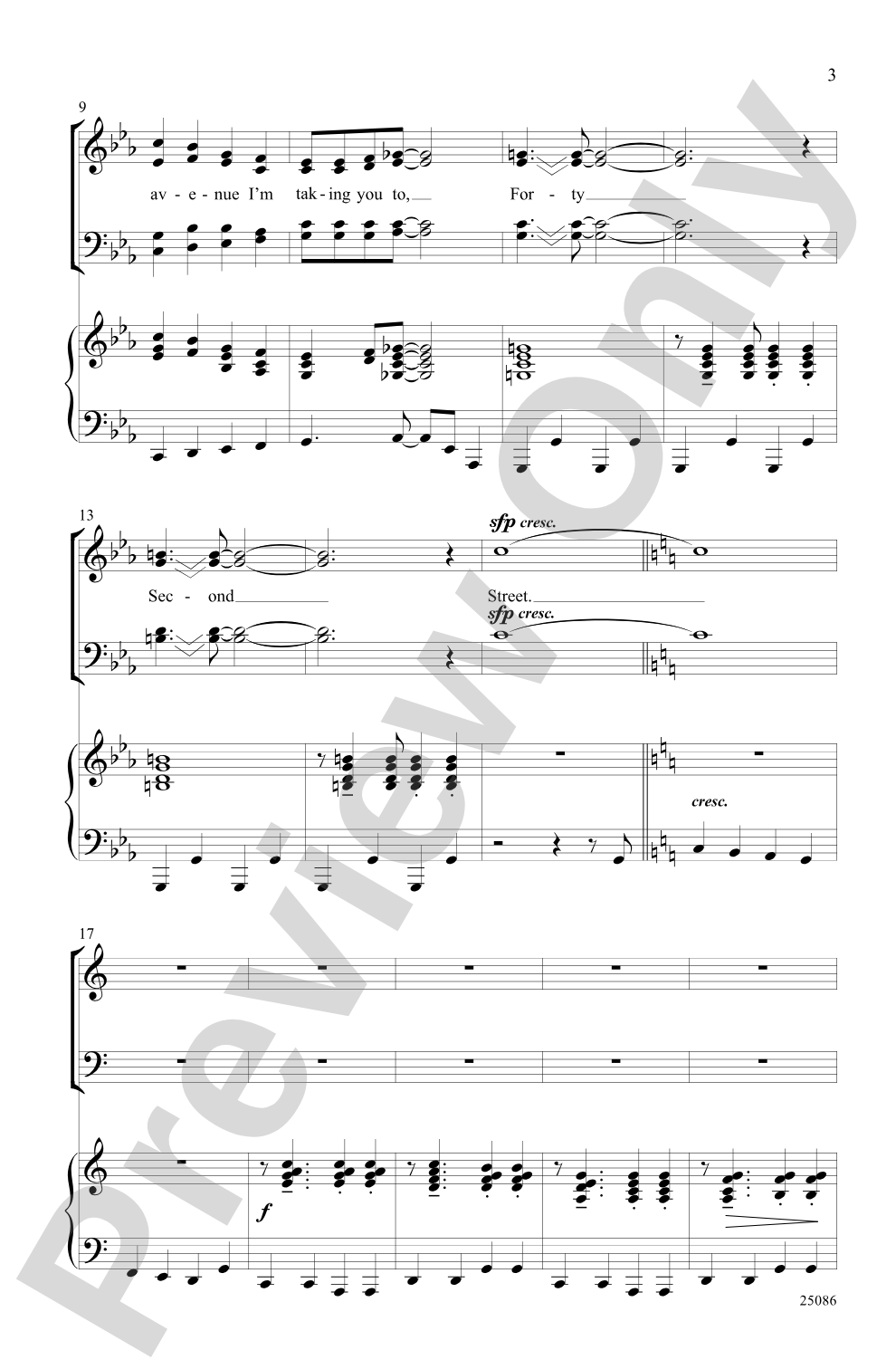
What a great pair of songs from the legendary Broadway musical 42nd Street. Bette Midler made "Lullaby of Broadway" a hit in the 1970s, but it's been around since the golden era of Hollywood. Jay's arrangement opens with a touch of "Forty-Second Street." Two swinging standards arranged with style. Featured on the Danza! Movement DVD (00-31225).


Don't just read it, hear it, play along with it, and watch your students grow with it. In MakeMusic Cloud, Lullaby of Broadway (and Forty-Second Street): SATB Choral Octavo comes alive with professional accompaniment, adjustable tempo, and built-in practice tools that turn solo practice into real progress.
Open in the Player
Jump straight in and assign it today.
Start Your Free Trial
Open this title and explore the full library in minutes.
Sample Audio
1
Audio File
--:--
0:00
0:00
Sample Video
No sample videos found.
Additional Details
Series:
Alfred Pop Choral Series
Publisher:
Alfred Music
Page Count:
12
SKU:
00-PO-0002236
More about this title
About the Composer: Al Dubin
Al Dubin was a prolific lyricist during Hollywood's golden age, crafting words for some of the era's most enduring melodies. Working frequently with composer Harry Warren, Dubin shaped the sound of 1930s musical theater and film, creating standards that have outlasted the decades through their clever wit and singable phrases.
Dubin's gift for matching lyrics to melody made him invaluable in the studio system. His work on 42nd Street exemplifies his ability to write for the stage while crafting songs memorable enough to transcend their original context and become jazz standards.
Why we love this
Jay Althouse's arrangement captures the swagger and sophistication of these two standards without overcomplicating them. The pairing is unexpected enough to feel fresh, yet both songs sit so naturally in four-part harmony that your singers will connect immediately with the material. You get genuine Broadway charm with smart, teachable voicings.
What to expect
Stepping into a 1930s night club where the band knows exactly what they're doing and the spotlight finds you mid-song. There's elegance here, but also lightness and a touch of knowing humor. The music swings with confidence and invites the audience to settle in and enjoy themselves.
Who it's for
Directors building a concert that balances standard repertoire with genuine entertainment value. Any choir comfortable with straight-ahead swing rhythms and interested in material that connects with diverse audiences, from seasoned listeners to younger singers discovering classic American songwriting.
How to get the most out of it
- Balance the opening "Forty-Second Street" section carefully so it sets up the transition rather than overpowering it; think of it as a brief invitation into the main event.
- Keep the swing style consistent across all four parts. A unified rhythmic pocket will let the lyrical content shine through without sounding forced.
- Lean into the accompaniment track to establish the groove early in rehearsal; it anchors the style faster than counting alone.
- Shape the dynamics through the narrative arc of both songs rather than treating each phrase as a separate statement. These songs tell a story.
How to use it
Pair this with other American standards or folk arrangements to create a concert segment celebrating classic songwriting. It also works well as a bridge between contemporary pop and more traditional repertoire, giving audiences a sense of how modern music draws from these roots. The staging options make it equally at home in a cabaret-style presentation or a formal concert setting.
Skills your students will build
- Swing rhythms and syncopation in four-part texture
- Maintaining lyrical legibility while supporting harmonic complexity
- Call-and-response phrasing between vocal sections
- Dynamic control across an extended melodic arch
- Coordinate with recorded accompaniment while preserving vocal independence