

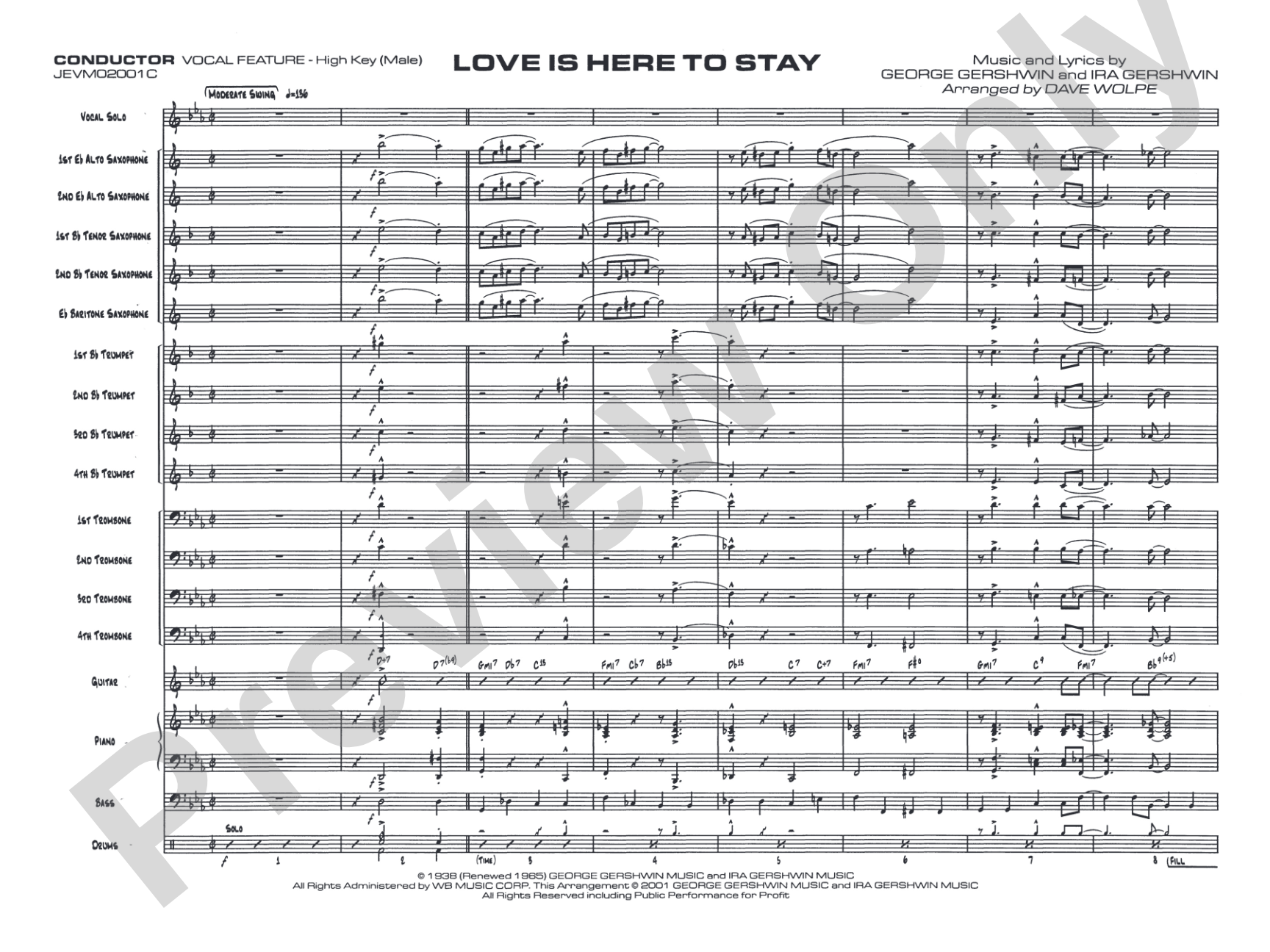
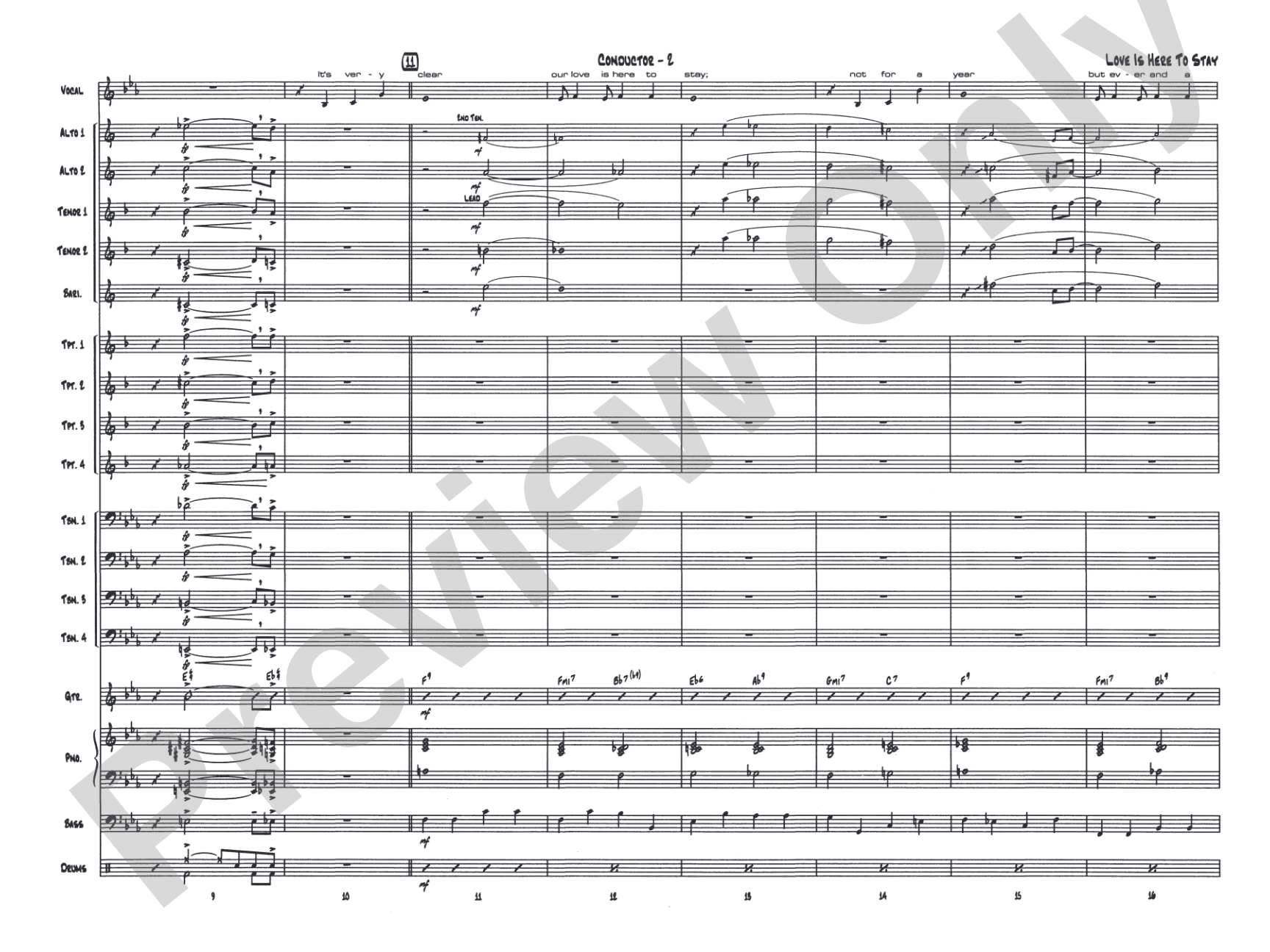
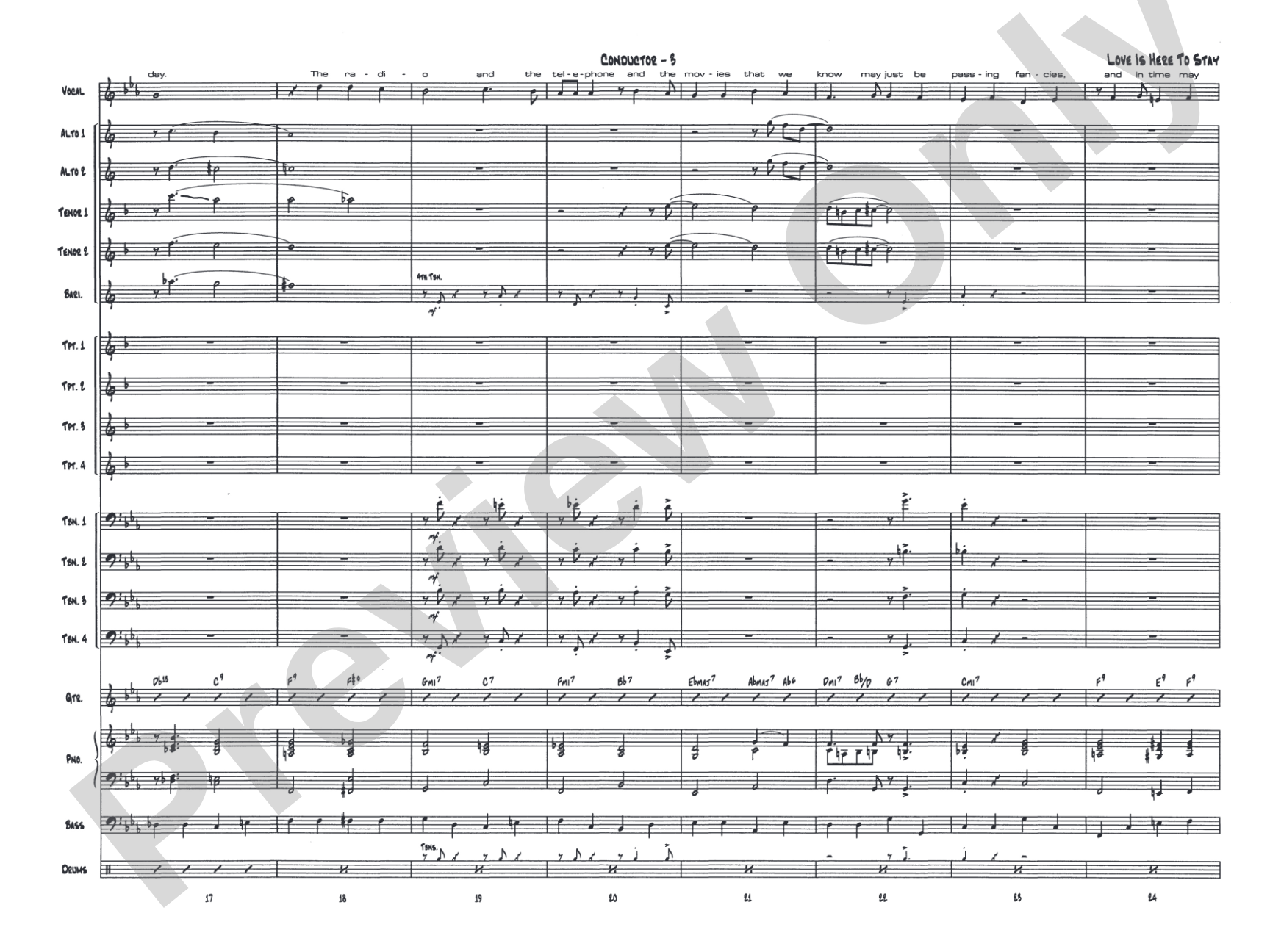
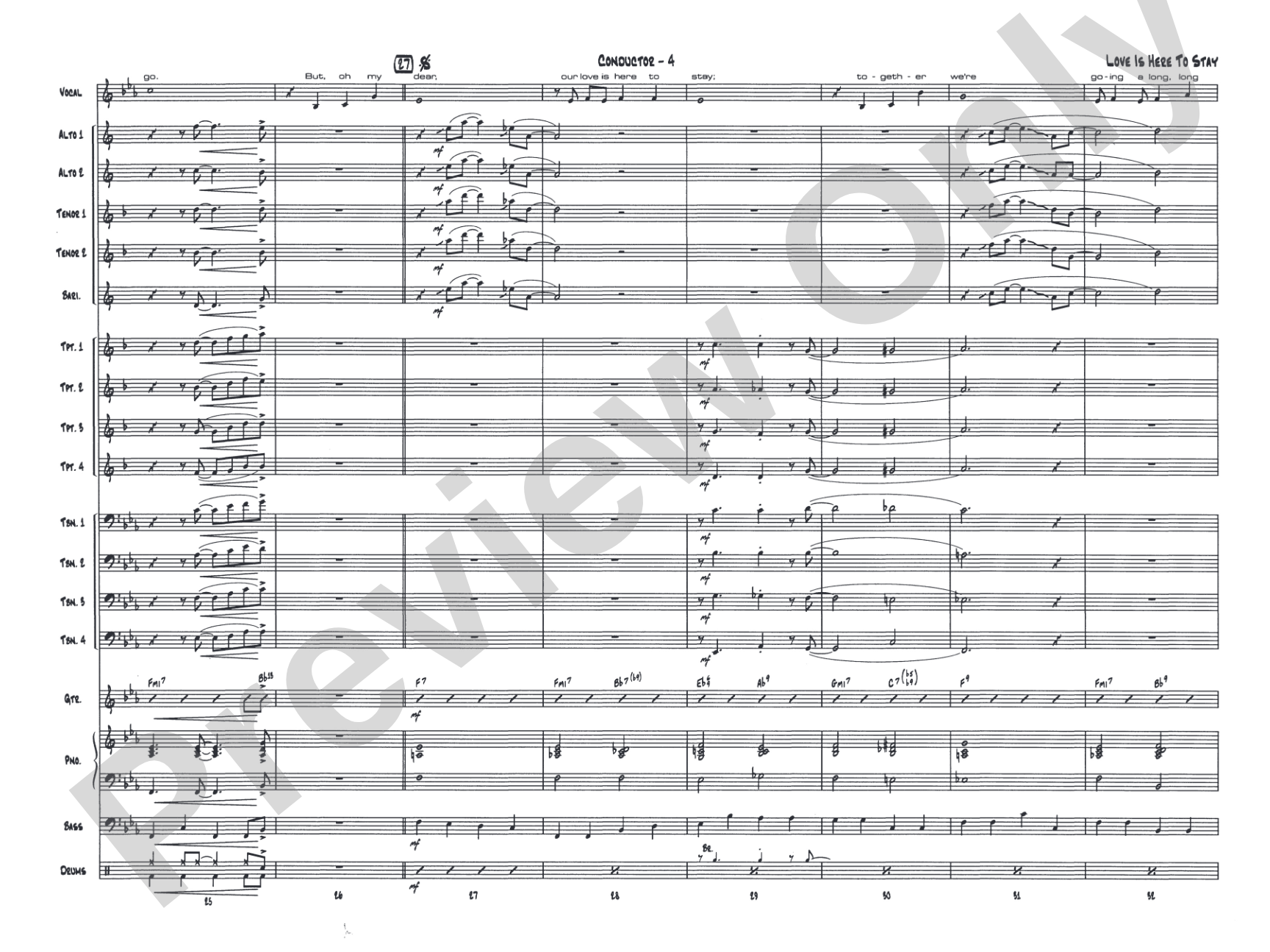
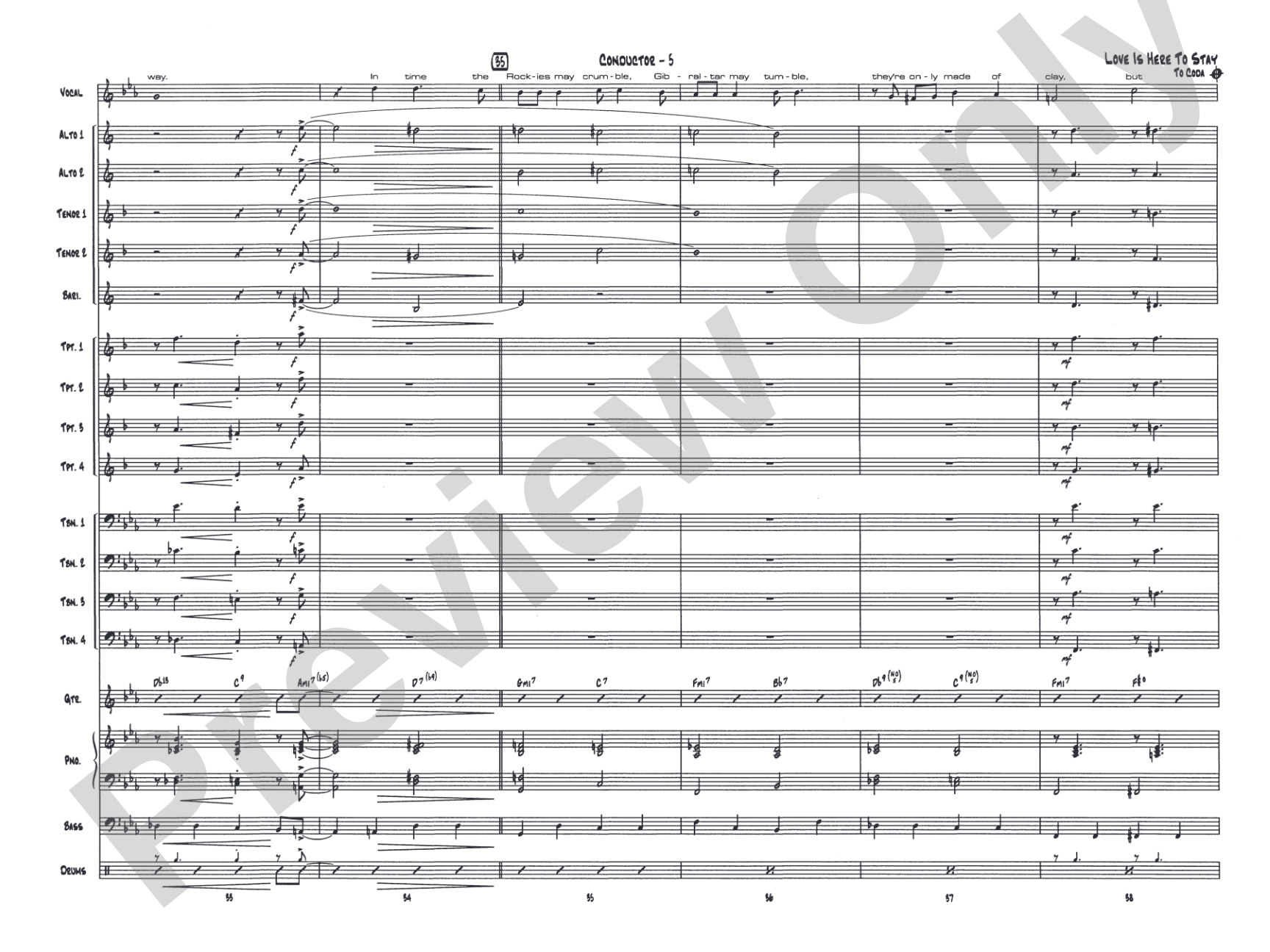
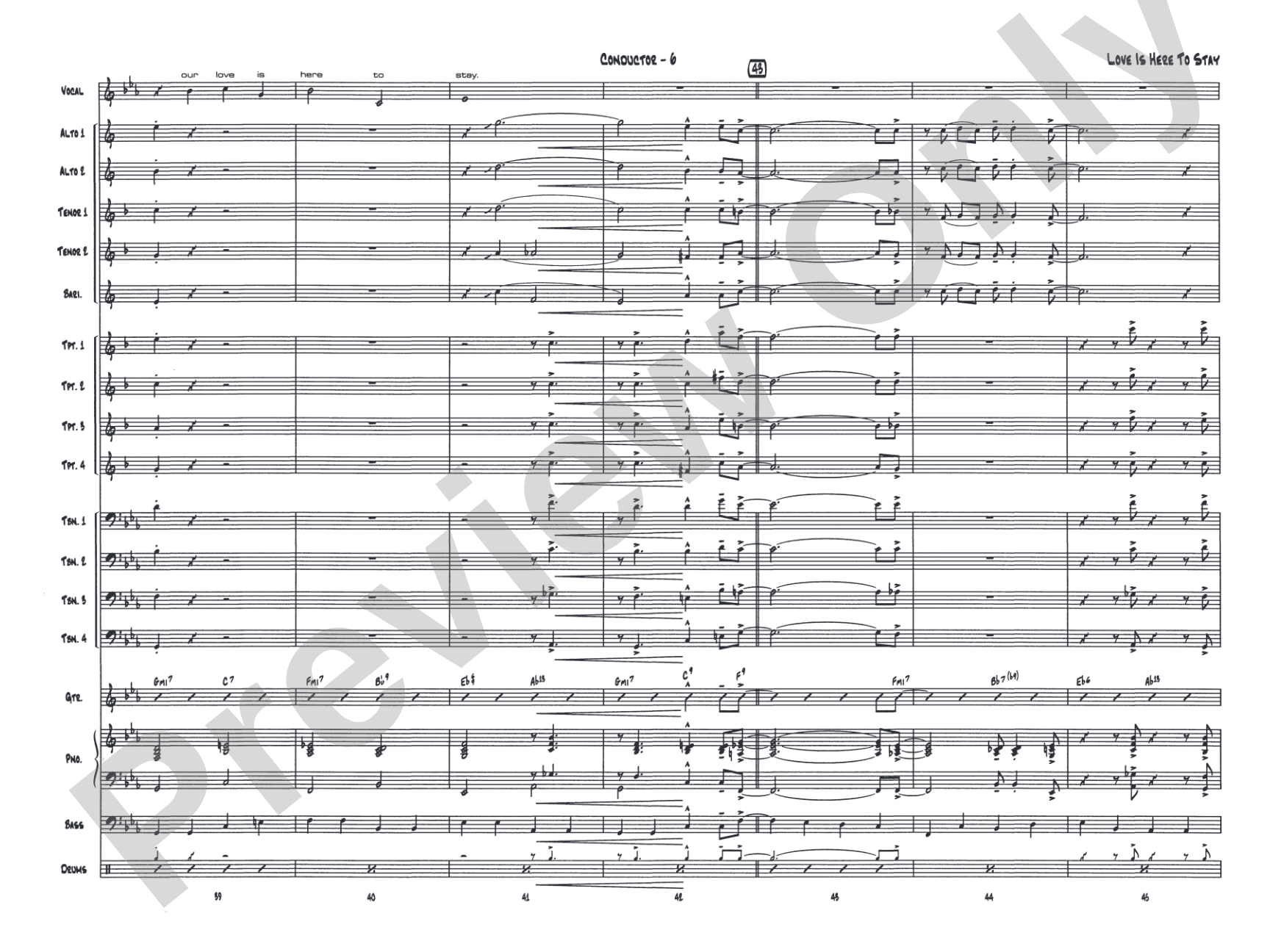
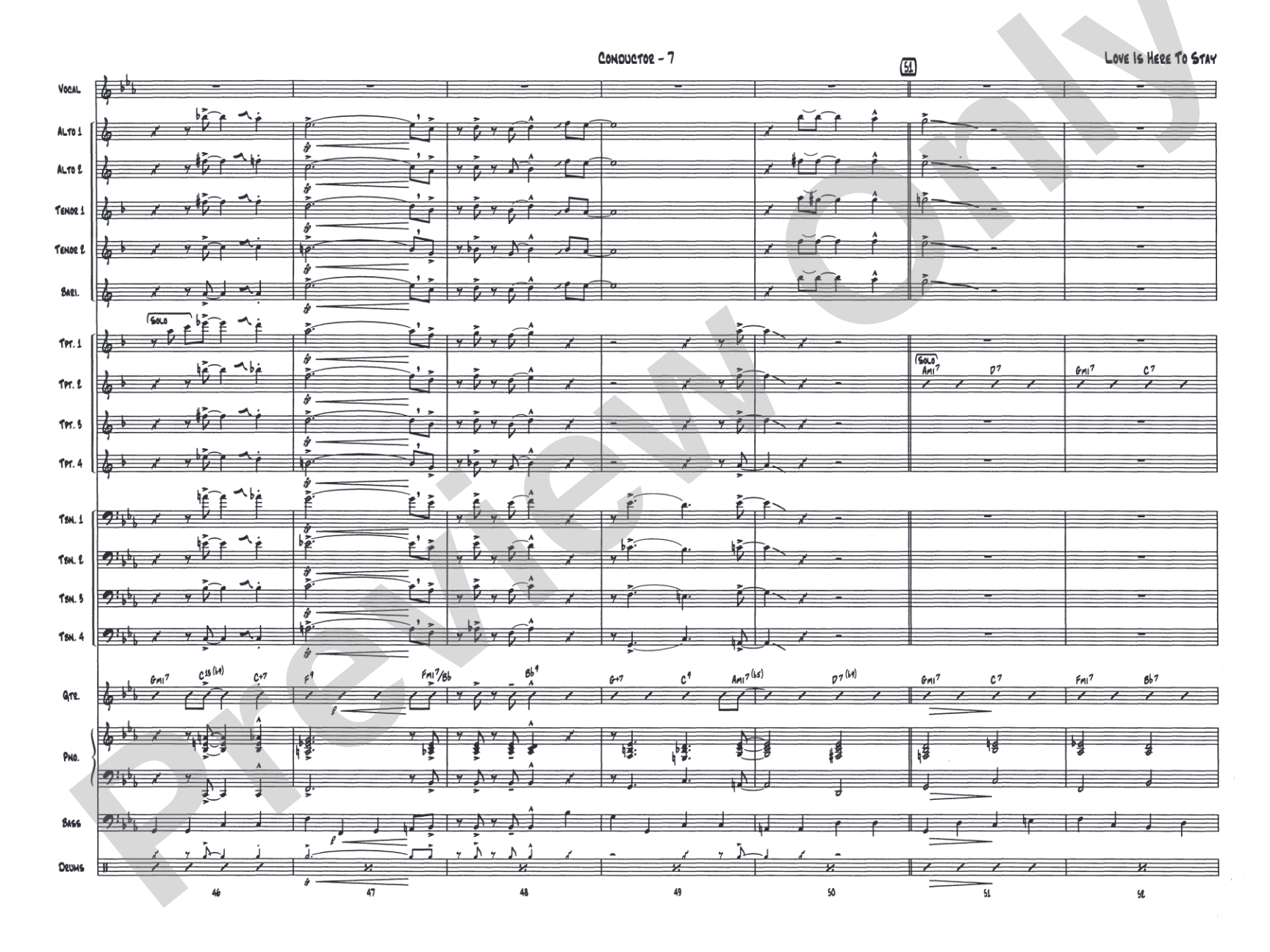
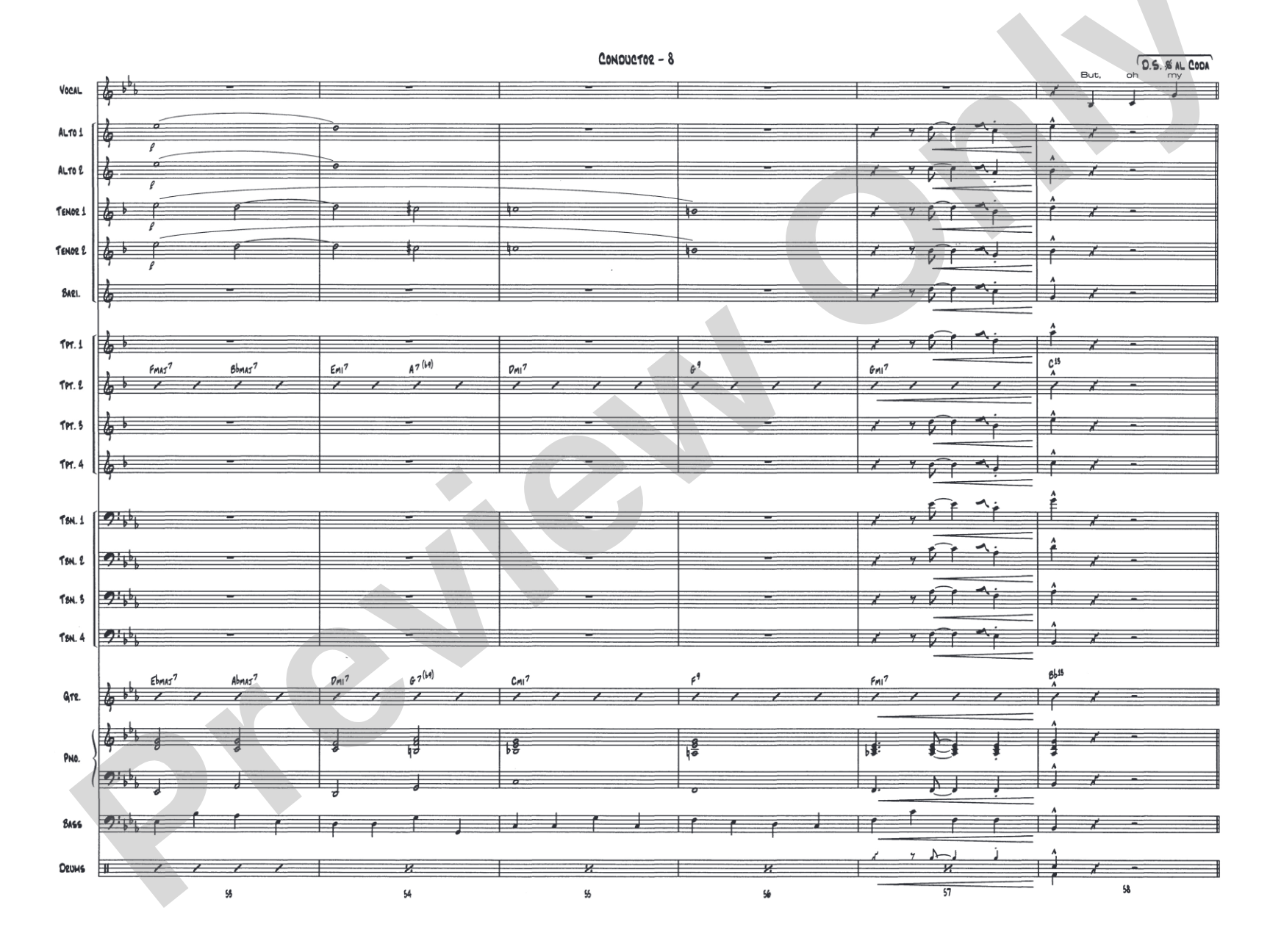
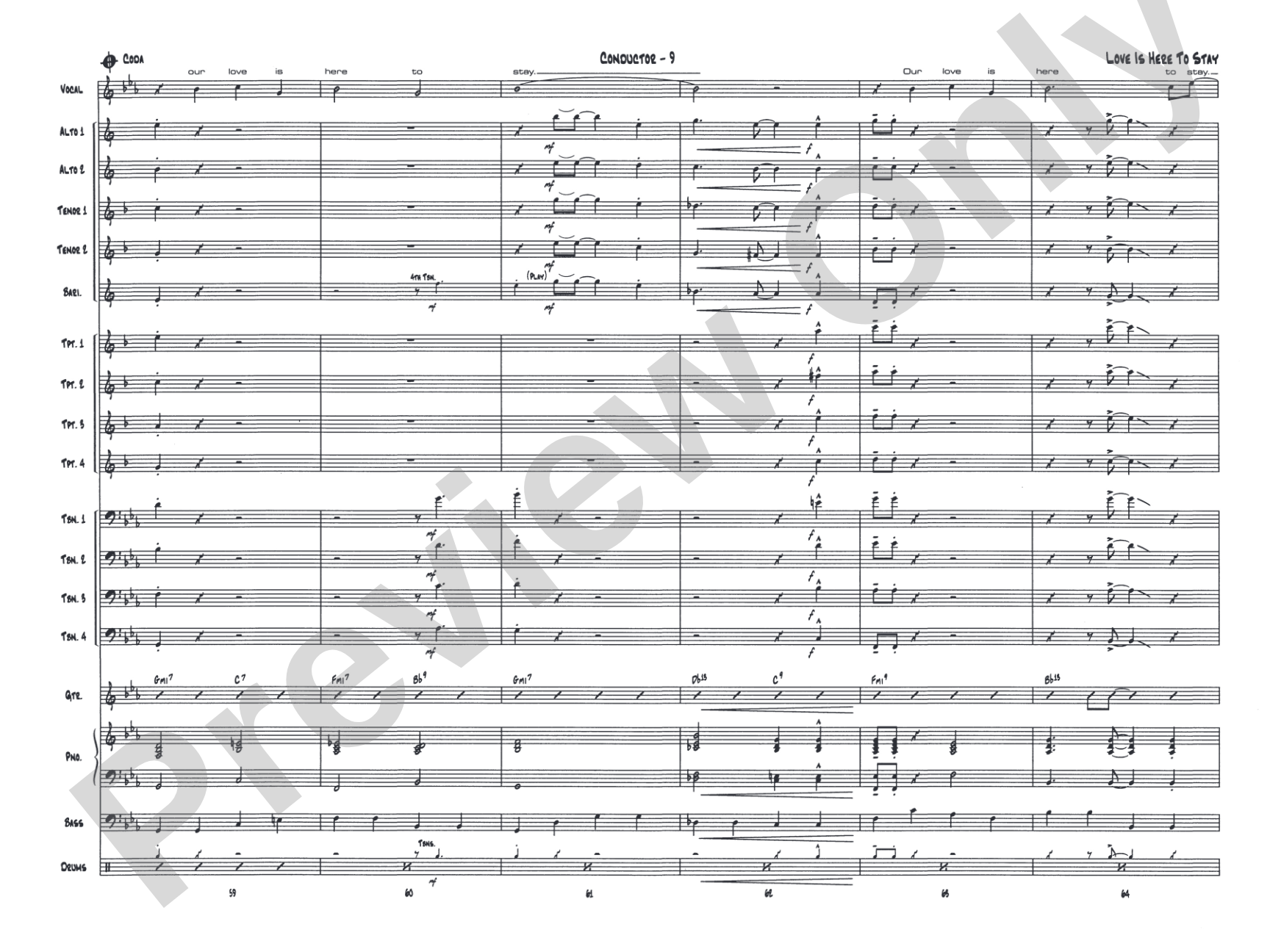
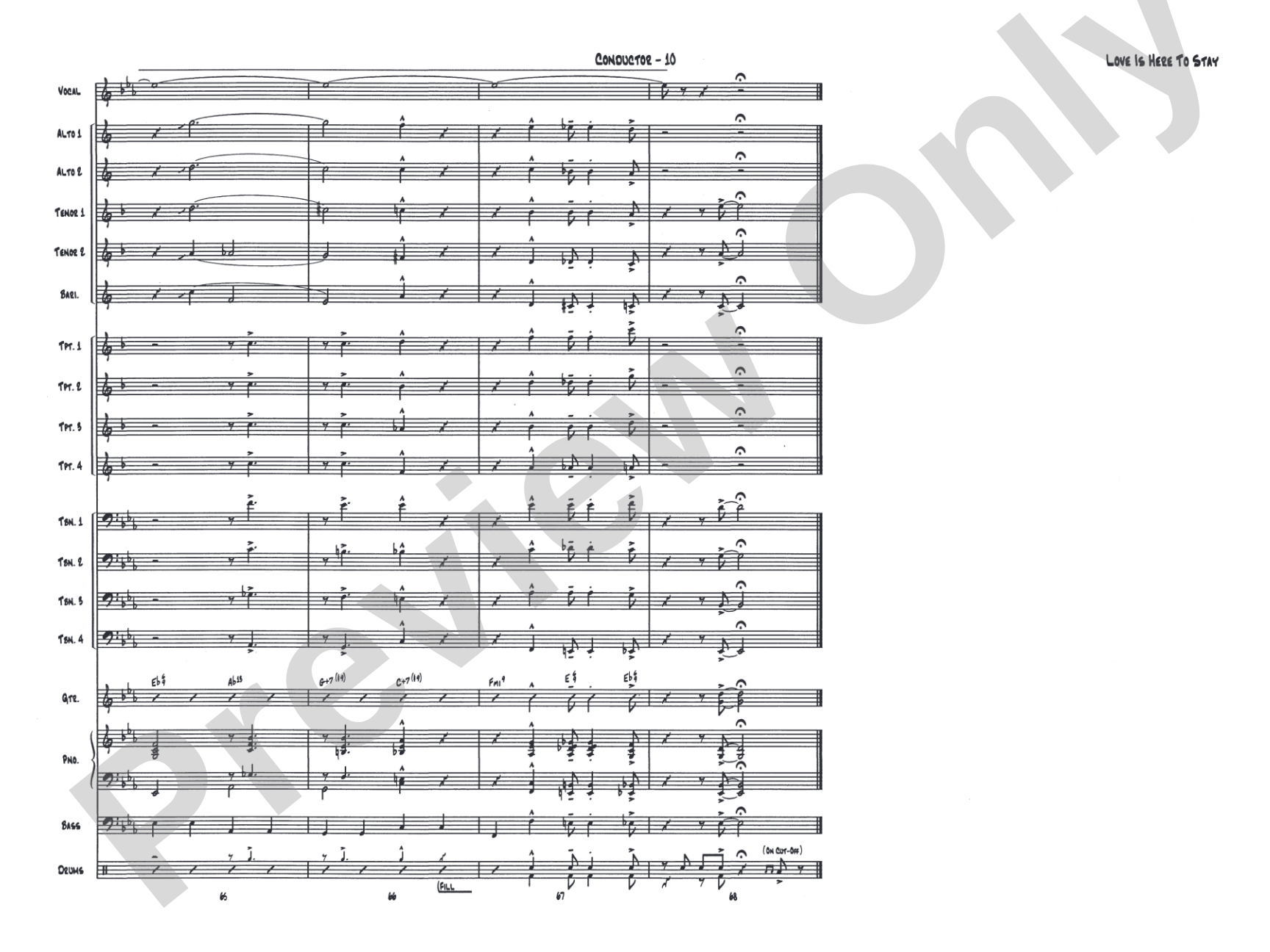
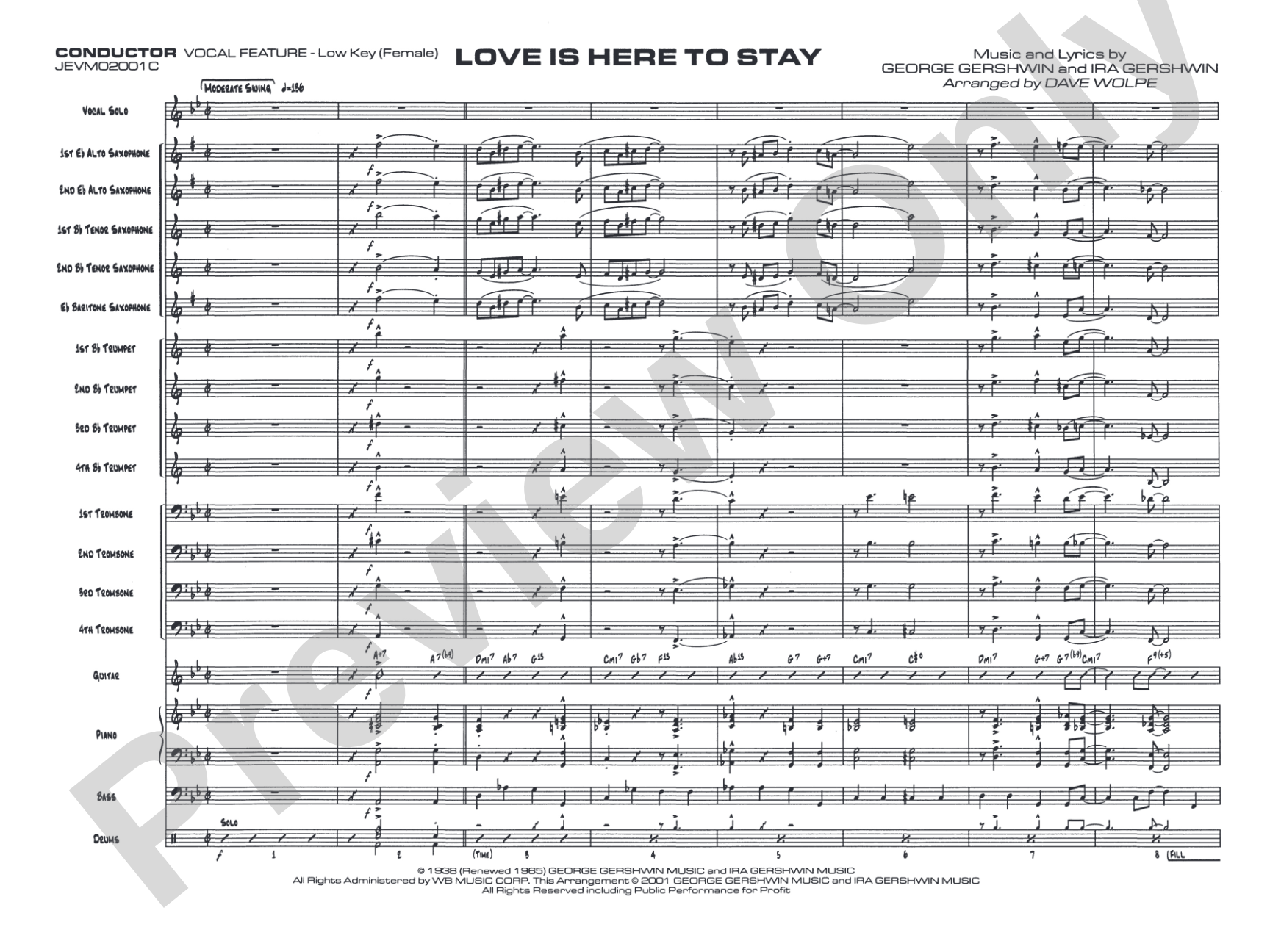
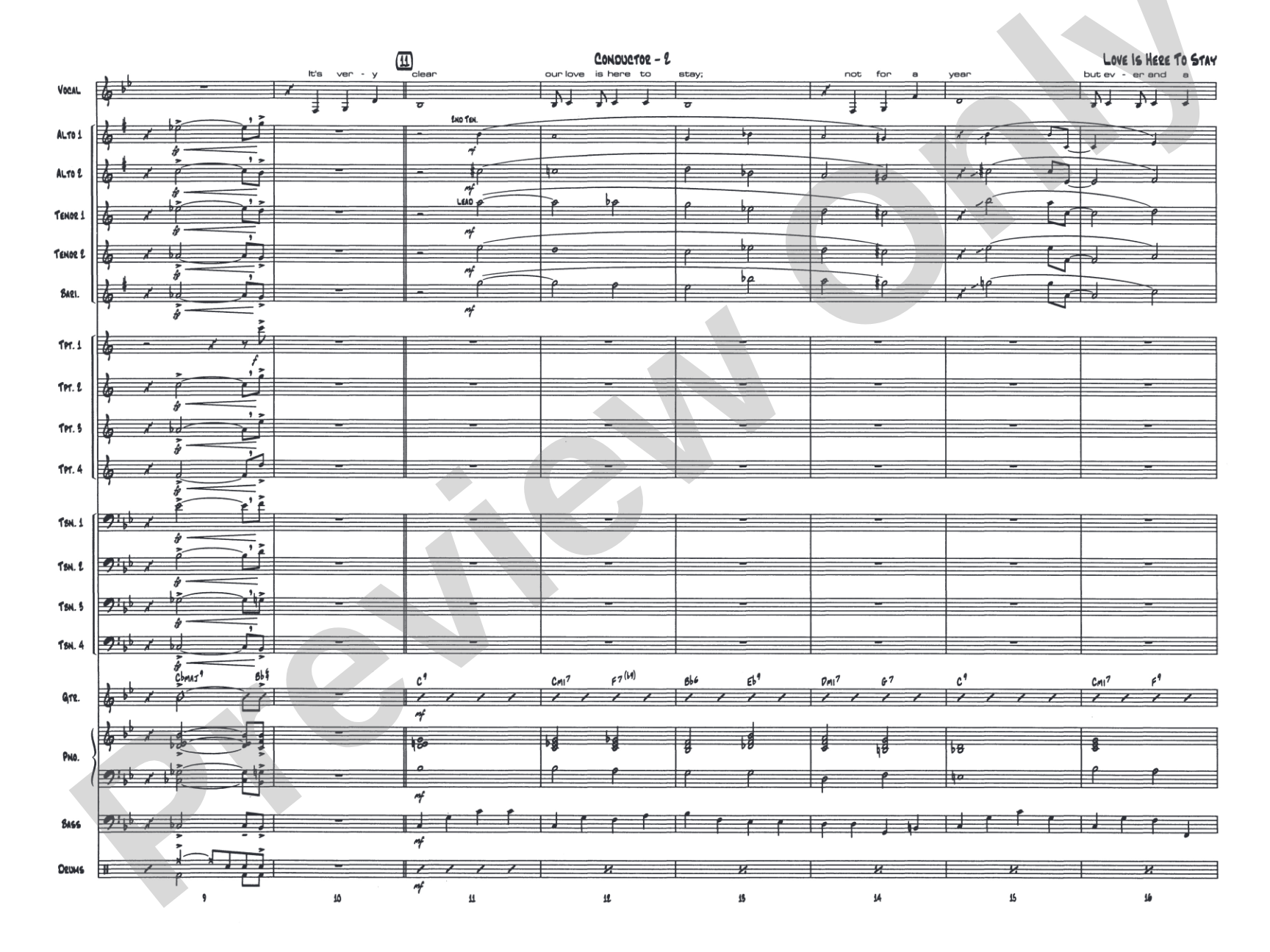
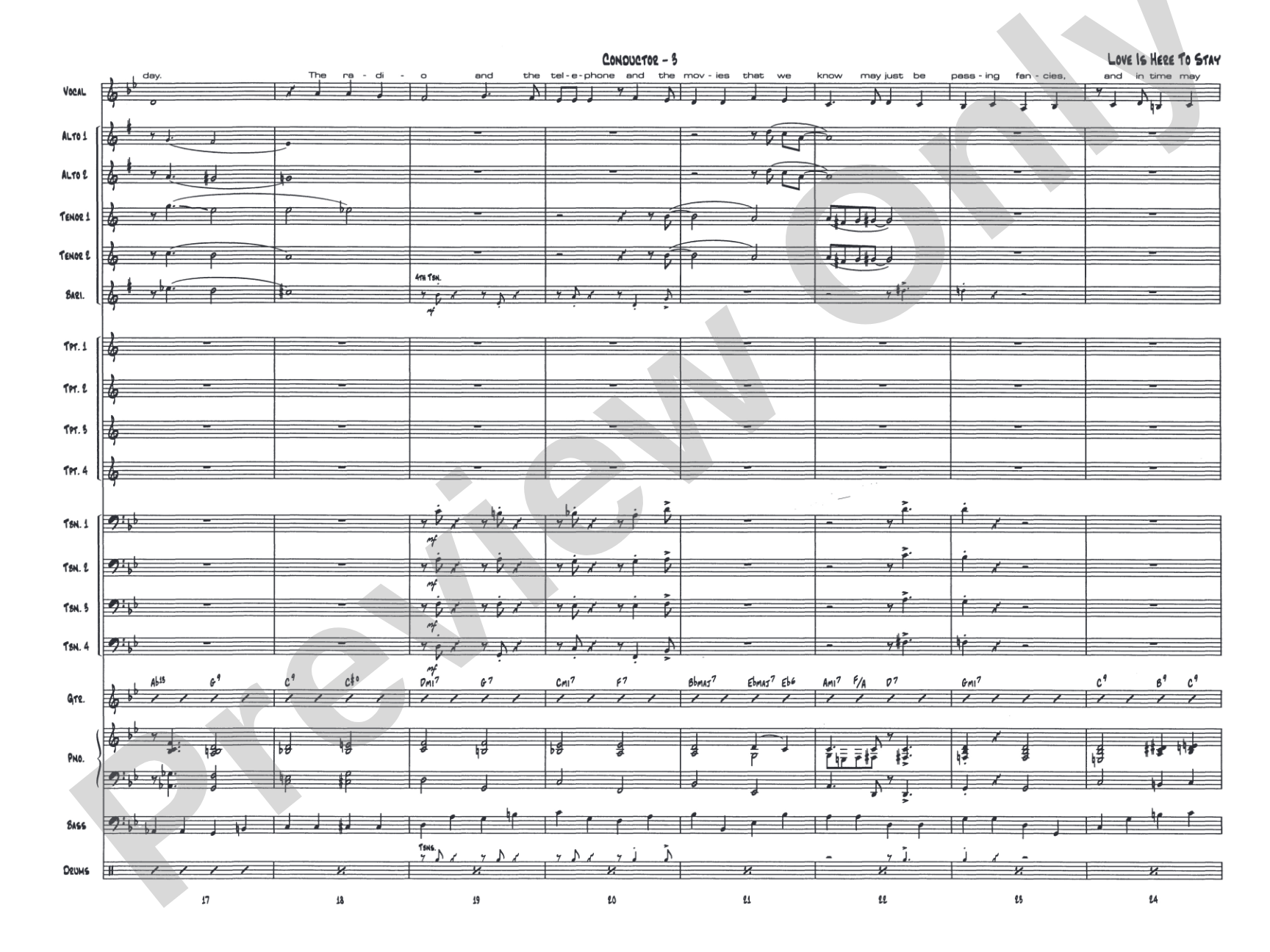
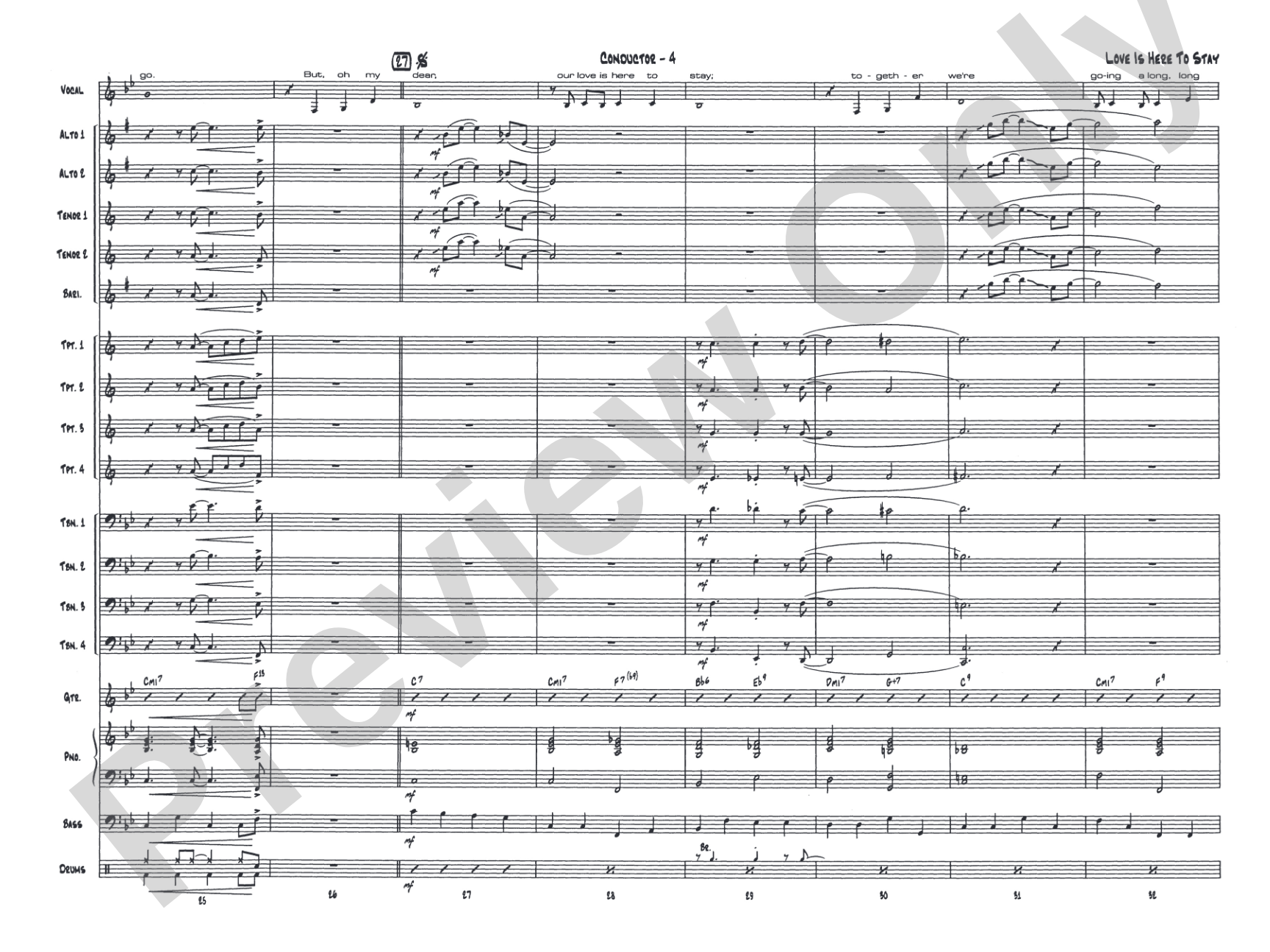
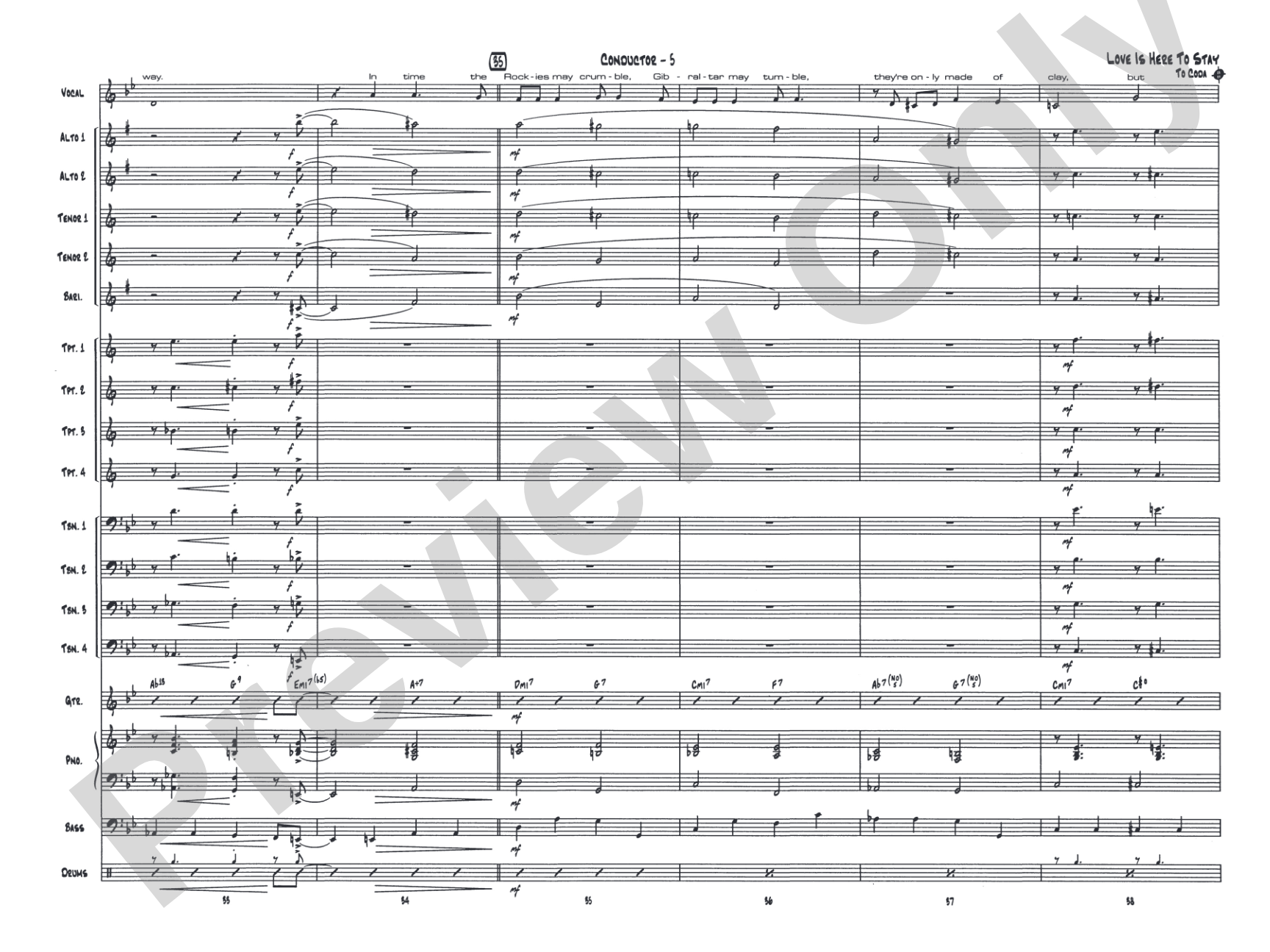
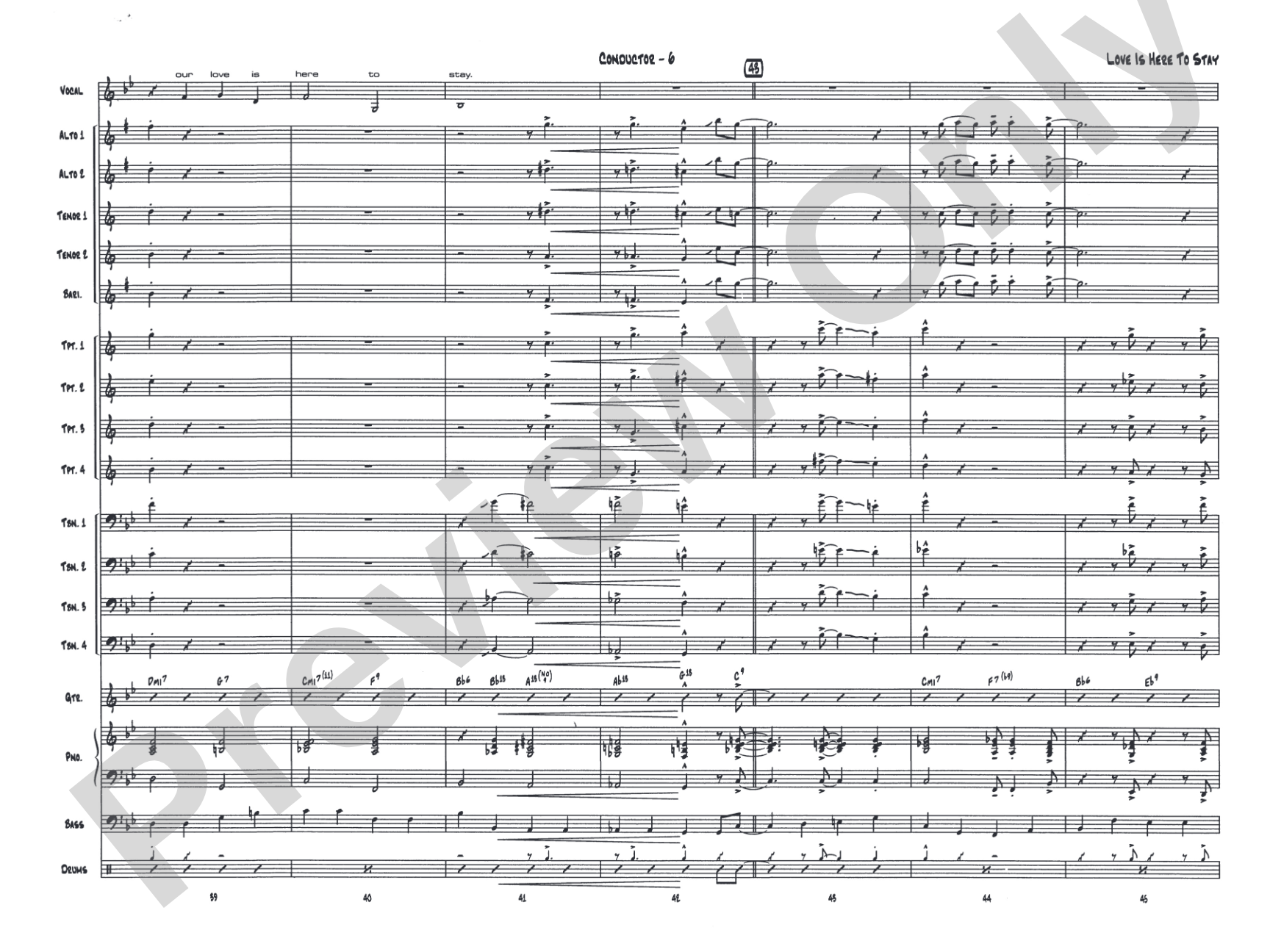
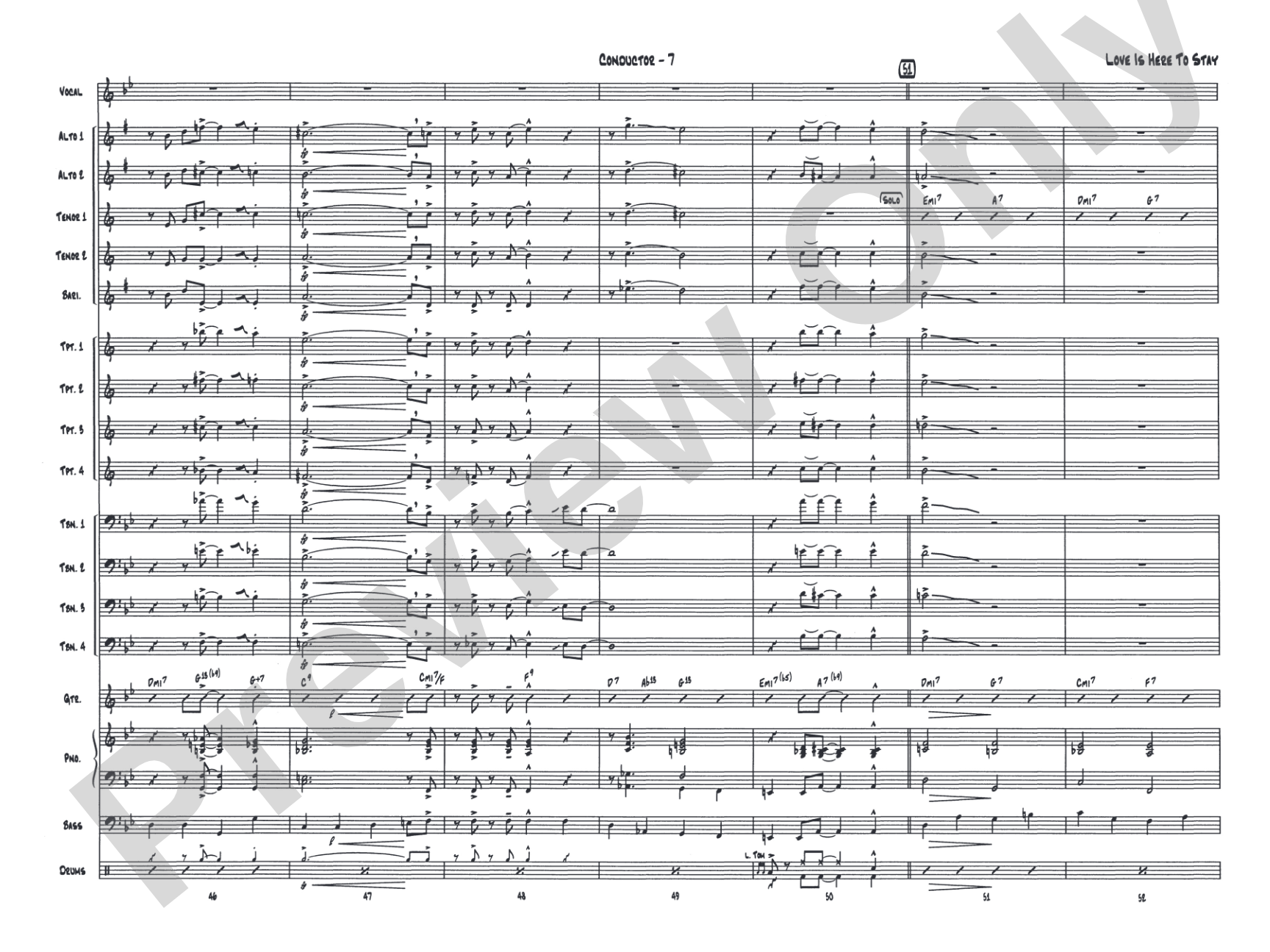
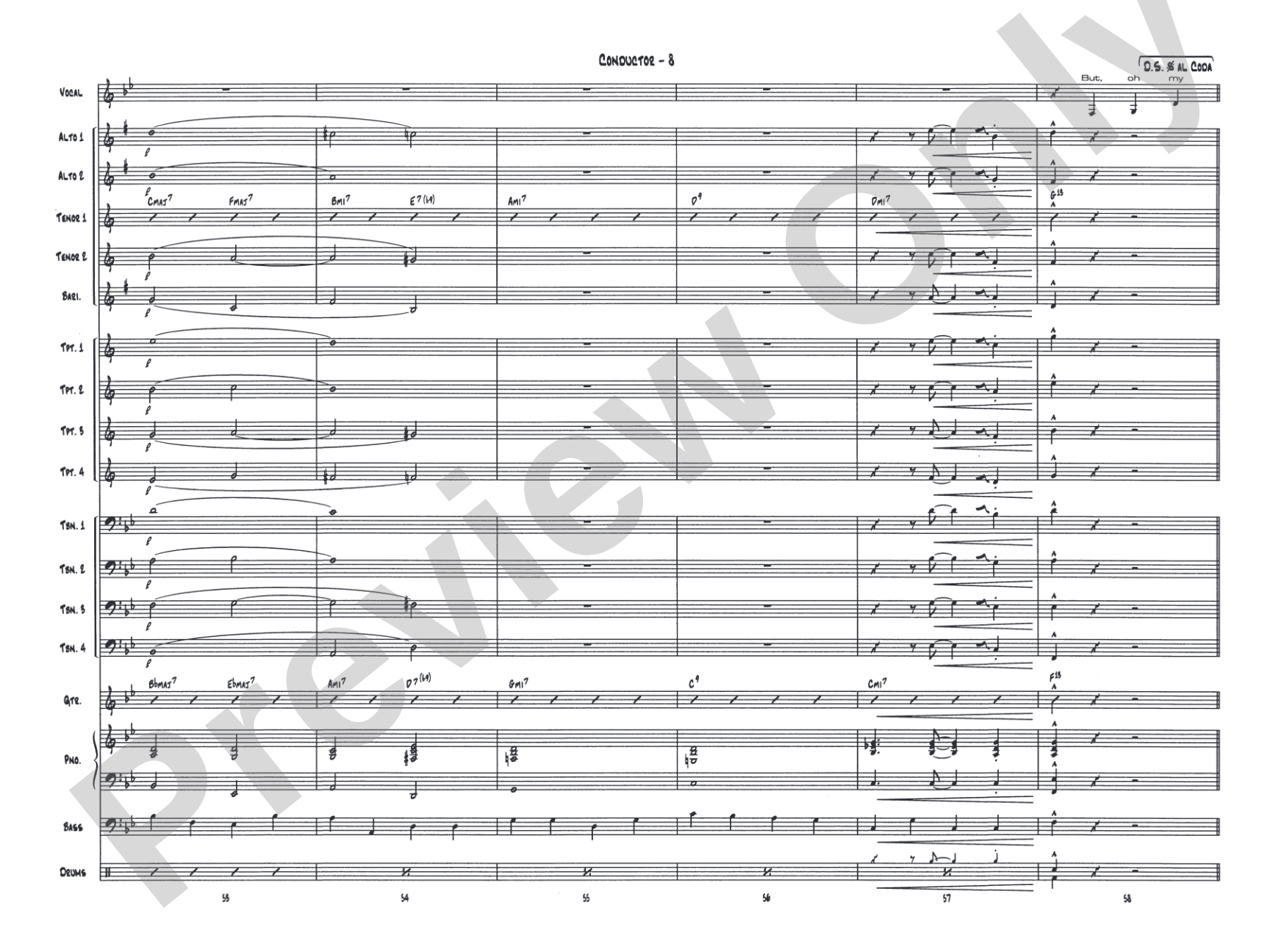
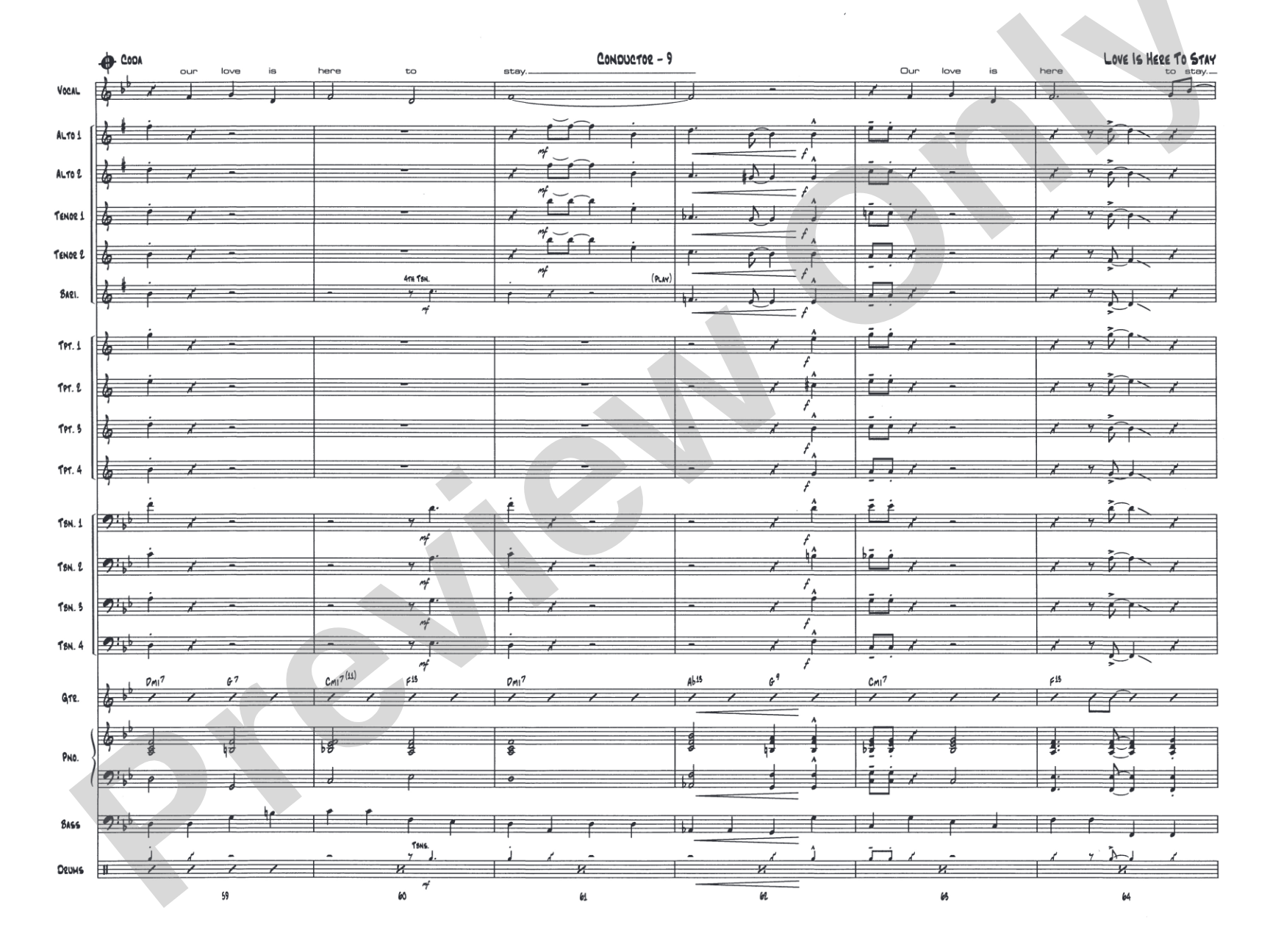
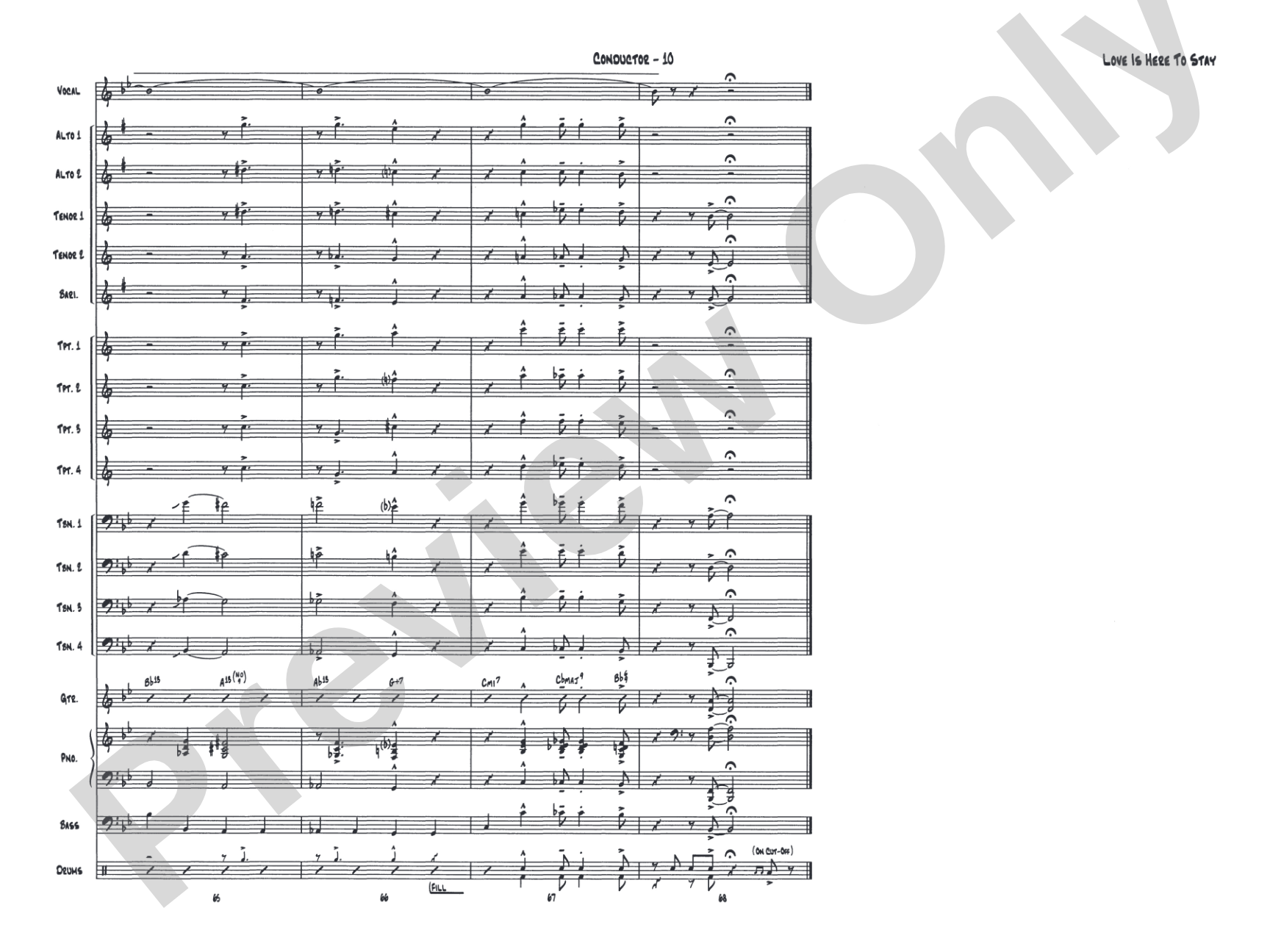

Love Is Here to Stay: Vocal Solo with Jazz Ensemble Conductor Score & Parts
Vocal Feature
Music and lyrics by George Gershwin and Ira Gershwin / arr. Dave Wolpe
Grade: 3 (Medium)
Item: 00-PK-0002549

$62.00
One moment…
Description
A wonderful song by George and Ira Gershwin arranged by master arranger Dave Wolpe. Arranged in two keys, this flexible chart is "reversible" with the higher key for male vocalist and the lower key for female vocalist. The parts are printed back to back - just flip the page. In addition to the vocal solo, this chart also features a tenor sax solo and great ensemble writing. The low female key of B-flat ranges from F below middle C to third line B-flat. The high male key of E-flat ranges from B-flat below middle C to fourth space E-flat. An outstanding and flexible chart! (2:11)


Don't just read it, hear it, play along with it, and watch your students grow with it. In MakeMusic Cloud, Love Is Here to Stay: Vocal Solo with Jazz Ensemble Conductor Score & Parts comes alive with professional accompaniment, adjustable tempo, and built-in practice tools that turn solo practice into real progress.
Open in the Player
Jump straight in and assign it today.
Start Your Free Trial
Open this title and explore the full library in minutes.
Sample Audio
1
Audio File
--:--
0:00
0:00
Sample Video
No sample videos found.
Additional Details
Series:
Jazz Vocal Series
Publisher:
Alfred Music
Page Count:
112
SKU:
00-PK-0002549
More about this title
About the Composer: George Gershwin
George Gershwin (1898-1937) bridged classical and popular music with a distinctly American voice. His command of melody, harmony, and orchestration shaped the sound of twentieth-century music, from concert works like Rhapsody in Blue to standards that remain central to jazz repertoire.
Ira Gershwin (1896-1983) was one of America's greatest lyricists, known for his wit, sophistication, and perfect marriage of words to George's melodies. Together, the brothers created some of the most enduring songs in the American songbook, including "Love Is Here to Stay."
Why we love this
Dave Wolpe's arrangement transforms this timeless Gershwin standard into a flexible, ensemble-friendly vehicle that serves both male and female vocalists without requiring multiple copies. The reversible design (flip the page to switch keys) is practical and clever, and the tenor sax solo alongside the vocal line gives your ensemble players their own moment to shine while keeping the focus on one of the greatest melodies ever written.
What to expect
Sophisticated and romantic, with the warmth of a classic jazz ballad. The melody carries the emotional weight while the ensemble surrounds it with subtle harmonic color and swing. Wolpe's arrangement respects the song's elegance without overdoing the arrangement.
Who it's for
Jazz ensembles with a strong vocalist (male or female) who want a sophisticated standard that showcases both the soloist and the ensemble. This works equally well for community jazz groups, school jazz choirs, and professional settings where flexibility and repertoire depth matter.
How to get the most out of it
- Anchor the vocal line to the piano part during early rehearsals; once the vocalist feels secure with the melody against accompaniment, gradually bring in the ensemble textures.
- Balance the tenor sax solo so it complements rather than competes with the vocal melody when both lines are sounding together.
- Shape the phrase arcs across the longer sections using dynamic control and precise articulation in the ensemble to support the vocalist's phrasing.
- Treat the ending with unhurried confidence; this standard benefits from a relaxed, conversational tempo that gives the lyric time to breathe.
How to use it
Program this in a jazz concert alongside up-tempo swing numbers to create contrast and showcase your vocalist's interpretive range. It pairs beautifully with other Gershwin standards or as a tribute set, and works particularly well as a set closer when you want to leave the audience with something beautiful and memorable.
Skills your students will build
- Balancing solo voice with ensemble accompaniment
- Swing feel and articulation in ensemble texture
- Interpreting a jazz standard with harmonic sophistication
- Listening and responding to a featured soloist's phrasing and dynamics
- Reading chord changes and supporting harmonic motion