
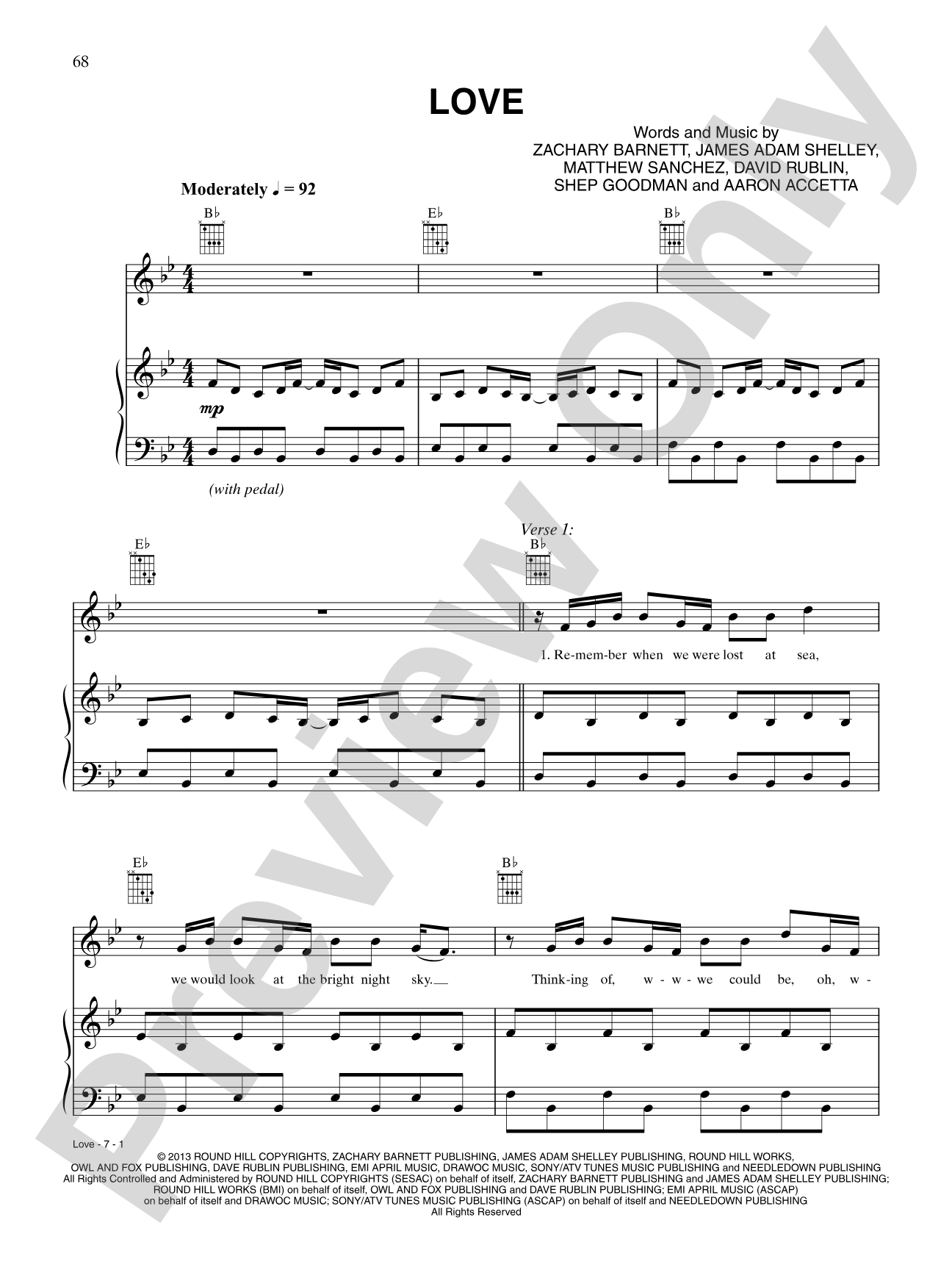
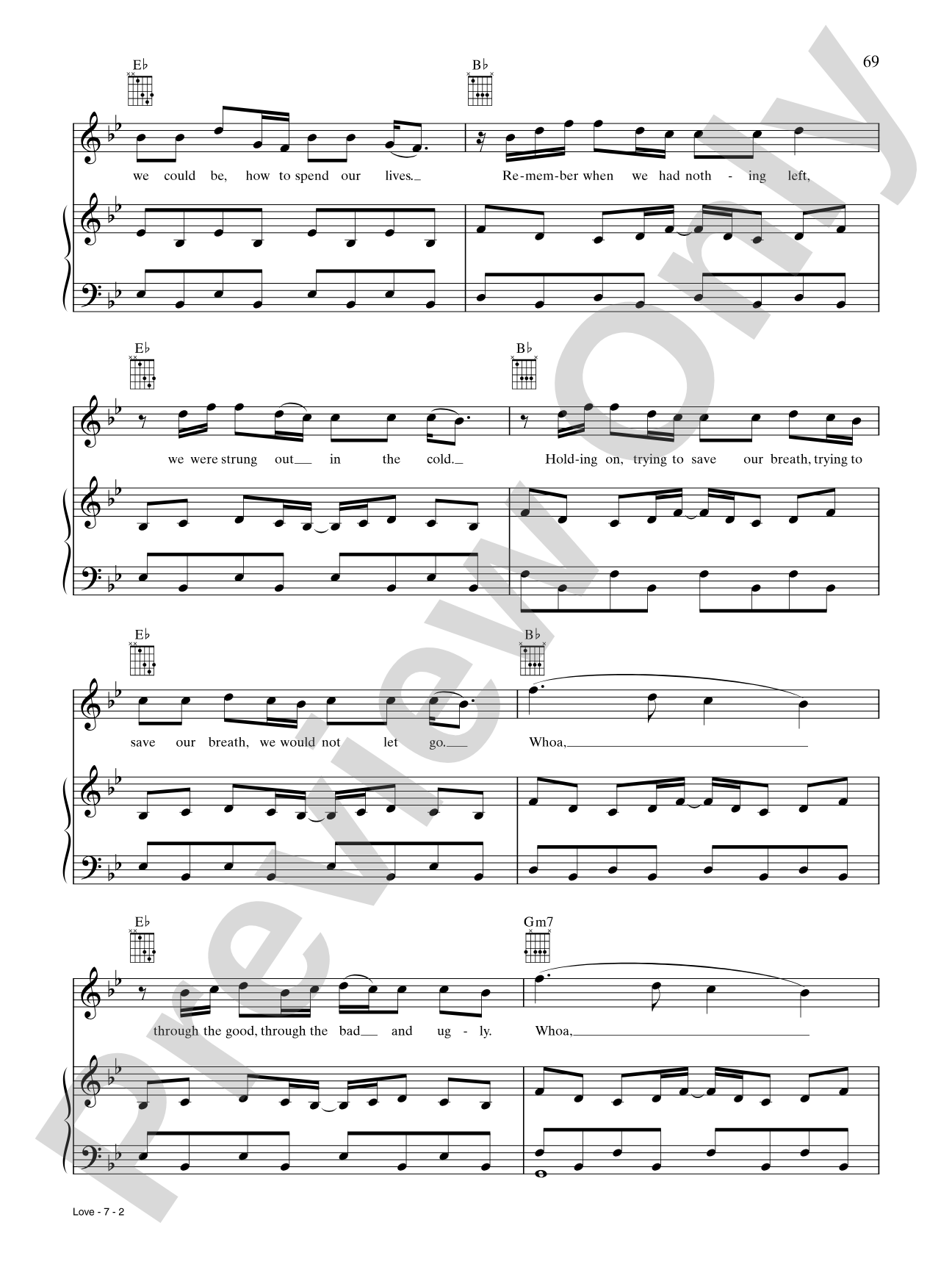

Love: Piano/Vocal/Chords
American Authors
Item: 00-PS-0015782
$5.99
Pickup currently not available
Related Items
Believer: Piano/Vocal/Chords |
$5.99
|
View | |
Think About It: Piano/Vocal/Chords |
$4.99
|
View | |
Ghost: Piano/Vocal/Chords |
$4.99
|
View | |
Luck: Piano/Vocal/Chords |
$5.99
|
View | |
Heart of Stone: Piano/Vocal/Chords |
$9.99
|
View | |
Trouble: Piano/Vocal/Chords |
$9.99
|
View | |
Hit It: Piano/Vocal/Chords |
$9.99
|
View | |
Home: Piano/Vocal/Chords |
$9.99
|
View | |
Oh, What a Life: Piano/Vocal/Chords |
$5.99
|
View |
Description
Hailing from New York City, indie rock band American Authors have burst on to the music scene with their debut album Oh, What a Life. This folio matches the album and includes piano accompaniment, guitar chord diagrams, and all the lyrics needed to play their hits at home. Titles: Believer * Think About It * Best Day of My Life * Luck * Trouble * Hit It * Home * Love * Heart of Stone * Ghost * Oh, What a Life.


Love: Piano/Vocal/Chords isn't in MakeMusic Cloud just yet...but it could be. Let us know you'd like to see it, and you'll help shape what comes next. In the meantime, start a free trial and dive into thousands of interactive titles your students can play along with today.
Request This Title
Tell us you want it.
Start Your Free Trial
Explore everything that's ready to play right now.
Sample Audio
No sample audio found.
Sample Video
No sample videos found.
Additional Details
Publisher:
Alfred Music
Page Count:
96
SKU:
00-PS-0015782
More about this title
About the Composer: Zachary Barnett
Zachary Barnett is the lead vocalist and primary songwriter of American Authors, the indie rock band that emerged from New York City in the early 2010s. With his collaborators Shelley, Sanchez, Rublin, Goodman, and Accetta, Barnett crafted the infectious, uplifting sound that defines their debut album Oh, What a Life, which introduced millions of listeners to their blend of accessible pop-rock hooks and earnest lyrical sensibility.
Barnett's songwriting approach emphasizes melodic clarity and emotional directness, qualities that make this folio particularly valuable for pianists and vocalists learning to interpret contemporary commercial music. His work demonstrates how contemporary songwriting principles translate effectively to the piano/vocal/guitar format.
Why we love this
This collection captures the exact moment when indie rock crossed fully into mainstream accessibility, offering pianists and vocalists genuine hits they actually want to play. The folio's combination of piano arrangements, vocal melody lines, and guitar chord diagrams creates flexibility for different performance contexts, whether a student is singing with piano accompaniment or a guitarist wants harmonic reference. Each song here was built to stick in your head; that same quality makes them rewarding material to learn and perform.
What to expect
These songs radiate optimism and infectious energy. Even the ballads carry buoyancy; there's a sense of youthful confidence and forward momentum throughout. The arrangements emphasize accessibility without sacrificing harmonic interest, creating material that feels both immediately gratifying to play and durable enough to hold attention across repeated performances.
Who it's for
This folio works for intermediate to advanced pianists who want to perform contemporary pop-rock repertoire with vocals, guitarists looking for a complete lead sheet and harmonic reference, and vocalists building a modern commercial music performance library. Music teachers and private instructors will find it useful for students interested in learning the mechanics of hit songwriting and arrangement in the streaming era.
How to get the most out of it
- Pay attention to the rhythm section's pocket in arrangements like "Best Day of My Life." The piano sits differently than a traditional ballad might; lock the accompaniment pattern with the vocal phrasing rather than playing strictly metronomically.
- Treat the chord diagrams as a collaborative tool. If you're the pianist, use them to understand the harmonic movement that the guitarist will provide in a full arrangement; this helps you voice chords musically rather than filling every eighth note.
- Vocal inflection matters here. These melodies are simple by design, so small choices about where you lean into the lyric, how you place dynamics, and when you breathe shape the entire performance.
- The key signatures and ranges in this folio are written for singability. If a key feels consistently low or high for your voice, transposition is straightforward; the harmonic content remains strong across ranges.
How to use it
Program selections from this folio in student recitals, coffeehouse concerts, or contemporary music showcases where audiences appreciate current popular repertoire. The variety in the collection allows you to build a short set of contrasting songs, moving from upbeat hits to more reflective material, without stepping outside a cohesive musical aesthetic. This works particularly well for demonstrating the piano/guitar/voice trio format in educational settings.
Skills your students will build
- Reading and interpreting guitar chord diagrams while playing keyboard
- Balancing accompaniment texture with vocal melody clarity
- Transposing songs to suit vocal range without losing harmonic identity
- Understanding contemporary pop-rock song structure and phrasing
- Collaborating across instrumental voices using lead sheet notation