
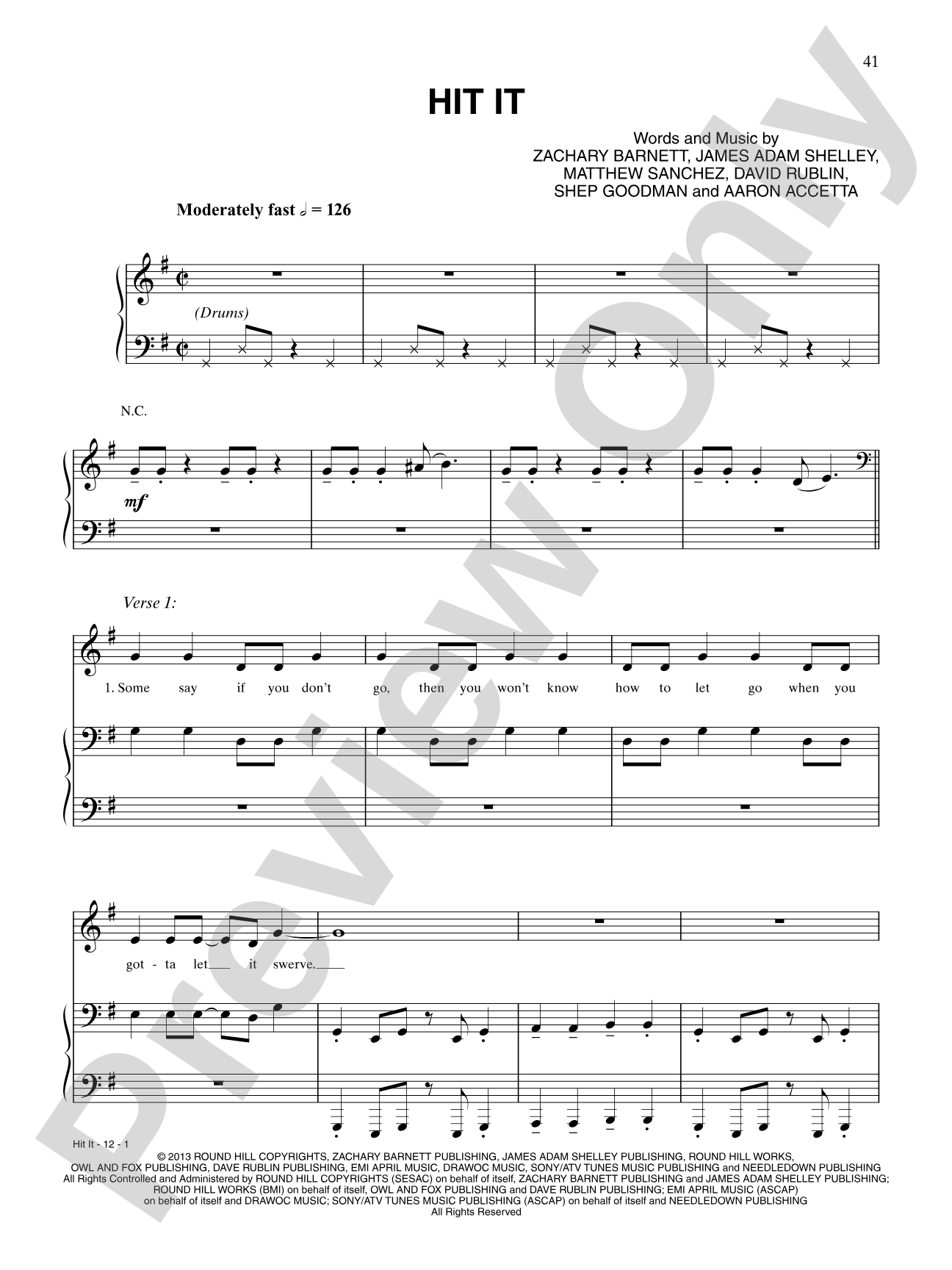
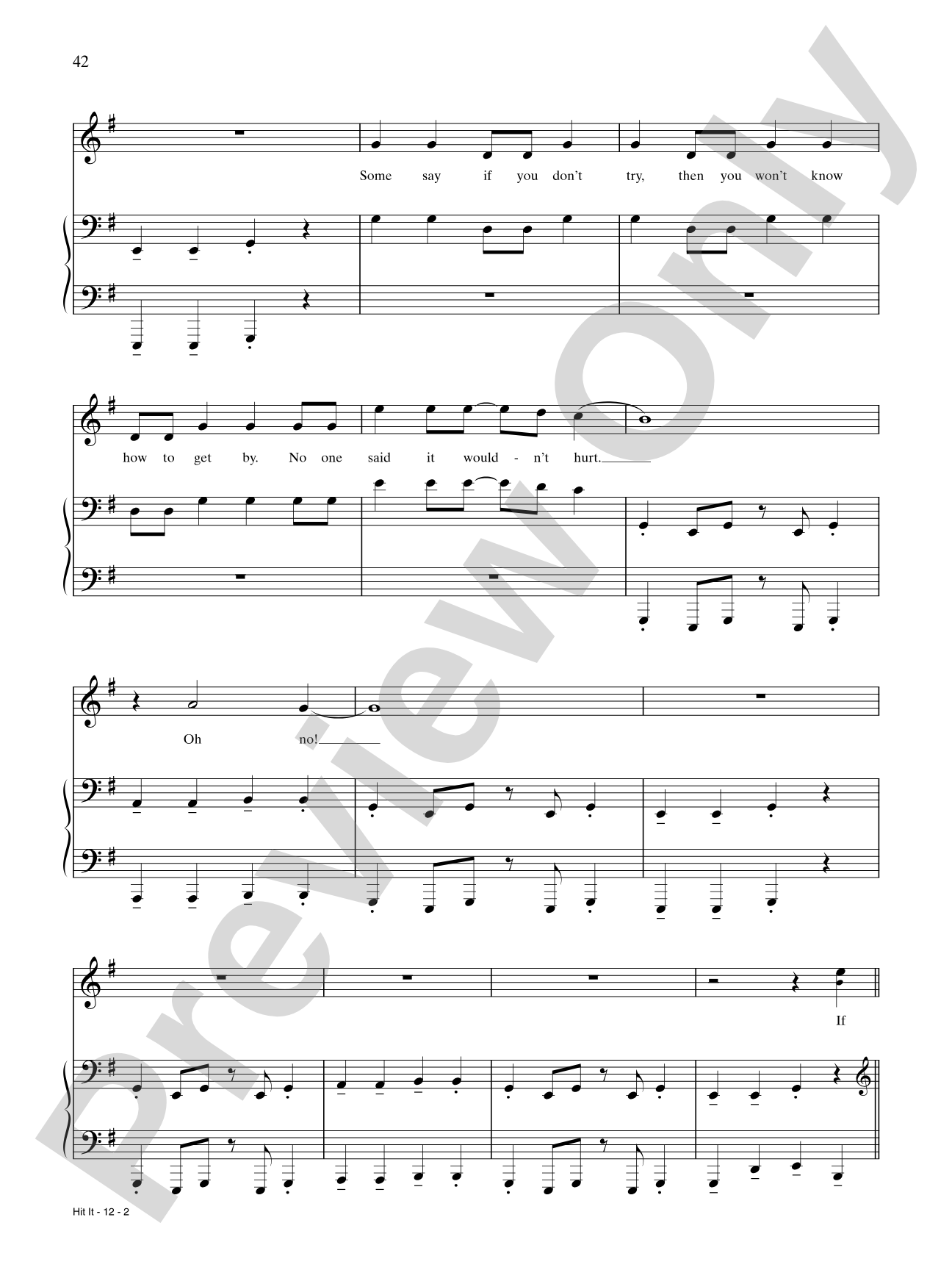
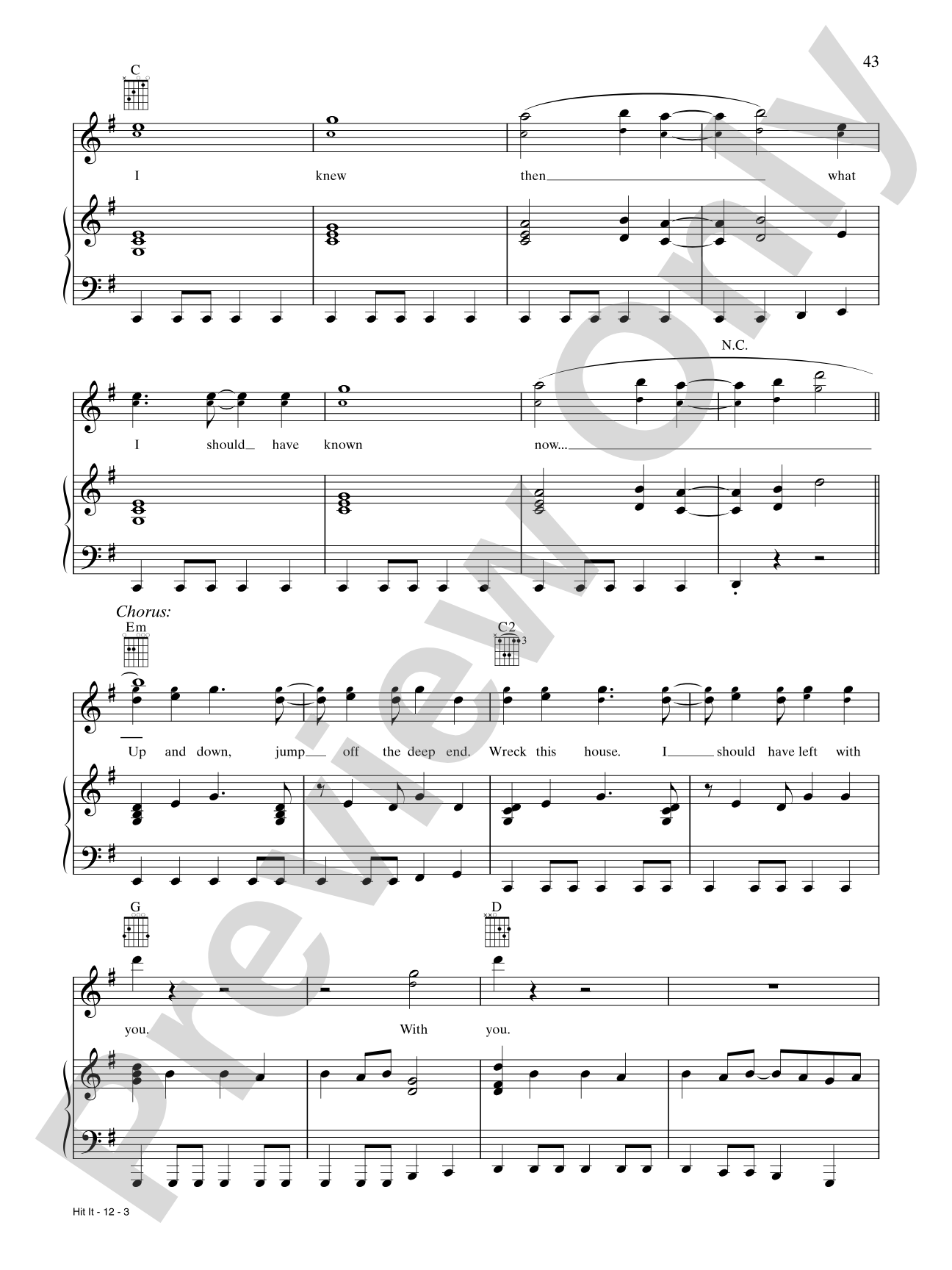

Hit It: Piano/Vocal/Chords
American Authors
Item: 00-PS-0015786
$9.99
Pickup currently not available
Related Items
Believer: Piano/Vocal/Chords |
$5.99
|
View | |
Think About It: Piano/Vocal/Chords |
$4.99
|
View | |
Ghost: Piano/Vocal/Chords |
$4.99
|
View | |
Love: Piano/Vocal/Chords |
$5.99
|
View | |
Luck: Piano/Vocal/Chords |
$5.99
|
View | |
Heart of Stone: Piano/Vocal/Chords |
$9.99
|
View | |
Trouble: Piano/Vocal/Chords |
$9.99
|
View | |
Home: Piano/Vocal/Chords |
$9.99
|
View | |
Oh, What a Life: Piano/Vocal/Chords |
$5.99
|
View |
Description
Hailing from New York City, indie rock band American Authors have burst on to the music scene with their debut album Oh, What a Life. This folio matches the album and includes piano accompaniment, guitar chord diagrams, and all the lyrics needed to play their hits at home. Titles: Believer * Think About It * Best Day of My Life * Luck * Trouble * Hit It * Home * Love * Heart of Stone * Ghost * Oh, What a Life.


Hit It: Piano/Vocal/Chords isn't in MakeMusic Cloud just yet...but it could be. Let us know you'd like to see it, and you'll help shape what comes next. In the meantime, start a free trial and dive into thousands of interactive titles your students can play along with today.
Request This Title
Tell us you want it.
Start Your Free Trial
Explore everything that's ready to play right now.
Sample Audio
No sample audio found.
Sample Video
No sample videos found.
Additional Details
Publisher:
Alfred Music
Page Count:
96
SKU:
00-PS-0015786
More about this title
About the Composer: Zachary Barnett
Zachary Barnett is the lead vocalist and primary songwriter of American Authors, the indie rock band that emerged from New York City in the early 2010s. Barnett's songwriting style blends pop-rock sensibilities with introspective, relatable lyrics that connect with a broad audience. His work on the debut album Oh, What a Life established him as a voice capable of crafting both infectious radio-friendly hooks and emotionally resonant material.
As a composer and bandmate, Barnett collaborates closely with his fellow American Authors members to shape the band's sound. His approach to songwriting emphasizes accessibility without sacrificing emotional depth, making his compositions particularly well-suited for educational and recreational music-making contexts.
Why we love this
Contemporary songs that students actually want to play and sing. The folio captures the infectious energy of American Authors' breakthrough album while remaining technically approachable for mixed-ability performers, making it ideal for recitals, school performances, or recreational ensemble rehearsals.
What to expect
Energetic and optimistic without being saccharine. These songs carry the hallmark indie rock blend of sincerity and catchiness, with lyrics that speak to everyday experiences and emotions. The production leans into clean, upbeat arrangements that feel both polished and genuine.
Who it's for
Pianists, guitarists, and singers seeking contemporary material that connects with modern audiences. Student ensembles preparing recitals or informal performances, as well as teachers building repertoire around songs that motivate young musicians to engage with music outside traditional classical and folk contexts.
How to get the most out of it
- Balance the vocal melody against the piano part so neither drowns out the other; the song's hooks deserve clarity from both.
- Study the chord diagrams as a guitarist, but listen closely to the recorded versions to catch the rhythmic strumming patterns and any alternate voicings that add texture.
- Tempo consistency matters especially in the verse sections; work with a metronome until the groove sits naturally without clicking.
- Layer your instruments thoughtfully. If performing as a trio with voice and guitar, let the piano provide harmonic foundation while the guitar adds textural color rather than doubling every chord.
How to use it
Include a set of American Authors songs in a contemporary music concert or casual recital evening, where they'll showcase your students' ability to interpret modern songwriting. The collection works particularly well for mixed-skill programming, since different songs offer varied technical challenges, allowing multiple students to find appropriate selections.
Skills your students will build
- Reading chord symbols and diagrams across multiple instruments
- Coordinating melody, harmony, and accompaniment in ensemble settings
- Interpreting contemporary pop-rock phrasing and rhythmic style
- Balancing vocal projection with instrumental support
- Sight-reading lead sheets and working from reduced notation