
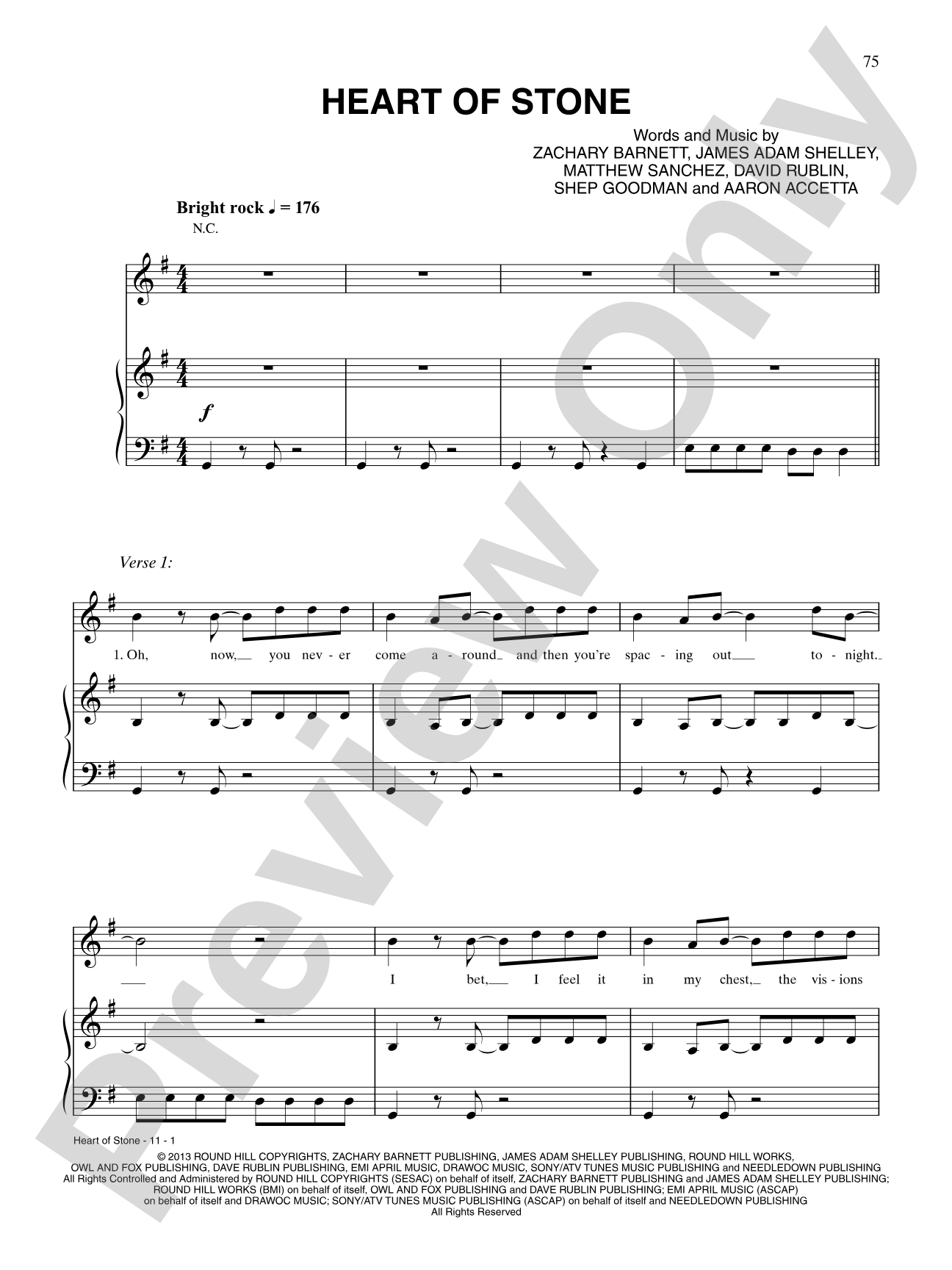
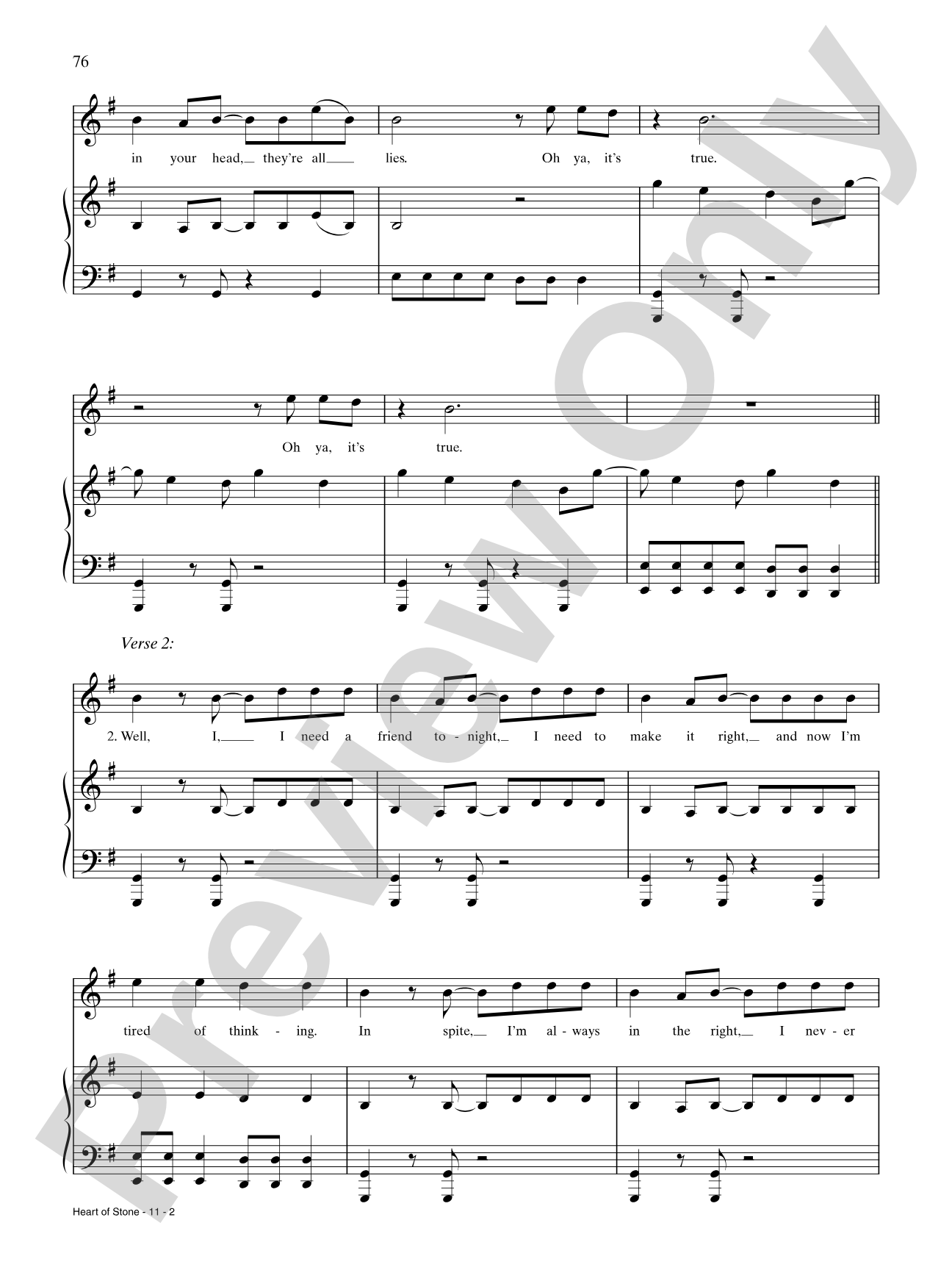
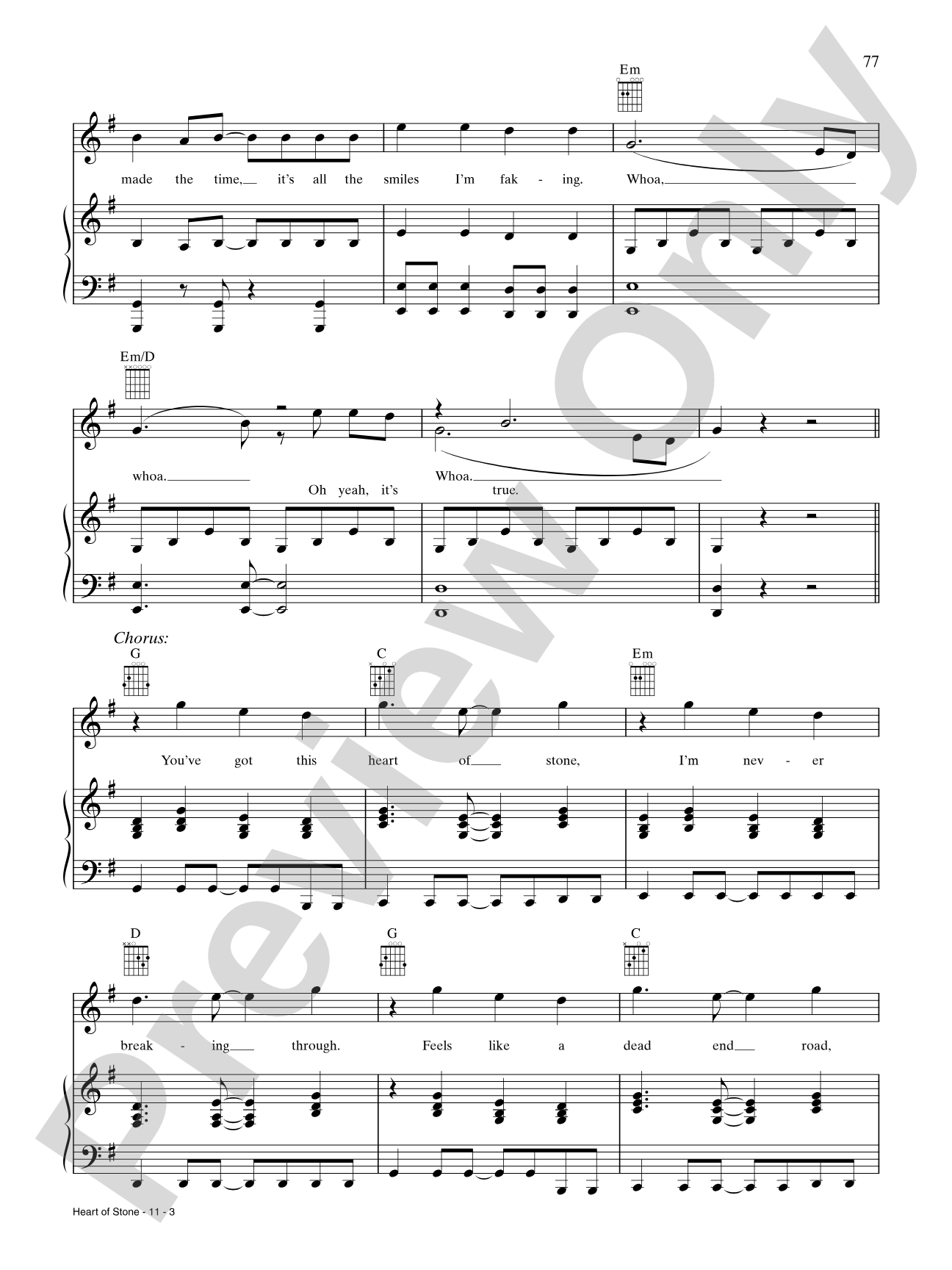

Heart of Stone: Piano/Vocal/Chords
American Authors
Item: 00-PS-0015784
$9.99
Pickup currently not available
Related Items
Believer: Piano/Vocal/Chords |
$5.99
|
View | |
Think About It: Piano/Vocal/Chords |
$4.99
|
View | |
Ghost: Piano/Vocal/Chords |
$4.99
|
View | |
Love: Piano/Vocal/Chords |
$5.99
|
View | |
Luck: Piano/Vocal/Chords |
$5.99
|
View | |
Trouble: Piano/Vocal/Chords |
$9.99
|
View | |
Hit It: Piano/Vocal/Chords |
$9.99
|
View | |
Home: Piano/Vocal/Chords |
$9.99
|
View | |
Oh, What a Life: Piano/Vocal/Chords |
$5.99
|
View |
Description
Hailing from New York City, indie rock band American Authors have burst on to the music scene with their debut album Oh, What a Life. This folio matches the album and includes piano accompaniment, guitar chord diagrams, and all the lyrics needed to play their hits at home. Titles: Believer * Think About It * Best Day of My Life * Luck * Trouble * Hit It * Home * Love * Heart of Stone * Ghost * Oh, What a Life.


Heart of Stone: Piano/Vocal/Chords isn't in MakeMusic Cloud just yet...but it could be. Let us know you'd like to see it, and you'll help shape what comes next. In the meantime, start a free trial and dive into thousands of interactive titles your students can play along with today.
Request This Title
Tell us you want it.
Start Your Free Trial
Explore everything that's ready to play right now.
Sample Audio
No sample audio found.
Sample Video
No sample videos found.
Additional Details
Publisher:
Alfred Music
Page Count:
96
SKU:
00-PS-0015784
More about this title
About the Composer: Zachary Barnett
Zachary Barnett is the lead vocalist and primary songwriter of American Authors, the indie rock band that emerged from New York City in the early 2010s. His songwriting balances introspective lyricism with accessible melodies, drawing listeners into emotionally resonant narratives wrapped in pop-rock arrangements.
Barnett's compositions on Oh, What a Life showcase his ability to craft hooks that stick without sacrificing lyrical depth. His work has made him a significant voice in contemporary indie rock, influencing how emerging artists approach the intersection of commercial appeal and artistic authenticity.
Why we love this
This folio captures the full energy of American Authors' breakout album in a format that works for multiple players at once. Whether your students are learning piano, singing, or playing guitar, the integrated layout keeps everyone locked together, and the selection spans both radio hits and deeper album cuts that reward repeated listening.
What to expect
These songs radiate the optimism and introspection of early-2010s indie rock, blending earnest vocal performances with bright, radio-friendly production. The melodies sit comfortably in accessible ranges, and the lyrics range from celebratory (Best Day of My Life) to contemplative (Ghost), creating a dynamic emotional arc across the collection.
Who it's for
Pianists and singers working through contemporary pop-rock repertoire in lessons, informal recitals, or ensemble settings will find familiar material here. Guitar players developing their comping skills can use the chord charts to experiment with voicings and rhythm patterns that work alongside vocal and keyboard parts.
How to get the most out of it
- Balance the vocal line with piano accompaniment by thinking of the keyboard as harmonic support, not the lead voice. The lyrics should always project clearly over the harmonic foundation.
- Study the guitar chord diagrams alongside the piano voicings to understand how the original arrangements move. This cross-instrument awareness helps vocalists and pianists interpret the harmonic intent the same way.
- Lock into the rhythmic pocket by identifying which songs lean toward straight rock grooves and which ones use syncopation or swing. Best Day of My Life, for example, thrives on rhythmic precision.
- Use the lyrical content as an emotional anchor. These songs tell specific stories, and performing them with awareness of what Barnett is singing about will deepen your interpretation beyond just hitting the right notes.
How to use it
This folio works well for contemporary song recitals where students can perform solo or with collaborative pianists. It also serves as engaging supplementary material for ear training and arranging classes, since comparing how the original recordings use harmony, melody, and rhythm against the printed voicings builds critical listening skills.
Skills your students will build
- Reading chord symbols and translating them into piano voicings
- Coordinating vocal phrasing with piano accompaniment
- Interpreting guitar chord diagrams as harmonic reference points
- Recognizing and performing rhythmic patterns in contemporary pop-rock music
- Balancing multiple instrumental parts in an ensemble context