
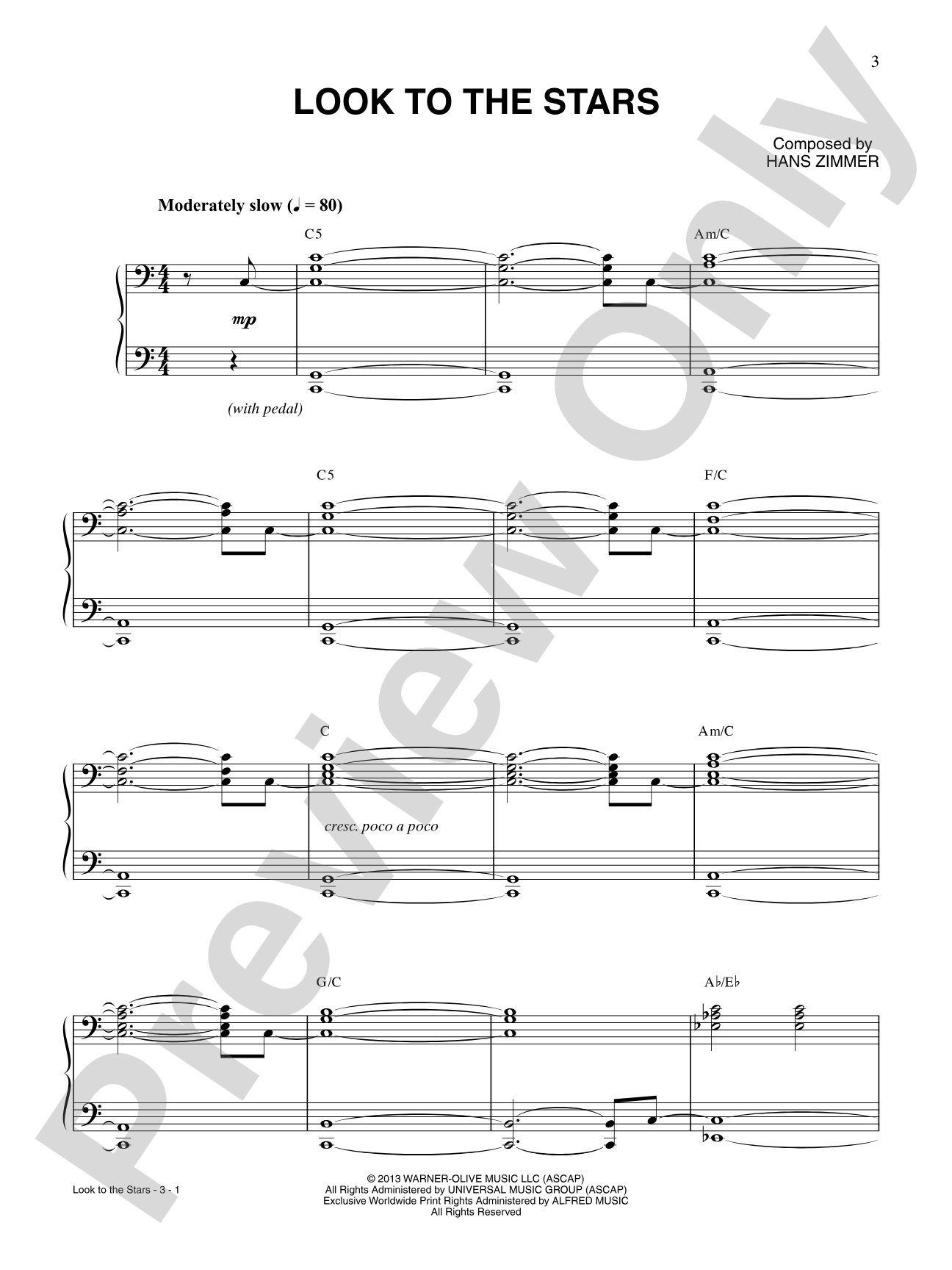

Look to the Stars (from Man of Steel): Piano
Sheet Music Selections from the Original Motion Picture Soundtrack
Music by Hans Zimmer
Item: 00-PS-0014415
$4.99
Pickup currently not available
Related Items
Goodbye My Son (from Man of Steel): Piano |
$4.99
|
View | |
If You Love These People (from Man of Steel): Piano |
$4.99
|
View | |
Krypton's Last (from Man of Steel): Piano |
$4.99
|
View | |
This Is Clark Kent (from Man of Steel): Piano |
$4.99
|
View | |
Flight (from Man of Steel): Piano |
$4.99
|
View | |
What Are You Going to Do When You Are Not Saving the World? (from Man of Steel): Piano |
$4.99
|
View | |
Man of Steel: Piano Book |
$14.99
|
View |
Description
For pianists who love epic film scores, this collection contains arrangements of seven standout themes from Hans Zimmer's soundtrack to the smash-hit motion picture. Titles: Look to the Stars * If You Love These People * Krypton's Last * Goodbye My Son * This Is Clark Kent * Flight * What Are You Going to Do When You Are Not Saving the World?


Look to the Stars (from Man of Steel): Piano isn't in MakeMusic Cloud just yet...but it could be. Let us know you'd like to see it, and you'll help shape what comes next. In the meantime, start a free trial and dive into thousands of interactive titles your students can play along with today.
Request This Title
Tell us you want it.
Start Your Free Trial
Explore everything that's ready to play right now.
Sample Audio
No sample audio found.
Sample Video
No sample videos found.
Additional Details
Publisher:
Alfred Music
Page Count:
32
SKU:
00-PS-0014415
More about this title
About the Composer: Hans Zimmer
Hans Zimmer has shaped the sound of modern cinema for over three decades, creating scores that define entire franchises and genres. His work spans superhero epics, historical dramas, and intimate character studies, earning him an Academy Award, three Golden Globes, and a Grammy. Zimmer's approach to orchestration and thematic development has influenced a generation of film composers and music students worldwide.
Why we love this
These arrangements capture the architectural brilliance of Zimmer's original orchestrations, translating sweeping heroic themes and intimate character moments into pianistically idiomatic writing. The collection balances technical challenge with emotional accessibility, giving pianists the chance to explore how leitmotif, harmonic color, and dramatic pacing function in contemporary film scoring. Players encounter real compositional craft here, not simplified pop arrangements.
What to expect
These arrangements channel the scope of Zimmer's orchestral writing into a single instrument, preserving the sense of grandeur, vulnerability, and heroism that defines the Man of Steel score. You move between moments of crystalline beauty and driving, propulsive energy, exploring how a single piano voice can suggest an entire film orchestra through careful voicing and registration.
Who it's for
Pianists drawn to contemporary film music who want to expand beyond classical repertoire while still engaging with sophisticated compositional thinking. Advanced intermediate to advanced players will find these arrangements musically rewarding, offering both technical challenge and the satisfaction of performing recognizable, emotionally resonant material.
How to get the most out of it
- Study the film scenes alongside the score to internalize the emotional arc and pacing of each theme. Zimmer's music tells a story, and your interpretation will deepen when you know what unfolds onscreen.
- Pay close attention to Zimmer's use of register shifts and dynamics to create narrative tension. Small changes in voicing can transform a tender moment into something epic.
- Work rhythmic precision in passages where ostinatos or minimalist patterns drive the music forward. These repetitive figures need absolute clarity to maintain the hypnotic quality Zimmer intended.
- Experiment with pedal strategically rather than continuously. The resonance should support harmonic color without muddying the clarity of Zimmer's often dissonant or unusual chord progressions.
How to use it
Feature this collection in a recital exploring music beyond the classical canon, or pair individual pieces with other contemporary film scores to demonstrate how orchestral storytelling functions in modern media. These works also bridge traditional piano students and those who engage primarily through popular culture, creating entry points for deeper musical engagement.
Skills your students will build
- Interpreting leitmotif and thematic transformation across multiple contexts
- Managing wide register shifts and orchestral voicing on a single instrument
- Balancing repetitive structural patterns (ostinatos, minimalism) with emotional nuance
- Pedal technique for harmonic resonance and color in non-traditional harmonic contexts
- Sight-reading and memorization of contemporary harmonic language