

Loch Lomond: SAB Choral Octavo
Scottish Folk Song / arr. Mary Donnelly and George L. O. Strid
Item: 00-PO-0005917

$2.05
Minimum order quantity: 20 copies
Pickup currently not available
Description
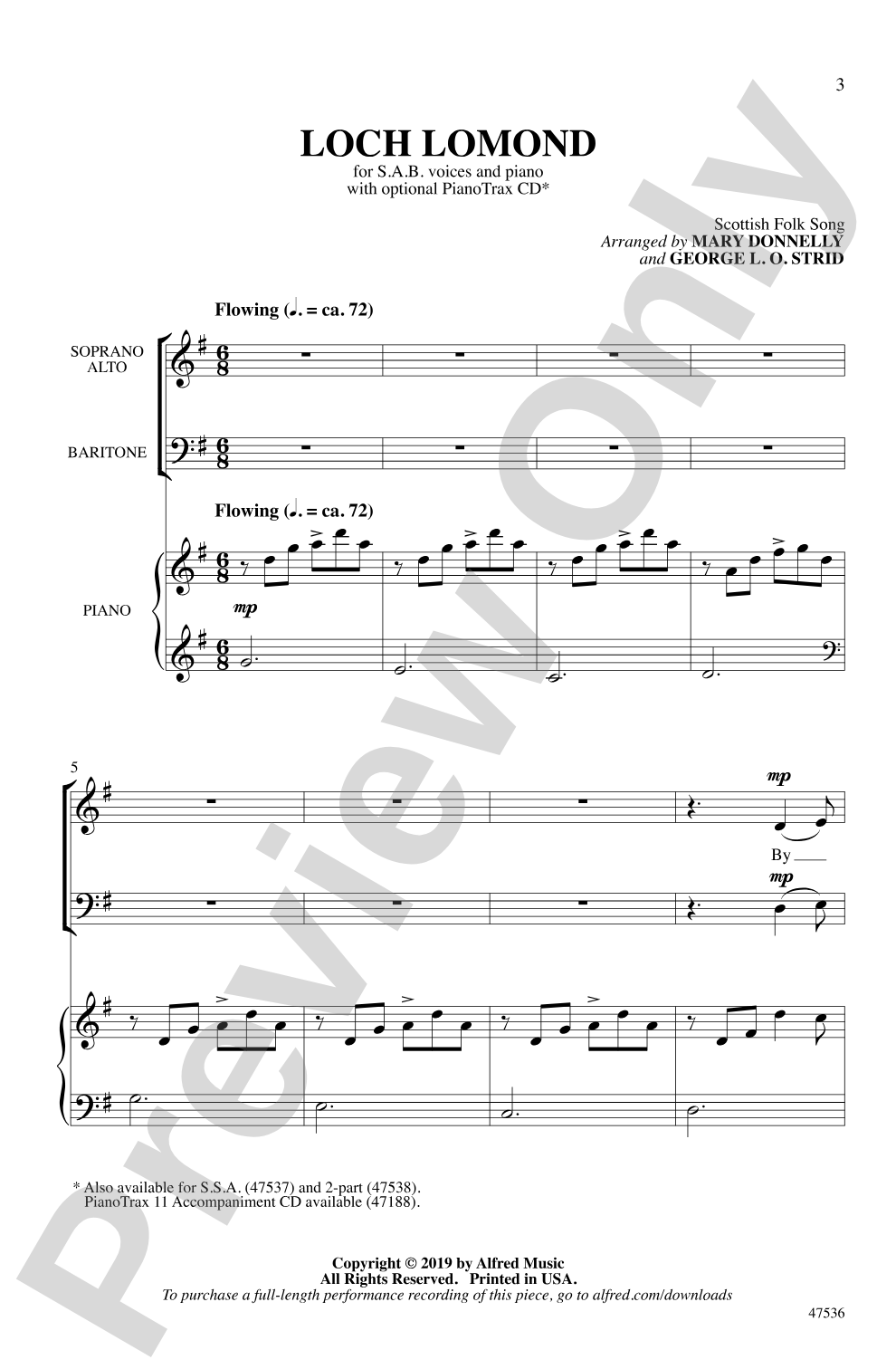
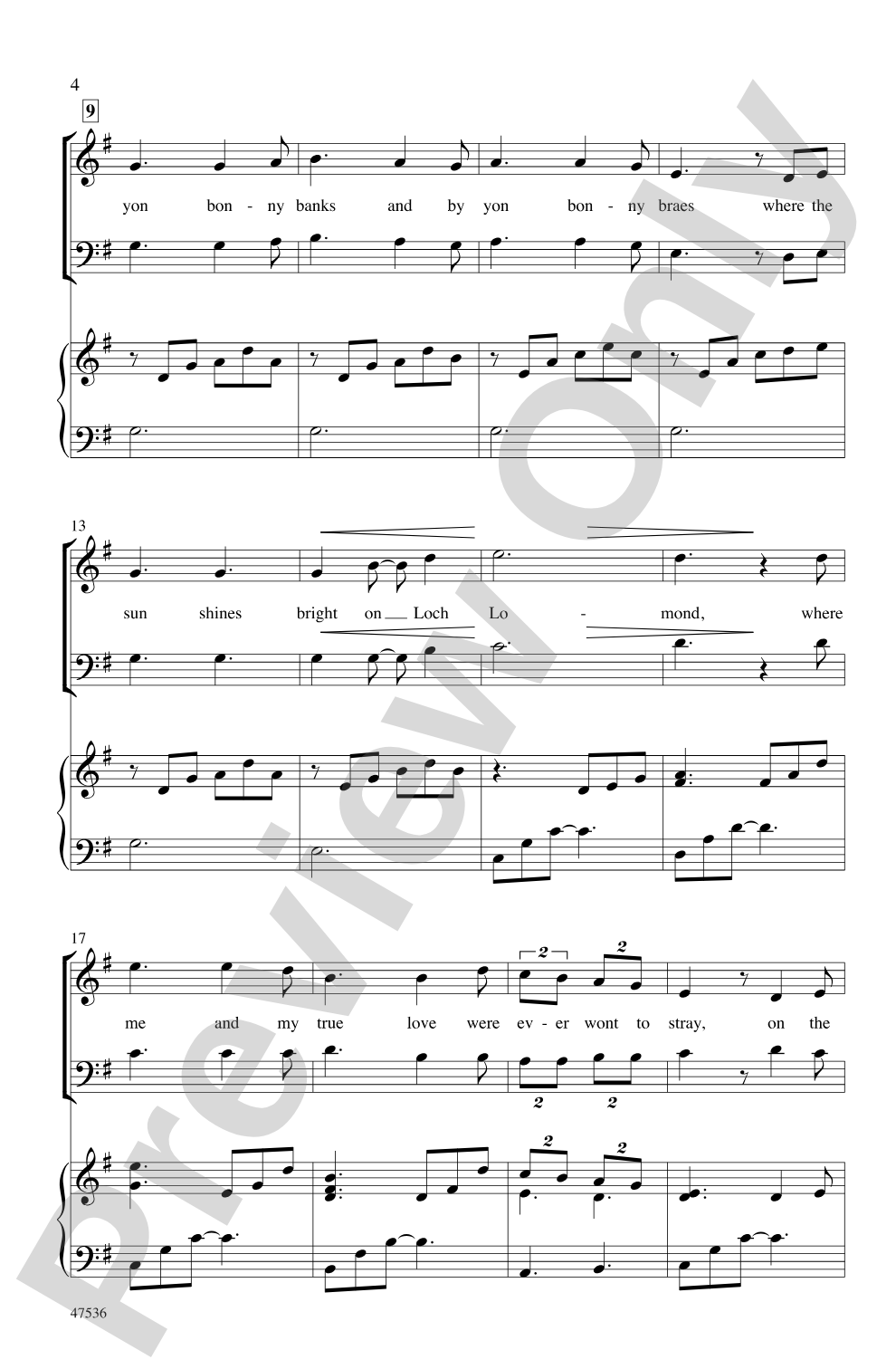
This sweet setting of the famous Scottish folk song generously passes the melody from voice to voice, while gently stretching the traditional rhythms of the piece. Piano players will enjoy the flowing arpeggios of the supportive accompaniment, and singers will savor the long legato lines.


Don't just read it, hear it, play along with it, and watch your students grow with it. In MakeMusic Cloud, Loch Lomond: SAB Choral Octavo comes alive with professional accompaniment, adjustable tempo, and built-in practice tools that turn solo practice into real progress.
Open in the Player
Jump straight in and assign it today.
Start Your Free Trial
Open this title and explore the full library in minutes.
Sample Audio
1
Audio File
--:--
0:00
0:00
Sample Video
Additional Details
Series:
Alfred Choral Designs
Publisher:
Alfred Music
Page Count:
12
SKU:
00-PO-0005917
More about this title
About the Arranger: Mary Donnelly

Mary Donnelly grew up in Reno, Nevada, and earned a Bachelor of Arts in English and French from the University of Nevada, Reno. She later pursued a Master's Degree in Education from Lesley College in Cambridge, Massachusetts, with a focus on integrating the arts across the curriculum. Over thirty years, she taught general music and choir in elementary and middle schools throughout the Washoe County School District.
In 1985, Donnelly began collaborating with George L. O. Strid while co-teaching a sixth grade general music class. Their partnership has produced more than two hundred songs and twenty-five musicals, making them prolific voices in music education and choral literature. She holds memberships in ACDA, NEA, and ASCAP.
Why we love this
The melody's journey across all three voices creates natural opportunities for sectional leadership and ensemble balance, keeping every singer engaged throughout. Donnelly and Strid's gentle expansion of the traditional rhythmic framework prevents the well-known tune from feeling predictable, while the flowing piano arpeggios provide genuine musical support without overwhelming young voices.
What to expect
Warm and unhurried, like a Scottish melody unfolding naturally across a gentle landscape. The passing of the tune from voice to voice creates an intimate sense of sharing a story, while the legato writing invites singers into sustained, lyrical singing.
Who it's for
This octavo works well for middle school and high school choirs seeking accessible yet musical repertoire that honors a folk classic. It suits ensemble singers who are developing independence within a three-part texture and appreciate melodies that rotate fairly across voice parts.
How to get the most out of it
- Shape each melodic phrase as it moves between sections; mark where your soprano, alto, and bass have the tune so singers understand they're telling a connected story rather than singing in isolation.
- Invest in the legato lines by encouraging sustained breath support and smooth vowel transitions, especially in the longer note values that distinguish this arrangement.
- Balance the accompanimental textures by having accompanists voice the arpeggios lightly, allowing the choir's long lines to remain the focal point.
How to use it
Program this alongside other folk song arrangements to build a thematic set exploring cultural music traditions, or place it as a poignant middle selection to contrast with more energetic pieces. Its lyrical character and moderate difficulty make it a natural fit for concert and festival settings where your choir wants to demonstrate both musical maturity and connection to traditional material.
Skills your students will build
- Singing independent melodic lines within a three-part texture
- Sustaining legato phrases across longer note values
- Tracking a melody as it rotates between voice parts
- Listening for harmonic support from ensemble singers on non-melody lines