

Listen To The Wind: 2-Part Choral Octavo
Words and music by David Waggoner
Item: 00-PO-0003667
$2.05
Minimum order quantity: 20 copies
Pickup currently not available
Description
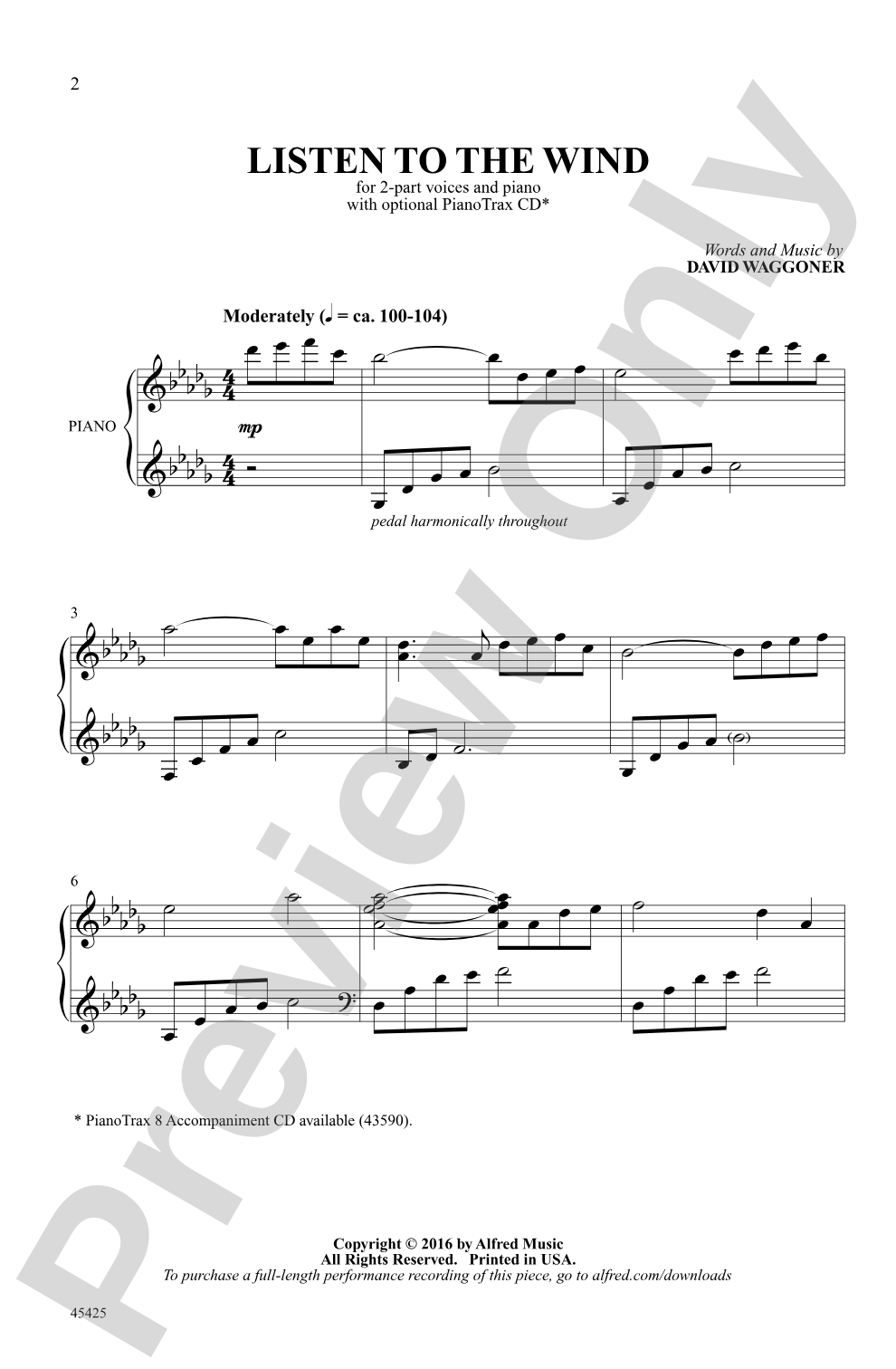
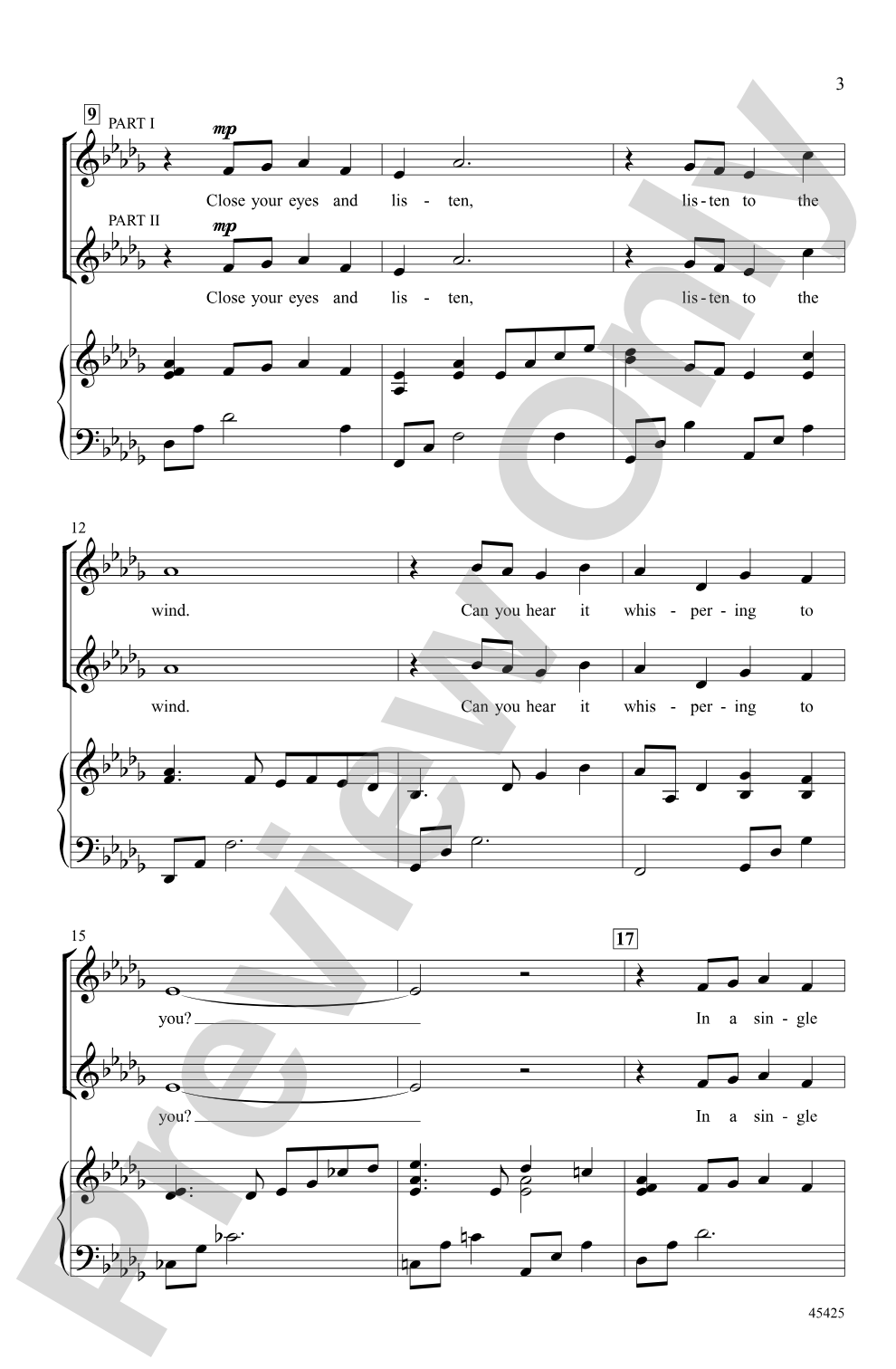
A gently floating piano theme introduces an uplifting, nature-themed text in this sensitive piece for developing voices. Superb choral writing allows each voice part to take a turn singing the melody, as well as supportive harmony. A wonderful piece for growing musicians! This title is available in MakeMusic Cloud.


Listen To The Wind: 2-Part Choral Octavo isn't in MakeMusic Cloud just yet...but it could be. Let us know you'd like to see it, and you'll help shape what comes next. In the meantime, start a free trial and dive into thousands of interactive titles your students can play along with today.
Request This Title
Tell us you want it.
Start Your Free Trial
Explore everything that's ready to play right now.
Sample Audio
1
Audio File
--:--
0:00
0:00
Sample Video
Additional Details
Series:
Alfred Choral Designs
Publisher:
Alfred Music
Page Count:
12
SKU:
00-PO-0003667
More about this title
About the Composer: David Waggoner

David Waggoner holds degrees from the University of Michigan School of Music and a master's degree from Eastern Michigan University. He has spent his career composing for choirs, handbells, and instrumental ensembles while maintaining an active role in music education.
Waggoner serves as Director of Music at the First United Methodist Church in Wyandotte, MI, and teaches elementary music in Woodhaven, MI. His compositional work reflects a deep commitment to writing accessibly for developing musicians across multiple genres and ensembles.
Why we love this
Waggoner writes melody with genuine care for young singers, and this piece exemplifies that gift. The structure allows both voice parts genuine musical moments rather than relegating one to pure support, building confidence and engagement across your entire section. Nature-themed texts paired with skilled harmonic writing create a piece that sounds far more sophisticated than its difficulty level suggests.
What to expect
The piece breathes with a serene, pastoral quality as the piano unfolds its gently floating theme. Nature imagery and the melodic shape create an atmosphere of quiet contemplation that feels both uplifting and intimate, inviting singers to connect meaningfully with the text.
Who it's for
This octavo serves developing 2-part choirs and emerging singers who are ready to handle modest harmonic independence. It works equally well in middle school general music, beginning high school treble or mixed ensembles, and community or church youth choirs.
How to get the most out of it
- Allow the floating piano introduction to establish the gentle mood completely before voices enter; resist the urge to hurry into the choral sections.
- When each voice part carries the melody, ensure singers recognize the shift and bring slight emphasis to their melodic line while the other part pulls back slightly in dynamic weight.
- The supporting harmony parts benefit from clear vowel shaping and gentle legit tone rather than forced projection; let the piano and melody do the work.
How to use it
This piece fits naturally into a spring concert or nature-themed recital, and its moderate difficulty makes it accessible for contest or festival programming. Consider pairing it with other nature texts or lighter choral works to create a thematic set that showcases your ensemble's developing maturity.
Skills your students will build
- Trading melody between voice parts while maintaining harmonic awareness
- Singing supportive harmony that balances with rather than competes against melody
- Connecting text meaning to musical phrasing and dynamics
- Responding to piano accompaniment textures and following ensemble cues from the instrumental part