
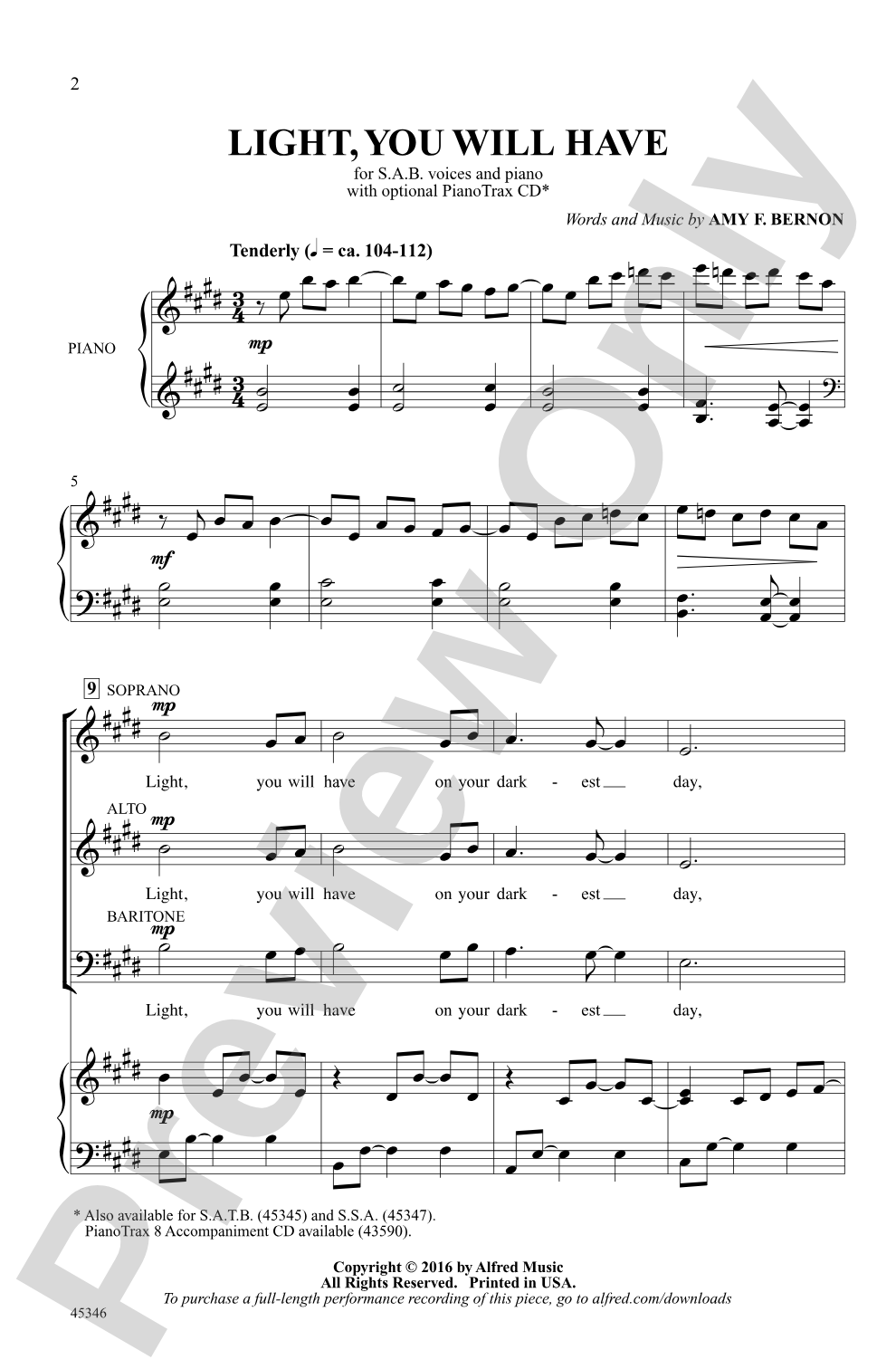
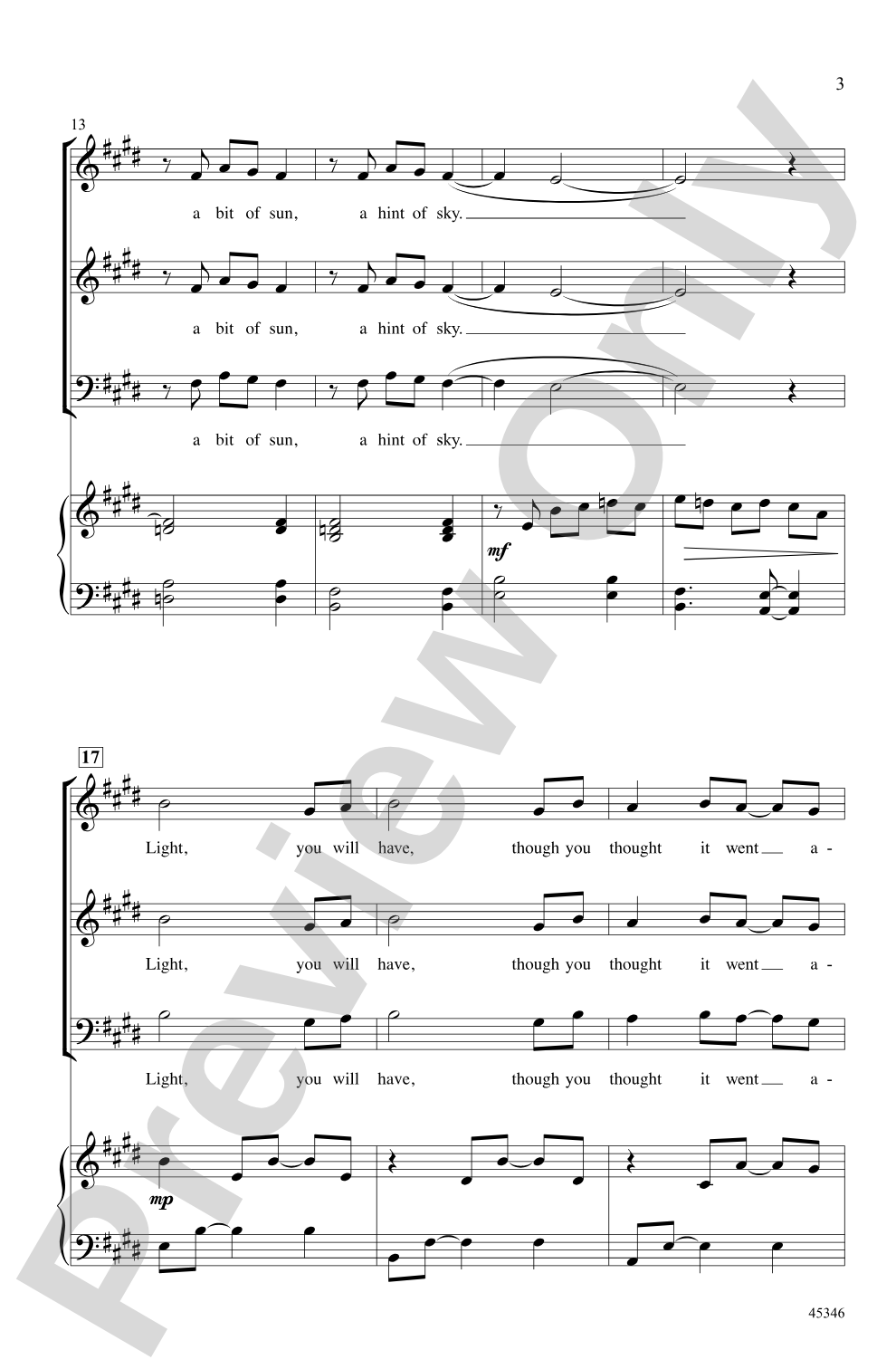
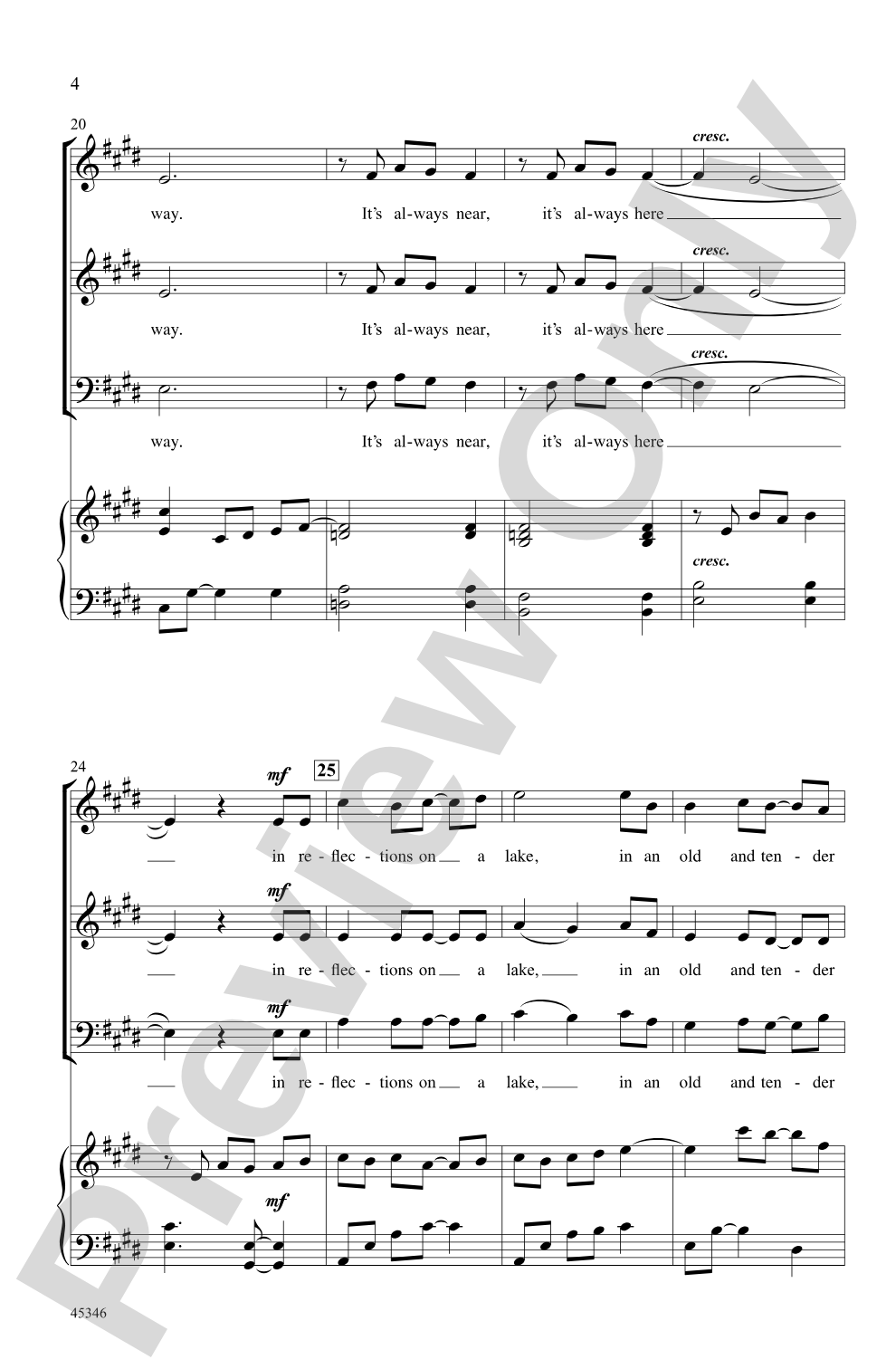

Light, You Will Have: SAB Choral Octavo
Words and music by Amy F. Bernon
Item: 00-PO-0003605
$2.05
Minimum order quantity: 20 copies
Pickup currently not available
Related Items
Light, You Will Have: PianoTrax Digital Download |
$9.99
|
View | |
Light, You Will Have: SATB Choral Octavo |
$1.90
|
View | |
Light, You Will Have: SSA Choral Octavo |
$1.90
|
View | |
Light, You Will Have: SATB Choral Octavo |
$1.90
|
View | |
Light, You Will Have: SAB Choral Octavo |
$2.05
|
View | |
Light, You Will Have: SSA Choral Octavo |
$1.90
|
View |
Description
Perfect for graduation or end-of-year concerts, mature choirs will revel in the lush harmonies and divisi writing of this artistic piece, with words and music of equal caliber. Brief optional solos allow the opportunity to feature some individual voices.


Light, You Will Have: SAB Choral Octavo isn't in MakeMusic Cloud just yet...but it could be. Let us know you'd like to see it, and you'll help shape what comes next. In the meantime, start a free trial and dive into thousands of interactive titles your students can play along with today.
Request This Title
Tell us you want it.
Start Your Free Trial
Explore everything that's ready to play right now.
Sample Audio
1
Audio File
--:--
0:00
0:00
Sample Video
No sample videos found.
Additional Details
Series:
Alfred Choral Designs
Publisher:
Alfred Music
Page Count:
12
SKU:
00-PO-0003605
More about this title
About the Composer: Amy F. Bernon

Amy F. Bernon studied composition at two of America's premier music schools: the Hartt School and Yale University School of Music, where she worked with an impressive roster of composers including Martin Bresnick, Robert Carl, Jacob Druckman, and Libby Larsen. Her formative years in Syracuse, New York shaped her love of music making; she turned to piano, songwriting, and singing with friends during long winters, laying the groundwork for a compositional voice that balances technical sophistication with genuine lyricism.
Bernon has held teaching and accompaniment positions at the Taft School in Connecticut and Buckingham Browne and Nichols School in Massachusetts, while founding and directing choirs of her own. She remains active as a clinician and has been commissioned by choirs across the United States and internationally. She lives in western Connecticut with her husband, Jonathan.
Why we love this
Bernon's gift for pairing sophisticated harmonic language with accessible vocal writing makes this piece feel both substantial and singable for growing choirs. The optional solo moments give you natural ways to showcase developing soloists without overshadowing the ensemble work, and the lush divisi writing demonstrates how three-part texture can sound mature and full when crafted with care.
What to expect
The piece unfolds with genuine warmth, built from harmonies that feel both contemporary and rooted in traditional choral writing. There is an unhurried elegance to the work, with text and music working in tandem to create moments of quiet reflection alongside broader, more expansive gestures.
Who it's for
This piece suits choirs with solid sight-reading skills and a season or more of ensemble experience under their belts. Directors seeking a concert closer for graduation or end-of-year performances will find a work that feels both celebratory and emotionally substantive, with enough musical sophistication to hold an audience's attention.
How to get the most out of it
- Attend to the divisi passages with the same precision you would give to full four-part harmony; even brief moments of dividing voices require careful balance and blend.
- Bring individual singers forward gradually during the optional solos, allowing them to grow into the spotlight rather than stepping suddenly into solo exposure.
- Shape phrases through the harmonic progression rather than relying on dynamics alone; let the vertical sonorities guide your interpretation.
- Rehearse the SAB voicing as written to hear how the three parts interact, then experiment with optional divisi doublings if your section sizes allow for expanded color.
How to use it
Program this as a concert finale where its artistic weight and emotional generosity can leave audiences with a lasting impression. It also works well in a graduation or spring concert context, where you might pair it with lighter selections earlier in the program to showcase the full range of your choir's capabilities.
Skills your students will build
- Balancing divisi voices while maintaining ensemble blend
- Responding to harmonic progression and vertical sonority
- Solo performance and individual confidence within a choral context
- Phrasing across longer musical lines in three-part texture
- Collaborative chamber singing within the ensemble