
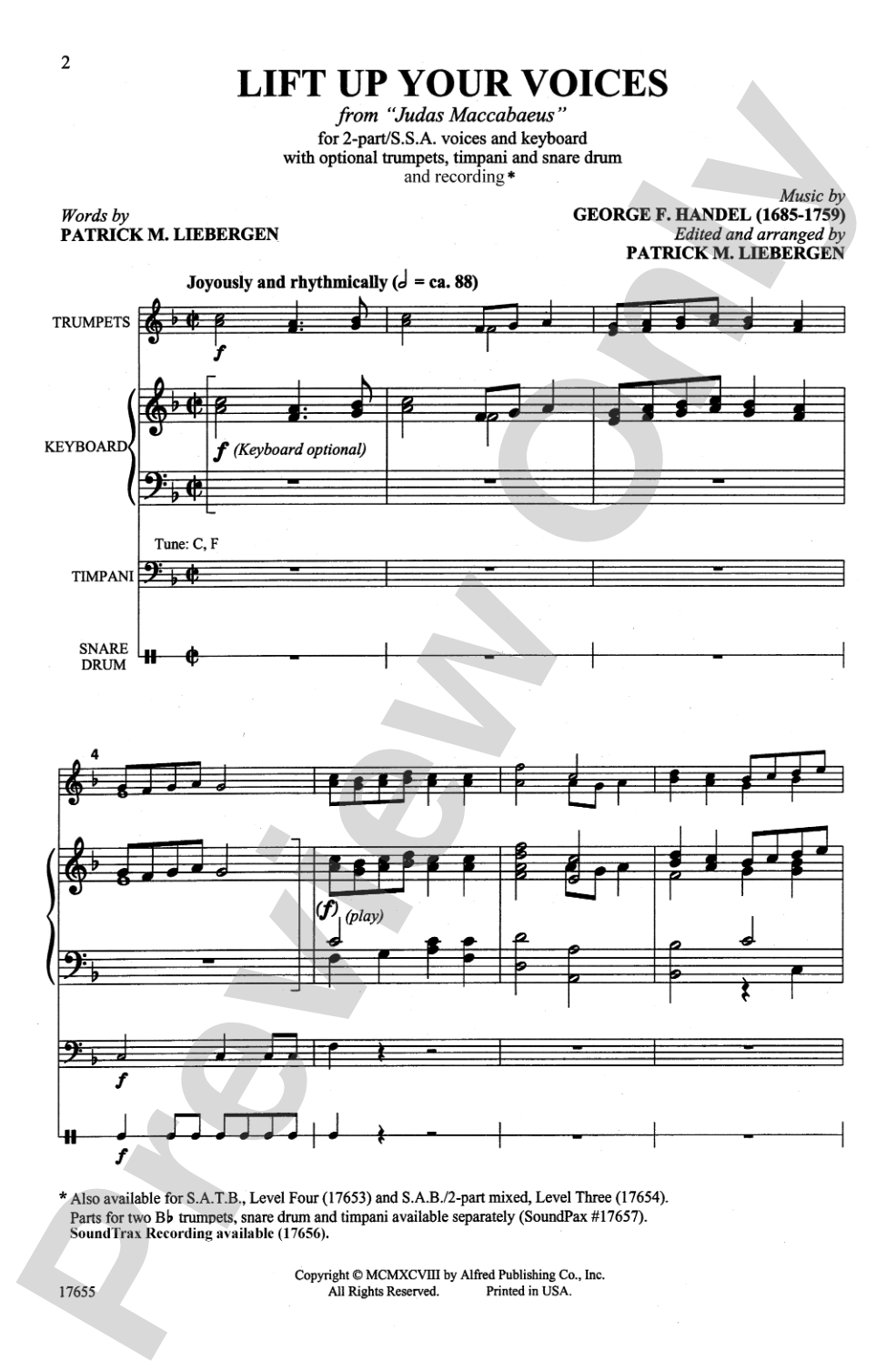
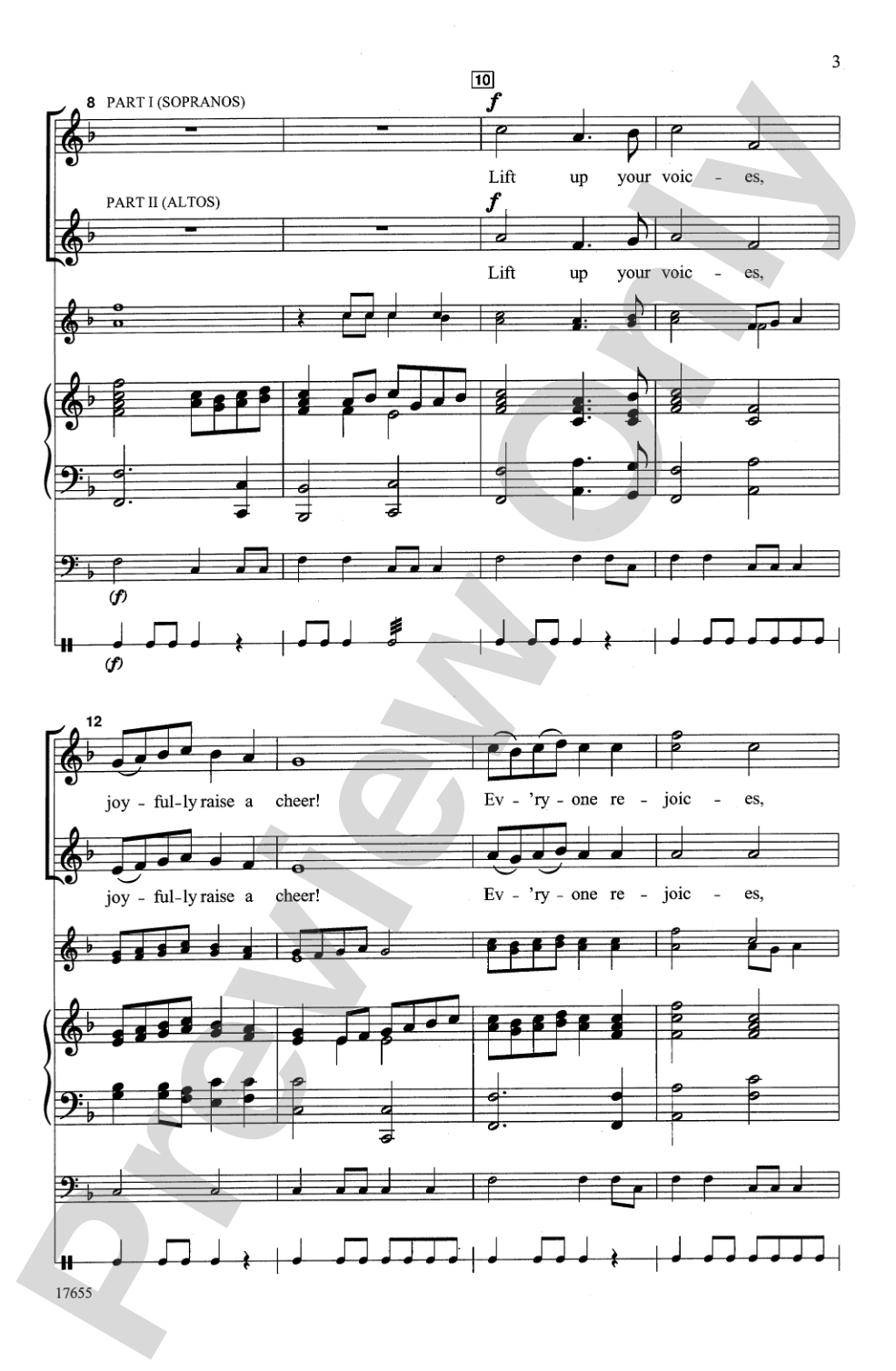

Lift Up Your Voices (from Judas Maccabeus): 2-Part/SSA Choral Octavo
From Judas Maccabeus
Music by George Frideric Handel / arr. Patrick M. Liebergen
Item: 00-PO-0003997
$2.25
Minimum order quantity: 20 copies
Pickup currently not available
Related Items
Lift Up Your Voices (from Judas Maccabeus): SATB Choral Octavo |
$2.25
|
View | |
Lift Up Your Voices (from Judas Maccabeus): SAB/2-Part Mixed Choral Octavo |
$2.25
|
View | |
Lift Up Your Voices: SATB Choral Octavo |
$2.25
|
View | |
Lift Up Your Voices: SAB/2-Part Mixed Choral Octavo |
$2.25
|
View | |
Lift Up Your Voices: 2-Part/SSA Choral Octavo |
$2.25
|
View | |
Lift Up Your Voices: Choral Octavo SoundTrax CD |
$16.95
|
View |
Description
Fine edition of a Handel masterwork. It's an easy-to-learn choral work with a secular text appropriate for any festive occasion for choirs of all levels.


Lift Up Your Voices (from Judas Maccabeus): 2-Part/SSA Choral Octavo isn't in MakeMusic Cloud just yet...but it could be. Let us know you'd like to see it, and you'll help shape what comes next. In the meantime, start a free trial and dive into thousands of interactive titles your students can play along with today.
Request This Title
Tell us you want it.
Start Your Free Trial
Explore everything that's ready to play right now.
Sample Audio
1
Audio File
--:--
0:00
0:00
Sample Video
No sample videos found.
Additional Details
Series:
Alfred Archive Edition: Alfred Choral Designs
Publisher:
Alfred Music
Page Count:
12
SKU:
00-PO-0003997
More about this title
About the Composer: George Frideric Handel
George Frideric Handel (1685-1759) shaped the musical landscape of the Baroque era and beyond, mastering oratorio, opera, and instrumental music with equal brilliance. His works remain cornerstones of choral repertoire, celebrated for their memorable melodies, dramatic sweep, and architectural clarity. Handel's ability to write for all skill levels while maintaining artistic integrity makes his music enduringly valuable in education and performance.
Judas Maccabeus, one of Handel's most popular oratorios, showcases his gift for creating choruses that thrill both singers and audiences. The work's patriotic themes and accessible musical language have kept it in regular performance for nearly three centuries, testament to music that speaks across time.
Why we love this
Liebergen's arrangement preserves what makes Handel essential while opening this masterwork to choirs that might otherwise struggle with the original's demands. The choral writing sits comfortably in both 2-part and SSA formats, allowing flexible casting without sacrificing the piece's festive character and harmonic richness. Programming this creates a legitimate window into Baroque choral literature without requiring advanced vocal technique.
What to expect
Triumphant and celebratory, this piece radiates the confidence of Baroque writing at its most direct and satisfying. The familiar harmonic language and sing-through melodic contour create an immediate sense of occasion, inviting choirs to sound accomplished from early rehearsals onward.
Who it's for
This octavo works for developing choirs seeking substantial Baroque repertoire without excessive technical demands, mixed-age community choirs, and programs that need accessible masterworks for concert settings. Singers at all levels can participate meaningfully in the 2-part or SSA versions, making it ideal for inclusive programming.
How to get the most out of it
- Shape the melodic line with forward momentum; Handel's phrases reward continuous legato singing through the bar lines rather than punctuated articulation.
- Balance the homophonic texture so that harmonic color emerges naturally; this arrangement invites singers to hear how chords support the main melody.
- Keep the tempo steady and energetic to capture the piece's jubilant spirit; a dragging tempo flattens the festive character entirely.
- If using the recorded accompaniment, cue singers to the entrance points clearly; the Baroque style expects precise rhythmic placement without the rubato some singers may anticipate.
How to use it
Position this as a highlight in a concert celebrating secular choral traditions, or pair it with other Baroque choral works to build a liturgical or festive suite. Its 12-page length and jubilant character make it ideal for spring concerts, celebratory programs, or community choral events where Handel's name carries immediate recognition and audience appeal.
Skills your students will build
- Baroque phrasing and legato line singing
- Reading two-part and SSA voicings
- Harmonic awareness through homophonic texture
- Balanced blending in choral chords
- Steady tempo and rhythmic precision with accompaniment