
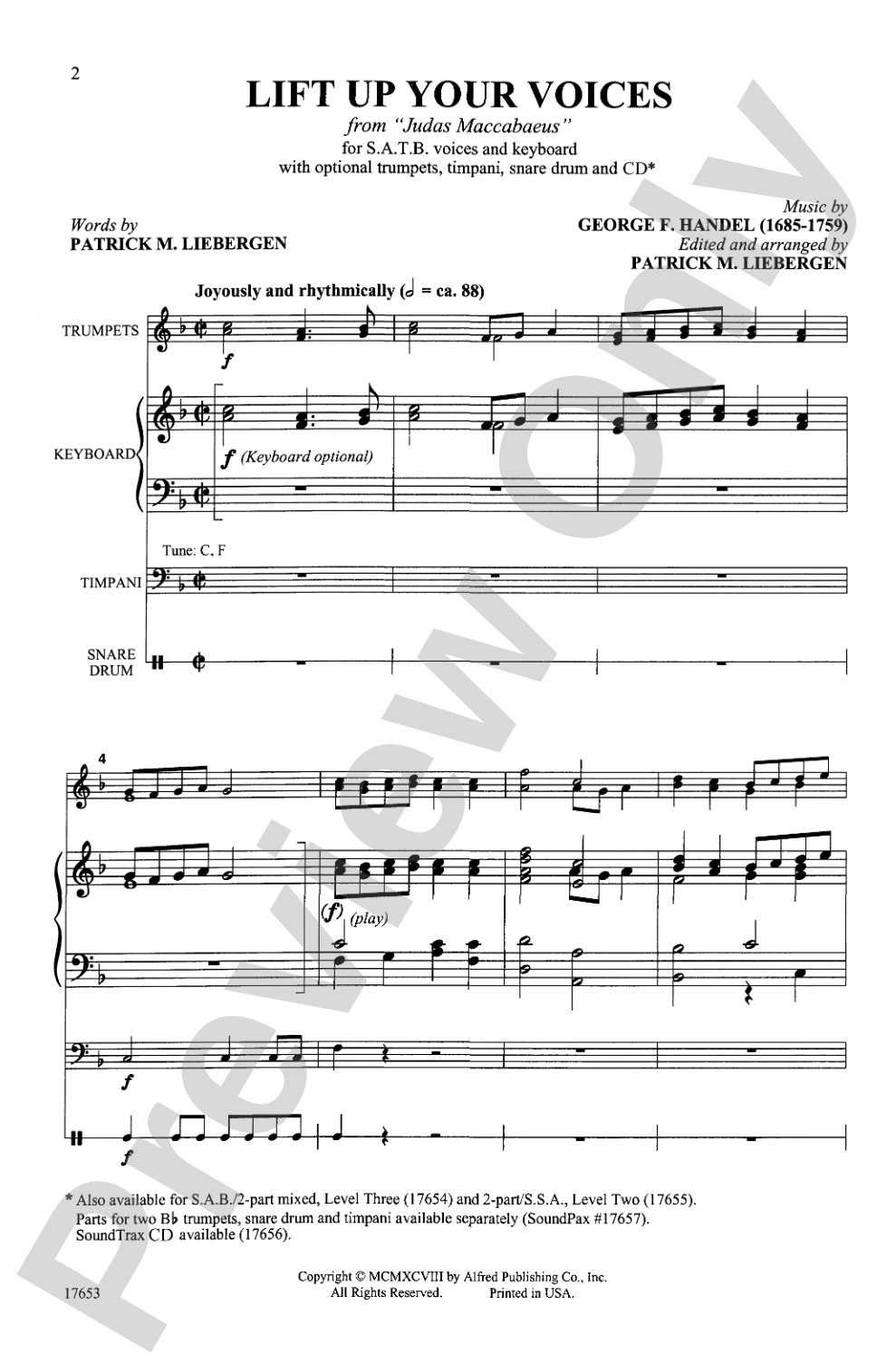
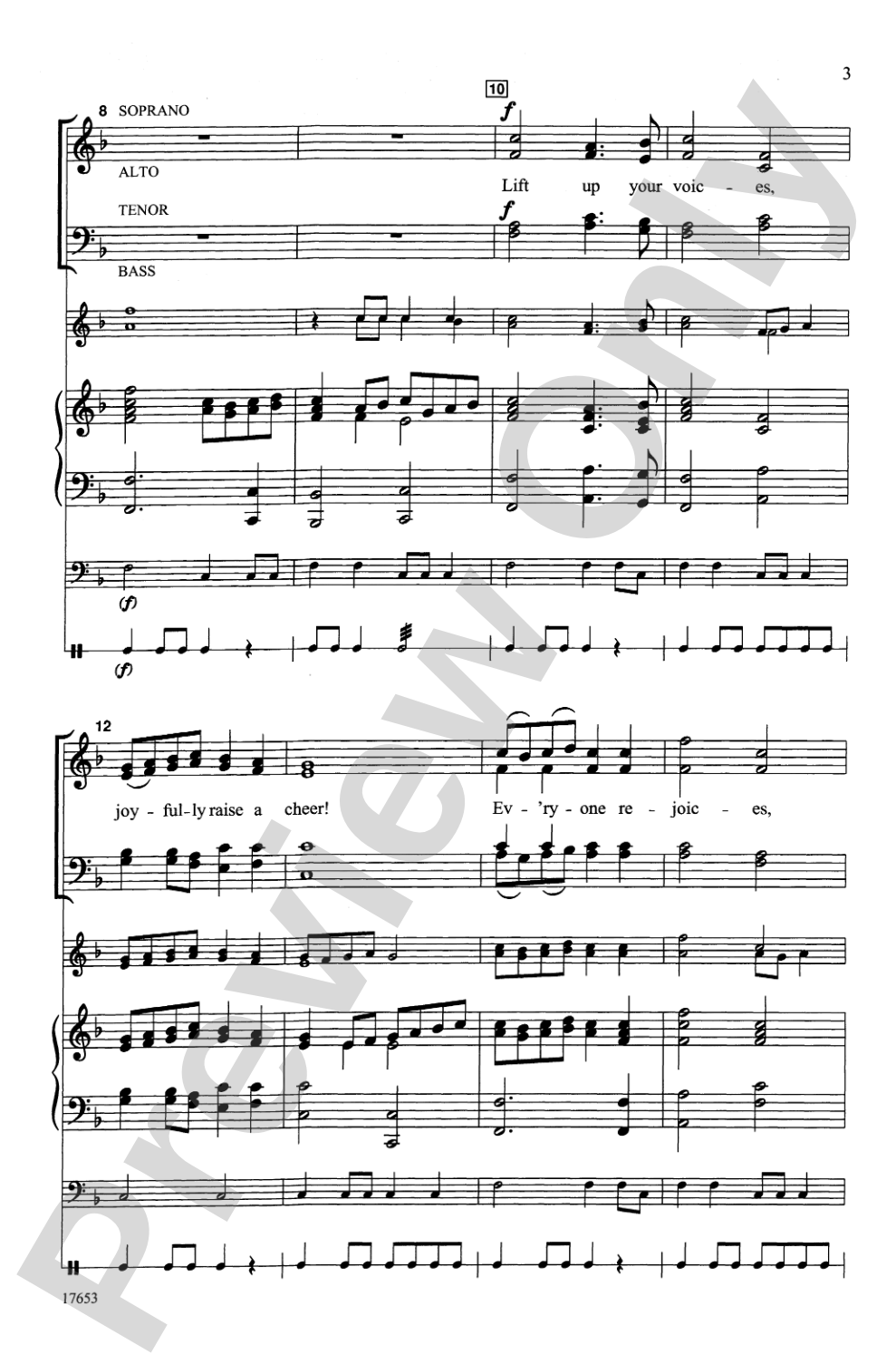

Lift Up Your Voices (from Judas Maccabeus): SATB Choral Octavo
From Judas Maccabeus
Music by George Frideric Handel / arr. Patrick M. Liebergen
Item: 00-PO-0003995
$2.25
Minimum order quantity: 20 copies
Pickup currently not available
Related Items
Lift Up Your Voices (from Judas Maccabeus): SAB/2-Part Mixed Choral Octavo |
$2.25
|
View | |
Lift Up Your Voices (from Judas Maccabeus): 2-Part/SSA Choral Octavo |
$2.25
|
View | |
Lift Up Your Voices: SATB Choral Octavo |
$2.25
|
View | |
Lift Up Your Voices: SAB/2-Part Mixed Choral Octavo |
$2.25
|
View | |
Lift Up Your Voices: 2-Part/SSA Choral Octavo |
$2.25
|
View | |
Lift Up Your Voices: Choral Octavo SoundTrax CD |
$16.95
|
View |
Description
Fine edition of a Handel masterwork. It's an easy-to-learn choral work with a secular text appropriate for any festive occasion for choirs of all levels.


Lift Up Your Voices (from Judas Maccabeus): SATB Choral Octavo isn't in MakeMusic Cloud just yet...but it could be. Let us know you'd like to see it, and you'll help shape what comes next. In the meantime, start a free trial and dive into thousands of interactive titles your students can play along with today.
Request This Title
Tell us you want it.
Start Your Free Trial
Explore everything that's ready to play right now.
Sample Audio
1
Audio File
--:--
0:00
0:00
Sample Video
No sample videos found.
Additional Details
Series:
Alfred Archive Edition: Alfred Choral Designs
Publisher:
Alfred Music
Page Count:
12
SKU:
00-PO-0003995
More about this title
About the Composer: George Frideric Handel
George Frideric Handel (1685-1759) stands as one of the Baroque era's most prolific and commercially successful composers. Born in Halle, Germany, he spent much of his career in England, where he became a naturalized citizen and created works that defined the sound of the Georgian court. His mastery of melody, harmonic clarity, and dramatic structure made his music immediately accessible to audiences while remaining sophisticated enough to sustain centuries of performance and study.
Handel's output spanned opera, oratorio, instrumental concertos, and ceremonial music. His oratorios in particular established a template for large-scale choral works that influenced generations of composers. The clarity and directness of his writing makes his music especially valuable for choral education: singers engage with genuinely great music while learning to shape phrases, balance parts, and execute clean ensemble writing.
Why we love this
This arrangement captures the triumphant spirit of the original oratorio while trimming away unnecessary complexity, making Handel genuinely accessible for school and community choirs. The text is secular and celebratory, perfect for holiday concerts, spring festivals, or any occasion calling for festive music with substance behind it. Liebergen's editing respects the integrity of Handel's melodic writing while creating parts that sit comfortably in the singers' ranges.
What to expect
Joyful and ceremonial, with the kind of unshakeable optimism that only Baroque trumpet calls and major keys can deliver. The writing feels fresh and energetic without ever straining the ensemble; you sense Handel's confidence that good melody and clean harmony need no embellishment. There's genuine lift in the music, exactly what the title promises.
Who it's for
This piece suits SATB choirs ranging from high school to community level, as well as church choirs seeking something both celebratory and musically substantial. Singers of mixed experience benefit from Handel's straightforward harmonic logic and memorable melodies, while the text remains accessible and broadly appealing. Directors looking for Baroque repertoire that doesn't require extensive historical context or specialized vocal training will find this an ideal fit.
How to get the most out of it
- Shape the opening phrases with clear direction toward the downbeats; Handel's melodies sing best when they feel purposeful rather than note-by-note.
- Balance the soprano line prominently enough that the text remains intelligible, but keep the inner voices warm and present to support harmonic resonance.
- Use the recorded accompaniment as a reference for tempo and stylistic conventions, but allow your ensemble's own breath and phrasing to lead.
- Approach articulation cleanly; Baroque style benefits from crisp consonants and space between phrases rather than legato blur.
How to use it
Program this as a concert opener or finale when you need uplifting, high-energy repertoire that will warm an audience into the program. It pairs well alongside other Baroque sacred or secular works, or as a contrast piece in a program mixing eras and styles. The secular text and festive character make it equally at home in a winter holiday concert, a spring celebration, or a general concert themed around joy and community.
Skills your students will build
- Baroque style conventions including clean articulation and balanced part-writing
- Major key harmonic progressions and functional chord movement
- Shaping long melodic lines across phrases while maintaining ensemble unity
- Text clarity and diction in secular English verse
- Part independence within a homophonic texture