
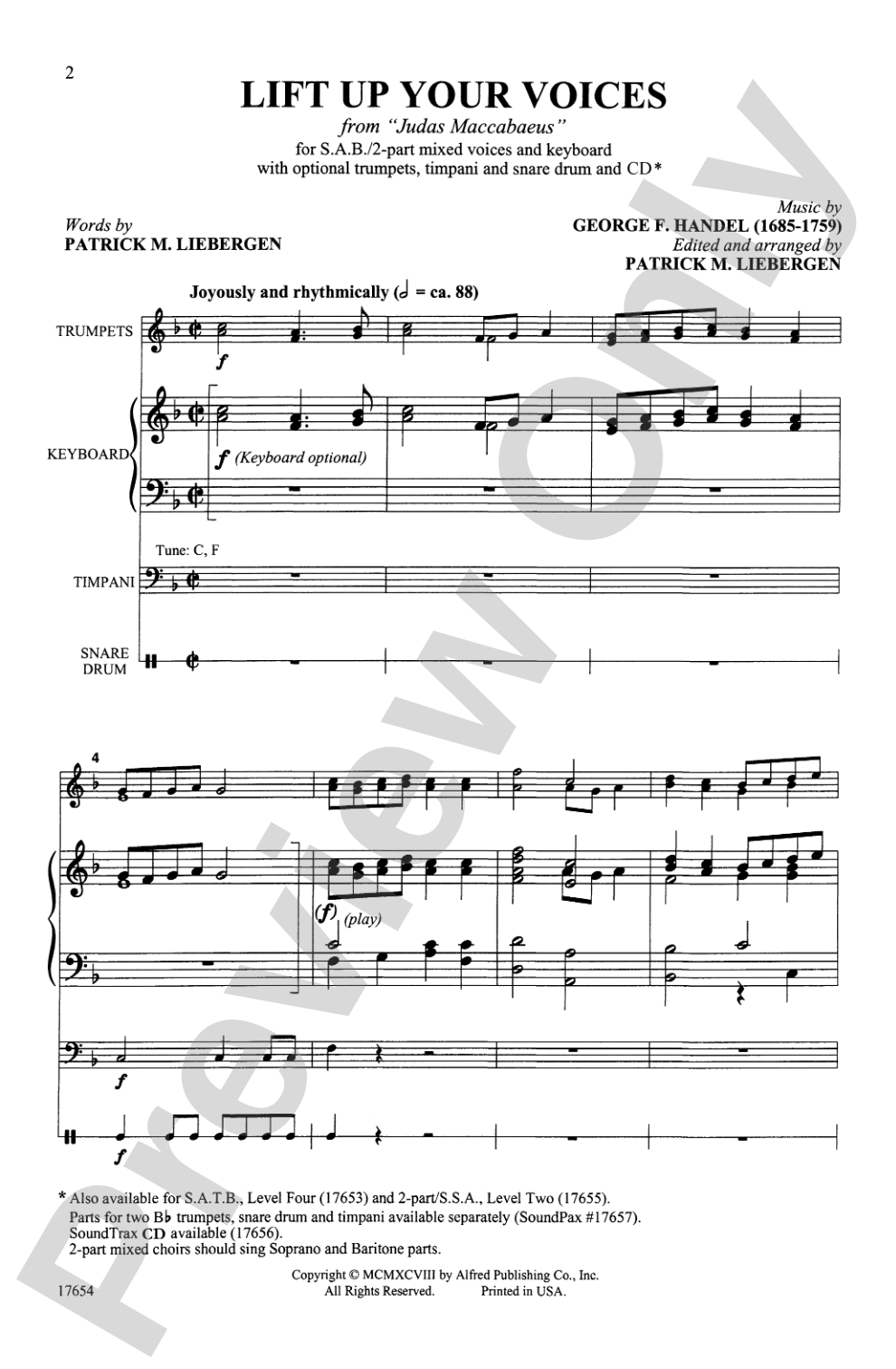
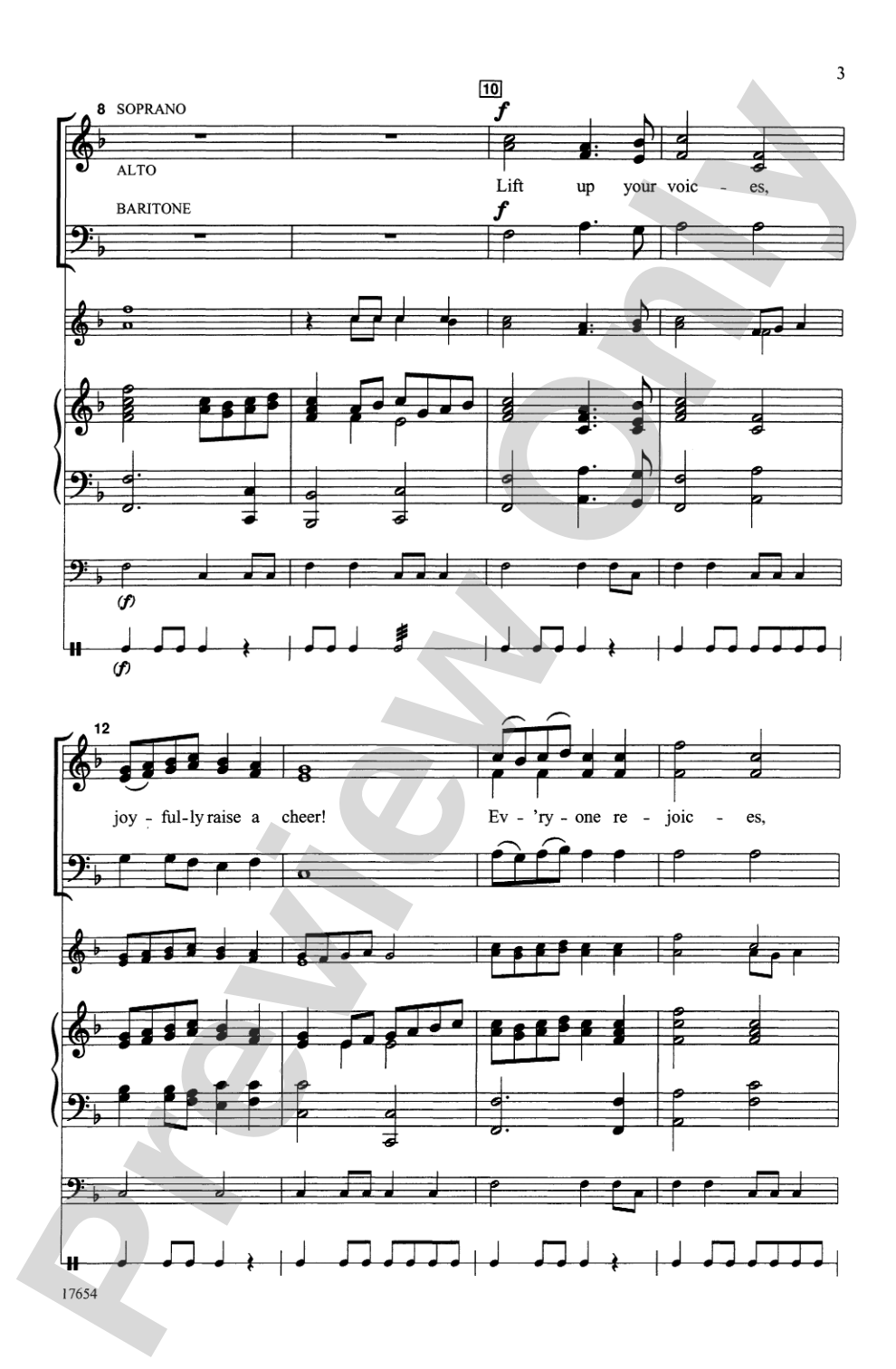

Lift Up Your Voices (from Judas Maccabeus): SAB/2-Part Mixed Choral Octavo
From Judas Maccabeus
Music by George Frideric Handel / arr. Patrick M. Liebergen
Item: 00-PO-0003996
$2.25
Minimum order quantity: 20 copies
Pickup currently not available
Related Items
Lift Up Your Voices (from Judas Maccabeus): SATB Choral Octavo |
$2.25
|
View | |
Lift Up Your Voices (from Judas Maccabeus): 2-Part/SSA Choral Octavo |
$2.25
|
View | |
Lift Up Your Voices: SATB Choral Octavo |
$2.25
|
View | |
Lift Up Your Voices: SAB/2-Part Mixed Choral Octavo |
$2.25
|
View | |
Lift Up Your Voices: 2-Part/SSA Choral Octavo |
$2.25
|
View | |
Lift Up Your Voices: Choral Octavo SoundTrax CD |
$16.95
|
View |
Description
Fine edition of a Handel masterwork. It's an easy-to-learn choral work with a secular text appropriate for any festive occasion for choirs of all levels.


Lift Up Your Voices (from Judas Maccabeus): SAB/2-Part Mixed Choral Octavo isn't in MakeMusic Cloud just yet...but it could be. Let us know you'd like to see it, and you'll help shape what comes next. In the meantime, start a free trial and dive into thousands of interactive titles your students can play along with today.
Request This Title
Tell us you want it.
Start Your Free Trial
Explore everything that's ready to play right now.
Sample Audio
1
Audio File
--:--
0:00
0:00
Sample Video
No sample videos found.
Additional Details
Series:
Alfred Archive Edition: Alfred Choral Designs
Publisher:
Alfred Music
Page Count:
12
SKU:
00-PO-0003996
More about this title
About the Composer: George Frideric Handel
George Frideric Handel (1685-1759) was a German-born composer who became one of the most celebrated figures in English musical life. He wrote across virtually every genre of his time: operas, oratorios, concertos, and ceremonial music for royal occasions. His gift for crafting memorable melodies and his mastery of choral writing made his works central to the English musical canon for centuries.
Handel's oratorios, including Judas Maccabeus, represent some of his most enduring achievements. Unlike his Italian operas, these large-scale choral works were performed in concert settings and became vehicles for the developing English choral tradition. His influence shaped how composers approached choral writing for generations.
Why we love this
Patrick Liebergen's arrangement preserves the grandeur and melodic clarity of Handel's original while making it genuinely accessible for mixed choirs without extensive vocal ranges or complex divisi. The secular text gives you programming flexibility across seasons and occasions, and the optional 2-part voicing option means you can use this effectively even when your SAB section depth varies.
What to expect
There is an immediate sense of occasion and joy in this music. The opening has the brightness of a festive celebration, with a strong melodic hook that sits comfortably in the middle of the choral range. Singers feel the confidence that comes from singing a recognizable masterwork arranged with clear voice leading and room to breathe.
Who it's for
This arrangement suits choirs at all levels, from early intermediate through advanced ensembles. It works equally well for school choirs, community groups, and church choirs seeking repertoire that sounds polished without demanding soprano soloists or extensive rehearsal time.
How to get the most out of it
- Shape the melodic line with gentle dynamic swells rather than rigid forte throughout; Baroque phrasing comes alive when singers find the natural peaks and valleys of the phrase.
- Let the text dictate articulation. Words like 'lift' and 'voices' benefit from a touch of rhythmic buoyancy, which helps younger singers stay engaged with the lyrical material.
- Balance the parts carefully during sectional rehearsals so the alto and bass lines support rather than compete with the soprano line; Handel's harmonic structure relies on this transparency.
- When using the recorded accompaniment, have singers listen to it in context first before singing along, so they absorb the style and pacing rather than rushing to match.
How to use it
This piece works beautifully as a closing number for a winter concert, holiday program, or spring celebration where you want something joyful and substantial without the weight of a major choral work. It also pairs well with lighter contemporary pieces or as a contrast to more introspective repertoire, giving audiences a moment of uplift and theatrical polish.
Skills your students will build
- Baroque phrasing and style awareness
- Part independence in three-part (and optional two-part) voicing
- Balance and blend in mixed voices
- Text expression and diction in a secular celebration
- Reading and performing from a digital score