

Lift Every Voice and Sing: TTB Choral Octavo
Words by James Weldon Johnson, music by J. Rosamond Johnson / arr. Greg Gilpin
Item: 00-PO-0005558
$1.90
Minimum order quantity: 20 copies
Pickup currently not available
Related Items
Lift Every Voice and Sing: SoundTrax Digital Audio Download |
$27.99
|
View | |
Lift Every Voice and Sing: SATB Choral Octavo |
$1.90
|
View | |
Lift Every Voice and Sing: SAB Choral Octavo |
$2.05
|
View | |
Lift Every Voice and Sing: SSA Choral Octavo |
$1.90
|
View | |
Lift Every Voice and Sing: 2-Part Choral Octavo |
$1.90
|
View | |
Lift Every Voice and Sing: Choral SoundPax |
$15.00
|
View | |
Lift Every Voice and Sing: SATB Choral Octavo |
$1.90
|
View | |
Lift Every Voice and Sing: SAB Choral Octavo |
$2.05
|
View | |
Lift Every Voice and Sing: SSA Choral Octavo |
$1.90
|
View | |
Lift Every Voice and Sing: TTB Choral Octavo |
$1.90
|
View | |
Lift Every Voice and Sing: 2-Part Choral Octavo |
$1.90
|
View | |
Lift Every Voice and Sing: SoundTrax CD |
$27.99
|
View | |
Lift Every Voice and Sing: Choral SoundPax |
$15.00
|
View |
Description
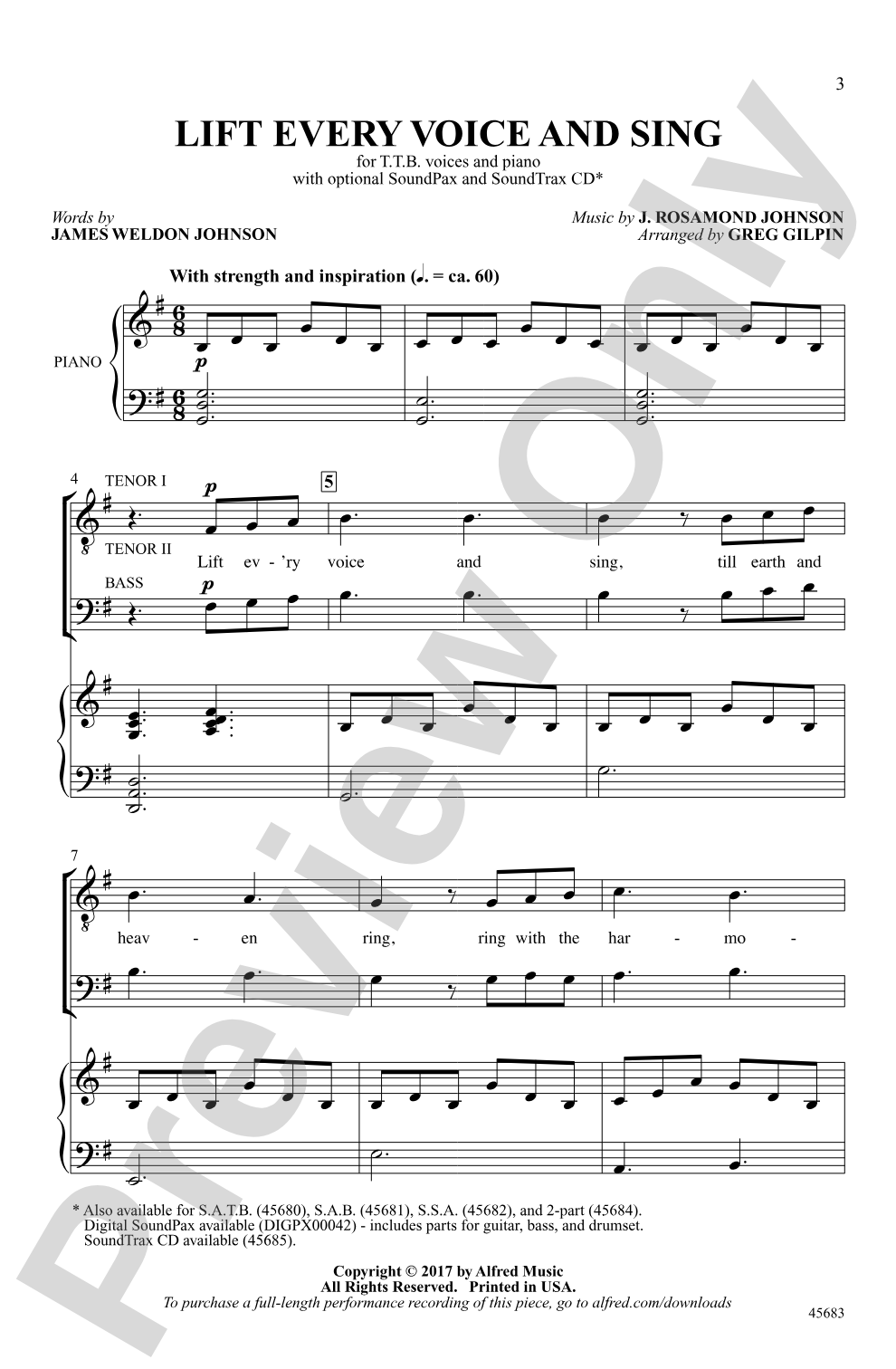
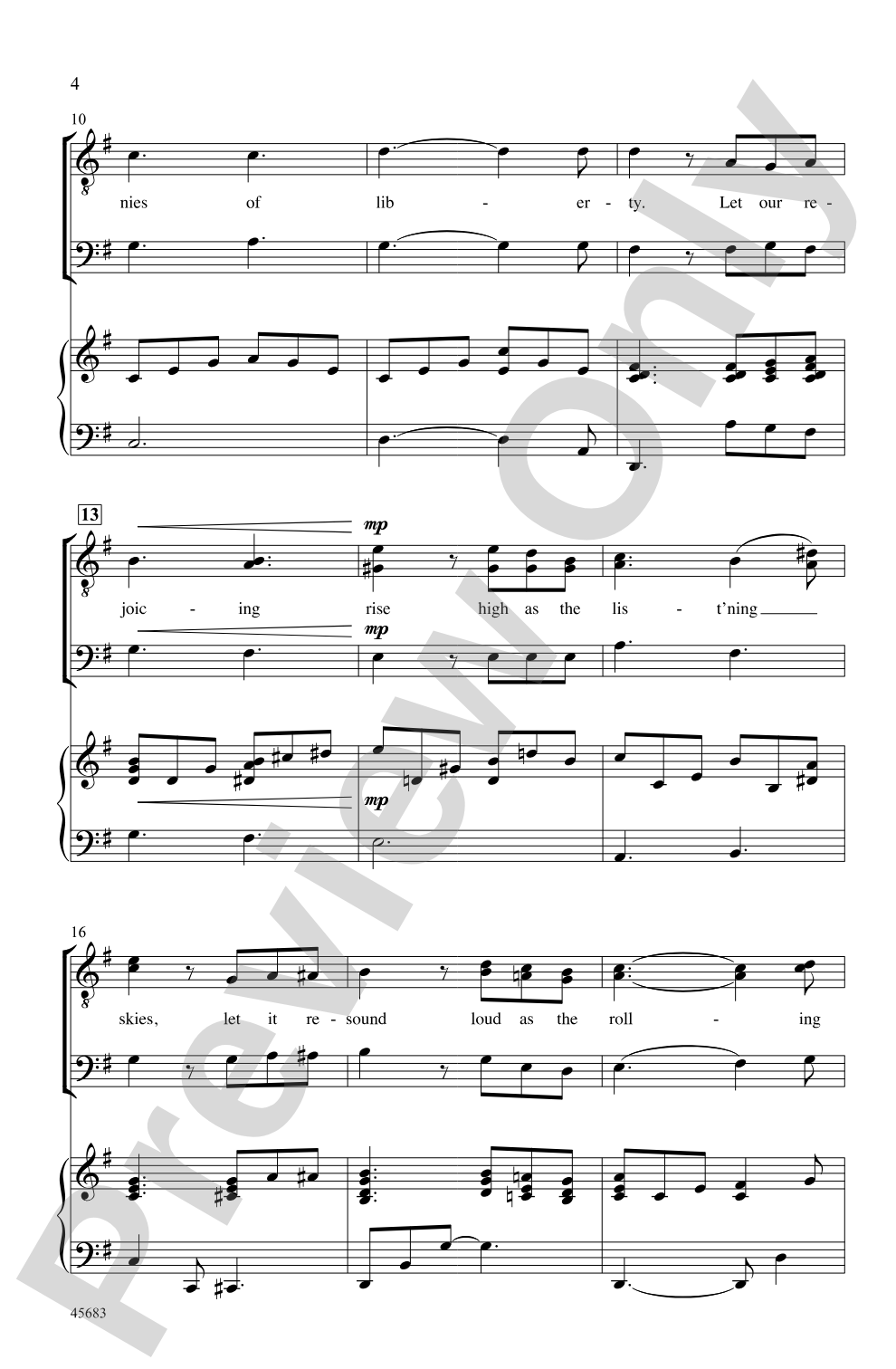
This contemporary spiritual boasts a rich history as a song of liberation and has been dubbed the "Black American National Anthem." Greg's tour-de-force arrangement opens with a powerful unison before developing into thick gospel harmonies. Perform with the SoundTrax CD or the SoundPax parts for guitar, bass, and drumset. Both words and music will resonate long after the final glorious chord!


Lift Every Voice and Sing: TTB Choral Octavo isn't in MakeMusic Cloud just yet...but it could be. Let us know you'd like to see it, and you'll help shape what comes next. In the meantime, start a free trial and dive into thousands of interactive titles your students can play along with today.
Request This Title
Tell us you want it.
Start Your Free Trial
Explore everything that's ready to play right now.
Sample Audio
1
Audio File
--:--
0:00
0:00
Sample Video
No sample videos found.
Additional Details
Series:
Alfred Choral Designs
Publisher:
Alfred Music
Page Count:
12
SKU:
00-PO-0005558
More about this title
About the Composer: J. Rosamond Johnson
J. Rosamond Johnson (1873-1954) was a composer, lyricist, and performer who shaped African American musical identity during the early twentieth century. Co-composing "Lift Every Voice and Sing" with his brother James Weldon Johnson in 1900, Rosamond created music that transcended entertainment to become a cornerstone of the civil rights movement and a statement of cultural pride and resilience.
Beyond this iconic work, Johnson was a prolific composer of spirituals, songs, and theatrical music who performed internationally and advocated for the preservation and elevation of Black musical traditions. His compositions demonstrate sophisticated harmonic language rooted in spiritual traditions, making his work valuable for choirs seeking repertoire with both historical significance and musical substance.
Why we love this
Greg Gilpin's arrangement honors the song's monumental legacy while making it singable for TTB ensembles without compromising impact. The unison opening establishes clarity and purpose, then the gospel harmonies deepen the emotional weight and give singers real harmonic interest. This is repertoire that educates and moves simultaneously.
What to expect
The arrangement moves from quiet determination in unison to swelling, jubilant gospel harmonies that lift and affirm. The thick chord voicings create warmth and spiritual weight, while the text's message of hope and collective strength permeates every phrase. This is music that feels both urgent and timeless.
Who it's for
TTB choirs and mixed ensembles seeking a spiritually profound piece with flexibility in voicing. Directors programming for concert, festival, or community occasions will find a work that connects singers and audiences to the song's deeper meaning while offering genuine musical challenge.
How to get the most out of it
- Shape the unison opening with intention. This passage sets the spiritual and emotional foundation, so maintain forward momentum while allowing space for the text to land with clarity.
- Balance the gospel harmonies carefully as they enter. TTB voicing can crowd quickly, so encourage singers to listen across parts and avoid forcing volume when blending becomes challenging.
- Use the recorded accompaniment or guitar/bass/drumset parts to establish groove without letting instrumental color overshadow the singers' natural resonance.
- Attend to diction throughout, especially in the final chord. The glorious conclusion demands crisp vowel definition and unified release to ring with authority.
How to use it
Program this as a centerpiece for concerts exploring peace, brotherhood, and cultural heritage. Its length and emotional arc make it ideal alongside other spirituals or as a standalone statement piece that frames an entire program. Consider festival contexts where the piece's historical and musical significance will resonate with adjudicators and audiences.
Skills your students will build
- Gospel harmony voicing and voice leading in TTB texture
- Unison singing with textual clarity and collective purpose
- Blend and balance in four-part and three-part gospel harmony
- Interpretive singing rooted in spiritual and cultural traditions
- Rhythm and groove coordination with instrumental accompaniment